Essential Guide: Safe Storage of Sealed Pantry Foods
Proper storage of sealed pantry foods directly impacts both household budgets and food safety. Scientific research shows that maintaining optimal storage conditions can extend shelf life by up to 25% while preventing contamination and spoilage.
Key Storage Principles:
- Temperature control (maintain 50-70°F/10-21°C)
- Humidity management (aim for 50-60% relative humidity)
- Light exposure reduction
- Proper container selection
Expert-Recommended Storage Methods:
- Use airtight containers with moisture-proof seals
- Implement FIFO (First In, First Out) rotation system
- Monitor expiration dates systematically
- Store items off the floor on sturdy shelving
Critical Safety Considerations:
- Check seals integrity regularly
- Keep chemicals separate from food storage
- Monitor for pest activity
- Document storage dates
Advanced Organization Strategies:
- Zone-based arrangement by food type
- Clear labeling systems
- Regular inventory assessments
- Emergency food rotation schedule
These evidence-based practices, supported by food safety experts and professional organizers, ensure maximum shelf life while maintaining nutritional quality. Regular system maintenance and updates help protect both investment and family health.
Essential Storage Conditions for Vacuum Sealed Foods
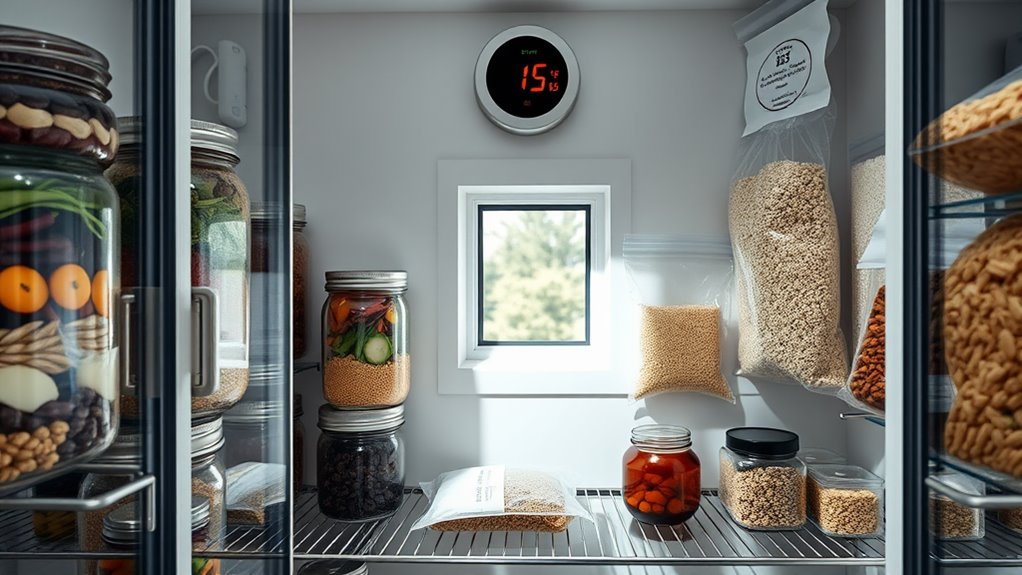
Every vacuum sealed food deserves the perfect storage environment to maintain its quality and safety.
I've discovered that the key to properly store these items lies in finding a cool dark place with temperatures between 50-70°F. You'll want to keep your vacuum sealed foods away from heat sources that could compromise their seals and lead to spoilage.
I always recommend using airtight containers as an extra layer of protection for your food storage needs.
Trust me, maintaining low humidity levels is vital – moisture isn't your friend when it comes to storage life!
I make it a habit to regularly inspect my vacuum sealed foods for any signs of damage or air getting in. Additionally, vacuum sealing can significantly extend shelf life by reducing oxygen levels, further enhancing food safety.
Temperature and Humidity Control Methods
While maintaining proper temperature and humidity levels might seem challenging, I've found that it's actually quite manageable with the right approach.
I've discovered that keeping sealed pantry foods between 50-70°F is essential for maximizing shelf life. I always use a hygrometer to monitor humidity levels, aiming for 30-50% to protect food integrity.
I've transformed my storage environment by placing airtight containers away from heat sources like ovens. It's amazing how these simple changes prevent moisture issues and maintain freshness! Utilizing a vacuum sealing method can further extend shelf life and help in preserving the overall quality of your pantry items.
For even better results, I've invested in climate-controlled storage solutions for my most sensitive items. Trust me, these temperature-regulated spaces work wonders for preserving everything from grains to spices.
Remember to check your pantry conditions regularly – it's the key to keeping your food fresh longer.
Proper Container Selection and Maintenance
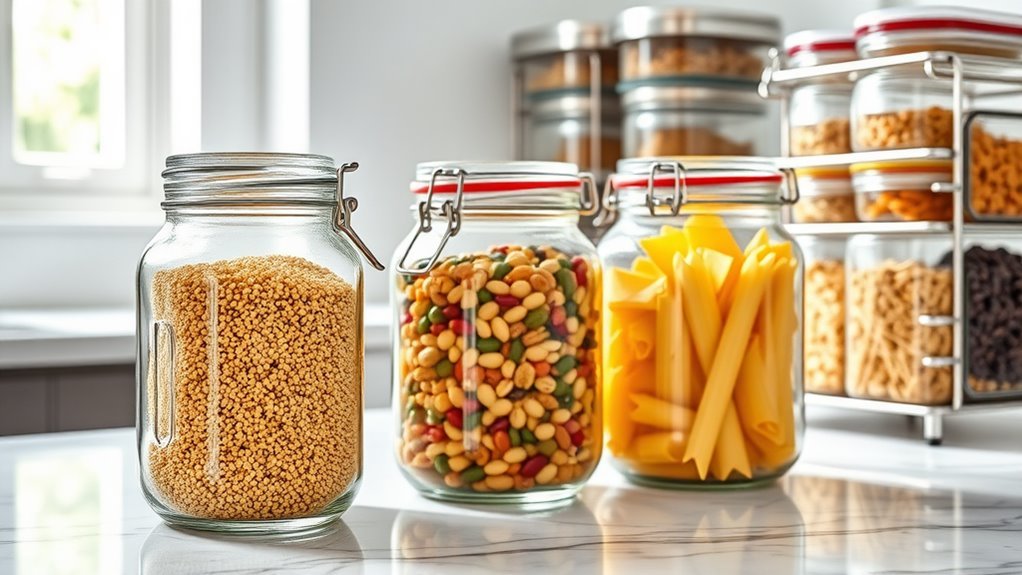
Selecting the right containers for pantry storage has completely transformed how I keep my food fresh!
I've discovered that airtight containers made of glass or sturdy plastic are absolute game-changers for achieving maximum freshness. To prolong shelf life, I store containers in a cool, dark place where temperatures stay between 50-70°F.
Here's my pro tip: I always label everything with purchase dates, which helps me track freshness easily.
I also regularly check my containers for any damage that could compromise their seals. When I'm feeling extra motivated, I'll vacuum seal my dry goods to reduce air exposure – it's amazing how much longer they last! Airtight containers and vacuum sealing are modern tools that help prevent food spoilage.
Trust me, once you've got the right storage system in place, you'll never go back to keeping food in those flimsy original packages.
Monitoring and Inspection Techniques
Now that you've got your containers sorted, let's focus on keeping a watchful eye on your pantry items.
I've found that regular monitoring and inspection of sealed items is essential for maintaining a safe, organized pantry. I recommend checking your storage containers monthly for any signs of spoilage, like bulging cans or odd smells.
I always keep a detailed log of expiration dates and follow a first-in, first-out approach to guarantee nothing goes to waste.
When I'm doing my inspections, I look for moisture, pests, and any damage to packaging. Store everything in a cool, dark place, and once you've opened something, transfer it to airtight containers right away. This will help prevent spoilage and potential losses, ensuring your food remains fresh and safe to eat.
Trust me, these simple monitoring habits will revolutionize your pantry management and keep your food fresher, longer.
Strategic Pantry Organization Systems
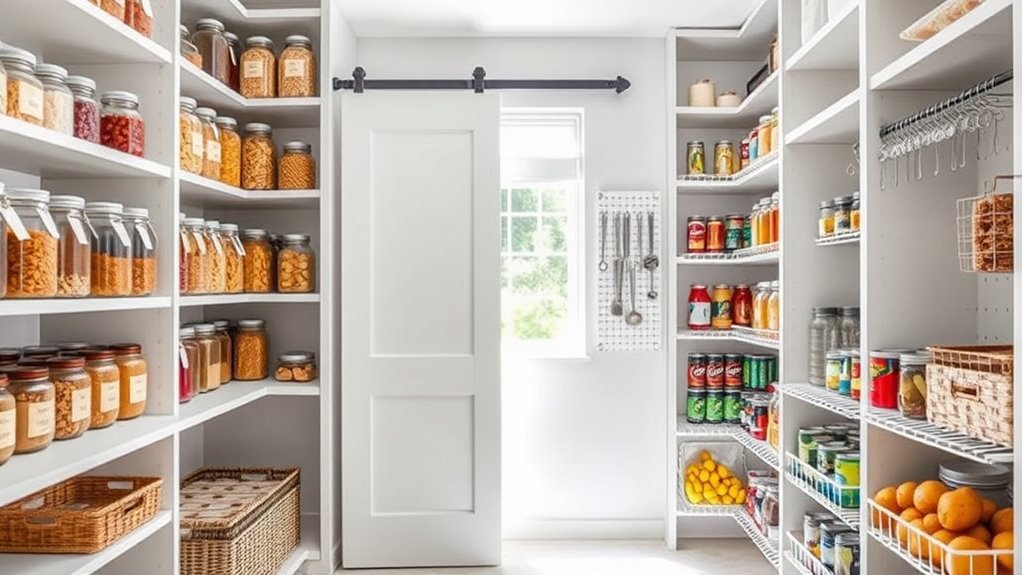
Since maintaining an organized pantry can feel overwhelming, I'm excited to share my favorite strategic organization systems that'll transform your space into a well-oiled machine.
I've found that organizing pantry items by category is a game-changer for long-term storage success. I store grains, canned goods, and spices in clear, airtight containers, making it super easy to spot what I need in a flash.
To keep my shelf-stable foods fresh, I've implemented a foolproof FIFO system – the oldest items always move to the front. I label everything with purchase dates and store items in a cool, dry place.
Every few months, I do a complete pantry audit to track inventory and prevent food waste. Trust me, these strategies will revolutionize your pantry game! Additionally, using sealed bags can help maintain the freshness of my pantry staples for even longer periods.
Pest Prevention and Management
Protecting your pantry from unwanted visitors is essential for maintaining a healthy food storage system. I'll show you how to prevent pests while keeping your food fresh and safe using proven strategies that work!
| Area | Action | Benefits |
|---|---|---|
| Storage | Use airtight containers | Blocks pest access |
| Maintenance | Inspect pantry weekly | Early detection |
| Cleaning | Remove food debris | Eliminates attractions |
| Organization | Rotate stock (first in, first out) | Maintains freshness |
I've found that combining smart storage solutions with regular cleaning makes a huge difference. I always keep my pantry areas spotless and use natural deterrents like bay leaves to keep pests away. When you inspect your pantry regularly, you'll catch any issues before they become problems. Additionally, using vacuum sealing not only protects your food from pests but also ensures that food stays fresher longer. Remember, prevention is easier than dealing with an infestation!
Best Practices for Food Rotation
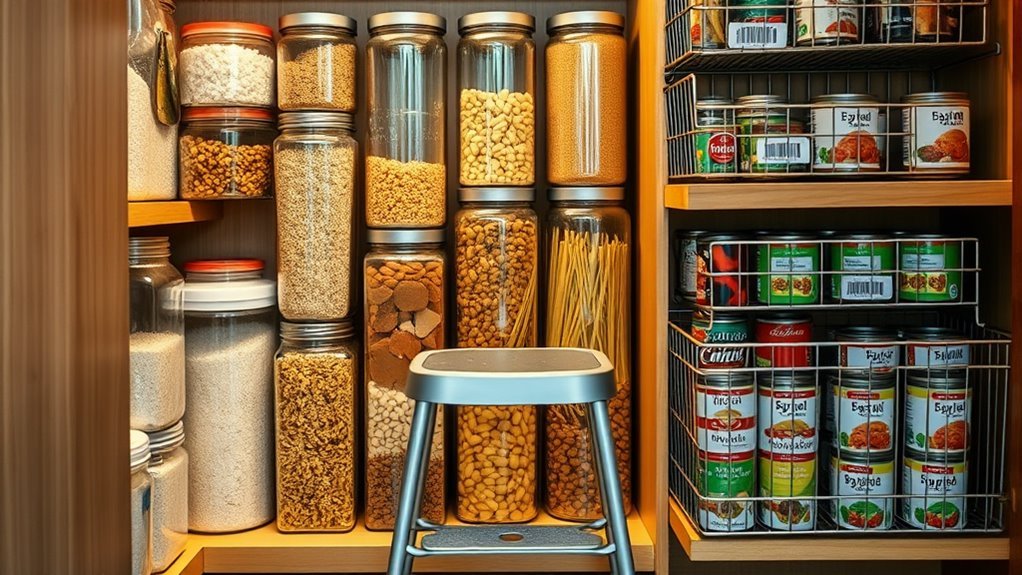
Maintaining a well-organized food rotation system is one of the most important steps you'll take in managing your pantry effectively. I've found that placing new food items at the back of each shelf while moving older ones forward guarantees nothing gets forgotten.
To safely store your dry and canned goods, I recommend labeling everything with purchase dates.
I keep my well-stocked pantry organized by categories, making it easier to track what I have. While canned goods typically last up to a year, many dry items can last much longer when stored properly, especially when employing vacuum sealing technology for preservation.
I prevent food spoilage by checking expiration dates every few months and planning meals around items that need to be used soon. This simple FIFO (first in, first out) method has transformed how I maintain my pantry.
Signs of Compromised Seals and Solutions
Safety checks on stored food items start with recognizing compromised seals, which can indicate serious food safety issues.
When I'm inspecting my pantry, I look for telltale signs that food hasn't been stored correctly. For canned goods, I'm especially vigilant about bulging or dented lids – these are red flags that require immediate action.
I've learned that hissing sounds when opening cans or any leakage around the seams are definite signs of spoilage. I never take chances with these items – straight to the trash they go!
I also pay close attention to expiration dates and inspect vacuum-sealed packages for unusual puffiness. Even if you're a savvy shopper, compromised seals can happen, so I recommend checking your stored items monthly to verify everything's safe to consume. Additionally, I'm aware that certain foods, like vacuum-sealed meats, can promote harmful bacteria growth in low-oxygen environments.
Conclusion
I've discovered that proper pantry storage isn't just about keeping food fresh – it's about creating a system that works for you. By maintaining ideal temperatures, using quality containers, and staying vigilant with inspections, you'll protect your investment and guarantee your family's safety. Remember, it's the small daily habits, like proper labeling and rotation, that make the biggest difference in keeping your pantry organized and your sealed foods safe.