When Sarah discovered half her CSA box vegetables spoiling in the crisper drawer, she knew there had to be a better way. We’re here to show you why vacuum sealing isn’t just another kitchen gadget gimmick – it’s food preservation science at its finest. By removing air and creating an oxygen-free fortress around your produce, we’re literally stopping bacteria and mold in their tracks. Let’s unpack the technical magic that’ll keep your vegetables fresh for weeks, not days.
The Science Behind Vacuum Sealing Fresh Vegetables
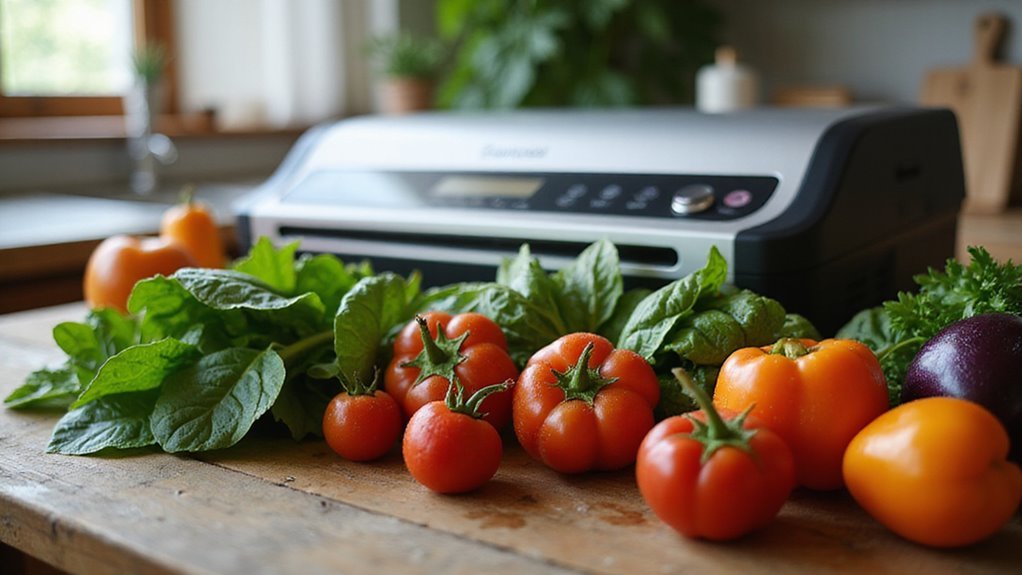
When you understand the science of vacuum sealing vegetables, you’ll realize it’s not just removing air – it’s creating a fortress against decay.
Let’s break it down: Vacuum sealing establishes an oxygen-free environment that stops bacteria, mold, and yeast dead in their tracks. These microscopic spoilers can’t survive without air, which means your fresh produce stays fresher longer.
We’re talking a shelf life boost from 1-3 days to several weeks.
But here’s the kicker – blanching is essential before sealing. It deactivates those pesky enzymes and stops gas emission that could otherwise sabotage your vacuum seal.
Cool completely, dry thoroughly, then seal. Now you’re playing food storage like a pro. Additionally, vacuum sealing retains nutrients effectively, ensuring that your vegetables not only last longer but also maintain their flavor and health benefits.
Essential Tools and Equipment for Vacuum Sealing
Now that we’ve mastered the science, let’s talk tools – because you won’t get far without the right gear.
A quality vacuum sealer is your command center, but don’t skimp on vacuum sealer bags – cheap ones leak, and that’s a rookie mistake we won’t make.
You’ll need proper blanching equipment: large pots, strainers, and timers. Trust us, blanching matters.
Keep a food thermometer handy to nail those pre-seal temperatures.
And here’s what separates pros from amateurs: labeling materials. Date everything. Mark everything. Future-you will thank past-you for this obsessive organization. Remember, vacuum sealing extends food shelf life significantly, so having the right tools will ensure your vegetables stay fresh for longer.
Best Practices for Preparing Vegetables Before Sealing
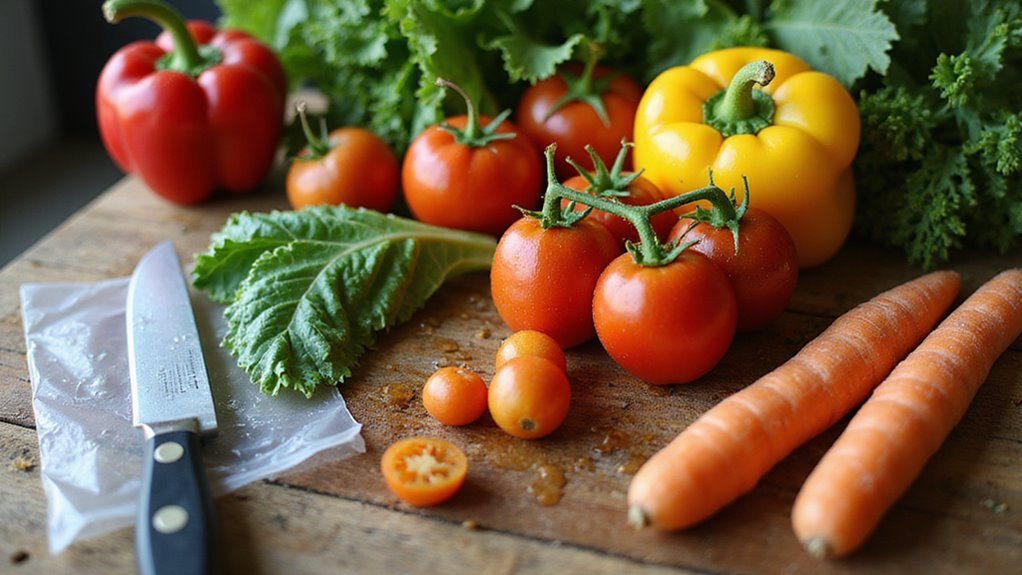
Before you even think about firing up that vacuum sealer, we’ve got to nail the prep work – it’s non-negotiable. Food safety comes first, and proper preparation guarantees your vacuum-sealed vegetables last longer.
Blanching is vital, especially for cruciferous veggies, killing bacteria and stopping ripening in its tracks. Additionally, proper blanching helps deactivate spoilage-causing enzymes, ensuring that your vegetables maintain their quality over time.
- Wash thoroughly, then chop into uniform pieces that’ll fit snugly in your bags
- Blanch for 1-4 minutes depending on vegetable type, then dry completely
- Flash freeze pieces separately on a tray before vacuum sealing – trust us, your future self will thank you for preventing those pesky ice crystals
Storage Times and Temperature Guidelines
The real magic of vacuum sealing happens in the storage phase – and you’ve got to get the temps right.
Let’s break down what you’re working with: Raw vacuum-sealed veggies last 2-4 weeks in your fridge, while cooked ones give you 1-2 weeks max. Want to go longer? Freeze those babies.
Here’s the deal: Keep those temps steady. We’re talking consistent refrigeration or freezing – no fluctuations.
Properly frozen vacuum-sealed vegetables can last up to 3 years. That’s not a typo. Just remember to blanch them first. Trust us on this one – it’s the difference between crisp beans and mushy disappointments. Additionally, vacuum sealing can prevent freezer burn, ensuring your vegetables maintain their texture and flavor over time.
Common Mistakes to Avoid When Vacuum Sealing
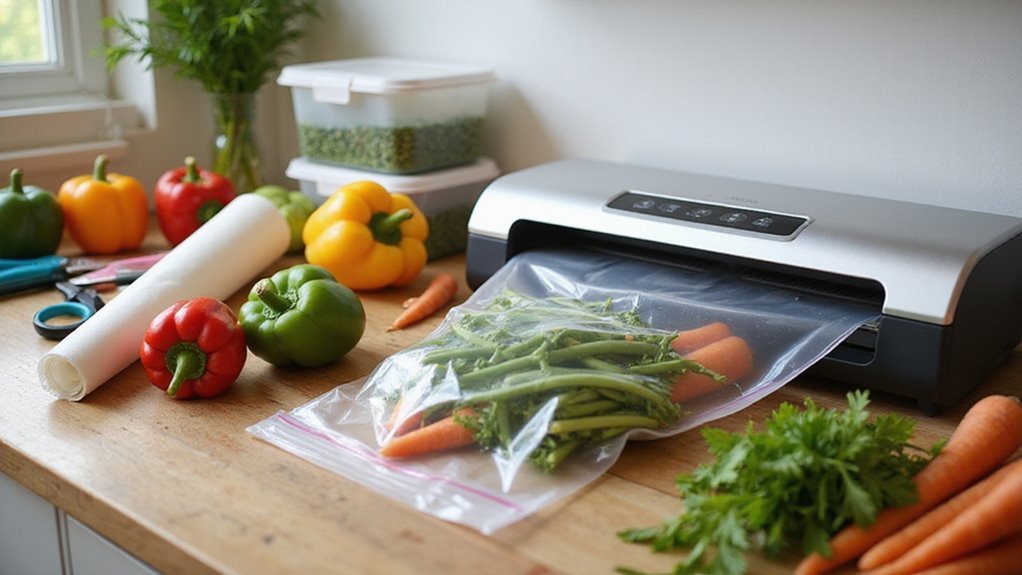
When it comes to vacuum sealing vegetables, even seasoned pros make rookie mistakes that’ll sabotage their preservation efforts. Prevent spoilage by blanching cruciferous veggies before storage – those gases will ruin your seal. Keep moisture in check by thoroughly drying produce, and don’t overstuff those bags. Quality matters: cheap bags equal failed storage.
- Picture bacteria multiplying in that poorly sealed bag of broccoli you forgot to blanch.
- Imagine opening a bag to find fuzzy green growth from trapped moisture.
- Visualize split seams on bargain bags, letting air destroy your preserved harvest.
Remember: Label everything. We’re storing food, not playing memory games. Additionally, using vacuum sealing techniques can extend shelf life significantly by removing air and preventing spoilage.
Maximizing Freshness Through Proper Sealing Techniques
Since mastering proper sealing techniques can triple your vegetables’ storage life, we’ll get straight to business. Blanching’s non-negotiable – it kills bacteria and stops ripening. We’re serious about extending freshness and preventing food wastage here.
Next up: dryness. Your fruits and vegetables must be bone-dry before vacuum sealing. No exceptions. Flash freeze them first to maintain texture, then use premium bags for an airtight seal. Proper sealing ensures each portion stays fresh, aiding in efficient meal planning.
Don’t skip labeling – it’s not just busy work. Date every package. Trust us, you’ll thank yourself later when you’re not playing “guess the storage time” with your perfectly preserved produce.
Frequently Asked Questions
Does Vacuum Sealing Vegetables Make Them Last Longer?
We’ll get better nutrient retention and flavor preservation when we vacuum seal our vegetables. They’ll last much longer for meal prep, especially in freezer storage, extending shelf life considerably.
Why Does Vacuum Sealing Make Food Last Longer?
We can extend food’s life by 2-3 years through vacuum sealing, which works by preventing microbial growth, stopping oxidation, controlling moisture levels, and maintaining nutrient retention in our stored foods.
Which Vegetables Cannot Be Vacuum Sealed?
We shouldn’t vacuum seal raw onions, garlic, mushrooms, or unblanched cruciferous vegetables due to moisture retention and gas emission spoilage factors. Alternative storage methods like paper bags work better for these non-sealable vegetables.
Is Vacuum Sealing Good for Long-Term Storage?
We can rely on vacuum sealing benefits for excellent long-term preservation. It’s one of our most effective food storage techniques, maintaining freshness up to 3 years when items are properly sealed and frozen.