Sous vide chicken paprikash combines precision cooking with traditional Hungarian flavors for an exceptional meal. By cooking chicken thighs at exactly 74°C for two hours, the meat becomes incredibly tender while retaining its moisture. The rich paprikash sauce, made with sautéed onions, paprika, and finished with sour cream, complements the perfectly cooked chicken. A quick sear after sous vide creates crispy skin, bringing restaurant-quality results to your dinner table. The technique promises consistent results that might just transform your approach to this classic dish.
Perfecting Chicken Thighs With Sous Vide Precision
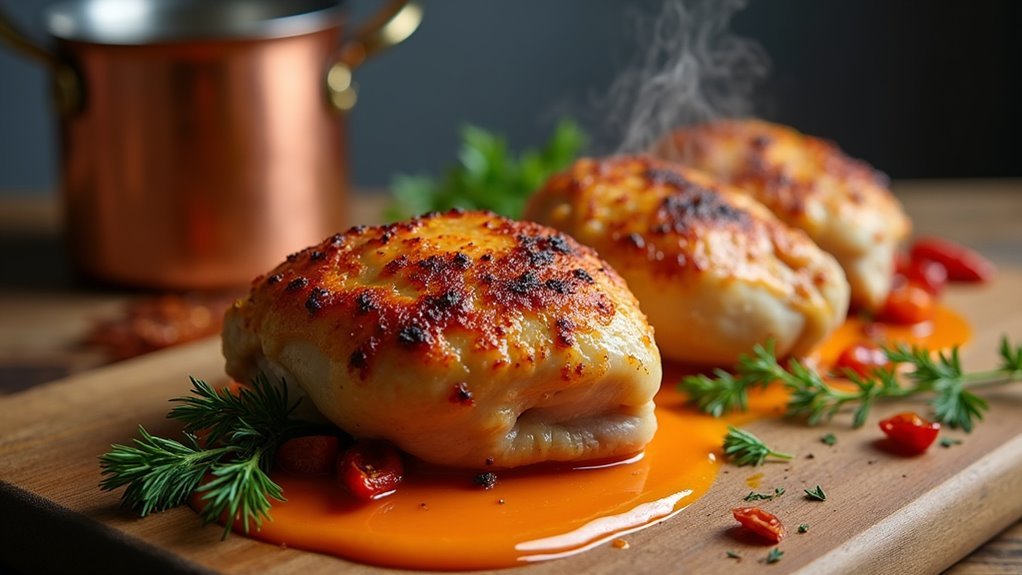
Precision is the hallmark of sous vide cooking, especially when it comes to perfecting chicken thighs that often suffer from inconsistent results with traditional methods.
The ideal 74C/165F temperature guarantees thorough cooking while preserving the meat’s natural juiciness, something that’s honestly quite difficult to achieve through conventional methods.
A reliable sous vide device like an Anova or Breville Joule maintains this precise temperature throughout the recommended two-hour cooking period.
This extended time might seem excessive to some, but it’s actually essential for breaking down the tougher connective tissues in thighs, resulting in that melt-in-your-mouth tenderness that, I think, makes this technique so worthwhile. Additionally, the sous vide method ensures optimal heat distribution, which further enhances cooking performance and consistency.
Essential Equipment for Sous Vide Chicken Paprikash
The right tools can make or break a sous vide cooking experience. For chicken paprikash, a reliable sous vide machine is essential—Anova and Breville Joule are popular choices that maintain precise temperature control at 74°C/165°F.
Precision meets tradition when the right sous vide equipment transforms classic Hungarian flavors into modern culinary masterpieces.
A 12-quart plastic container offers ample space for submerging the chicken, and adding a compatible lid helps prevent evaporation during the two-hour cooking process.
I think this setup creates the perfect environment for tender, juicy results. Chamber vacuum sealers can enhance your sous vide experience by providing an airtight seal that retains flavor and texture during cooking.
For that final touch of perfection, a quality cast iron skillet—perhaps a Lodge—is ideal for achieving that crispy sear and preparing the flavorful paprikash sauce while your chicken cooks.
Step-by-Step Sous Vide Chicken Preparation
Preparing chicken for sous vide cooking begins with setting up your immersion circulator to the precise temperature of 74°C/165°F. This temperature guarantees chicken thighs are fully cooked to the bone while maintaining their natural juiciness. Vacuum sealing the chicken prior to cooking creates an airtight environment, essential for extended food shelf life and even cooking.
After patting the chicken dry, perhaps season it lightly with salt. Place thighs in a freezer bag, carefully removing as much air as possible before sealing. I think this step is vital for even cooking.
| Stage | Duration | Key Action |
|---|---|---|
| Setup | 5 min | Fill container, set temp |
| Preparation | 10 min | Season chicken, bag it |
| Cooking | 2 hours | Maintain water level |
| Finishing | 3-4 min | Sear for crispy skin |
Creating the Authentic Paprikash Sauce
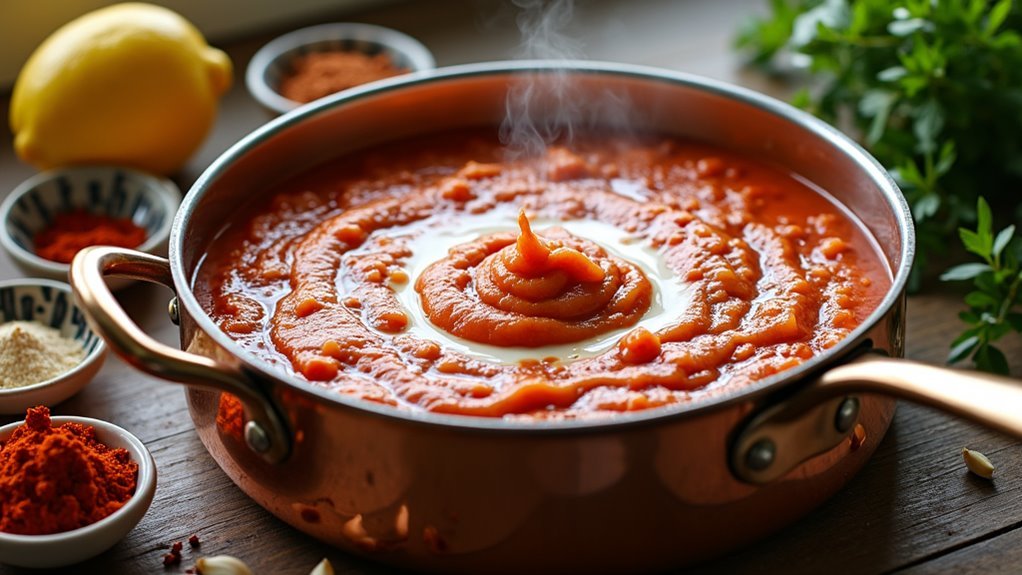
While the chicken cooks in its precisely controlled bath, attention turns to crafting a rich, flavorful paprikash sauce that honors Hungarian culinary traditions.
This vital element should begin about 30 minutes before the chicken finishes cooking.
The process starts by gently sautéing onions in a blend of oil and butter until they become translucent and soft.
The humble onion transforms through gentle heat, its sharp edges mellowing into sweet translucence in a golden bath of butter and oil.
Garlic is added just until fragrant—perhaps 30 seconds or so.
The signature step involves combining paprika with flour and butter, cooking until the raw flour taste disappears.
Tomatoes and broth then join the mix, simmering until slightly thickened.
Finally, sour cream is folded in, creating that distinctive creamy texture that makes paprikash so beloved. Vacuum sealing food can be a great way to preserve ingredients for making your paprikash.
Frequently Asked Questions
Can I Substitute Boneless Chicken Breasts for Thighs?
Substituting boneless chicken breasts for thighs is possible, though cooking time should be reduced to 1-1.5 hours as breasts cook faster and can dry out more easily than thighs.
How Long Will Cooked Chicken Paprikash Last in the Refrigerator?
Cooked chicken paprikash can be safely stored in the refrigerator for 3-4 days. For longer preservation, it can be frozen for up to 3 months in airtight containers.
What Wine Pairs Best With Chicken Paprikash?
Hungarian paprikash pairs well with dry white wines like Furmint or Pinot Grigio. The acidity cuts through the rich sauce, while a light-bodied red like Zweigelt complements the paprika flavors.
Can I Freeze the Paprikash Sauce Separately?
Like a winter coat preserves warmth, the paprikash sauce freezes well separately. It can be stored in an airtight container for up to three months, then thawed and reheated when needed.
Is There a Dairy-Free Alternative for the Sour Cream?
Yes, coconut cream or cashew cream can substitute sour cream in the paprikash sauce. These alternatives maintain creaminess while keeping the dish dairy-free for those with restrictions.