To master sous vide pork tenderloin, you’ll need to cook it at 140°F for about 2 hours, which creates perfectly pink, juicy meat every time. Remove the silver skin beforehand, then seal it airtight using a vacuum sealer or water displacement method. After cooking, thoroughly dry the tenderloin and quickly sear it for 1-2 minutes per side on high heat. This foolproof technique gives you incredible flexibility without risking overcooking. The right equipment makes all the difference.
The Art of Sous Vide: Understanding the Technique
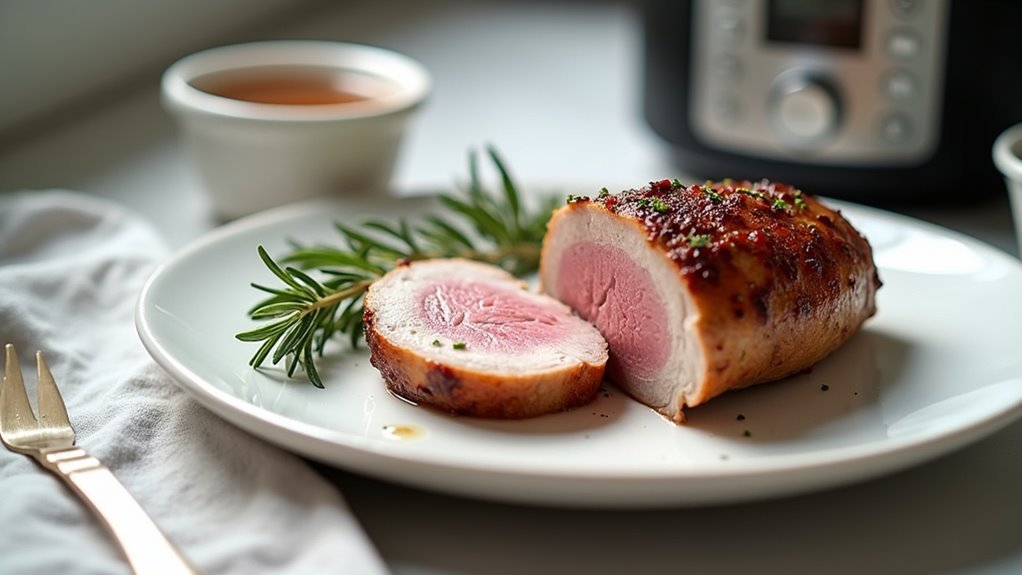
While many cooking methods rely on guesswork, sous vide stands apart as a technique that gives you unprecedented control over your results. By cooking food sealed in a bag, immersed in precisely heated water, you’re fundamentally eliminating the variables that often lead to overcooked or dried-out meat.
I think what makes sous vide so revolutionary for home cooks is that timing becomes flexible. Your pork tenderloin won’t overcook if left for an extra 30 minutes – a game-changer when you’re juggling multiple dishes or, perhaps, entertaining guests.
It’s cooking with confidence, not anxiety. However, it’s important to consider the potential environmental impact of sous vide, including the water consumption and plastic waste associated with the process.
Preparing Your Pork Tenderloin for Sous Vide Success
Three key steps stand out when preparing pork tenderloin for sous vide cooking, and I think they make all the difference between a mediocre meal and something truly spectacular.
First, you’ve got to remove that stubborn silver skin—it never softens and ruins the texture. Just slide a knife underneath and pull it away with a paper towel for grip.
Next, proper packaging matters. Whether you’re using a vacuum sealer (the Anova works great) or the water displacement method, you need that airtight seal to prevent floating. Utilizing a chamber vacuum sealer is ideal for achieving leak-free sealing, especially with juicy meats.
Finally, dry the meat thoroughly before searing. It’s perhaps the most overlooked step, but vital for that perfect golden crust.
Temperature and Timing: The Perfect Sous Vide Formula
Temperature and timing represent the heart of sous vide cooking—they’re what make this method so revolutionary for pork tenderloin.
The perfect marriage of time and temperature transforms ordinary pork into extraordinary dining through sous vide’s revolutionary precision.
For perfectly pink, juicy tenderloin, I’d recommend 140°F (60°C) for about 2 hours. This hits that sweet spot between medium-rare and medium that most people love.
If you prefer it a bit more done, perhaps try 145°F (62.5°C).
The beauty here is precision—unlike traditional methods where you’re frantically checking doneness, sous vide gives you a wider window.
Your pork won’t overcook even if you leave it an extra 30 minutes while finishing other dishes.
Finishing Touches: Searing Methods for Maximum Flavor
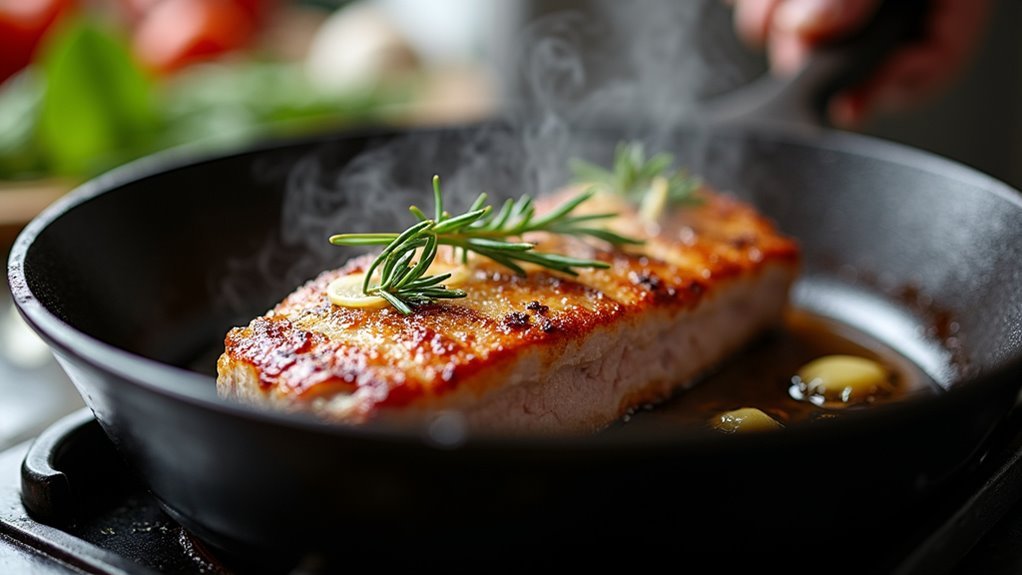
The single most important step after sous vide cooking is properly searing your pork tenderloin. This final touch transforms your perfectly cooked meat into a culinary masterpiece with that appealing golden-brown crust that everyone craves.
First, pat your tenderloin completely dry with paper towels—this is essential, I think. Moisture is the enemy of a good sear! Season generously with salt and perhaps a touch of fresh pepper.
For the actual searing, you’ve got options. A screaming-hot cast iron skillet works wonderfully, but you could also use a grill or even a kitchen torch.
Just remember: high heat, quick action—about 1-2 minutes per side is all you need. Additionally, a quick sear after sous vide cooking enhances the texture of the meat while maintaining its tenderness and flavor.
Essential Equipment for Sous Vide Cooking
Successful sous vide cooking begins with having the right tools in your kitchen arsenal. I think once you try cooking pork tenderloin this way, you’ll wonder how you ever managed without these essentials.
While you don’t need everything fancy right away, a reliable immersion circulator is non-negotiable for maintaining that perfect temperature. Additionally, a vacuum food sealer is essential for extending meat freshness by removing oxygen from packaging.
| Equipment | Purpose | Investment Level |
|---|---|---|
| Immersion Circulator | Temperature control | $75-300 |
| Vacuum Sealer | Air removal | $50-200 |
| Container | Water bath | $15-50 |
| Cast Iron Skillet | Searing | $20-150 |
| Digital Thermometer | Verification | $15-100 |
Perhaps start with just the basics and expand your collection as you fall in love with sous vide cooking.
Serving Suggestions and Accompanying Dishes
After mastering the cooking process with your equipment, you’ll want to contemplate what to serve alongside your perfectly cooked pork tenderloin.
I find that simple, fresh sides often work best – perhaps a light arugula salad with lemon vinaigrette or roasted seasonal vegetables that won’t overpower your star protein.
For starch options, creamy mashed potatoes complement the tenderloin beautifully, though wild rice or crusty bread work well too.
A fruit-based sauce, like apple compote or that peach mustard some readers mentioned, adds brightness and cuts through the richness of the pork.
Whatever you choose, keep it balanced – your tenderloin deserves the spotlight. Additionally, consider vacuum sealing any leftover portions to extend the shelf life of your meal, ensuring you can enjoy it later without compromising quality.
Frequently Asked Questions
Can I Reuse the Sous Vide Water for Multiple Cooking Sessions?
Yes, you can reuse sous vide water for multiple cooking sessions. Just make certain it’s clean and you’ve maintained hygiene between sessions to prevent cross-contamination and bacteria growth.
How Do I Store Leftovers After Sous Vide Cooking?
Cool as a cucumber, you’ll want to store your sous vide leftovers in airtight containers in the refrigerator for up to 3-4 days. You can also freeze them for longer storage.
Is It Safe to Sous Vide Frozen Pork Tenderloin?
Yes, you can safely sous vide frozen pork tenderloin. Simply add 30-60 minutes to your cooking time to guarantee it fully thaws and cooks at your desired temperature.
Can I Add Vegetables to the Same Sous Vide Bag?
While you might worry about flavor mixing, you can add vegetables to the same sous vide bag as pork tenderloin. Just choose complementary flavors that cook well at the same temperature and time.
How Does Altitude Affect Sous Vide Cooking Temperatures?
Altitude doesn’t affect your sous vide cooking temperatures. Unlike traditional methods, sous vide maintains precise water temperature regardless of elevation, so you’ll use the same settings everywhere you cook.