Sous vide transforms flap steak into something special by breaking down tough fibers while preserving its rich, beefy flavor. You’ll want to cook at 129°F for about 2 hours for medium-rare perfection, then finish with a quick sear in a screaming-hot cast iron skillet. Don’t forget to pat the meat dry before searing – it’s perhaps the most essential step for getting that beautiful crust. The technique is surprisingly forgiving, even for beginners looking to elevate their steak game.
What Makes Flap Steak Ideal for Sous Vide Cooking
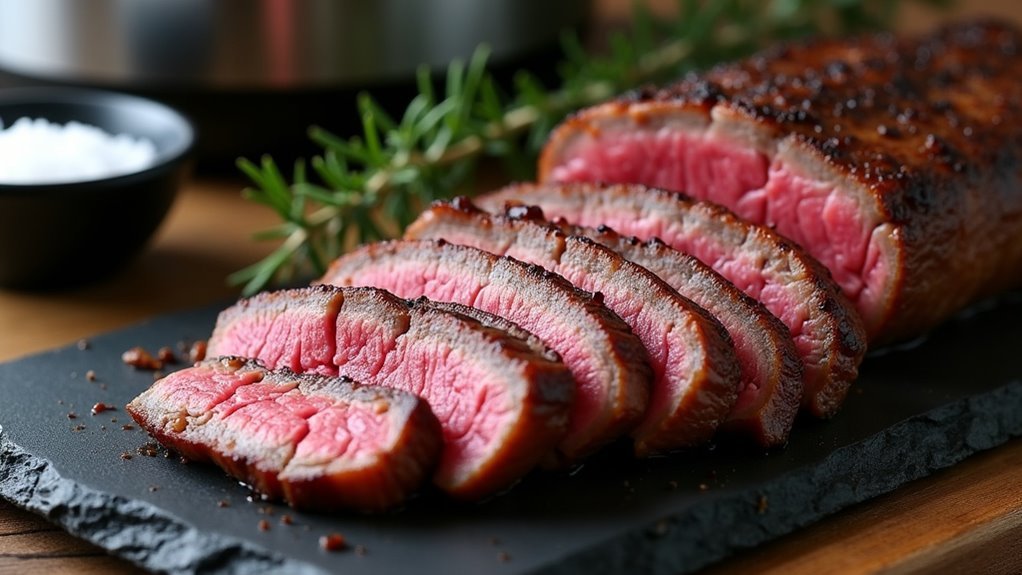
While many cuts of beef can be cooked sous vide, flap steak might just be the perfect candidate for this precision cooking method. It’s that magical combination of being affordable yet packed with bold, beefy flavor that makes it special.
What I love about flap steak is its unique structure – those long, defined muscle fibers respond incredibly well to sous vide’s gentle approach.
You’re basically getting the best of both worlds: the method breaks down the tougher connective tissues, but doesn’t sacrifice flavor like you might with other techniques. Additionally, proper storage methods can further enhance the quality of your meat, ensuring it stays fresh and flavorful for your sous vide recipe.
Sous vide magic: tender transformation without flavor sacrifice—beef alchemy at its most approachable.
Perhaps most importantly, it’s forgiving. Even if you’re new to sous vide, you’ll likely get impressive results.
Preparing and Packaging Your Flap Steak
The proper packaging of your flap steak is honestly the unsung hero of sous vide cooking.
It’s perhaps the most overlooked step, yet it makes all the difference in your results.
I think most home cooks don’t realize that air is the enemy of even heat transfer.
- Pat your steak dry and season generously with salt and pepper
- Choose between vacuum sealing (my preference) or the water displacement method
- If using ziplock bags, submerge slowly in water to push air out
- Double-check all seals before cooking—trust me, leaks ruin everything. Additionally, ensure you use food-safe vacuum bags to avoid leaks and damage during the cooking process.
Time and Temperature Guide for Perfectly Cooked Flap Steak
Setting the perfect temperature for sous vide flap steak might seem intimidating, but I’ve found that 54°C/129°F consistently delivers that ideal medium-rare result most beef lovers crave. The magic happens when you give it enough time – around 2 hours is perfect for breaking down those tough connective tissues without sacrificing texture. I think what makes sous vide so reliable is the consistency. Using an Anova or Joule will maintain that exact temperature throughout cooking. Perhaps experiment if you prefer your steak a bit rarer or more done, but this sweet spot works for most people. Additionally, precision temperature control ensures that you achieve evenly cooked results every time.
Finishing Techniques: Creating the Perfect Sear
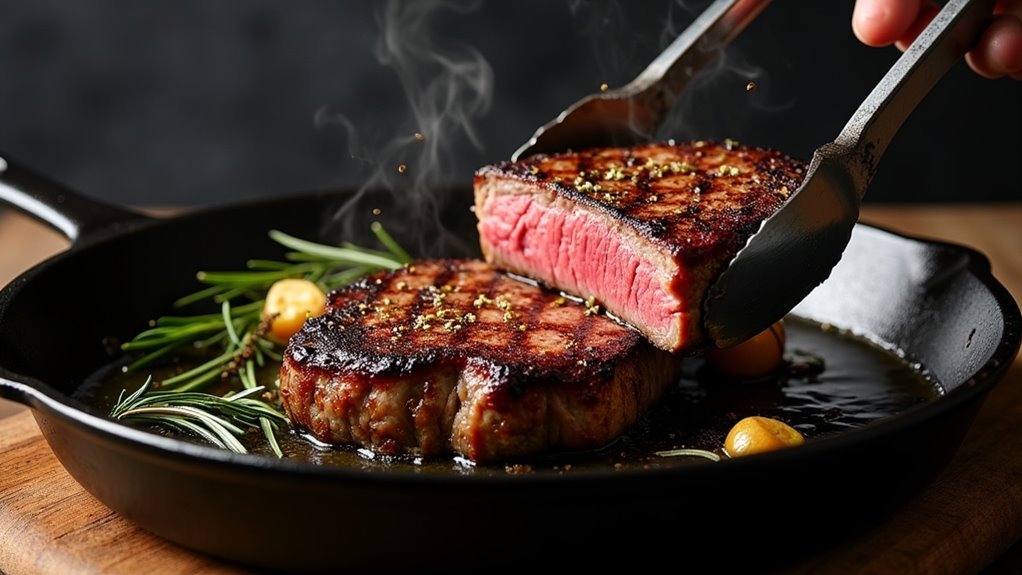
After achieving that perfect internal temperature, you’ll need to focus on creating a mouth-watering crust that completes your flap steak.
The searing process isn’t just about appearance—it’s where those rich, complex flavors develop through the Maillard reaction.
- Pat your steak completely dry with paper towels (moisture is the enemy of a good crust!)
- Season generously with salt and pepper just before searing
- Use extremely high heat—a screaming hot cast iron skillet works wonders
- Limit searing to just 1-2 minutes per side to prevent overcooking your perfectly sous vide meat.
Additionally, vacuum sealing your steak before marinating can enhance flavor absorption, making the most of your vacuum sealing benefits.
Frequently Asked Questions
Can I Reuse Sous Vide Water for Multiple Cooking Sessions?
You can reuse sous vide water for multiple sessions if it remains clean. However, you’ll need to replace it if it becomes cloudy, smelly, or contaminated.
How Does Altitude Affect Sous Vide Cooking Temperatures?
In Denver’s higher altitude, water boils at lower temperatures. For sous vide, you’ll need minimal adjustments since you’re using precise temperature control, not relying on boiling points like traditional cooking methods.
Will Marinades Work Differently With Sous Vide Cooking Methods?
Yes, marinades work differently with sous vide. You’ll get flavor infusion but less tenderizing since enzymes deactivate at cooking temperatures. Apply marinades before bagging for best results.
Can I Refrigerate Sous Vide Flap Steak Before Searing?
Like a hibernating bear, your sous vide flap steak can rest in the fridge for up to 3-4 days before searing. Just chill it rapidly in an ice bath first, then reheat briefly before searing.
Does the Thickness of Flap Steak Affect Sous Vide Cooking Time?
Yes, thickness affects cooking time. While your 2-hour standard guarantees tender results, very thick cuts (over 2 inches) might need 30-60 minutes more for heat to fully penetrate the meat.