Sous vide salmon is, I think, the foolproof way to release incredible flavors while maintaining that perfect texture every time. You’ll get consistently moist, tender results by cooking at precise temperatures—115°F for silky, 125°F for medium-rare, or 131°F for firmer texture. Start with quality salmon, brine it briefly, and finish with a quick sear for that amazing contrast between crispy exterior and buttery interior. The technique’s simplicity might surprise you.
The Science Behind Sous Vide Salmon
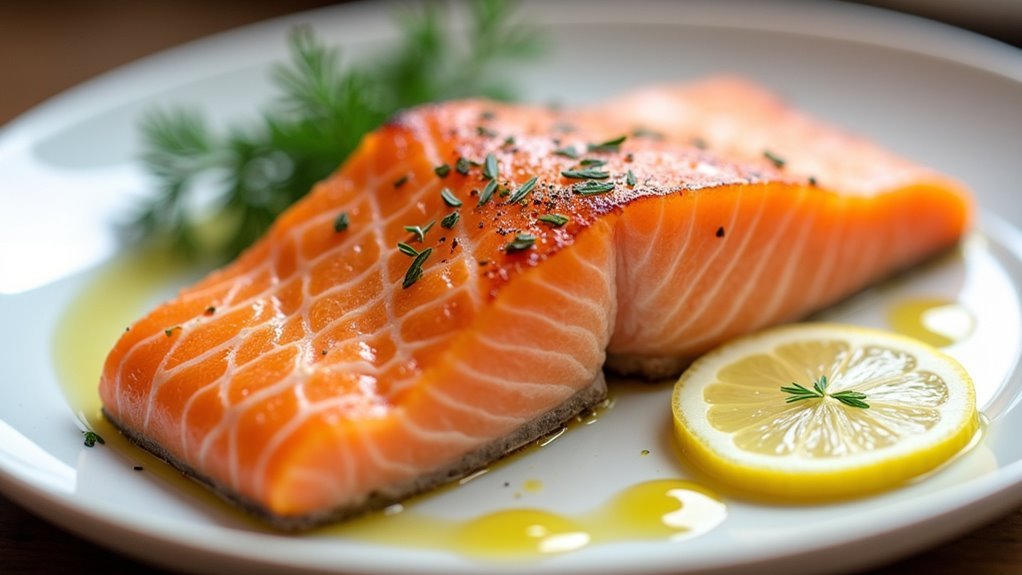
Temperature control is the magic behind sous vide salmon‘s incredible texture.
When you cook salmon traditionally, you’re constantly battling that narrow window between undercooked and dry. Sous vide eliminates this problem entirely.
At precisely 115°F, your salmon proteins begin denaturing slowly and evenly.
I think this gentle process is why the fish retains its moisture so beautifully. The sealed environment prevents any flavor from escaping too.
Perhaps what’s most fascinating is how different temperatures create entirely different experiences.
At 125°F you’ll get a more traditional texture, while lower temps offer that silky, almost custard-like quality that’s impossible to achieve otherwise. Additionally, sous vide cooking ensures that your fish remains preserved nutrients, enhancing the overall flavor profile while promoting healthier eating habits.
Selecting Premium Salmon For Exceptional Results
Why does quality matter so much when selecting salmon for sous vide? Simply put, your results will only be as good as the fish you start with.
Wild-caught, sustainably-sourced salmon delivers superior flavor and texture while avoiding antibiotics often found in farmed options.
I think the decision between farmed and wild makes a real difference in both taste and environmental impact.
When you choose wild salmon, you’re supporting healthier ecosystems and getting cleaner protein.
Look for bright, firm flesh with minimal “fishy” smell.
Perhaps spend a little more for quality – trust me, you’ll notice the difference when that first perfectly cooked bite melts in your mouth.
Essential Equipment For Sous Vide Success
Now that you’ve selected the perfect salmon, let’s talk about the gear you’ll need to create restaurant-quality results at home.
I think having the right equipment makes all the difference between good and exceptional sous vide salmon.
For best results, you’ll want these essentials:
- Reliable sous vide immersion circulator – Maintains precise temperature control, perhaps the most vital element for that perfect texture.
- Quality vacuum sealer – Guarantees proper air removal and prevents bags from floating, as vacuum sealing can enhance the flavors and textures of your food significantly.
- Heavy-bottomed skillet – For that final sear that elevates your dish with crispy texture and enhanced flavor.
Don’t worry about fancy gadgets beyond these basics.
Mastering The Brine And Packaging Process
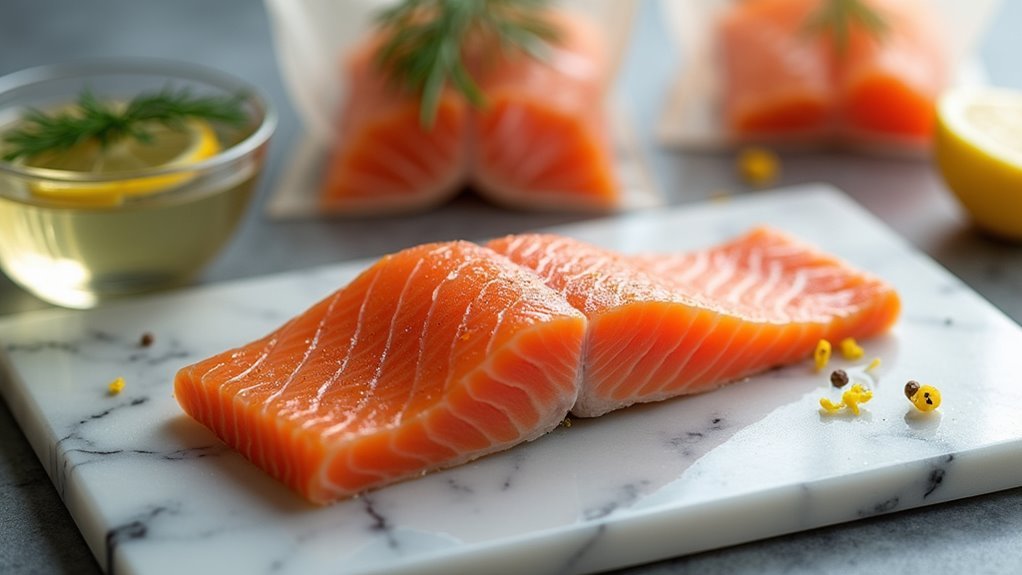
Before diving into the cooking process itself, you’ll want to master the brining technique that transforms ordinary salmon into something truly special. This simple step makes a world of difference in flavor development.
Create a solution using 1 tablespoon salt per cup of cold water. Submerge your salmon completely for about 30 minutes, then rinse thoroughly. I think this quick brine works wonders for texture too.
For packaging, vacuum sealing is ideal, but don’t worry if you lack equipment. The water displacement method works nearly as well – just submerge your ziplock bag slowly, letting water push air out before sealing. Additionally, vacuum sealing retains flavor and freshness by preventing air and moisture exposure to the salmon.
Perhaps experiment with both methods to find your preference.
Temperature Guide For Your Perfect Texture
Three key temperature ranges define your sous vide salmon experience, each delivering distinctly different textures and eating qualities.
Finding your perfect temperature is a bit of trial and error, but I think most people fall into clear preferences once they’ve experimented.
Most home chefs gravitate toward these ranges:
- 115°F (46°C) – Supremely tender, almost sashimi-like texture with vibrant color
- 125°F (52°C) – Medium-rare with silky, moist flakes that separate easily
- 131°F (55°C) – Firmer, traditional texture that perhaps feels more familiar to those used to conventional cooking. It is essential to understand that sous vide cooking offers precise temperature control, which enhances the overall experience of enjoying perfectly cooked fish.
Finishing Techniques To Elevate Presentation
After your salmon emerges from its warm bath, the real artistry begins with how you choose to finish the dish. That perfectly cooked fish deserves a presentation that’ll make your guests swoon.
For the most impressive results, pat your salmon completely dry before searing.
I think a smoking hot cast iron pan (not those newer Lodge pans, honestly) gives the best crust in just 1-2 minutes per side.
Or perhaps try a kitchen torch for more control?
Don’t forget a final sprinkle of flaky sea salt and maybe a squeeze of lemon.
The contrast between the crispy exterior and that buttery interior is, well, simply magical. The technique of sous vide cooking ensures precise temperature control that results in a consistently tender and flavorful salmon every time.
Frequently Asked Questions
Can I Reuse the Sous Vide Water Bath for Multiple Meals?
Yes, you can reuse your sous vide water bath for multiple meals. You’ll just need to guarantee proper temperature adjustment between uses and periodic water replacement to maintain cleanliness.
How Long Does Sous Vide Salmon Stay Fresh in Refrigerator After Cooking?
Like delicate flowers wilting with time, your sous vide salmon stays fresh for 3-4 days in the refrigerator. Store it properly in an airtight container to maintain its texture and flavor throughout this period.
Is Sous Vide Salmon Safe During Pregnancy?
Yes, sous vide salmon is safe during pregnancy when properly cooked to 145°F (63°C). You’ll need to guarantee higher temperatures than typical sous vide recipes to eliminate potential pathogens completely.
Can I Cook Vegetables Simultaneously With Salmon?
Perfectly pairing produce with protein is possible! You can cook vegetables alongside your salmon sous vide, but you’ll need separate bags as they require different temperatures for ideal results.
What Wine Pairings Complement Sous Vide Salmon Best?
You’ll enjoy crisp whites like Sauvignon Blanc or unoaked Chardonnay with your sous vide salmon. For richer preparations, try Pinot Noir or rosé champagne to complement the fish’s delicate flavors.