Sous vide poached eggs eliminate all the usual frustrations of traditional poaching. Simply set your immersion circulator to 75°C, cook whole eggs for 14 minutes, then immediately transfer to an ice bath for at least 5 minutes. You’ll get perfectly custard-like yolks and properly set whites every time—no vinegar or swirling water required. I think it’s particularly fantastic for batch cooking when hosting brunch. The technique might seem precise, but the results are worth every careful step.
Why Sous Vide Produces Superior Poached Eggs

Why have so many home cooks struggled with traditional poached eggs for decades? I think it’s because conventional methods involve that tricky dance of vinegar, swirling water, and perfect timing.
You’re fundamentally gambling with breakfast.
Sous vide eliminates this frustration completely. Your eggs cook at a precise temperature—no guesswork involved.
Perhaps what’s most satisfying is the consistency; once you’ve found your perfect texture (that custard-like 75°C works beautifully for most), you’ll get identical results every time.
No more hovering anxiously over a pot or fishing out stringy egg whites. Just set your circulator and walk away.
It’s cooking with certainty rather than hope. Sous vide cooking ensures that your eggs are perfectly cooked every time, providing peace of mind for breakfast success.
Equipment and Setup for Sous Vide Egg Perfection
Although you don’t need much specialized equipment to make the perfect sous vide poached eggs, having the right setup will make all the difference in your results.
Equipment isn’t everything, but thoughtful setup transforms ordinary eggs into sous vide perfection.
At minimum, you’ll need a reliable sous vide immersion circulator that can maintain a steady 75°C temperature.
I think a deep pot or container works best – something that allows enough water coverage without splashing. You’ll also want a slotted spoon for handling the eggs and a bowl of ice water ready for shocking them afterward.
Perhaps a kitchen timer too, since timing is critical.
Additionally, ensuring that you understand the importance of food preservation safety will help you create a safe and enjoyable cooking experience.
Don’t overthink this – the beauty of sous vide is its simplicity!
Step-by-Step Process: 75°C for 14 Minutes
The perfect sous vide poached egg comes down to these three magic numbers: 75°C for 14 minutes. I’ve found this combination delivers that dreamy custard-like yolk that’s just set around the edges but still flows beautifully when cut into.
First, fill your water bath and set your sous vide machine to exactly 75°C. Once it’s heated, gently lower your eggs in with a slotted spoon.
Set a timer – this isn’t something you want to guess! After 14 minutes, transfer them immediately to an ice bath for about 5 minutes. This step’s essential for firming up those whites, as it helps enhance food safety by quickly cooling the eggs and preventing overcooking.
Mastering the Ice Bath Technique
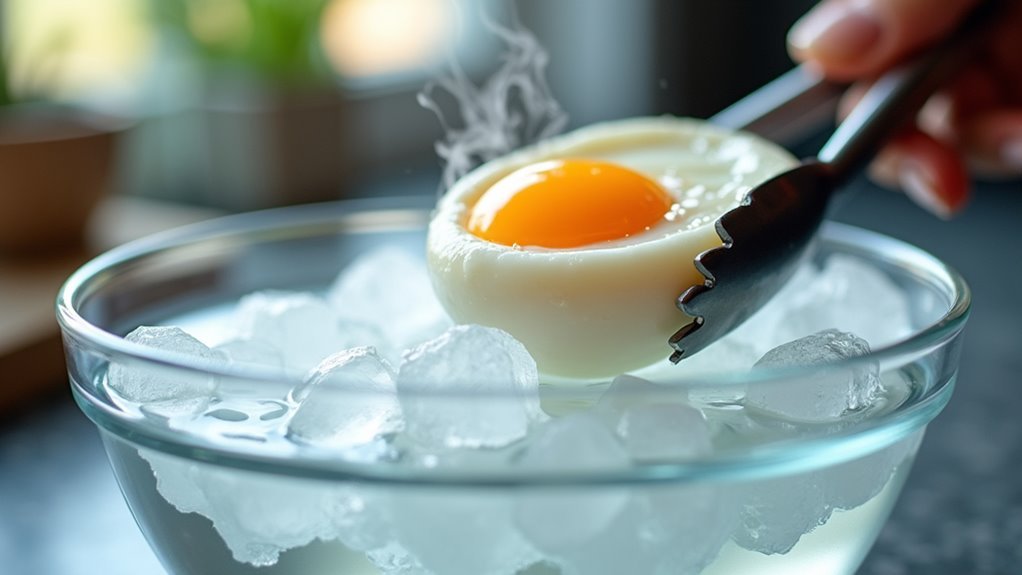
Many sous vide enthusiasts overlook the ice bath step, but it’s absolutely crucial for achieving those restaurant-quality poached eggs you’re aiming for. After your eggs finish their 14-minute bath at 75°C, that shock of cold water actually sets the whites while preserving that perfect custard-like yolk texture. Additionally, using the ice bath can help mitigate food safety concerns by halting the cooking process and reducing the risk of bacterial growth.
| Ice Bath Tips | Why It Matters |
|---|---|
| Use plenty of ice | Stops cooking immediately |
| 5 minute minimum | Firms up whites properly |
| Full submersion | Guarantees even cooling |
| Gentle handling | Prevents yolk ruptures |
I’ve found that skipping this step often leads to disappointingly runny whites. Remember, the ice bath isn’t just cooling—it’s actually completing the cooking process in a way that gives you that professional finish.
Delicious Ways to Serve Your Sous Vide Poached Eggs
Once you’ve mastered the perfect sous vide poached egg, your culinary world truly opens up with endless serving possibilities.
Unlock a universe of culinary creativity with the perfect sous vide egg as your versatile kitchen companion.
The classic avocado toast becomes extraordinary with that custardy yolk melting into creamy avocado. I think it’s worth trying!
For something more adventurous, perhaps add your eggs to a spicy shakshuka or atop a fresh salad for protein.
Eggs Benedict is transformed when you use sous vide eggs – they’re consistently perfect every time.
My favorite weekend option? A simple veggie bowl with quinoa, roasted vegetables, and a poached egg.
The yolk creates an instant sauce that brings everything together beautifully. With sous vide cooking, precision cooking enables you to achieve the ideal doneness every time!
Troubleshooting Common Challenges When Batch Cooking
While batch cooking sous vide eggs sounds incredibly convenient, several challenges might arise when you’re preparing multiple eggs at once. The most common issue is temperature drop – when you add many cold eggs to your water bath, the temperature can plummet temporarily, affecting cooking times.
I think fresh eggs often present peeling difficulties too. You might find that extending your ice bath time helps firm up those whites, perhaps to 7-8 minutes instead of the standard 5. Remember that not all eggs cook identically – slight size differences can impact results. If you’re cooking more than 20 eggs, you may need to add an extra minute to your timing. Additionally, utilizing food storage solutions like FoodSavers vacuum sealing can help keep your eggs fresher for longer, ensuring optimal flavor and quality.
Frequently Asked Questions
Can I Store Sous Vide Poached Eggs for Later Use?
Yes, you can store sous vide poached eggs in cold water for up to 5 days in the refrigerator. Just reheat them under hot water or in your sous vide bath when needed.
How Does Egg Size Affect Cooking Time and Temperature?
Imagine your XL eggs turning out overcooked while medium ones are perfect. Larger eggs need 1-2 minutes more cooking time at the same temperature, as their greater volume requires longer heat penetration. You’ll notice this difference immediately.
Are Pasteurized Eggs Safer When Cooked Sous Vide?
While sous vide cooking can pasteurize eggs during the process, using already pasteurized eggs offers an additional safety layer if you’re concerned about foodborne illness, especially for vulnerable individuals.
Can I Add Seasonings or Flavors During the Sous Vide Process?
You can’t add seasonings directly during sous vide egg cooking since they’re in the shell, but you can season afterwards when serving your perfectly poached eggs.
Do Different Chicken Breeds Produce Eggs That Cook Differently Sous Vide?
Yes, different chicken breeds can produce eggs with varying shell thickness, white-to-yolk ratios and protein composition that might affect your sous vide results. You’ll need to adjust timing slightly based on your eggs.