I’ve been using vacuum sealer bags for years, and I’ll be honest—I was completely lost when I first started. You know how it goes, standing in the aisle overwhelmed by options. Should you go with textured bags? Chamber-compatible? Reusable? Wait, what’s mil thickness again? I’ve made pretty much every mistake possible (including that one time I tried to sous vide in the wrong type, what a mess). Let me save you from similar kitchen disasters.
Types of Vacuum Sealer Bags and Their Applications
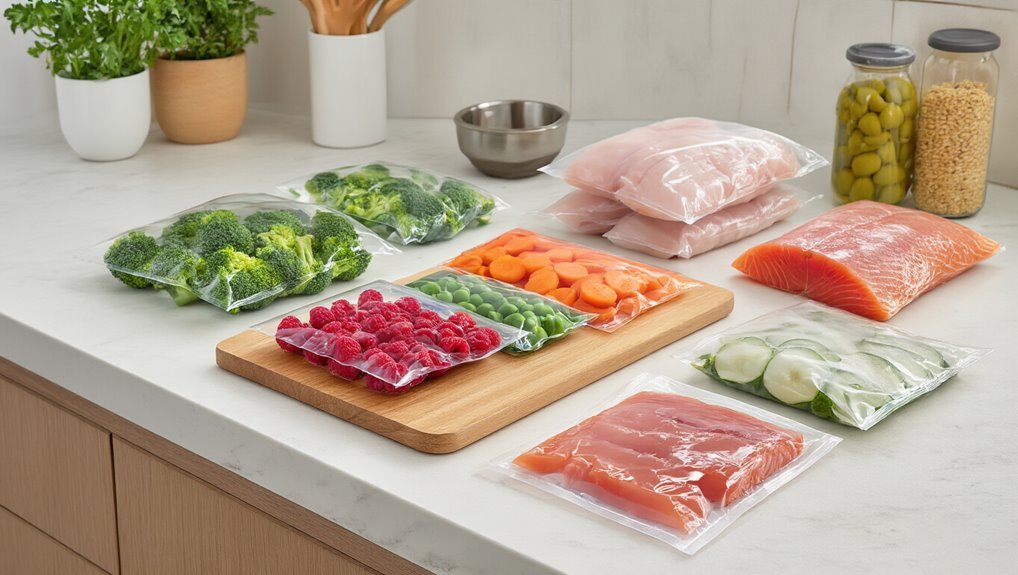
No matter which type you choose, make sure they’re food-safe and BPA-free. Your food deserves nothing less! Additionally, universal bags offer versatility and cost savings for many users.
Material Quality and Composition for Optimal Preservation
I’ve learned that multi-layer construction in vacuum sealer bags isn’t just fancy marketing—it’s what actually protects your food from air and moisture for months.
Vacuum sealing also supports extended shelf life by inhibiting the growth of bacteria, molds, and yeast.
When you’re shopping for these bags, you’ll want to check for BPA-free materials since nobody wants chemicals leaching into their perfectly preserved steaks or berries.
The thickness of your vacuum bags matters too; I always recommend at least 4-mil thickness for anything you plan to freeze long-term or cook sous vide.
Multi-Layer Construction Benefits
Understanding the multi-layer construction of vacuum sealer bags is essential if you’re serious about food preservation.
I’ve found that the layered durability of these bags comes from their clever combination of polyethylene, nylon, and polyester—each layer serving a specific purpose.
The outer polyethylene provides flexibility and toughness, which, trust me, you’ll appreciate when handling frozen items that might otherwise puncture lesser bags.
What I think really makes these multi-layer bags special is their barrier effectiveness. The inner layers—typically nylon or polyester—create an impressive shield against oxygen and moisture infiltration.
In my experience, this layered approach delivers airtight seals that preserve flavor and freshness way longer than single-layer alternatives.
You might pay more upfront, but the extended shelf life makes them worth every penny.
BPA-Free Considerations
Beyond the layered structure, the chemical composition of your vacuum sealer bags matters tremendously for food safety. I always recommend choosing BPA-free options, which eliminate those hormone-disrupting chemicals that nobody wants leaching into their food.
What’s great is that these safer bags don’t sacrifice performance—they’re just as durable and effective as traditional options.
When selecting bags, you’ll find various color options available, which isn’t just about aesthetics. Different colors can help you organize your freezer contents at a glance.
Some manufacturers even offer branding opportunities on their bags, which is perfect if you’re a small business owner packaging products.
In my experience, the peace of mind from knowing my stored foods aren’t being contaminated by harmful chemicals is well worth choosing high-quality, FDA-approved materials.
Thickness Impacts Performance
Three key factors determine how well your vacuum sealer bags perform, but thickness might be the most essential one.
In my experience, thicker bags (4-5 mil) provide superior puncture resistance, which is critical for proper vacuum seal efficiency when storing sharp items like bones or heavy foods.
I’ve found that multi-layer bags with polyethylene, nylon, and sometimes aluminum foil create exceptional oxygen barriers.
These materials aren’t just thicker—they’re smarter, with textured surfaces that actually improve air extraction during sealing.
For effective bag storage guidelines, I’d recommend matching thickness to your preservation needs.
Thinner bags work for short-term storage, but if you’re planning months of freezer time or sous vide cooking, those thicker, multi-layered options are worth the extra cost.
Understanding Bag Thickness and Durability Ratings
When I first started vacuum sealing, I didn’t pay attention to mil ratings – big mistake!
The thickness of your vacuum bags (measured in mil) directly impacts how well they’ll protect your food. Standard options range from 3-5 mil for everyday use.
I’ve found that heat resistance is equally important, especially for sous vide cooking.
Bags need to maintain their seal integrity at higher temperatures without leaching chemicals into your carefully prepared meals.
Regularly updating your inventory helps implement a first-in, first-out system to minimize waste.
Mil Ratings Explained
If you’ve ever felt confused while shopping for vacuum sealer bags, you’re not alone – those mil ratings can seem like a mysterious code at first.
I’ve found that understanding these numbers completely changes your vacuum sealing techniques.
Think of mil ratings as a measure of thickness and strength. Here’s what you need to know:
- 2 mil bags: The lightweights – good for refrigeration but tear easier (like using tissue paper when you needed notebook paper)
- 3-4 mil bags: The sweet spot for most home bag sealing methods and freezer storage
- 5+ mil bags: The heavy-duty champions for sous vide cooking or sharp-edged foods
- Higher mil = better protection but costs more
I personally think 4 mil bags offer the best balance for everyday use, giving you durability without breaking the bank.
Heat Resistance Factors
Although bag thickness matters for everyday storage, heat resistance becomes essential when you’re diving into cooking methods like sous vide.
I’ve found that 4-mil or 5-mil bags stand up much better to prolonged heat exposure—they won’t melt or deform when the temperature climbs above 180°F.
When selecting bags, don’t just focus on vacuum bag aesthetics (though I’ll admit, I’m drawn to clear bags that showcase my food nicely). Instead, pay attention to the materials.
Many eco-friendly materials now offer impressive heat resistance while being better for the planet. The best bags often use co-extruded films or special linings that prevent punctures during cooking.
In my experience, always check if bags are specifically rated for rethermalization or sous vide—these can typically withstand temperatures up to boiling (212°F).
Size Selection Based on Storage Needs
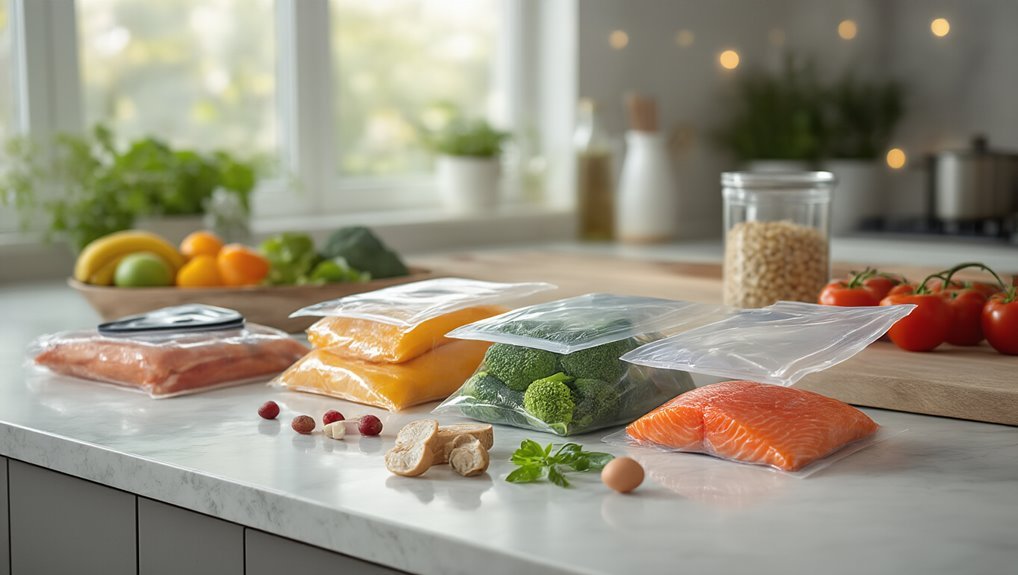
How does the humble bag size impact your food storage success? I’ve found that matching bag dimensions to your food items isn’t just about neatness—it’s essential for proper sealing techniques and reducing environmental impact. When you choose the right size, you’ll waste less plastic and get a tighter seal, which means better food preservation and less frustration. Additionally, regular maintenance like inspecting and replacing sealing gaskets can help maintain airtight seals.
I recommend considering these options for different storage situations:
- Larger bags for bulky items like roasts or whole chickens
- Medium bags for family-sized portions of fruits or vegetables
- Small bags for individual servings or snacks
- Custom-cut lengths for those awkwardly shaped leftovers
In my experience, thinking about your freezer space before selecting sizes saves you headaches later. You don’t want bags that are too big taking up unnecessary room!
Chamber vs. External Vacuum Sealer Compatibility
Why do some bags work with one sealer but not another? This boils down to the bag material and design, which determine compatibility bag material. External vacuum sealers need textured, embossed bags with those little channels that help draw air out. Without these ridges, they just can’t create a proper vacuum.
Chamber sealers, on the other hand, are much more versatile. I’ve found they work with both smooth pouches and textured bags because they create vacuum around the entire package, not just by suction.
The bag material matters tremendously for sealing compatibility.
Think of it like this—external sealers are like drinking through a straw (they need those textured channels), while chamber sealers are like submerging the entire drink underwater. One requires special equipment, the other’s more flexible.
Reusability and Proper Cleaning Methods
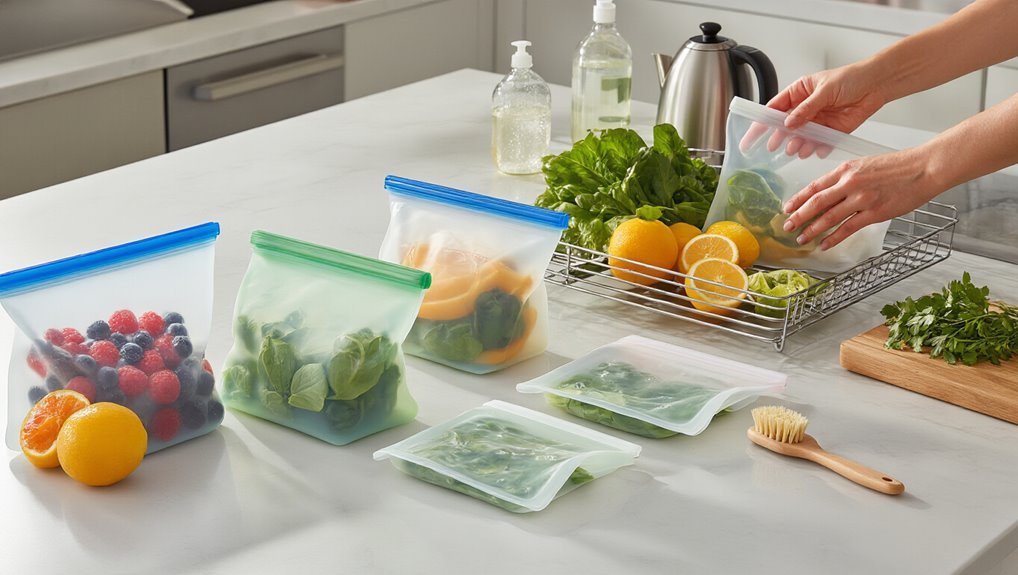
When it comes to maximizing your vacuum sealing investment, reusable bags are a game-changer that I’ve come to rely on for both environmental and economic reasons. This practice also aligns with the goal of promoting sustainable living by reducing disposable packaging waste. I’ve found that proper cleaning is essential for extending their lifespan.
After each use, I wash mine with warm, soapy water—though some are dishwasher-safe, but you’ll want to check the manufacturer’s instructions first.
Proper cleaning is key—warm, soapy water works wonders, but always verify if your bags can safely go in the dishwasher.
For handheld methods of cleaning, I recommend:
- Use a bottle brush to reach those tricky corners where food residue hides
- Rinse thoroughly to remove all soap residue
- Hang bags upside down on a drying rack for complete air drying
- Store in a cool, dry place away from direct sunlight
With these storage tips, you’ll likely get 10+ uses from each bag—saving money while reducing waste!
Storage Conditions and Shelf Life Maximization
You know, I’ve found that organizing bags by color options not only looks prettier in storage but helps me quickly grab what I need. Some brands offer different colors for different foods—pretty handy!
Using high-quality bags and containers can help maximize the extended shelf life of vacuum-sealed foods.
For the longest shelf life, I’d recommend keeping bags in their original packaging or, better yet, in an airtight container. Many branding possibilities include storage tips right on the box, which I actually find super helpful.
Special Features: Textured Surfaces and Barrier Technologies
The magic behind truly effective vacuum sealer bags often lies beneath the surface—literally. When I’m choosing bags for my food storage needs, I always look for embossed channels—those textured surfaces that create pathways for air to escape during sealing. They’re incredibly effective, especially when paired with multi-layer barriers that block oxygen and moisture.
For truly reliable results, I prioritize bags with multi-layer barriers that block oxygen and moisture even during extended storage.
In my experience, the best vacuum sealer bags combine:
- Textured surfaces that guide air out even from around oddly-shaped foods
- Multi-layer barriers (think nylon or aluminum) that protect against environmental elements
- Consistent sealing technology that works well with moist items
- Enhanced preservation capabilities for sous vide cooking
I’ve found that these features aren’t just fancy add-ons—they’re essential if you want to maximize shelf life and keep your food at its best quality.
Cost Comparison and Value Assessment
While considering the price tag of vacuum sealer bags, I’ve discovered that true value goes far beyond the initial cost. In my experience, comparing pricing strategies across brands reveals that reusable options ($0.50-$1.50 each) initially cost more than single-use bags ($0.20-$0.50).
The smart shopper looks beyond sticker price to find vacuum sealer bags that deliver lasting value through multiple uses.
Additionally, selecting the right bag type can extend shelf life, a key factor in reducing spoilage.
But they’re actually more economical in the long run. I’ve found that buying in bulk is almost always the way to go—you’ll slash that per-unit cost considerably.
When comparing brands, I don’t automatically reach for the cheapest option anymore. Those premium, thicker bags might seem pricey, but they’ve saved me money by protecting expensive meats and seafood for months.
Maybe the most important value metric isn’t the bag cost at all, but how much food waste you’ll prevent by using them.
Frequently Asked Questions
How Do I Know Which Vacuum Bag to Buy?
I choose vacuum bags based on my sealer type, ensuring proper thickness for storage tips. I always select food-safe, BPA-free materials for food safety and the right size for my needs.
What Is the Best Thickness for Vacuum Seal Bags?
I’d recommend 4-5 mil thickness for best material durability, especially for long-term storage or sharp items. 3 mil works fine for regular refrigeration in various bag size options.
Is There a Difference in Vacuum Sealer Bags?
I’ve encountered numerous “variations” in vacuum sealer bags. Their material compatibility affects which machine they’ll work with, while thickness and composition impact your storage guidelines for different preservation needs.
Are All Vacuum Sealer Bags Compatible?
No, vacuum sealer bags aren’t universally compatible. I recommend checking your machine’s specifications for proper bag type, ensuring food safety and reducing environmental impact through appropriate waste prevention.