When my kitchen became a battleground between freezer-burned steaks and soggy vegetables, I knew I needed a secret weapon. I’ve had my eye on Costco’s chamber vacuum sealer for months, wondering if the hefty price tag was justified. After researching obsessively (maybe too much), I think I’ve finally reached a conclusion about whether this appliance is worth your hard-earned cash. The answer might surprise you, especially when you consider the long-term math.
Features & Specifications of the Costco Chamber Vacuum Sealer
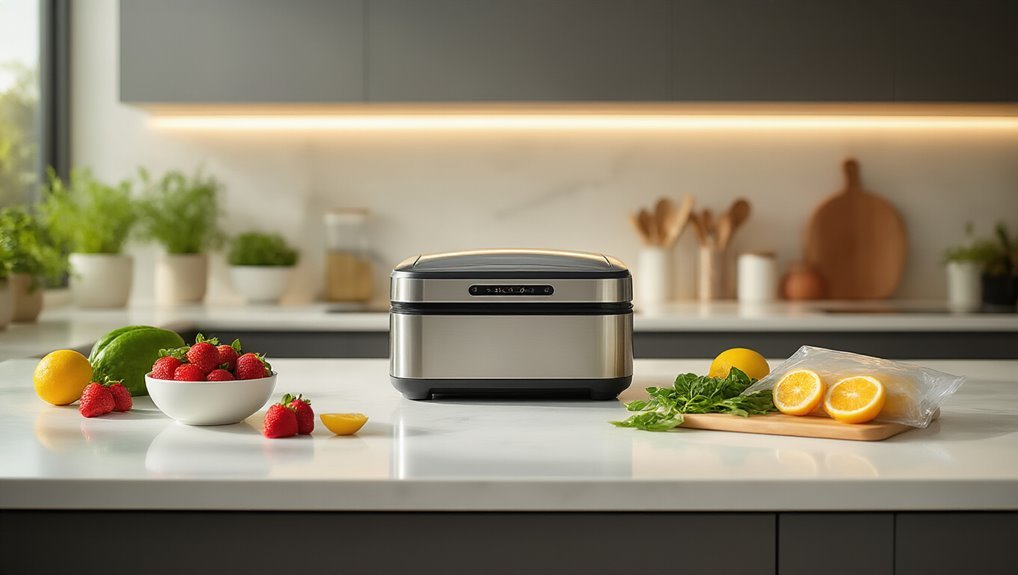
While I’ve been testing various food preservation tools over the years, I’ve got to say that the Costco chamber vacuum sealer stands out for its impressive array of features. The spacious chamber accommodates different bag and jar sizes, which I’ve found incredibly convenient for my diverse preservation needs.
Costco’s chamber vacuum sealer outperforms competitors with versatile sizing that adapts to all my preservation needs.
What really impresses me is the adjustable vacuum packaging settings. You know how some foods need gentle treatment while others require maximum air extraction? This machine handles both beautifully, resulting in consistent seal quality every time.
The powerful pump means I’m not waiting around forever—most items are sealed within 20-40 seconds. Choosing the right bag material can extend seal longevity, with polypropylene being a common and durable option bag material.
Oh, and the versatility! It works with Mylar, nylon, aluminum foil, and even paper bags. Plus, the included hoses for jar sealing have been a game-changer for my pantry organization.
Price Comparison: Chamber Vs Traditional Vacuum Sealers
When considering the Costco chamber vacuum sealer, the price tag is often what makes potential buyers pause. At $300-$2,000, it’s considerably pricier than traditional suction models that typically run $50-$150. But is this price analysis telling the whole story?
I’ve found that while the upfront cost comparison seems steep, chamber sealers actually offer better value over time. They handle liquids and moist foods beautifully—something the cheaper models just can’t manage well.
You know how frustrating it’s when a traditional sealer fails on that expensive salmon you’re trying to preserve?
In my experience, the investment pays off through fewer failed seals, less food waste, and—if you’re sealing foods regularly—reduced packaging costs.
It’s kind of like buying quality boots instead of cheap ones; you’ll replace the cheap ones several times before the good ones wear out.
Chamber sealers like the Avid Armor USV32 offer an automatic sealing process and a built-in cutter, which reduces waste.
How the Chamber Vacuum Technology Works
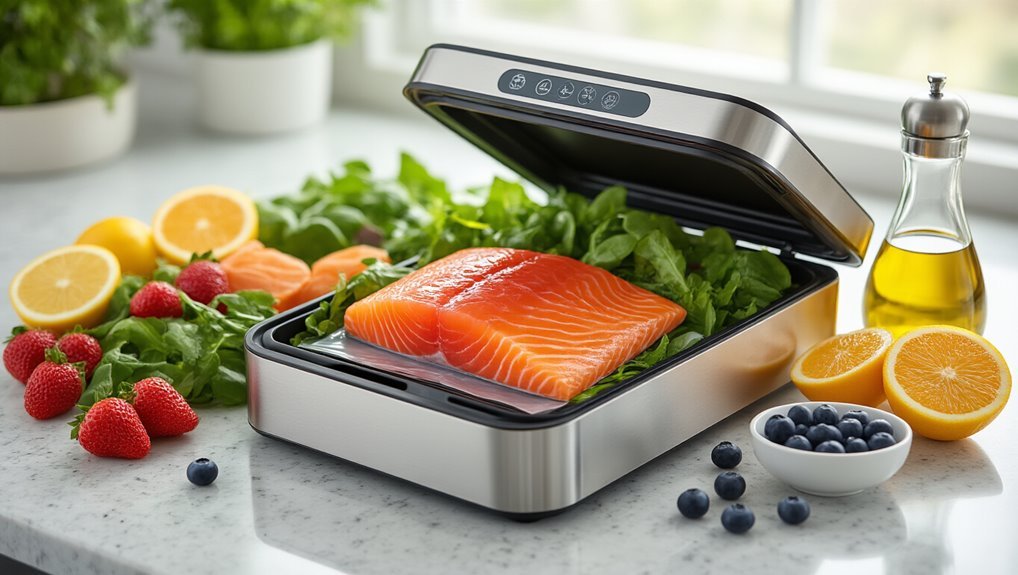
Unlike traditional vacuum sealers, chamber models operate on a fundamentally different principle that’s truly revolutionary for home food preservation. The chamber design is what makes all the difference.
When I place my food bag inside and press down the lid, the entire chamber becomes a vacuum environment—not just the bag itself.
The vacuum principle is actually pretty simple. The pump draws air from the whole chamber, so there’s no messy suction pulling at liquids or soft foods.
I’ve found it takes about 30 seconds, give or take, depending on what I’m sealing.
Once the pressure drops to the preset level, a heated bar seals the bag completely.
What I love most? The process handles marinades and moist foods without making a mess—something traditional sealers just can’t do.
Chamber sealing also contributes to longer shelf life of stored foods by minimizing air contact during the entire process.
Sealing Performance With Different Food Types
Now that I’ve explained how the chamber system works, let’s talk about what really matters—how it performs with actual food. I’ve been seriously impressed by the sealing versatility of Costco’s chamber vacuum.
Unlike standard sealers, it doesn’t crush delicate items like pastries or berries. The real game-changer is how it handles wet foods—soups, marinades, even stews—with virtually no mess or leakage.
Food texture isn’t an issue either. Whether I’m sealing dry grains or juicy steaks, the results are consistently airtight.
I think the most surprising thing is how it manages wrinkled bags. You know how regular vacuum sealers sometimes fail with uneven surfaces? Well, this chamber model doesn’t care—it just works, creating strong seals regardless of the packaging condition. This approach also echoes Integrated Pest Management principles to minimize chemical reliance.
Long-Term Durability and Maintenance Tips
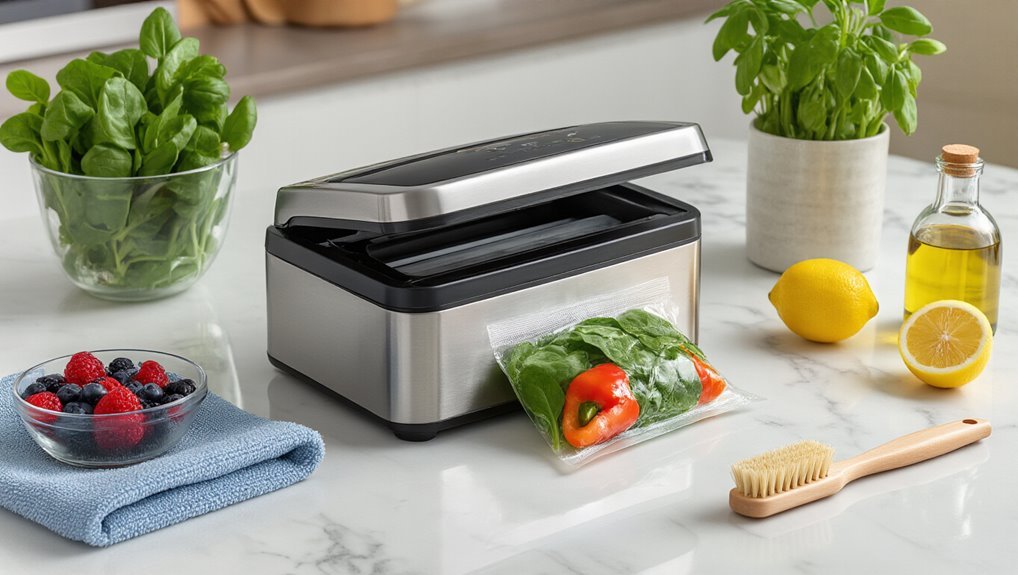
I’ve found that maintaining my Costco chamber vacuum sealer isn’t nearly as complicated as I initially thought. For best results, I wipe down the seal bar after each use and do a deeper clean of the chamber weekly to prevent that stubborn oil buildup that can ruin perfect seals.
You’ll want to mark your calendar for regular oil changes on the vacuum pump. I learned this the hard way when my vacuum strength suddenly dropped last year.
Seal Bar Maintenance Schedule
While your vacuum sealer’s performance largely depends on how well you maintain the seal bar, I’ve found that many Costco owners don’t realize this critical component needs regular attention.
Your vacuum pouch won’t seal properly if the sealing mechanism is dirty or worn out.
I recommend cleaning the seal bar after every 15-20 uses with a soft, damp cloth—never use abrasive cleaners that might damage the heating elements.
For moderate usage, I’d schedule a thorough inspection every six months; heavy users should bump that up to quarterly checks.
Wait, scratch that—it’s actually better to inspect monthly if you’re sealing more than 50 pouches weekly.
When you notice inconsistent seals or visible wear, that’s your cue to replace components rather than pushing them past their prime.
Cleaning Best Practices
Beyond just maintaining the seal bar, keeping your entire Costco chamber vacuum sealer clean is what’ll really extend its life. I use a damp cloth for the sealing bar and gasket—never harsh chemicals or abrasives!
These can damage your machine’s sensitive parts, which, trust me, you don’t want to replace.
After I’ve sealed anything liquidy or sticky, I immediately do a deep clean. You know how residue builds up? That’s your vacuum sealer’s worst enemy.
For the chamber, I actually use a soft brush or compressed air—works like a charm for getting into those tight spots!
Don’t forget about the pump oil. In my experience, replacing it every 6-12 months keeps vacuum strength prime. Proper cleaning is one of the most underrated sealing techniques that’ll keep your investment working for years.
Preventing Oil Degradation
Since investing in my Costco chamber vacuum sealer, I’ve learned that oil degradation is the silent killer of these machines.
I’ve found that proper oil maintenance directly affects sealing efficiency and extends the lifespan of my investment.
To prevent oil degradation in your vacuum sealer, follow these simple steps:
- Check and replace oil regularly – I do this monthly to maintain ideal sealing performance.
- Allow cooling time between uses – This prevents overheating which can cause oil to vaporize.
- Use only compatible, high-quality oil – Never mix different types, trust me on this!
- Keep the chamber clean – Debris around the oil reservoir is the enemy of longevity.
I’ve noticed when I skip these steps, my sealer’s performance drops noticeably.
A little oil maintenance goes a long way!
Space Requirements and Storage Considerations
Before you rush out to buy a Costco chamber vacuum sealer, you’ll need to contemplate the significant space requirements these machines demand. These beasts measure roughly 20-24 inches wide, 10-15 inches tall, and can extend 12-20 inches in depth—not exactly something you’ll tuck into a drawer!
Chamber vacuum sealers demand serious kitchen real estate—these 20+ inch behemoths won’t hide in any drawer!
In my experience with kitchen organization, I’ve found that these 30-50 pound units require dedicated space planning. You’ll probably need a sturdy shelf or cart that can handle the weight while keeping it accessible.
I think space optimization becomes critical here—maybe consider if you have room for a permanent setup rather than moving it around.
Trust me, these aren’t for cramped kitchens! You’ll want to store it somewhere dry and dust-free to protect your investment.
A dedicated storage plan is essential for long-term performance dedicated storage.
Time and Money Savings From Reduced Food Waste
While these machines do require some real estate in your kitchen, let’s talk about what makes that space investment worthwhile. This efficiency is backed by the fact that vacuum sealing extends shelf life and preserves flavor.
I’ve found that the time and money savings from reduced food waste are absolutely game-changing for my household budget.
When it comes to food storage and enhanced cooking techniques, the benefits are clear:
- My vacuum-sealed foods last 3-5 times longer, which means way less throwing away spoiled leftovers.
- I’ve personally saved hundreds each year by preventing freezer burn on expensive meats.
- I’m making fewer trips to Costco—maybe once a month instead of weekly.
- Batch cooking has become more practical since I can properly store everything.
Honestly, the machine practically pays for itself within months.
Who doesn’t want fresher food and more money in their pocket?
Compatible Bags and Accessories
The right bags and accessories for your Costco chamber vacuum sealer aren’t just an afterthought—they’re essential to getting the most from your investment.
I’ve found that using the compatible heat-seal bags or specialized Mylar pouches makes a huge difference in packaging design and food preservation.
You’ll need bags that fit the 12-inch width limitation, but there’s actually plenty of flexibility there.
What I really love are the accessory compatibility options—jar attachments for my homemade sauces, canisters for delicate items, and those vacuum valve adapters that handle liquids without making a mess.
In my experience, investing in high-quality bags pays off.
They reduce seal failures and, well, dramatically extend shelf life.
Costco’s pre-cut bags and roll stock are perfect when you’re handling different sized items.
Using universal bags can further simplify your setup across different models.
Real User Experiences and Satisfaction Ratings
Since purchasing my Costco chamber vacuum sealer last year, I’ve been amazed by how consistently it delivers professional results that match what I’ve seen in commercial kitchens. The sealing technology handles everything from moist marinades to delicate pastries without crushing them—something my old edge sealer couldn’t manage.
The chamber vacuum sealer elevates home food preservation to commercial standards, handling wet and delicate items with precision my old sealer couldn’t match.
What users like me consistently praise about these vacuum sealers:
- Versatile performance with adjustable settings for different food types
- Durable construction that feels built to last for years
- Complete accessory package eliminating the need for additional purchases
- Professional-grade preservation extending food freshness dramatically
Yes, it’s bulky and honestly pretty heavy, but I think the performance makes these minor inconveniences worth tolerating. When I consider the money I’m saving on food waste, it’s definitely justified the investment.
This model’s durable stainless steel construction reinforces easy cleaning and long-term reliability, a hallmark of durable stainless steel design.
Alternative Uses Beyond Food Preservation
I’ve found my Costco chamber vacuum sealer isn’t just for keeping my steaks fresh—it’s actually amazing for protecting important papers and documents from moisture and aging. You’d be surprised how well it preserves non-food items like pharmaceuticals, jewelry, and even electronics components that need protection from oxidation. For small business owners, it’s a commercial-grade solution that’s worth every penny when you need to protect valuable collectibles or reduce the storage space needed for seasonal clothing. This aligns with how commercial vacuum sealers extend shelf life and reduce waste in food operations by creating an air-tight storage environment.
Preserving Non-Food Items
While most people buy a Costco chamber vacuum sealer for food storage, I’ve discovered it’s actually an incredible tool for preserving all sorts of non-food items too.
The chamber design works wonders for protecting sensitive equipment and even has artistic applications when preserving delicate collectibles.
I’ve found these four uses particularly valuable:
- Documents and photos – Using the gas-flush option prevents yellowing and decay
- Electronics and gadgets – Creates an airtight seal that prevents moisture damage
- Jewelry and heirlooms – Stops tarnishing and oxidation in its tracks
- Art supplies and craft materials – Extends shelf life of items like clay that would normally dry out
It’s like having a mini preservation system right in my home!
Commercial-Grade Paper Protection
Have you ever thought about using your vacuum sealer for preserving your most precious documents? I’ve discovered that my Costco chamber vacuum sealer isn’t just for keeping food fresh—it’s revolutionized my approach to paper preservation.
When I place important documents or family photos in special Mylar pouches and seal them, I’m actually creating museum-quality archival storage right at home. The machine’s customizable settings let me apply just the right amount of vacuum without crushing delicate papers.
What I love most is how it protects against practically everything that damages paper—humidity, oxygen, dust, even those pesky pollutants that cause yellowing over time.
Plus, it saves so much space! If you’re storing important paperwork or irreplaceable photographs, this might be, well, the protection they deserve.
Frequently Asked Questions
Are Vacuum Sealers a Good Investment?
I picture fresh berries still vibrant after months frozen. Yes, vacuum sealers are worthwhile investments for food preservation, whether you’re running a commercial kitchen or preserving home harvests. They’ll save you money long-term.
What Is the Best Vacuum Sealer for the Money?
I’ve found the FoodSaver V4840 offers the best value with commercial appeal at under $200. It combines technology advancements like automatic moisture detection while remaining user-friendly and reliable for years.
Which Is Better, Chamber or Suction Vacuum Sealer?
“You get what you pay for” in food preservation. I’d recommend chamber vacuum sealers for superior sealing technology with liquids and frequent use, while suction models work fine for casual home needs.
What Vacuum Sealer Does America’s Test Kitchen Recommend?
I’d recommend America’s Test Kitchen’s top pick – chamber vacuum sealers for food preservation. They’re superior for sous vide cooking and handling moist foods without crushing them, with FoodSaver and Weston earning high marks.