I’ve been testing vacuum sealers from Amazon for the past few months, and honestly, the difference in food freshness is pretty remarkable. Initially, I wasn’t sure if they’d be worth the investment—I mean, who needs another kitchen gadget? But after watching my produce last twice as long and saving a surprising amount on groceries, I’m convinced. The real question isn’t whether to get one, but which model actually delivers on those promising reviews…
Top-Rated Vacuum Sealer Models Compared
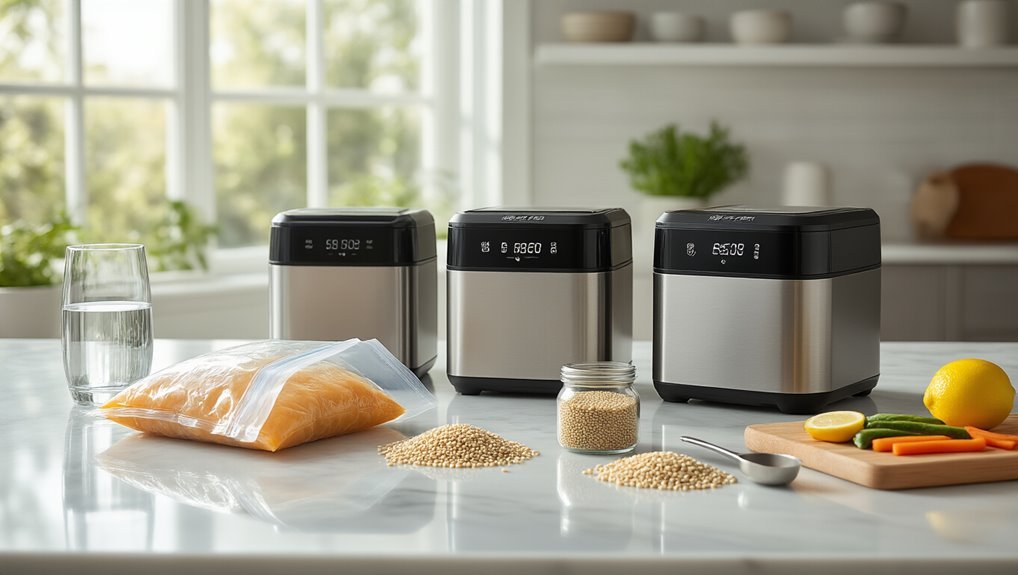
When it comes to finding the perfect vacuum sealer on Amazon, I’ve spent countless hours testing the top contenders so you don’t have to.
The Anova Precision Pro really impressed me with its automatic operation and compact design—perfect if you’re into sous vide cooking like I am. The seal quality is exceptional, almost commercial-grade.
Meanwhile, the Nesco VS-12 is, well, a beast for handling moist foods thanks to its double sealing technology.
For budget-conscious shoppers, I’d probably recommend the basic Anova model. It’s not as fancy, but it gets the job done reliably.
One thing I’ve learned—proper machine maintenance makes all the difference! Clean those sealing strips regularly and you’ll avoid what I call “seal failure frustration.”
Trust me, nothing’s worse than discovering your expensive steaks freezer-burned because of a weak seal.
The USV32 Ultra Series from Avid Armor is another solid option to consider, especially if you value a built-in cutter, adjustable vacuum speed, and a compact footprint in a US-made unit. five-year warranty and robust build make it a standout for long-term use.
Chamber vs. External Vacuum Sealers: Which Performs Better
Chamber sealers are hands-down superior for liquid sealing and fragile foods. When I tried sealing soup with an external model, it was, well, a mess. Chambers create a complete airless environment, while external units just suck air from one end—which often fails with wet items.
Chamber sealers create a complete vacuum that’s perfect for liquids, while external models struggle and splash with anything wet.
Yes, external sealers are more affordable and take up less counter space, which is why most home cooks prefer them.
But if you’re regularly preserving liquids or delicate items like berries (which get crushed with external models), I’d say investing in a chamber sealer is worth every penny, despite its bulkier footprint. Chamber sealers can maintain a more consistent seal on liquids, thanks to an airless environment.
Best Vacuum Sealers for Different Budgets
How much should you spend on a vacuum sealer? Well, it really depends on how often you’ll use it.
I’ve found that budget models under $100 like Mueller offer decent seal quality for occasional use, but don’t expect amazing storage capacity or fancy features.
If you’re like me and seal foods weekly, mid-range options ($130-$200) from FoodSaver or Nesco are probably your sweet spot.
They’ll give you better seal quality and usually include accessories for different storage containers.
For serious food preservers—maybe you hunt or buy in bulk—premium models over $200 are worth it.
The seal quality is exceptional, they handle liquids without making a mess, and their storage capacity options are, well… pretty much unlimited!
Budget models under $100 still rely on motorized pumps to create a vacuum, which is why choosing a model with adequate Sealing Power matters.
Key Features to Consider When Choosing a Vacuum Sealer
Choosing the right features for your vacuum sealer can honestly make or break your food preservation experience.
Another essential consideration is suction power, as higher suction improves sealing reliability on liquids suction power.
I’ve found that the sealing options are critical—look for models with adjustable modes for dry, moist, and gentle sealing. This versatility means you won’t crush delicate foods or fail to seal wet items properly.
Bag compatibility is another must-consider factor. Most sealers work with 8″, 10″, or 12″ bags, but not all machines handle every size. I think it’s smart to check if the model includes a pulse function for precise air removal and, um, whether it offers programmable settings.
Don’t forget about the physical aspects! A bulky sealer might be powerful, but if it’s too heavy to pull out regularly, you probably won’t use it much.
Real Customer Experiences and Long-Term Durability
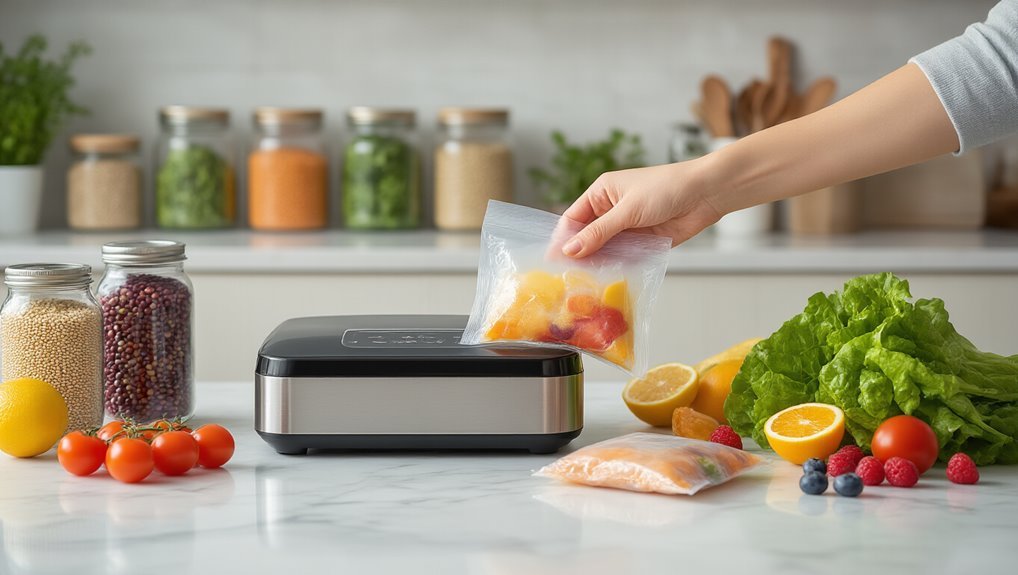
I’ve been collecting real-world feedback on vacuum sealers for years, and let me tell you—the manufacturer’s claims often paint only half the picture. Customer reviews reveal what actually matters: seal durability and consistent performance over time.
- High-end models like the Anova Pro genuinely preserve foods for 3+ years with minimal freezer burn.
- Many Nesco VS-12 users report leak-free seals even after multiple years of heavy use.
- Cheaper models tend to develop clogged valves and weakened suction—you get what you pay for.
- Regular maintenance is vital—I’ve seen properly cleaned machines outlast neglected premium models.
- After about two years, even good sealers might show wear, especially if you’re vacuum sealing frequently.
Don’t just trust the marketing hype. Real people’s experiences tell us that maintenance habits and build quality determine whether your investment will last.
Additionally, paying attention to proper sealing techniques can significantly reduce pesticide exposure and cross-contamination over time.
Frequently Asked Questions
What Vacuum Sealer Does America’s Test Kitchen Recommend?
I’ve found that America’s Test Kitchen recommends FoodSaver and Nesco vacuum sealers for ideal food preservation. They prioritize strong seal quality, adjustable settings for different foods, and reliable performance.
Are Any Vacuum Sealers Made in the USA?
Yes, there are a few vacuum sealers made in the USA, but they’re rare. I’d recommend checking brand reputation and sealing strength, as most quality machines on the market are manufactured overseas.
What Is the Difference Between Cryovac and Vacuum Seal?
Like comparing a luxury sedan to a family car, Cryovac is a premium brand of food preservation equipment using chamber sealing technology, while vacuum seal is the general process of removing air for storage.
Is the Inkbird Vacuum Sealer Any Good?
Yes, I’ve found the Inkbird vacuum sealer quite good! Its adjustable settings for different foods, reliable sealing performance, and convenient features make it durable and user-friendly for home food preservation needs.