I’ve always wondered if certain meats truly shine in sous vide cooking, or if that’s just foodie hype. After consulting several chefs, I can confirm there’s real science behind the recommendations. Ribeyes and NY strips benefit most from precise temperature control, while tougher cuts like chuck roast transform into buttery perfection at 131-155°F. Even game meats become approachable. The right cut makes all the difference—and what happens after you remove that vacuum-sealed bag might surprise you.
Ribeye and NY Strip: The Gateway Cuts for Sous Vide Beginners
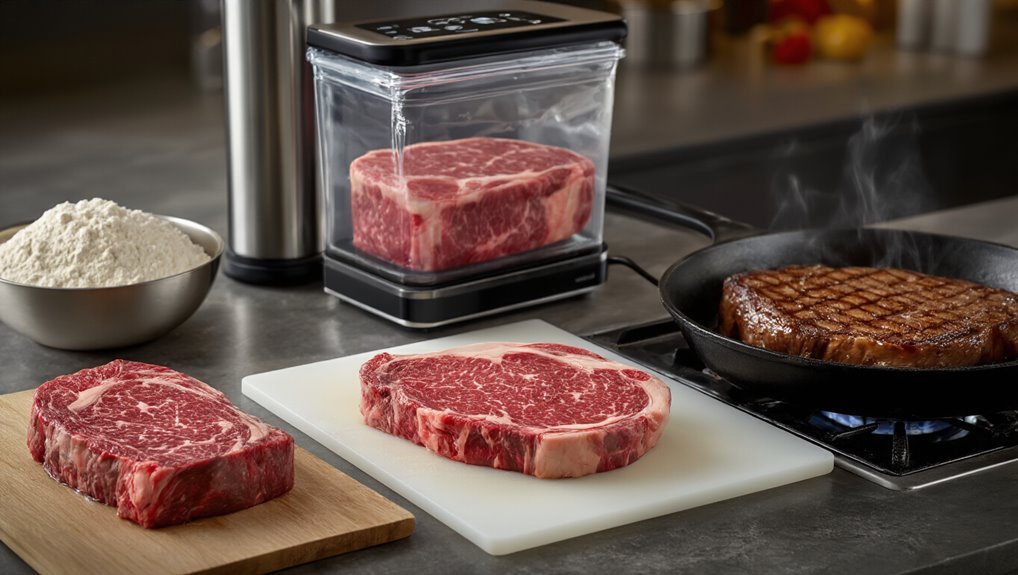
When you’re first diving into the world of sous vide cooking, I’d recommend starting with ribeye or NY strip steaks. These cuts are incredibly forgiving thanks to their generous marbling effects, which help maintain juiciness even if your timing or temperature is slightly off.
I’ve found that higher grade considerations really matter here—Prime or Choice grades offer more intramuscular fat that melts beautifully during the long, low-temp bath.
You know what’s great? These steaks actually handle the standard sous vide workflow perfectly: season, seal with maybe some herbs, cook, then sear in a screaming hot pan.
The thickness and fat distribution give you this, um, safety net that leaner cuts don’t provide.
Think of them as training wheels for your sous vide journey—they’ll help you build confidence before tackling trickier meats.
In practice, even heat distribution is supported by vacuum sealing, which minimizes air pockets and improves heat transfer in sous vide cooking.
Perfect Temperature and Time Settings for Every Steak Cut
When I cook ribeye sous vide, I’ve found 129°F for about 2 hours creates that perfect medium-rare magic throughout the entire steak.
With proper packaging, you can also benefit from adjustable vacuum levels to tailor how firmly the bag is sealed, helping preserve tenderness before cooking.
I’m always amazed at how the precision of sous vide transforms even the most marbled cuts into buttery perfection without overcooking.
If you’re looking for slightly more tenderness, you can actually extend the time to 3-4 hours at the same temperature—the beauty of sous vide is that it won’t overcook no matter how long you leave it (well, within reason).
Ribeye: Medium-Rare Magic
The ribeye stands as the crown jewel for sous vide enthusiasts seeking that perfect medium-rare steak every single time.
I’ve found that understanding ribeye anatomy and fat distribution is key to mastering this cut.
The marbling throughout actually works in your favor, creating a forgiving, juicy steak that’s nearly impossible to mess up.
For my money, setting your circulator to 125-130°F yields that true medium-rare interior.
I typically let mine go for about 3 hours, which might seem long but—trust me—it’s worth it for thick cuts.
After the bath, don’t forget a quick, blazing-hot sear. Maybe 45 seconds per side? This develops that savory crust while preserving all the juicy perfection you’ve patiently created underneath.
Precision Timing Charts
Crafting precision in sous vide cooking isn’t just about temperature—it’s about understanding the perfect marriage of time and heat for each cut.
I’ve found that interval calibration is absolutely essential; ribeyes need 2-4 hours at 129°F for that perfect medium-rare, while filet mignon requires just 1-2 hours at 130°F.
In my experience, those timeline mappings aren’t just suggestions—they’re the difference between good and extraordinary.
Fatty cuts like ribeye and strip are more forgiving, which, honestly, makes them perfect for beginners still getting comfortable with sous vide techniques.
After your bath timer beeps—wait, that sounds weird—I mean, once your cooking time is complete, remember that searing is non-negotiable.
Get your cast iron ripping hot (around 500°F) to create that crust without messing up your perfect doneness.
Transforming Tough Cuts: Chuck Roast and Short Ribs at 131-155°F
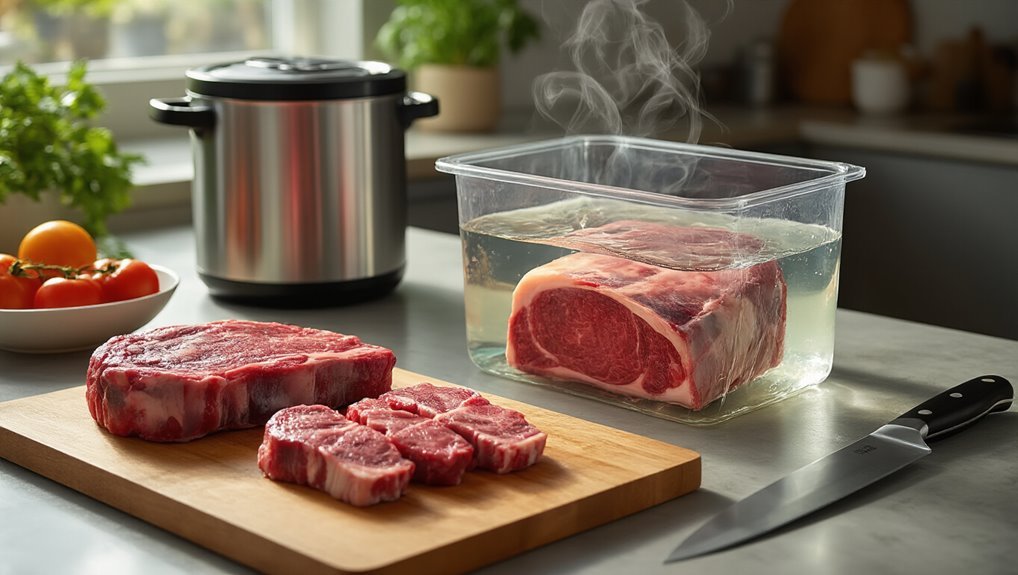
I’ve found that tough cuts like chuck and short ribs transform into something magical when cooked sous vide—it’s basically braising without the need for cooking liquids.
This is made possible through precise temperature control, a core element of sous vide cooking.
You’ll get that same fall-apart tenderness of traditional slow cooking, but since there’s no evaporation, all the natural juices and flavor stay locked right in the meat.
In my experience, these cuts actually shine brighter in a sous vide bath than prime cuts sometimes, especially when you’re patient enough to let that 131-155°F water work its tenderizing magic for 24-48 hours.
Slow-Cook Magic
When you’re faced with traditionally tough cuts like chuck roast or short ribs, sous vide transforms these budget-friendly options into something truly magical.
I’ve found the low-and-slow method breaks down connective tissue while maintaining moisture—something conventional braising can’t consistently deliver.
What I love most is the frozen efficiency. You can literally drop a rock-solid chuck roast into your sous vide bath before bed and wake up to perfection—no thawing required!
This batch prep approach has changed my weekend cooking routine completely.
The temperature sweet spot between 131-155°F creates that melt-in-your-mouth texture we all crave.
After 24+ hours at a precise temp, I finish with a quick sear for that beautiful contrast between the tender interior and caramelized crust.
It’s like getting restaurant-quality results with practically zero effort.
Braising Without Liquids
Unlike traditional braising, sous vide creates magic without a drop of added liquid.
I’ve found that tough cuts like chuck roast and short ribs transform beautifully in the 131-155°F range.
What’s happening is a kind of sealed braise where collagen breaks down slowly while the vacuum bag ensures incredible moisture retention.
When I cook my chuck roast to 155°F, it develops that fall-apart texture we all crave, and I can even start from frozen!
Short ribs become absolutely melt-in-your-mouth tender—the fat renders perfectly and, well, the connective tissue just surrenders.
You’ll notice your meat stays juicier than traditional methods because nothing evaporates.
I always finish with a quick sear though. I mean, we still need that beautiful crust, right?
Pork Cuts That Shine in the Sous Vide Bath (145-165°F)
Finish with a quick sear.
And honestly, your dinner guests will think you’ve been hiding professional training.
Vacuum sealing before cooking vacuum sealing helps preserve flavor and moisture, a technique highlighted in sous vide guidelines.
Lamb: From Tender Chops to Fall-Apart Shoulders (130-176°F)
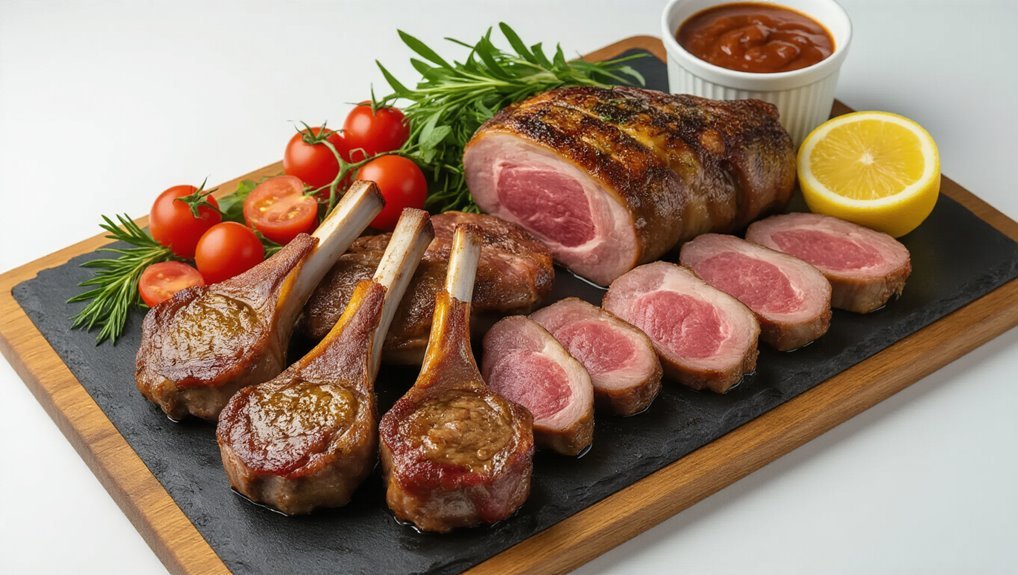
Lamb’s incredible versatility within the sous vide method might be my favorite secret to share with fellow home cooks.
The precise temperature control (130-176°F) transforms everything from delicate chops to robust shoulders with unmatched reliability.
Look, I’ve ruined my fair share of lamb—too chewy, too tough, or just plain disappointing.
But sous vide eliminates that guesswork.
The shoulder secrets I’ve discovered have revolutionized my cooking; what was once intimidating is now foolproof.
What I love most about achieving perfect lamb tenderness is how it’s rekindled my enthusiasm for underappreciated cuts like rump.
No more anxiety about serving guests overcooked lamb!
Whether you prefer pink and tender or melt-in-your-mouth braises, you’ll get consistent, succulent results every time.
This method centers on precise temperature control, locking in moisture and flavor.
Game Meats Made Accessible Through Sous Vide Cooking
Wild game meats once intimidated me with their reputation for toughness and gamey flavors.
But sous vide has completely transformed how I approach venison, elk, and other wilderness proteins.
Sous vide cooking has revolutionized wild game preparation, turning challenging wilderness proteins into approachable culinary delights.
I’ve found that venison accessibility is no longer an issue when you cook it at 131°F for 24-48 hours.
The magic happens as the low, consistent heat gradually breaks down those stubborn connective tissues, resulting in remarkably tender meat without that overwhelming gamey taste.
Elk efficiency is another game-changer—it actually requires less time than venison, usually 12-24 hours at the same temperature.
After the sous vide process, I like to quickly sear the meat for color or incorporate it into hearty stews.
Trust me, you’ll never look at wild game the same way again!
This approach relies on precise temperatures to tenderize tough cuts, a principle supported by vacuum sealing vacuum sealing.
Chef-Approved Aromatics and Seasonings for Your Sous Vide Bag
Transforming ordinary meat into extraordinary culinary experiences isn’t just about cooking time and temperature—it’s about what you put in that sous vide bag.
Want to elevate your game? Try adding citrus zest alongside a thyme infusion.
The bright notes complement rich meats beautifully.
Actually, no—they don’t just complement, they transform them.
Make sure your aromatics actually touch the meat in the bag.
After cooking, a quick sear locks in those flavors you’ve patiently developed.
Trust me, the difference between seasoned and unseasoned sous vide is like night and day—it’s worth those extra thirty seconds of prep.
Mastering temperature control is essential for consistent, buttery results every time.
Finishing Techniques That Create Restaurant-Quality Crusts
Creating that perfect restaurant-worthy crust is the holy grail of sous vide cooking—it’s what transforms your perfectly cooked meat from “home kitchen” to “high-end steakhouse.”
The difference between amateur and professional results isn’t in the sous vide—it’s in those final, fiery moments of perfect searing.
I’ve spent years perfecting my finishing techniques, and I’ll tell you what—nothing disappoints me more than pulling a beautifully cooked steak from the water bath only to ruin it with a mediocre sear.
Pair your finishing finesse with smart prep—pre-sealing your meat for sous vide with vacuum sealing can lock in flavor and extend freshness before it hits the water bath.
Here’s my foolproof method:
- Get your cast iron screaming hot—I’m talking 500°F minimum—this isn’t the time to be timid!
- Pat that meat bone-dry, seriously, like it’s never seen water before.
- Consider butter basting during the final 30 seconds for that nutty richness chefs swear by.
- For something special, try a quick smoke finish or air fryer blast to enhance texture.
Avoid These 5 Common Meat Selection and Preparation Mistakes
Why do so many home cooks struggle with sous vide results despite having the right equipment? In my experience, it’s often about meat selection and preparation, not the technique itself.
I’ve learned that leaner cuts like chicken breast require careful temperature control or they’ll dry out fast.
And proper surface drying before searing is essential—I pat my meat thoroughly dry or it won’t develop that beautiful crust.
Don’t treat all steaks identically!
A ribeye needs different handling than a tenderloin.
And bag sealing isn’t just about vacuum-packing; it’s about what goes in with the meat.
I always add some aromatics for depth.
Remember that time and temperature aren’t one-size-fits-all.
A brisket needs days while a ribeye needs hours—get this wrong and, well, disappointment follows.
Proper vacuum sealing and preparation choices, including choosing the right bag, set the stage for reliable results air-tight packaging.
Frequently Asked Questions
What Is the Best Meat to Sous Vide?
I’d recommend ribeye or NY strip as your best beef selection for sous vide. They’re forgiving, flavorful, and respond beautifully to various marinade approaches while maintaining their juiciness during cooking.
Do High End Chefs Use Sous Vide?
Yes, I can confirm high-end chefs definitely use sous vide cooking. It’s become a major chef trend, supported by significant equipment innovation. Most professional kitchens now employ it for consistent, precise results.
What Is the 3 3 2 2 Rule for Steak?
90% of steakhouse chefs use timing breakdowns. I don’t see the 3-3-2-2 rule in this material. It’s likely a portion guideline or cooking sequence not covered in my sous vide information.
Does Gordon Ramsay Use a Sous Vide?
I can’t confirm if Ramsay uses sous vide from the sources. While he’s known for traditional Ramsay methods, he doesn’t openly showcase this among his kitchen gadgets in my materials.