The silent battle against food waste begins in our kitchen drawers, often with a humble vacuum sealer tucked away. I’ve spent years testing various models, from budget-friendly external sealers to professional-grade chamber units, and I’m convinced there’s a perfect match for everyone’s preservation needs. The right vacuum sealer isn’t just about extending shelf life—it’s about preserving flavor, reducing waste, and ultimately saving money. Let me show you how to find your ideal kitchen ally.
External vs. Chamber Vacuum Sealers: Understanding the Differences
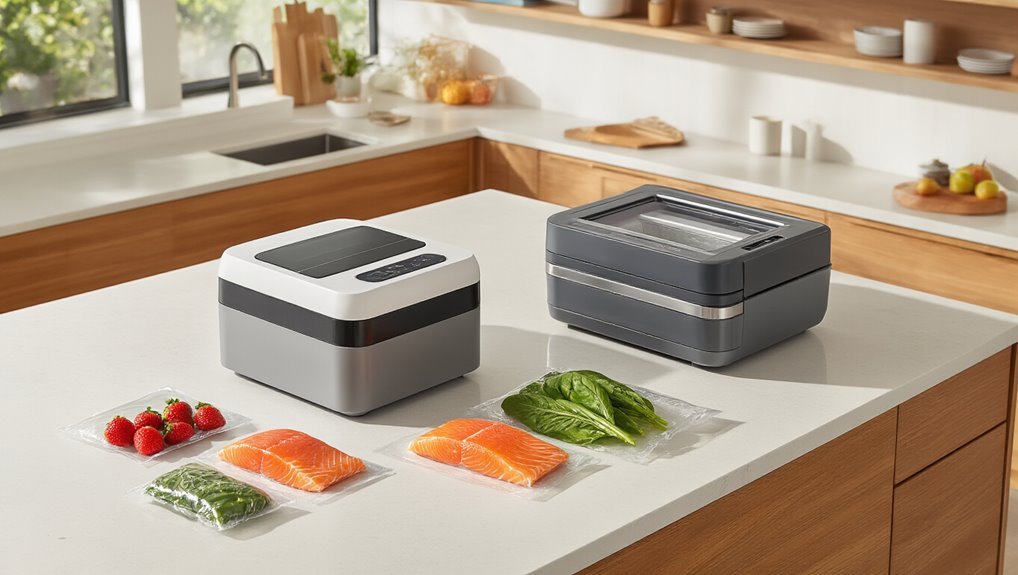
When it comes to vacuum sealers, I’ve found that the first big decision you’ll need to make is between external and chamber models.
From my experience, external sealers are like the friendly neighbors of vacuum sealing—compact, affordable, and perfect for occasional use. They’re typically faster in sealing speed but can be picky about bag compatibility.
Chamber sealers, on the other hand, are the heavy lifters. They’re bulkier and pricier, but boy, can they handle liquids! I think what makes them special is how they remove air from the entire chamber, not just through a strip like external models.
If you’re sealing soups or marinades regularly, you’ll probably want to invest in a chamber sealer despite the higher upfront cost.
Additionally, chamber models often offer dual sealing capability for leak-proof assurance, which is crucial when sealing liquids.
Top Vacuum Sealers for Home Kitchens and Small Spaces
I’ve found that external vacuum sealers like the Nesco VS 12 offer tremendous advantages for anyone with limited counter space.
They’re lightweight, easy to tuck away in a cabinet when not in use, and still pack enough sealing power for most home cooking needs.
Features like removable drip trays and built-in bag cutters make these compact models surprisingly functional without sacrificing precious kitchen real estate.
Vacuum sealing can extend shelf life and preserve flavors in everyday cooking.
External Sealer Advantages
If you’re short on kitchen counter space but still want to preserve foods effectively, external vacuum sealers might be your perfect solution. I’ve found these compact devices incredibly practical – they typically weigh just 2-15 pounds and measure about 15-17 inches long, making them easy to store in a drawer when not in use.
The cost efficiency is impressive too. You’ll only spend between $42-$90 for models like the Nesco VS-12 Deluxe or Geryon, which I think offers great value for occasional home use.
Their sealing versatility is another major advantage – most external sealers handle dry foods beautifully and can manage some moist items, though they might struggle with, well, very liquid-rich foods. The built-in cutters and multiple sealing modes make preservation tasks surprisingly straightforward, even for beginners.
Space-Saving Design Features
Space truly matters in today’s kitchens, which is why the newest vacuum sealers have evolved to fit our shrinking countertop real estate. I’ve found that compact models like Geryon and FoodSaver Handheld+ (under 10 inches long!) are perfect for small kitchens like mine.
| Model | Weight | Sealing Speed | Vacuum Sealer Noise |
|---|---|---|---|
| Geryon | <5 lbs | 10-15 sec | Low |
| FoodSaver Handheld+ | <3 lbs | 5-10 sec | Very low |
| Nesco VS-12 | 4.8 lbs | 20 sec | Medium |
| Vevor DZ-260A | 15 lbs | 25-30 sec | High |
What I love about modern designs is how they incorporate foldable parts and detachable hoses. Chamber sealers like the JVR Vac110 are bulkier but designed with countertop efficiency in mind. You’ll appreciate how today’s lightweight options (under 5 pounds) tuck neatly into cabinets when not in use.
Premium Chamber Vacuum Sealers for Serious Food Preservation
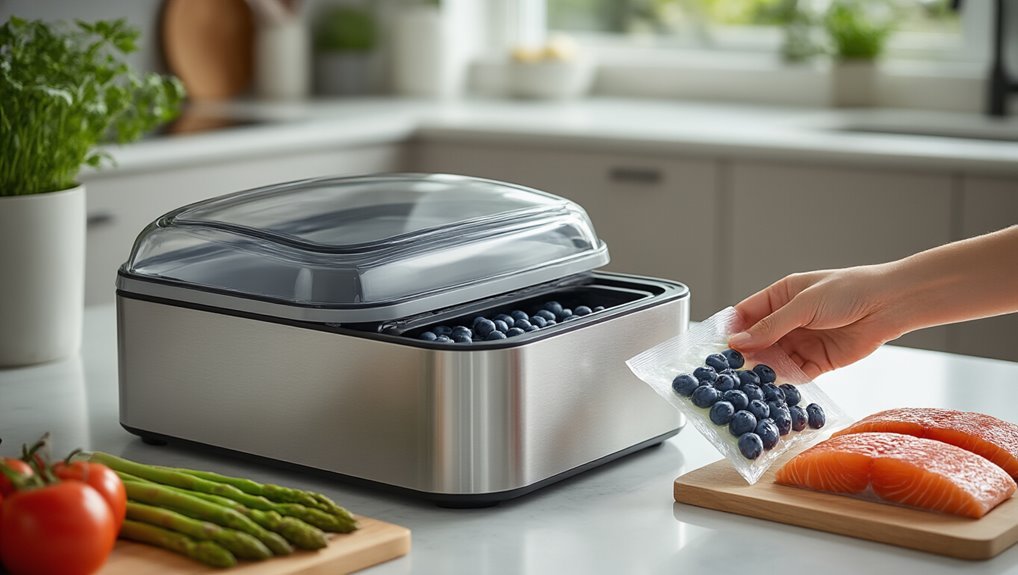
When you’re truly serious about food preservation, premium chamber vacuum sealers represent the gold standard that’ll transform how you store everything from delicate fish to marinades. Additionally, using high-quality bags is essential to prevent plastic-related contaminants and to maintain an oxygen-free environment that helps slow spoilage.
Key Features to Consider When Purchasing a Vacuum Sealer
Choosing the right vacuum sealer can feel overwhelming with all the options out there, but I’ve learned it’s really about matching the features to what you’ll actually use it for.
Finding the perfect vacuum sealer isn’t complicated—just match features to your actual needs.
Remember that vacuum sealing also helps reduce waste by extending shelf life, which translates to economic savings over time extended shelf life.
I always recommend looking for vacuum sealers with adjustable seal times and multiple modes—you know, like dry, moist, or gentle settings that handle different foods properly.
In my experience, convenience features make a huge difference. Models with built-in bag cutters and roll storage save tons of counter space!
And if you’re sealing liquids (which can be tricky), you’ll definitely want double heat seals.
Don’t forget about sealing compatibility. If you think you’ll seal jars or canisters, check that the model has accessory ports.
And finally, consider the size and noise level—nobody wants a bulky, screaming machine taking over their kitchen!
Best Vacuum Sealers for Sous Vide Cooking and Liquid Foods
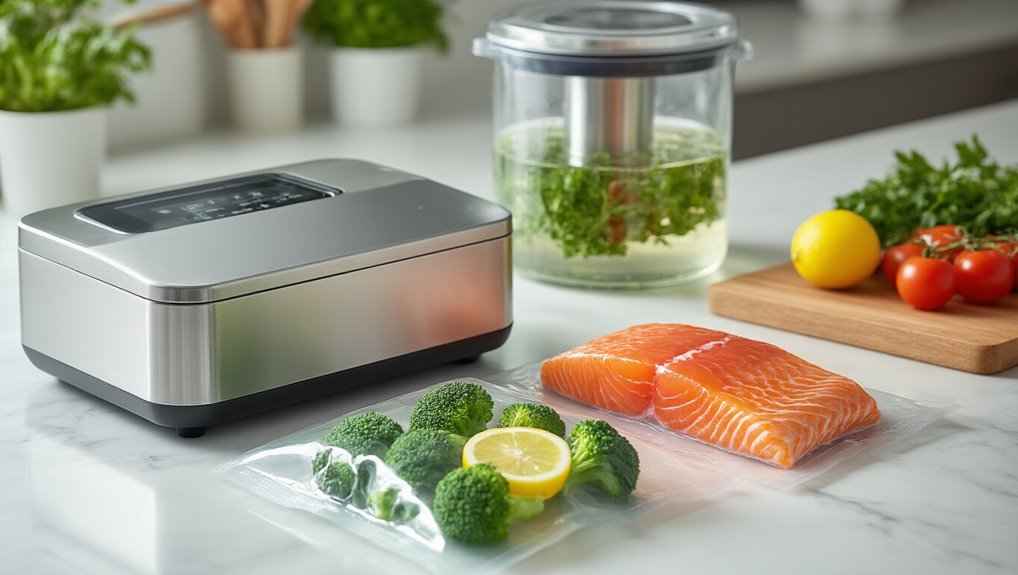
Why is sous vide cooking so challenging with standard vacuum sealers? It’s all about the liquids. Trust me, I’ve made a mess trying to vacuum seal marinades with my old FoodSaver! Standard external sealers just aren’t built to handle wet foods without making a splashy disaster.
For sealing burritos or vacuum sealing herbs with moisture, I’ve found that chamber vacuum sealers like the Anova Precision make all the difference. They’re game-changers for soups, sauces, and basically anything with liquid.
The adjustable vacuum and seal times mean you won’t crush delicate items—something that’s impossible with basic models.
I think the Vevor models are worth considering too if you’re serious about sous vide. They might be pricier, but they’ll save you countless cleanup headaches.
Taking advantage of an airtight seal and proper bags significantly extends shelf life and prevents freezer burn.
Budget-Friendly Vacuum Sealers That Deliver Quality Performance
How much performance can you really squeeze out of a vacuum sealer that doesn’t break the bank? Turns out, quite a lot! These budget options still deliver strong Sealing performance that helps prevent freezer burn.
Models like the FoodSaver V2244 and NutriChef PKVS160 offer reliable sealing for under $100 that’s perfectly adequate for most home cooks, including sous vide enthusiasts.
I’ve found that these budget options actually deliver impressive value. While they might require more manual operation than pricier models, they still include essential features like dry and moist modes.
The Vevor DZ-260A, for example, handles liquids surprisingly well—something I thought was only possible with expensive sealers.
Look, you don’t need to spend a fortune to effectively extend food shelf life and prevent freezer burn.
These affordable sealers might lack bells and whistles, but they’ll get the job done reliably.
Maintenance Tips and Longevity Considerations for Vacuum Sealers
While vacuum sealers aren’t particularly high-maintenance appliances, regular upkeep dramatically extends their lifespan and guarantees consistent performance.
Invest in simple vacuum sealer maintenance and enjoy years of reliable preservation power.
Regular maintenance helps prevent power problems in some models power problems.
I’ve found that implementing simple maintenance routines keeps my sealer running like new for years.
Seal quality directly correlates with how well you care for your machine.
For chamber vacuum sealers, I always check the pump oil monthly—it’s something many folks forget until their sealer starts acting up.
Here are my top three maintenance priorities:
- Clean sealing bars and gaskets after each use to prevent food particles from affecting seal quality
- Inspect for worn gaskets quarterly and replace as needed
- Store your sealer in a dry place with the lid slightly open to prevent gasket compression
Specialized Vacuum Sealers for Unique Preservation Needs
I’ve found that specialized vacuum sealers can be game-changers if you’re looking to preserve liquids without spills. Proper vacuum sealing can dramatically reduce freezer burn freezer burn, especially on long-term frozen goods. Chamber models like the Vevor DZ-260A are absolute heroes for soups and marinades.
If you’re into canning, you’ll want to check out jar sealing options such as the JVR Vac110 that offer those specialized functions I couldn’t live without.
For those ready to invest in restaurant-quality preservation at home, commercial-grade sealers with adjustable vacuum times let you perfect everything from delicate berries to thick stews.
Liquid Preservation Champions
When dealing with liquid-rich foods, have you ever experienced the frustration of soup seeping into your vacuum sealer’s chamber? I’ve been there, and it’s why I’m obsessed with chamber vacuum sealers like the Vevor DZ-260A and JVR Vac100.
Unlike external sealers, these liquid preservation champions create an environment where liquids stay put during sealing—no more messy spills!
What makes these machines truly remarkable:
- Adjustable vacuum and seal times perfect for delicate items like stews
- Compatible with various packaging material selection options for ideal preservation
- Accessory ports for sealing jars and canisters, great for infusions
Trust me, proper vacuum sealer maintenance is simpler with these models too—many even have auto-cleaning cycles.
For soups, marinades, or water-packed fish, nothing beats a dedicated chamber sealer.
Jar Sealing Solutions
For serious food preservers who’ve mastered basic vacuum sealing, jar sealing solutions open up an entirely new world of possibilities.
I’ve found that specialized models like the JVR Vac110 are game-changers when working with canning jars – they include jar ports that connect perfectly without making a mess.
What I love most about these systems is their versatility. You simply attach the accessory hose to vacuum caps or jar stoppers, and voilà – perfect preservation for everything from homemade sauces to dry goods.
They’re way better than bag sealers for maintaining those critical oxygen barriers, especially for liquids.
If you’re like me and serious about long-term storage, you might want to invest in a model with retort capabilities or specialized canning modes.
Trust me, they’re worth every penny when you taste summer jam in December!
Commercial-Grade Home Options
Commercial-grade vacuum sealers might seem intimidating at first glance, but they’re actually game-changers for serious home preservationists.
I’ve found models like the Vevor DZ-260A offer exceptional sealing accuracy that you just can’t get with standard countertop units. When you’re dealing with delicate foods or liquids in a vacuum pouch, that precision makes all the difference.
What makes these machines worth considering? Well, in my experience:
- They handle multiple items simultaneously in larger chambers
- They provide adjustable settings for different preservation techniques (perfect for pickling!)
- They offer substantially longer lifespans than consumer models
Yes, they’re bulkier and more expensive, but if you’re preserving food regularly or experimenting with techniques like infusion, the investment pays off.
I think the consistent performance alone justifies the extra counter space they require.
Frequently Asked Questions
How to Choose the Right Vacuum Sealer?
I’d recommend evaluating your needs first. Consider bag compatibility with your storage items and seal maintenance requirements. Choose between suction or chamber models based on your volume and liquid-sealing needs.
What Vacuum Sealer Does America’s Test Kitchen Recommend?
I’d recommend the FoodSaver V4400 that America’s Test Kitchen endorses. It offers versatile vacuum sealing techniques with moist/dry settings, improving shelf life extension for all your food preservation needs.
Is Higher Kpa Better for a Vacuum Sealer?
While it seems counterintuitive, higher kPa isn’t always better. Yes, increased pump strength typically improves seal quality for long-term storage, but I’d recommend adjustable pressure for delicate foods that could get crushed.
How Long Will Raw Meat Last in a Vacuum Sealed Bag?
I’ve found that vacuum-sealed raw meat lasts 1-3 years in the freezer with proper meat preservation techniques. That’s considerably longer than unsealed meat, which only gives you 4-12 months of freshness.