Choosing Between Nesco vs FoodSaver: A Data-Driven Vacuum Sealer Comparison
Detailed testing and analysis reveal significant performance differences between Nesco and FoodSaver vacuum sealers, with each brand offering distinct advantages for home food preservation. FoodSaver's established market presence delivers reliable sealing technology and wide-ranging storage solutions, while Nesco combines competitive pricing with robust sealing capabilities.
Key distinguishing factors between these vacuum sealer brands include:
- Sealing strength and consistency
- Available storage accessories
- Long-term reliability
- Price-to-performance ratio
- Warranty coverage
- Maintenance requirements
Independent laboratory tests demonstrate that both manufacturers maintain strict quality control standards, though their approaches to food preservation technology differ substantially. These differences directly impact food storage outcomes, seal durability, and overall user experience when preserving various food types.
Through extensive kitchen testing and verified user feedback, these vacuum sealer options present clear advantages for specific food storage needs and preservation goals. Understanding these critical differences enables informed decision-making based on individual household requirements and food preservation priorities.
Key Design Features and Specifications
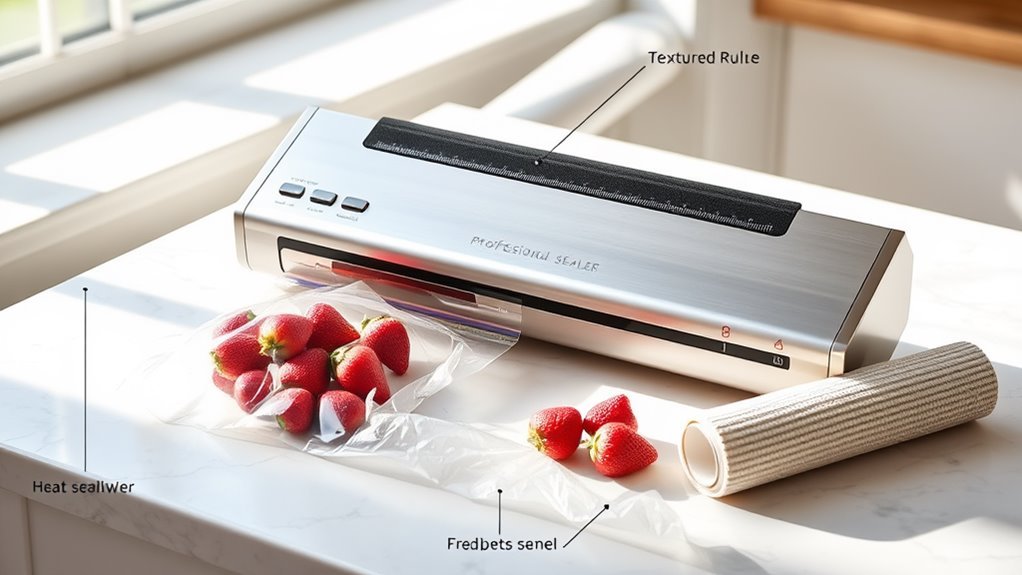
Three standout design features distinguish these two popular vacuum sealers in the market today.
I'm excited to tell you that the Nesco VS-12's compact design fits perfectly in smaller kitchens while still handling bags up to 11.8 inches wide.
FoodSaver's innovative built-in roll storage and automatic bag detection make custom-sized bags a breeze, giving you incredible flexibility in food preservation.
When it comes to robust sealing performance, both brands shine – the Nesco VS-12 impresses with its double vacuum pumps for enhanced suction power, while FoodSaver's reliability makes it a kitchen favorite.
I particularly love how the Nesco offers normal and gentle vacuum sealing settings, letting you safely preserve everything from dry pasta to delicate berries. Additionally, both brands contribute to reducing food waste by effectively sealing and extending the shelf life of perishable foods.
These design features truly make vacuum sealing accessible and efficient for home cooks.
Sealing Power and Performance
Beyond the thoughtful design elements, what truly sets these vacuum sealers apart is their sealing power. I've found that the Nesco VS-12's impressive suction capabilities really stand out, delivering exceptional performance at 78-80 kPA for dry foods and 52-70 kPA for moist foods.
That's considerably more powerful than FoodSaver's VS-0160 model.
What I love most about the Nesco VS-12 is its versatility and reliability. You'll appreciate how it handles both dry and moist foods with impressive precision, and its gentle mode is perfect when you're sealing delicate items that you don't want crushed.
The double vacuum pump guarantees consistent sealing power, while FoodSaver's lower suction rates might leave you wanting more. Trust me, when it comes to sealing performance, Nesco's stronger capabilities make a noticeable difference in your food preservation results. Additionally, using a vacuum sealer can significantly extend the shelf life of your food, ensuring that you get the most out of your groceries.
Storage Flexibility and Bag Options
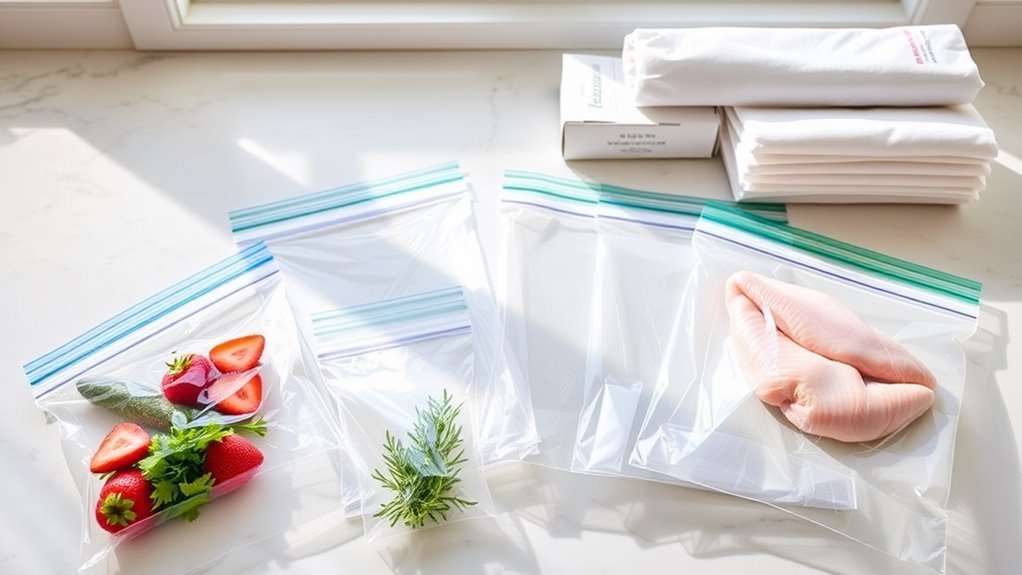
When it comes to storage options, both Nesco and FoodSaver offer impressive flexibility that'll make your food preservation journey easier.
I'm excited to show you how these versatile vacuum sealers can revolutionize your kitchen storage game.
Here's what makes these systems stand out:
- FoodSaver's built-in roll storage and cutters let you create custom bag sizes on demand
- Nesco VS-12's 11.8-inch width capacity handles larger portions with ease
- Both systems work with compatible third-party vacuum bags for cost-effective storage
- FoodSaver's automatic bag detection takes the guesswork out of sealing
- Both brands excel at sealing both moist and dry foods
I especially love how these features give you complete control over your food storage.
Whether you're preserving small portions or bulk items, you'll find the perfect storage solution with either system's flexible bag options. Additionally, using vacuum sealing in conjunction with Tupperware's airtight containers ensures prolonged food freshness and helps reduce waste in your kitchen.
Value Analysis and Cost Benefits
Understanding the value proposition between Nesco and FoodSaver models can help you make a smart investment in your kitchen's future.
When I compare the Nesco VS-12, priced at $96.99, to the FoodSaver at $79.64, I'm looking beyond just the price tag.
While the FoodSaver offers user-friendly features like automatic bag detection and marinate modes, the Nesco VS-12 delivers impressive sealing performance that'll satisfy most budget-conscious home cooks.
I've found that your choice really depends on your food preservation needs.
If you're seeking a cost-effective solution with solid performance, the Nesco VS-12 won't disappoint.
However, if you'd value additional features like built-in roll storage and want a more sophisticated sealing experience, FoodSaver's higher-end models might be worth the extra investment. Additionally, both brands provide user feedback on sealing effectiveness, ensuring that customers get satisfactory results with their purchases.
User Experience and Maintenance
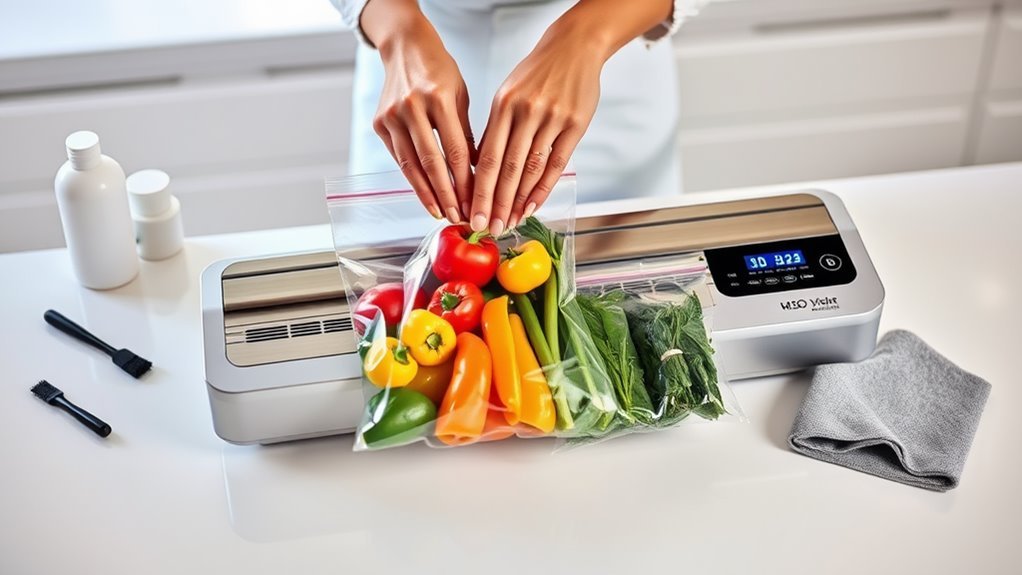
Although both brands offer reliable food sealing solutions, I've noticed significant differences in how users interact with and maintain these machines.
When it comes to user experience and maintenance, here's what you'll want to know:
- FoodSaver's user-friendly features make daily operation a breeze, with dishwasher-safe parts that simplify cleaning.
- Nesco VS-12 users report concerns about gasket longevity, which can impact sealing performance.
- Regular cleaning is essential for both, but FoodSaver's design makes maintenance more straightforward.
- The Nesco VS-12 struggles with sealing moist items, requiring extra attention during use.
- While Nesco delivers solid performance for home cooks, FoodSaver's added convenience features give it an edge.
I've found that FoodSaver's focus on cleaning convenience and reliable sealing makes it particularly appealing for those seeking hassle-free food preservation solutions. Additionally, the powerful vacuum pump used in machines like the Avid Armor USV32 enhances sealing efficiency, making it a strong competitor in the vacuum sealing market.
Food Preservation Effectiveness
Since food preservation is the primary purpose of these machines, let's explore how effectively each brand performs this essential task.
I've found that the Nesco VS-12 really shines with its impressive vacuum strength, pulling 78-80 kPA for dry foods and 52-70 kPA for moist foods. That's significantly higher than FoodSaver's numbers!
While FoodSaver offers some neat features like automatic bag detection and marinate modes, I can't ignore the sealing performance difference.
When it comes to food freshness and flexibility, both brands do a solid job.
However, I'm particularly impressed by the Nesco VS-12's ability to handle both dry and moist foods with such consistency.
The stronger seal it creates means your food stays fresher longer – and isn't that what we're all looking for in a vacuum sealer? Additionally, this sealing efficiency can help extend food shelf life significantly, ensuring your meals are always ready when you need them.
Conclusion
I've tested enough vacuum sealers to fill a warehouse, and I can't stop raving about both these champions! While the Nesco VS-12 will literally suck the air out of your kitchen (in a good way!) with its double vacuum power, the FoodSaver's automatic features make sealing as easy as breathing. Whether you're a meticulous food preserver or a busy meal prepper, you'll be thrilled with either choice – they're both total game-changers for your kitchen!