Vacuum sealing revolutionizes food preservation by creating an oxygen-free environment that significantly extends shelf life. Scientific research shows that removing air from storage containers inhibits bacterial growth and enzymatic reactions that cause food spoilage. According to food safety experts, vacuum-sealed meats can last 2-3 times longer in the refrigerator, while properly sealed vegetables maintain freshness up to 5 times longer than conventional storage methods.
The preservation process works through two key mechanisms: oxygen removal and barrier protection. When air is extracted, aerobic bacteria – which require oxygen to survive – become dormant or die off. The airtight seal also prevents moisture loss, freezer burn, and external contamination, preserving both nutrients and flavor profiles of stored foods.
Studies by food science researchers demonstrate that vacuum sealing:
- Reduces food waste by up to 50%
- Maintains vitamin and mineral content
- Prevents oxidation that causes color changes
- Protects against freezer burn for up to 12 months
- Helps preserve delicate herbs and spices
Understanding these preservation principles enables home cooks and food professionals to maximize storage efficiency while maintaining food quality and safety standards.
The Science Behind Vacuum Sealing Technology
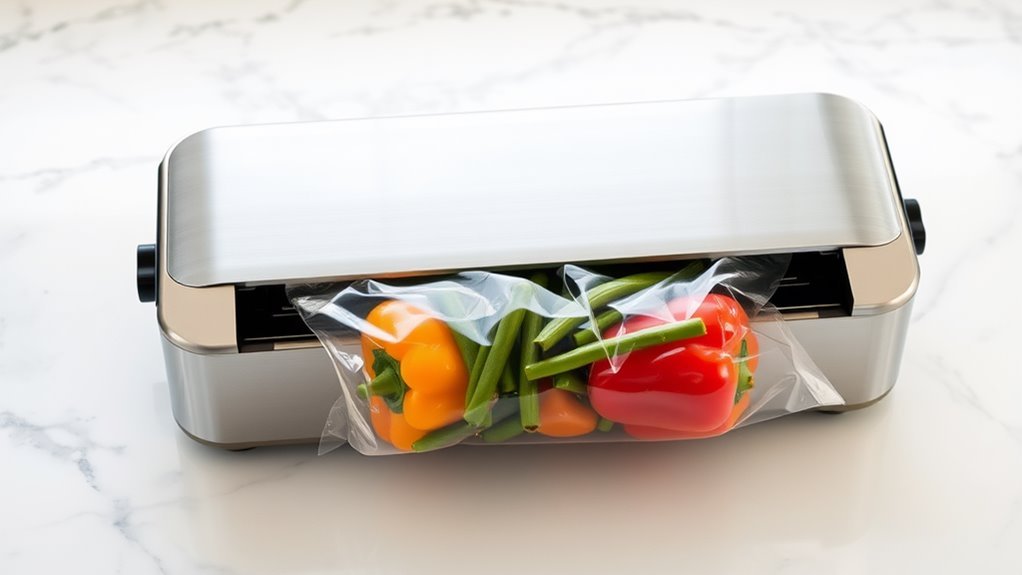
While many of us take modern food preservation for granted, vacuum sealing technology represents one of the most innovative breakthroughs in keeping our food fresh.
I'm excited to explain how this remarkable food preservation technique works to extend the shelf life of your favorite foods. When you place food in vacuum seal bags, the process removes oxygen, which is essential because oxygen is like an unwanted dinner guest that promotes bacteria growth and spoilage.
Here's what fascinates me most: by eliminating oxygen from the packaging, we're creating an environment where most harmful bacteria can't thrive. Vacuum sealing also retains up to 90% of nutrients, ensuring that your food remains not only fresh but also packed with the essential vitamins, minerals, and antioxidants that are vital for your health.
I've seen firsthand how vacuum sealing food can keep items fresh 3-5 times longer than traditional storage methods. It's not just about longevity though – this technology helps maintain the flavors and textures we love in our food.
Essential Benefits of Removing Oxygen From Food Storage
Since oxygen acts as a catalyst for food deterioration, removing it through vacuum sealing creates remarkable benefits for food storage that I'm thrilled to share with you.
When you remove oxygen through vacuum sealing, you'll reveal incredible ways to keep food fresh longer. Let me show you the amazing benefits I've discovered:
- Extends shelf life of fruits and vegetables up to 5 times longer than traditional storage
- Prevents aerobic bacteria from growing, keeping food safer and fresher
- Stops oils from becoming rancid and fruits from turning brown
- Keeps lettuce crisp for up to 10 days instead of just 2
- Maintains nutritional value and flavor by protecting food from air exposure
- Notably, vacuum sealing retains 3-5 times more nutrients than traditional methods.
I'm constantly amazed by how vacuum sealed food stays fresh so much longer, helping reduce waste while preserving food quality.
Long-Term Food Preservation Methods and Results
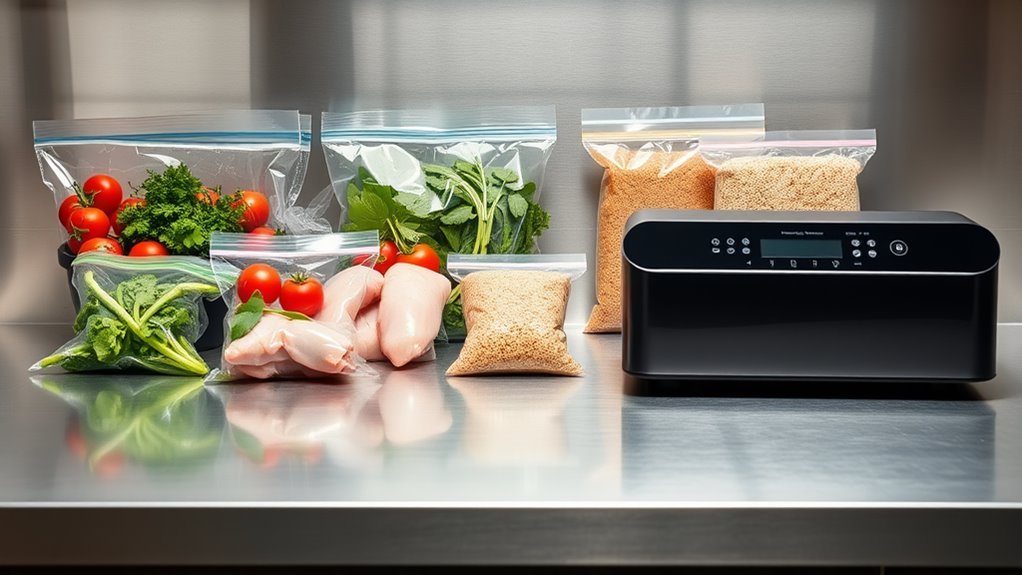
Because vacuum sealing has revolutionized food storage, I'm excited to share the impressive long-term preservation methods I've tested and their remarkable results. I've discovered that removing oxygen through vacuum sealing doesn't just keep food fresh – it transforms how we store our favorite ingredients! Let me show you the amazing preservation times I've achieved:
| Food Type | Standard Storage | Vacuum Sealed |
|---|---|---|
| Lettuce | 3-4 days | 10+ days |
| Herbs | 2-3 days | 7-8 days |
| Meat | 6 months frozen | 2-3 years |
| Rice | 6 months | 1-2 years |
| Trail Mix | 1 month | 6 months |
Additionally, vacuum sealing enhances marination of meats, allowing for more flavorful dishes that last longer in storage.
Best Practices for Vacuum Sealing Different Foods
After discovering the incredible benefits of vacuum sealing different foods, I can't wait to share the essential best practices I've learned through hands-on experience.
When using vacuum sealers to remove air and create perfect food packaging, I've found these tips to keep everything fresh and delicious:
- Blanch your veggies before sealing to maintain their vibrant colors and crisp texture.
- Cool meats completely before packaging and use separate bags to avoid cross-contamination.
- Store dry food like rice and pasta in large vacuum-sealed bags to maximize space.
- Always label bags with sealing dates to track freshness.
- Pre-portion snacks like trail mix for grab-and-go convenience.
I've discovered these methods really help foods stay fresh longer while making storage super efficient. Additionally, using vacuum sealing can extend shelf life by inhibiting bacterial growth and oxidation, ensuring your food remains safe and delicious.
Trust me, once you start following these practices, you'll wonder how you ever managed without them!
Safety Guidelines and Proper Storage Techniques
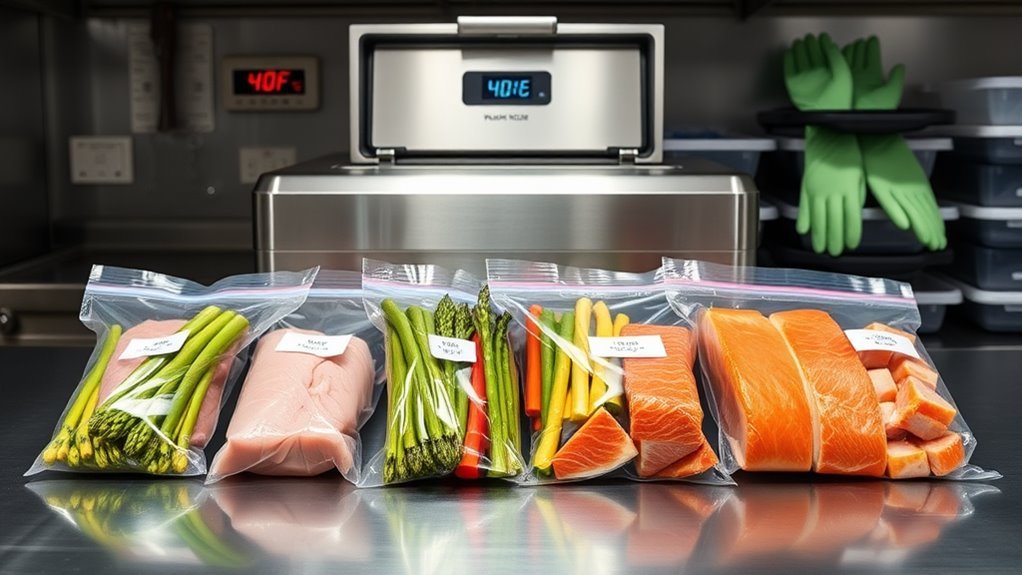
While mastering vacuum sealing techniques is important, following proper safety protocols takes your food preservation game to the next level.
I've discovered that keeping vacuum-sealed foods in the refrigerator or freezer is essential to prevent harmful bacteria from growing in that airless environment.
I always make sure to wash my hands thoroughly and use clean utensils instead of touching food directly – it's a game-changer for maintaining freshness!
Here's a pro tip: I label everything with dates and store items systematically so nothing goes to waste.
While I can keep dried goods like nuts at room temperature, I'm careful to refrigerate perishables and thaw frozen items in the fridge, never on the counter.
These safety guidelines have revolutionized my food storage techniques! Additionally, I ensure to separate raw meat from other foods using vacuum-sealed bags to minimize the risk of cross-contamination.
Cost-Effective Food Storage Solutions
Since food waste can take a huge bite out of your budget, I'm thrilled to share some incredible money-saving solutions through vacuum sealing.
The innovative Zwilling Fresh & Save system offers an affordable way to protect your pantry staples and preserve freshness. I've discovered that this smart storage method can help you save up to $1,300 annually by preventing freezer burn and extending shelf life.
Here's how vacuum sealing helps you save money:
- Reusable bags cost just $20 for 10, replacing expensive disposable options
- Prevents food waste, helping reduce the 27 million tons thrown away yearly
- Enables bulk buying and efficient portioning
- Reduces trips to the grocery store, saving on transportation
- Protects food quality, eliminating the need to replace spoiled items. Additionally, vacuum sealing extends shelf life significantly, allowing you to keep perishables fresh for much longer periods.
Common Mistakes to Avoid When Vacuum Sealing
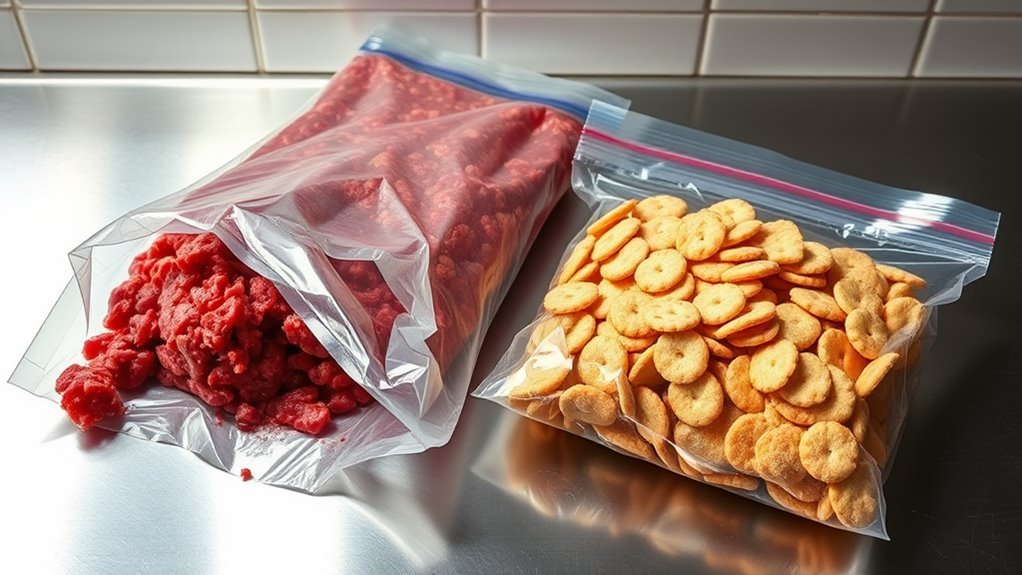
To help you get the most out of your vacuum sealing system, I've learned some essential mistakes to avoid through my own trial and error.
I've discovered that sealing hot food is a big no-no – always let it cool first to prevent steam from compromising the seal.
I'm also careful to clean all surfaces thoroughly before using a vacuum sealer to keep harmful bacteria at bay.
Here's another pro tip: don't overfill those bags! Leave enough space at the top for a proper seal, and avoid cramming too much food in one bag. This guarantees all the air gets removed, protecting food from freezer burn.
Finally, I always use proper vacuum-seal bags rather than regular plastic ones – they're specially designed to handle the pressure and keep your food fresh longer. Also, proper cooling below 41F is vital for preventing bacterial growth before sealing hot food.
Time-Saving Tips for Efficient Food Preservation
As a busy home cook, I've discovered that vacuum sealing isn't just about preserving food – it's a fantastic time-saving solution for my hectic schedule.
Let me share some incredible tips that have revolutionized my kitchen routine:
- Prep multiple meals at once and vacuum seal them for grab-and-go convenience throughout the week.
- Keep pantry staples fresh longer by protecting them from oxygen and moisture, reducing trips to the store.
- Speed up marination time – what used to take hours now takes minutes with vacuum sealing.
- Store fresh herbs and produce efficiently with a handheld vacuum sealer to minimize food spoilage.
- Organize your freezer with clearly labeled, compact vacuum-sealed packages for easy meal planning.
- This method not only preserves extended food shelf life but also helps reduce food waste, so you're making the most of what you buy.
I've found these strategies particularly helpful when I'm juggling work and family life, making my time in the kitchen more productive and enjoyable.
Conclusion
I've found that vacuum sealing is like having a time machine for my food – it preserves freshness and flavor far beyond regular storage methods. By removing oxygen and sealing tight, I'm able to keep my groceries fresh up to five times longer than traditional storage. I'm always amazed at how this simple technology helps me save money, reduce waste, and maintain the quality of my food with minimal effort.