Creating irresistible avocado toast requires perfectly ripe avocados that yield slightly to pressure, quality bread, and a precisely cooked egg. For best results, try sous vide eggs at 75°C for 14 minutes, yielding runny yolks and set whites. Mash avocado with fresh lemon juice and garlic salt, then top with herbs, red pepper flakes or everything bagel seasoning. An ice bath after cooking helps firm up the egg whites. These techniques transform a simple breakfast into something truly special.
The Secret to Restaurant-Quality Avocado Toast at Home
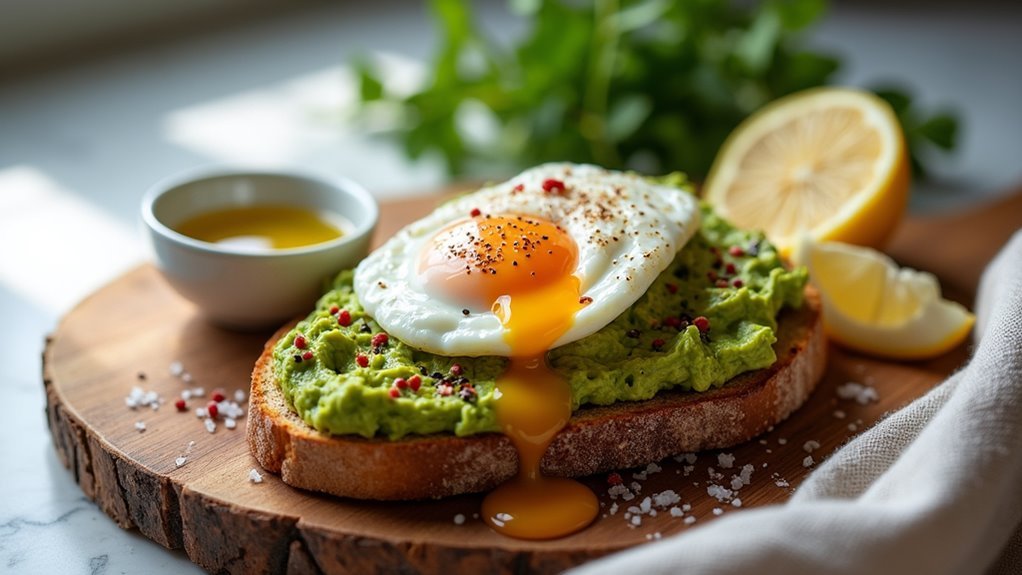
While many people think of avocado toast as an overpriced brunch item, the secret to creating restaurant-quality avocado toast at home is surprisingly simple. Fresh ingredients make all the difference – perfectly ripe avocados, quality bread, and a properly cooked egg transform this dish.
The key perhaps lies in technique rather than complexity. A touch of lemon juice and garlic salt elevates the avocado mash, while proper sous vide cooking at 75°C creates that dreamy runny yolk that restaurants charge $10+ for. Additionally, using vacuum sealing techniques can ensure that your avocado remains fresh longer, making it easier to whip up this dish anytime.
I think most home cooks overlook temperature precision, which is truly what separates mediocre from magnificent.
Essential Equipment for Sous Vide Egg Perfection
Achieving that perfectly runny yolk at home requires proper tools. A reliable sous vide machine is perhaps the most vital investment, with the Anova Precision Cooker or Breville Joule being popular choices among home chefs. Temperature accuracy is everything when it comes to eggs. A spacious 12-quart container gives ample room for multiple eggs, and adding a lid helps prevent water evaporation during the cooking process. This matters more than you might think for maintaining consistent temperatures. After cooking, don’t forget a simple ice bath setup. It’s just a bowl with ice water, but it’s essential for stopping the cooking process at exactly the right moment. Additionally, using the sous vide method helps achieve precise temperature control, improving the quality of your eggs significantly.
Step-by-Step Avocado Mash Preparation
Preparing the perfect avocado mash lies at the heart of this breakfast classic. The process is fairly straightforward, though the quality of ingredients makes all the difference.
Start with ripe avocados – they should yield slightly to gentle pressure but not feel mushy. Slice the avocados in half, remove the pit, and scoop the flesh into a bowl. Add fresh lemon juice to prevent browning and enhance flavor. I think a touch of garlic salt brings everything together nicely.
Mash with a fork to your preferred consistency – some prefer it chunky, others completely smooth. Perhaps reserve a few slices for garnish.
Mastering the 75°C/167°F Sous Vide Egg Technique
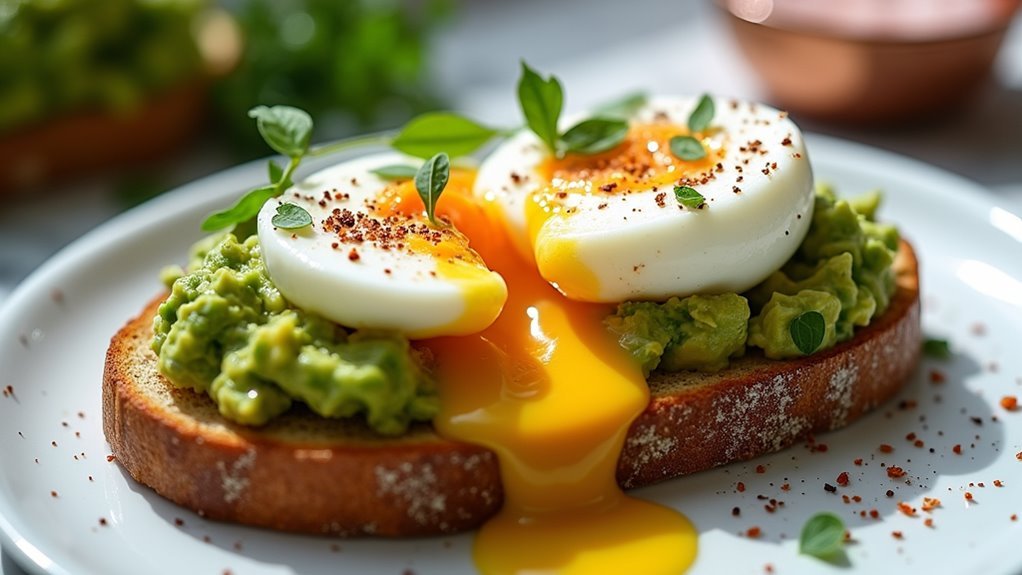
The sous vide egg technique transforms ordinary avocado toast into a restaurant-worthy delicacy.
At precisely 75°C/167°F for 14 minutes, eggs develop that perfect balance between runny yolk and set whites that elevates the entire dish.
After cooking, an ice bath helps firm up the outer whites while maintaining that luxurious yolk consistency.
The temperature precision is critical here – perhaps the most important factor in achieving consistent results. If your eggs cool too much in the ice bath, a quick rinse under warm water can restore their ideal serving temperature.
When precision matters, temperature control cannot be compromised – your perfect egg depends on it.
Many home cooks find this method intimidating at first, but with practice, it becomes second nature. Sous vide method ensures you are able to consistently deliver perfectly cooked eggs every time.
Complementary Toppings and Flavor Combinations
What makes avocado toast truly shine beyond the perfect egg? It’s the thoughtful combination of complementary toppings that elevate this simple dish to something extraordinary.
Fresh herbs like cilantro or chives add brightness, while a sprinkle of red pepper flakes or everything bagel seasoning introduces welcome heat or texture.
Perhaps a few thin radish slices or microgreens might provide a peppery contrast to the rich avocado.
For those seeking more substance, crispy bacon bits or smoked salmon transform breakfast into a hearty meal.
A drizzle of quality olive oil or a squeeze of lemon can tie everything together, enhancing the avocado’s natural creaminess.
Troubleshooting Common Egg Poaching Challenges
Even the most skilled home cooks occasionally face the frustration of egg whites that disperse into wispy clouds or yolks that break prematurely when attempting to create the perfect poached egg.
A common issue is water that’s either too turbulent or not hot enough. Aim for a gentle simmer around 180°F—not a rolling boil. Adding a tablespoon of white vinegar helps congeal the whites without affecting flavor considerably.
For those struggling with dispersing whites, try straining eggs through a fine mesh sieve first to remove the loose whites, or perhaps consider the plastic wrap method if traditional approaches aren’t working. Furthermore, it’s vital to ensure that cooling food to safe temperature before sealing any leftovers is observed to prevent bacterial growth.
Remember that practice makes perfect—sometimes it takes several attempts to develop the technique.
Frequently Asked Questions
Can I Prepare the Avocado Mixture Ahead of Time?
One might expect avocados to stay pristine for days, but reality differs. Preparing avocado mixture ahead is possible but limited to 24 hours refrigerated in an airtight container with lemon juice preventing oxidation.
How Do Sous Vide Eggs Compare Nutritionally to Other Cooking Methods?
Sous vide eggs retain more nutrients due to precise, gentle temperature control. They preserve delicate proteins better than boiling methods while maintaining comparable nutritional profiles to poached or soft-boiled preparations.
What’s the Best Bread Type for Maximum Flavor Absorption?
Like a sponge at the water’s edge, sourdough bread offers the best flavor absorption due to its open, porous crumb structure and tangy notes that complement rich toppings.
Can I Freeze Leftover Avocado Toast Components?
Freezing components separately yields best results. Toast freezes well for 2-3 months. Mashed avocado can freeze for 3-4 months with lemon juice added. Sous vide eggs don’t freeze effectively.
Are There Dairy-Free Alternatives for Creamy Toppings?
Like clouds of creaminess without the cow, dairy-free alternatives include coconut yogurt, cashew cream, tahini sauce, olive oil drizzles, or plant-based cream cheese for adding richness to avocado toast toppings.