Sous vide transforms ordinary carrots into mouthwatering glazed perfection at precisely 85°C (185°F) for 45 minutes. The sealed environment concentrates natural sweetness while ensuring even cooking throughout. After cooking, simply pour the contents into a hot pan and swirl until the liquid reduces to a glossy coating. A sprinkle of fresh parsley and flaky salt elevates this side dish to restaurant quality. The technique might seem technical, but the remarkable results speak for themselves.
Why Sous Vide Is the Secret to Perfect Glazed Carrots
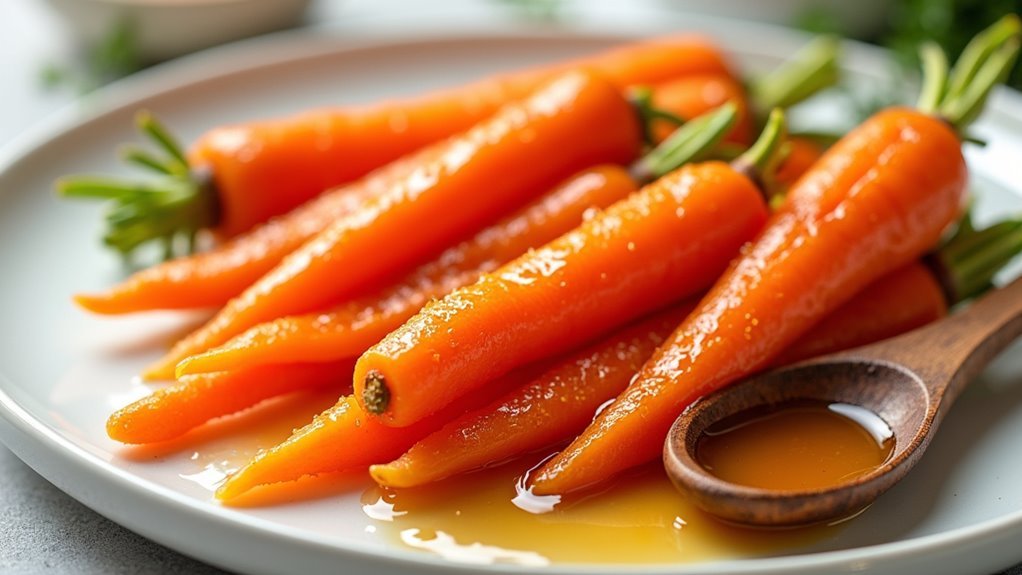
Precision is the ultimate game-changer when it comes to cooking vegetables perfectly.
Traditional methods leave too much to chance – a minute too long and carrots become mushy, too short and they’re unpleasantly crunchy.
Sous vide eliminates this guesswork.
At 85°C for 45 minutes, carrots reach that magical point where they’re tender yet maintain structural integrity.
The sealed environment also prevents flavor loss – instead, it concentrates.
Perhaps most importantly, the consistent temperature means every single carrot achieves identical doneness.
No more bite-testing or second-guessing.
The result? Perfectly glazed carrots that, I think, might actually convert vegetable skeptics. This technique showcases how sous vide preserves sweetness and tenderness, making it an ideal method for enhancing vegetables.
Preparation and Packaging Techniques
Now that you understand why sous vide creates superior glazed carrots, let’s talk about getting those vegetables ready for their warm bath.
Proper packaging guarantees those carrots cook evenly and absorb all the wonderful flavors we’ll be adding.
For perfect sous vide carrots, proper packaging isn’t optional—it’s the gateway to even cooking and maximum flavor absorption.
There are two effective methods that work particularly well for this recipe:
- Vacuum sealing – removes air completely for ideal results
- Water displacement – a budget-friendly alternative that works almost as well
- Seasoning before sealing – allows flavors to fully penetrate during cooking
- Arranging in single layer – guarantees even cooking throughout
Perhaps the most important thing to remember is avoiding air pockets, which can create uneven cooking spots. Vacuum sealing also prevents staleness in food by eliminating air contact, ensuring the freshest results during your sous vide process.
The Precise Cooking Method
Every successful sous vide carrot recipe hinges on precise temperature and timing control. For these glazed carrots, setting your sous vide machine to exactly 85°C (185°F) creates the perfect balance between tenderness and structure.
The 45-minute cooking duration isn’t arbitrary – it’s been tested to guarantee ideal texture development.
Whether using an Anova or Joule device, the key is maintaining consistent temperature throughout the process.
Perhaps the most common mistake is rushing this step, but patience yields remarkable results.
Once your water bath reaches temperature, simply submerge your sealed carrots and let science do the work.
The precision of sous vide eliminates the guesswork traditional methods introduce, especially considering that proper food preservation strategies should prioritize safety over convenience.
Finishing Touches for Restaurant-Quality Results
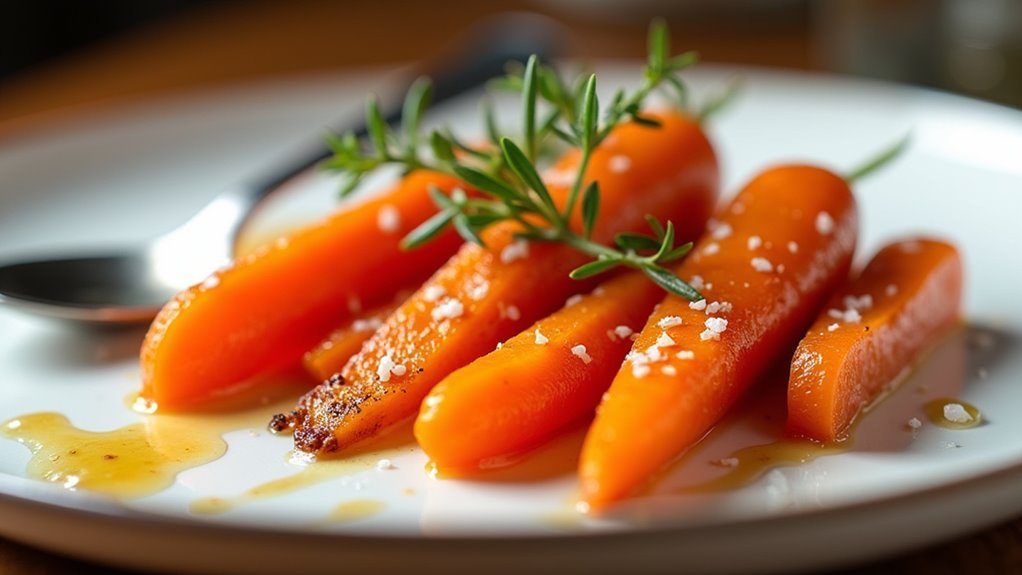
After transforming your carrots through the precise sous vide process, the final presentation elevates them from merely cooked vegetables to restaurant-worthy fare.
The glazing technique is perhaps the most essential step, as it concentrates flavors while adding that professional sheen that makes diners reach for their phones before taking a bite.
- Pour the entire sous vide bag contents into a large pan over medium-high heat
- Swirl the pan constantly until most liquid evaporates, creating a glossy coating
- Garnish with freshly chopped parsley and a sprinkle of flaky salt
- Serve immediately for ideal visual appeal and temperature. Additionally, using proper bag filling techniques ensures that your sous vide carrots are sealed correctly for optimal results before cooking.
Frequently Asked Questions
Can I Use Baby Carrots Instead of Full-Sized Carrots?
Baby carrots work perfectly for sous vide cooking, though they may require a slightly shorter cooking time. Their smaller size allows for faster heat penetration while maintaining the same texture quality.
How Long Can I Store Sous Vide Carrots in the Refrigerator?
Glistening with residual glaze, sous vide carrots can be safely refrigerated for up to 5 days when properly cooled and stored in an airtight container. Reheating maintains their delicate texture.
What Other Spices Complement Glazed Carrots Besides the Standard Recipe?
Glazed carrots pair well with warm spices such as cardamom, nutmeg, and star anise. Herbs like thyme and rosemary add earthiness, while ginger, cinnamon, and cumin offer aromatic complexity to the dish.
Can I Prepare the Carrots Ahead and Reheat Before Serving?
Yes, sous vide carrots can be prepared ahead of time and reheated before serving. Simply refrigerate after cooking, then warm in a pan while adding the glaze just before serving.
Is It Possible to Double the Recipe Without Affecting Cooking Time?
Simple vs. double batch—cooking time remains unchanged with sous vide’s immersion method. The recipe can be doubled easily, as temperature control is maintained regardless of quantity. Bag arrangement matters for even cooking.