Manual vs Automatic Vacuum Sealers: A Professional Comparison
As a food preservation specialist with extensive hands-on testing experience, understanding the key differences between manual and automatic vacuum sealers proves crucial for making an informed purchase decision. These kitchen appliances serve distinct purposes, from basic home food storage to advanced meal preparation needs.
Manual Vacuum Sealers:
- Require direct user control over the sealing process
- Generally more affordable and space-efficient
- Ideal for occasional use and smaller households
- Greater control over delicate foods
- Lower maintenance requirements
Automatic Vacuum Sealers:
- Offer hands-free operation with sensor technology
- Higher initial investment but enhanced convenience
- Perfect for bulk food preservation and sous vide cooking
- Multiple sealing modes and pressure settings
- Built-in safety features and consistent results
The choice between manual and automatic models depends on several critical factors: frequency of use, available counter space, budget constraints, and specific food storage requirements. Professional kitchens often prefer automatic models for high-volume operations, while home cooks might find manual sealers more practical for everyday needs.
Each option delivers measurable benefits in food freshness and storage longevity, with research showing properly sealed foods lasting 3-5 times longer than conventional storage methods.
Understanding Manual and Automatic Vacuum Sealing Systems
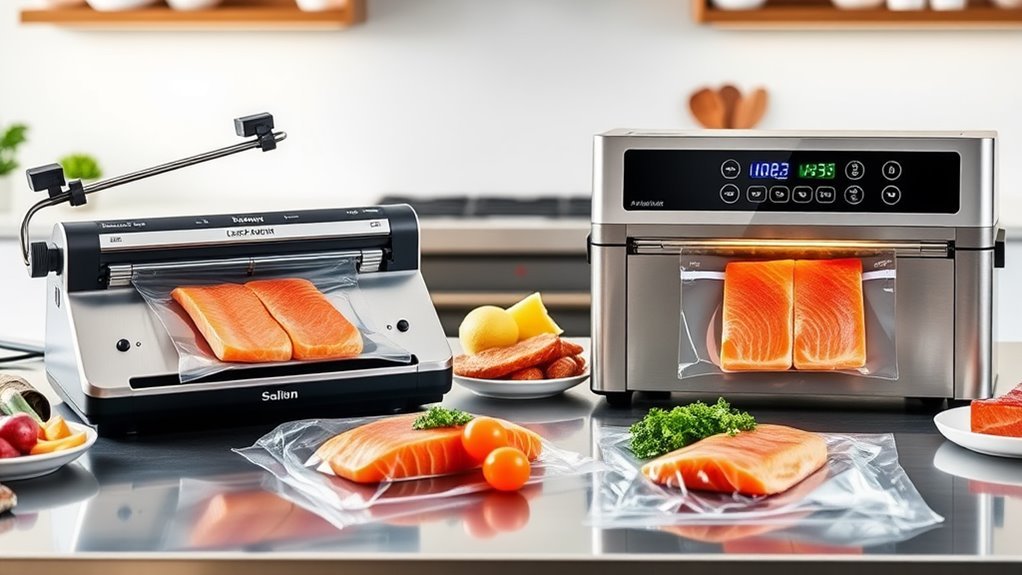
When it comes to preserving your food and keeping ingredients fresh, understanding the differences between manual and automatic vacuum sealers is essential for making the right choice.
I've found that while manual vacuum sealers offer a compact size and budget-friendly option for occasional use, automatic vacuum sealers really shine when it comes to high-volume tasks.
The packaging process is transformed with hands-free operation and advanced features like built-in cutters and adjustable sealing settings.
I'm particularly impressed by how automatic sealers handle a wider product range, including those tricky liquids and oddly-shaped items. Additionally, investing in commercial vacuum sealers can significantly enhance the efficiency of food preservation, especially for frequent use.
When you're deciding between the two, I'd recommend considering your intended usage frequency – if you're sealing items daily, an automatic sealer's efficiency will be worth the investment.
Key Features of Manual Vacuum Sealers
Manual vacuum sealers pack quite a punch with their impressive set of features, despite their simple design and operation. I've found these cost-effective options perfect for infrequent users like you who want quality air elimination without breaking the bank.
While monitoring during suction is necessary, I love how these machines offer several standout advantages:
- Their smaller size and lightweight design fit perfectly in kitchen drawers
- They're incredibly budget-friendly, typically costing between $20-$70
- The sealing process is straightforward and user-friendly
- They're ideal for homes with limited space
Though they require brand-specific bags and hand-filling before the sealing process, I've discovered these compact powerhouses deliver reliable results every time. Additionally, regular maintenance, including checking for loss of suction power, can help ensure these machines continue to perform effectively for your occasional food preservation needs, making them an excellent investment that won't overwhelm your kitchen or your wallet.
Benefits of Automatic Vacuum Sealing Technology
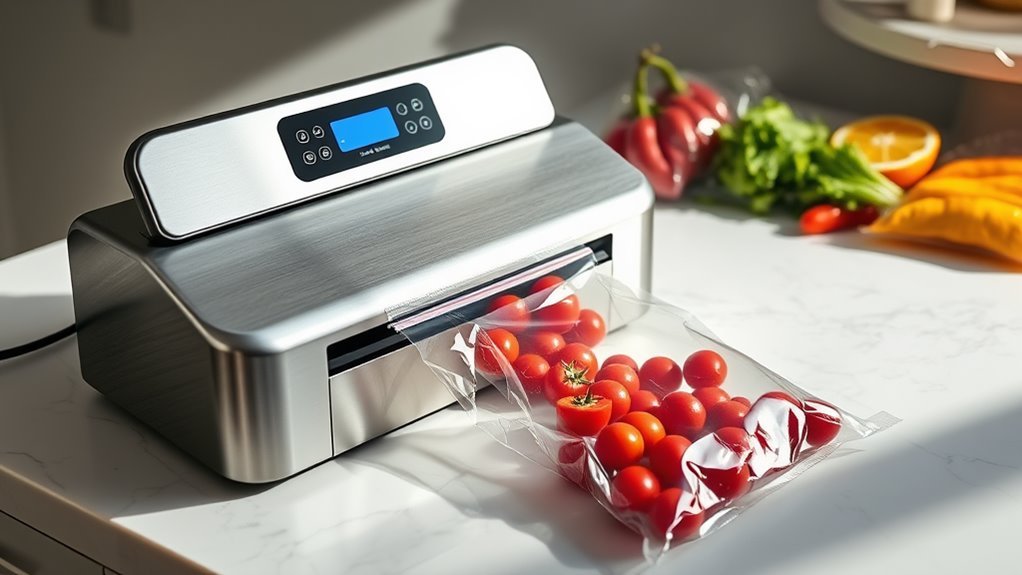
Three incredible advantages make automatic vacuum sealing technology a game-changer for busy kitchens and commercial settings.
First, you'll love the amazing packaging speed and efficiency these systems deliver through hands-free operation – no more manual filling! I'm particularly excited about how they reduce manual labor while maintaining consistently high-quality seals.
Second, these machines excel at high-volume performance, perfect for commercial use where you need to package products quickly and reliably.
The advanced features, like auto-detection and temperature control, guarantee peak sealing quality every time.
Finally, you'll see significant savings in operational costs since the automated system eliminates the need for multiple workers and reduces errors. Additionally, using these machines aligns with industry standards for food safety, ensuring that your packaged goods remain fresh and uncontaminated.
It's truly remarkable how one machine can streamline your entire packaging workflow!
Cost Comparison Between Manual and Automatic Systems
While automatic vacuum sealers offer impressive features, the price difference between manual and automatic systems can be substantial.
I've found that manual vacuum sealers are perfect for casual users, costing between $20-$70, while automatic models with advanced technology can range from $40-$200+.
When considering your investment, here's what I recommend evaluating:
- Frequency of use – high-volume users benefit more from automatic systems
- Initial budget constraints – manual systems offer lower upfront costs
- Time value – automatic systems reduce user intervention
- Long-term expenses – consider compatibility with third-party bags
Additionally, remember that using a vacuum sealer can significantly extend shelf life of your food items, making it a worthwhile consideration for any user.
If you're sealing foods occasionally, a manual system might be your best bet.
However, if you're planning frequent use, an automatic sealer's efficiency and potential savings on ongoing costs could justify the higher initial investment.
Space Requirements and Storage Considerations
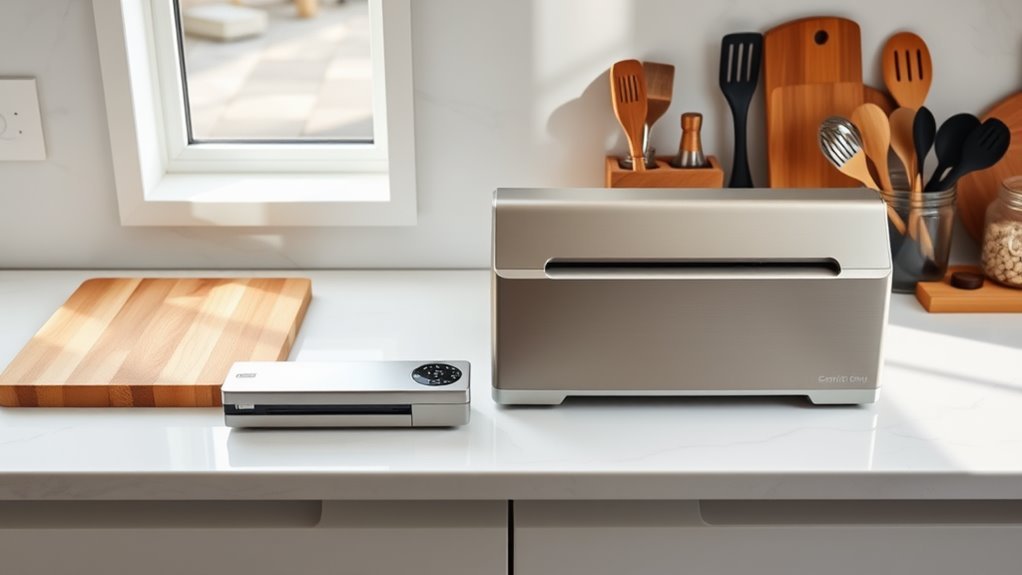
When planning your kitchen storage, space considerations can make or break your vacuum sealer choice. I've found that manual vacuum sealers are incredibly compact, fitting perfectly in kitchen drawers, while automatic models need dedicated counter space due to their bulkier design.
| Feature | Manual Sealers | Automatic Sealers |
|---|---|---|
| Size | Compact | Bulky |
| Storage Location | Drawer/Cabinet | Countertop |
| Accessories Needed | Minimal | Multiple |
| Maintenance Space | Low | Moderate |
| Storage Flexibility | High | Limited |
Let me tell you, your kitchen layout plays a huge role in this decision. If you're tight on space, I'd recommend a manual sealer – they're super convenient with minimal storage requirements. But if you've got room to spare and love having all the accessories at hand, an automatic sealer might be your perfect match. Additionally, it's essential to consider the food preservation benefits that each type offers, as they can influence your overall choice.
Performance Analysis in Commercial Settings
Since efficiency drives commercial food operations, I've seen firsthand how automatic vacuum sealers outshine their manual counterparts in high-volume settings.
When comparing performance, automatic models consistently deliver superior results in commercial environments.
Let me break down the key advantages of automatic vacuum sealers:
- Enhanced packaging speed through integrated filling and sealing operations
- Reduced labor costs by minimizing manual intervention
- Improved sealing precision with advanced technology
- Fewer errors compared to manual handling
While the initial investment might seem steep, I can't emphasize enough how automatic sealers justify their cost through faster turnaround times and consistent quality. Additionally, automatic vacuum sealers facilitate sous-vide cooking by providing an efficient and reliable method for sealing food items, which enhances both flavor and presentation.
In my experience, businesses that switch from manual to automatic systems see dramatic improvements in efficiency, making it a smart choice for commercial settings where volume matters.
Home Usage Effectiveness and Efficiency
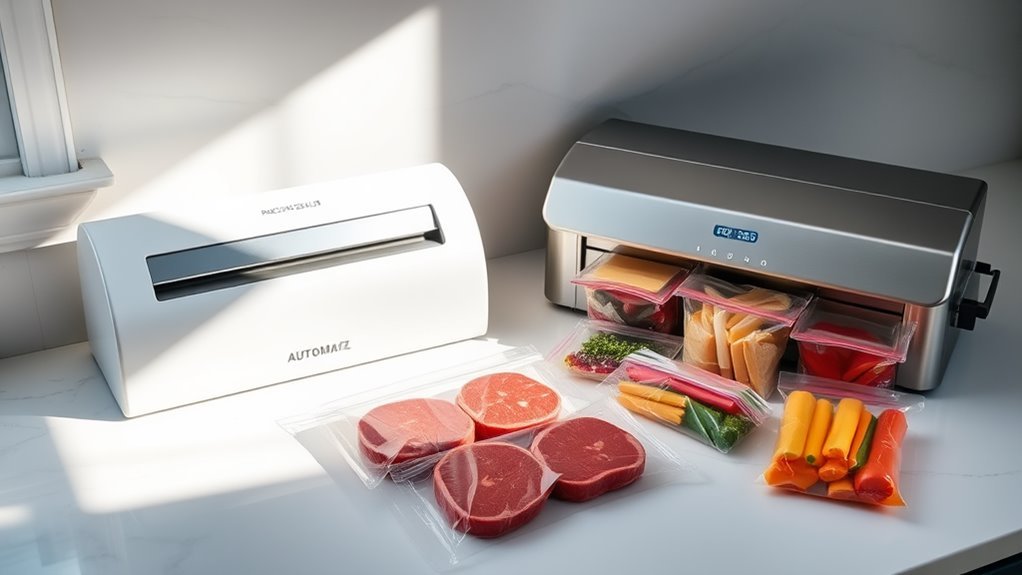
Unlike commercial settings, home usage presents unique considerations when choosing between manual and automatic vacuum sealers.
I've found that while manual vacuum sealers offer great affordability for home-use, starting at just $20, they do require more hands-on attention during the sealing process.
If you're looking for maximum efficiency, automatic vacuum sealers shine with their "set and forget" functionality, letting you multitask while ensuring consistent food preservation results.
The stronger motor strength in automatic models really makes a difference when handling wet ingredients, and I love how they minimize user error.
While they're pricier, ranging up to $200, their effectiveness in creating perfect seals is remarkable.
For busy home cooks who value both time and quality, I'd say the investment in an automatic sealer's enhanced capabilities is worth considering. Additionally, using a vacuum sealer can significantly extend the shelf life of food, which is particularly beneficial for those wanting to reduce food waste.
Maintenance and Durability Factors
The long-term reliability of your vacuum sealer deserves just as much attention as its immediate performance.
I've found that manual vacuum sealers, with their simpler design and fewer moving parts, often require less maintenance over time. However, don't let that be your only deciding factor!
When it comes to durability and maintenance, here's what you need to know:
- Manual vacuum sealers have minimal moving parts, reducing potential breakdowns.
- Automatic sealers create stronger, more consistent seals that prevent food waste.
- Advanced features in automatic models may need regular calibration.
- Both types benefit from proper cleaning procedures.
- Regular upkeep and maintenance, including monitoring temperature, is crucial in preventing vacuum sealer problems.
While automatic vacuum sealers need more specialized maintenance due to their advanced features, they make up for it with superior seal quality.
The key to extending the lifespan of either type is consistent user intervention and proper care.
Food Preservation Quality Results
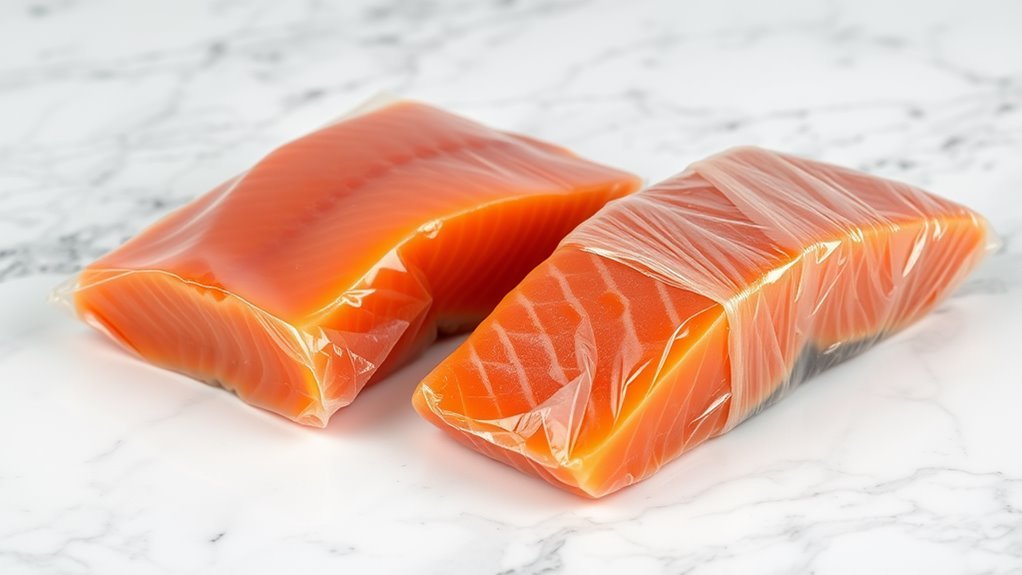
When comparing food preservation results between manual and automatic vacuum sealers, I've discovered that consistency makes all the difference. Automatic models excel at delivering reliable sealing quality through precise vacuum pressure and sealing times, while manual sealers can be hit-or-miss depending on technique.
| Feature | Manual Sealers | Automatic Models |
|---|---|---|
| Sealing Quality | Variable | Consistent |
| Moisture Handling | Poor | Excellent |
| Food Longevity | 2-3x longer | 3-5x longer |
I'm amazed by how automatic models' advanced features enhance preservation quality. They're particularly effective at preventing freezer burn and handling wet foods. The built-in marinating functions and multiple sealing modes mean I can optimize food preservation for different ingredients. Trust me, if you're serious about food preservation, you'll appreciate the precision that automatic vacuum sealers provide. Additionally, their efficacy in maintaining nutritional value makes them a far better choice for health-conscious individuals.
Operating Time and Labor Requirements
Beyond preservation quality, operating speed and labor demands highlight major differences between manual and automatic vacuum sealers.
I've found that automatic sealers are game-changers in high-volume settings, offering incredible efficiency through continuous operation with minimal supervision.
Let me break down the key advantages of automatic sealers in a commercial environment:
- They perform multiple functions simultaneously, cutting operating time considerably.
- Their streamlined sealing process requires less hands-on management.
- They can run continuously with minimal operator intervention.
- They dramatically reduce labor requirements and associated costs.
Additionally, the incorporation of smart sensors in automatic sealing systems enhances precision and efficiency, ensuring optimal operational performance.
When you're handling large volumes, manual vacuum sealers can really slow you down since they need constant attention and hands-on operation.
That's why I always recommend automatic sealers for serious commercial operations – they'll save you both time and labor costs.
Conclusion
I've found that choosing between manual and automatic vacuum sealers is like deciding between a trusty horse and a Tesla – both'll get you where you need to go, just differently. After exploring all aspects, I'm convinced that manual sealers are perfect for casual users watching their budget, while automatic systems shine for frequent sealers who value convenience. Your sealing frequency and storage needs should guide your final choice.