I’ve transformed pork tenderloin using sous vide cooking—it’s a game-changer! By marinating the meat for at least 4 hours (overnight is better) and cooking at precisely 140°F for 2 hours, you’ll get incredibly juicy, tender results. The marinade combines savory and sweet notes while acids help tenderize. After cooking, don’t skip the quick sear in a smoking hot cast iron skillet to create that perfect golden crust. The technique guarantees foolproof perfection every time you try it.
Why Sous Vide Creates Perfection Every Time
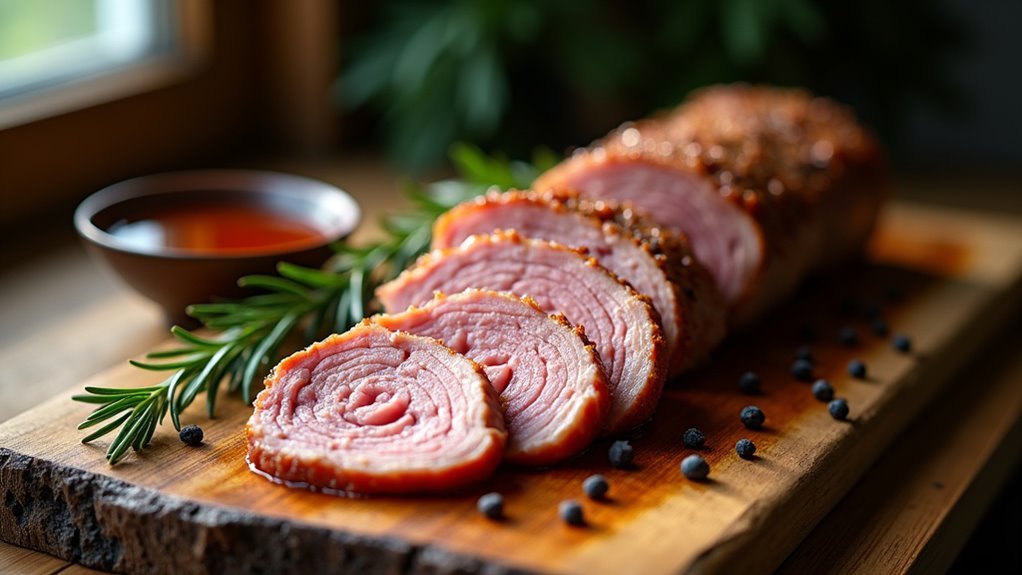
When it comes to cooking pork tenderloin, I’ve found that sous vide creates absolute perfection every time, no matter how inexperienced you might be in the kitchen.
It’s honestly a game-changer for consistent results. The magic happens because you’re controlling the temperature with incredible precision. At 140°F for 2 hours, the collagen breaks down just right while the meat stays tender and juicy. Not only does sous vide cooking ensure optimal tenderness, but it also allows you to experiment with different fresh herbs for enhanced flavor profiles.
No more overcooked, dry pork! I think what I appreciate most is the forgiveness of the method. You can’t really mess it up, plus you’re free to prep other dishes while it cooks.
Perhaps that’s why I’m so evangelical about it.
The Ultimate Flavor-Packed Marinade
Although I’m passionate about the sous vide cooking method, I’d argue that what truly elevates this pork tenderloin is the marinade.
I’ve experimented with dozens of combinations, but this blend strikes the perfect balance between savory depth and subtle sweetness.
The magic happens when you allow the flavors to penetrate the meat—at least 4 hours, though overnight is even better.
Time transforms this marinade from mere flavoring to culinary alchemy—patience rewards with depth impossible to rush.
I think the acids in the marinade help tenderize while infusing flavor throughout.
- Garlic and ginger releasing their aromatic oils into the meat
- Soy sauce caramelizing during the final sear
- Honey creating delicate sweetness against savory elements
- Fresh herbs adding brightness that cuts through richness
The sous vide method provides optimal results by ensuring even cooking and tender meat, making it a fantastic technique to use after marinating.
Step-by-Step Sous Vide Technique
First, I seal my marinated pork in a bag using either vacuum sealing (perfect for marinades if your machine can handle liquids) or the water displacement method, which works just as well in my experience. It’s important to note that using a vacuum sealer can extend shelf life significantly by removing air that causes spoilage. Next, I cook at 140°F for 2 hours—though I think 3 hours if it’s frozen. The temperature is non-negotiable for that perfect medium-rare texture, but perhaps you might prefer it slightly different. Finally, pat it dry and sear quickly—just 1-2 minutes per side in a screaming hot cast iron. That’s it!
Achieving the Golden Sear
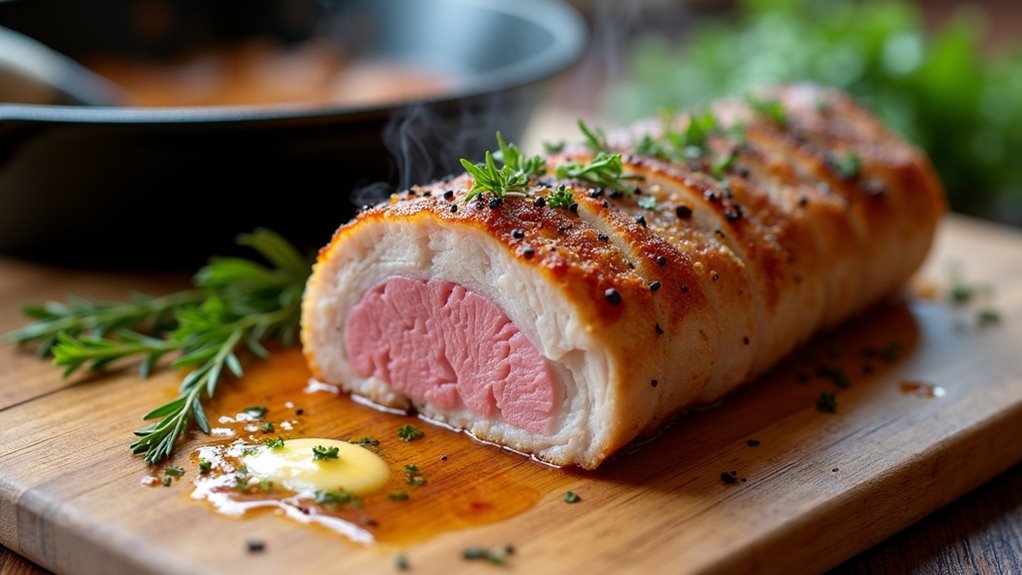
After spending hours getting that tenderloin to the ideal internal temperature, I’d be crazy not to finish strong. I usually pat the meat completely dry first—this is non-negotiable for a proper sear.
- Cast iron skillet smoking hot, the pork sizzling as it makes contact
- Golden-brown crust forming as the Maillard reaction works its magic
- Aromatic steam rising, filling the kitchen with savory promise
- The satisfying hiss when each new side touches the pan
Perhaps the searing step is where patience pays off most. Properly vacuum sealing the meat beforehand enhances the flavors, ensuring a more delicious final dish.
Food Safety and Storage Tips
While sous vide cooking greatly reduces food safety concerns, I’ve learned that proper handling still matters tremendously.
I always make sure my pork reaches at least 140°F, which eliminates harmful bacteria while keeping it juicy.
For storage, I’ve found that cooked tenderloin lasts 3-4 days in the refrigerator.
Sometimes I’ll batch cook and freeze portions for up to 2 months – perhaps even longer, though I prefer using them sooner for better quality.
If you’ve got leftovers, I think reheating at 130°F for about 30 minutes works perfectly.
Just remember to chill quickly after cooking! Additionally, ensure to always cool food properly before vacuum sealing to prevent the growth of anaerobic bacteria.
Pairing Suggestions and Serving Ideas
After preparing and storing your tenderloin properly, you’ll want to think about what goes with it! I find that a well-marinated pork tenderloin deserves sides that complement without overshadowing its flavor.
The goal is balance – sides that dance with your tenderloin rather than steal its spotlight.
Perhaps a bright, acidic component helps cut through the richness of the meat.
- Roasted garlic mashed potatoes with a pool of melted butter creating little golden lakes between fluffy peaks
- Crisp apple and fennel slaw with sharp vinaigrette glistening on the thinly-sliced vegetables
- Charred broccolini drizzled with lemon and scattered with toasted pine nuts
- Warm dinner rolls for soaking up those incredible meat juices left on the plate
Frequently Asked Questions
Can I Reuse the Marinade After Sous Vide Cooking?
I wouldn’t reuse marinade that’s been in contact with raw meat. If you want to save it, boil it thoroughly for 5+ minutes first to kill any harmful bacteria.
How Does Altitude Affect Sous Vide Cooking Times?
Altitude doesn’t considerably affect sous vide cooking times because the water bath maintains a precise temperature. I don’t need to adjust my cooking time of 2 hours for pork tenderloin at different elevations.
Is Pork Tenderloin Safe to Eat at 135°F Instead of 140°F?
I’d advise against cooking pork tenderloin at 135°F. While some chefs do this, 140°F is the safer temperature that still maintains tenderness while eliminating potential food safety concerns.
Can I Use a Slow Cooker as an Alternative to Sous Vide?
While you can use a slow cooker, it won’t replicate sous vide’s precision temperature control. I’d recommend a proper sous vide machine for that perfect 140°F pork tenderloin texture every time.
Will Marinating Longer Than Overnight Affect the Meat Texture?
I wouldn’t marinate pork tenderloin longer than overnight. Extended acid exposure can break down proteins too much, giving you mushy meat instead of tender. Stick to 8-12 hours maximum.