Sous vide cooking revolutionizes your kitchen game through precise temperature control in a water bath. You’ll need an immersion circulator, container, vacuum sealer, and bags to get started. By sealing ingredients and cooking them at exact temperatures, you’ll achieve consistently tender, juicy results that traditional methods can’t match. After cooking, don’t skip the essential searing step for that perfect crust. With practice, you’ll develop an intuition about timing and temperature that transforms ordinary ingredients into extraordinary meals.
What Is Sous Vide and Why You Should Try It
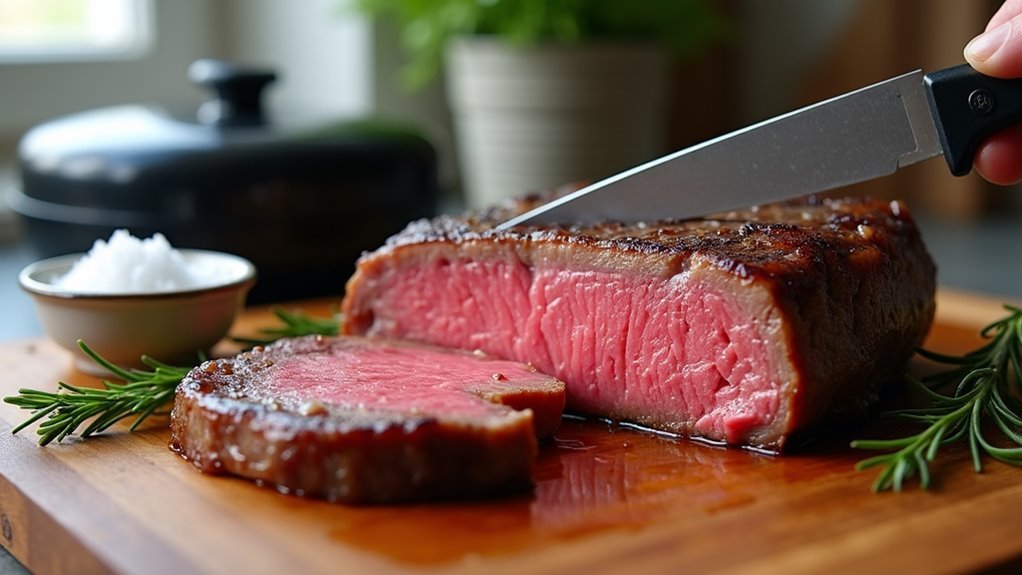
When you first hear the term “sous vide,” you might think it’s some fancy French cooking technique that’s best left to professional chefs.
But honestly, it’s quite accessible – and might even revolutionize your home cooking experience.
Simply put, sous vide involves sealing food in an airtight bag and cooking it in a temperature-controlled water bath.
Sous vide transforms ordinary ingredients into extraordinary meals through the magic of precise temperature control.
This method preserves flavors and juices better than traditional cooking, giving you consistently perfect results every time.
I think what’s really amazing about sous vide is how foolproof it can be.
Whether you’re meal prepping or hosting dinner guests, you’ll achieve restaurant-quality dishes with minimal effort. The sous vide method ensures tender and juicy results through precise temperature control.
Essential Equipment for Sous Vide Success
To get started with sous vide cooking, you’ll need a few key pieces of equipment. I think the most important is obviously the sous vide immersion circulator itself, which maintains precise water temperature. Beyond that, you’ll want containers and sealing methods that work for your cooking style. Vacuum sealing enhances sous vide cooking by ensuring even temperature distribution, locking in flavors and moisture, and keeping food fresh longer.
| Equipment | Purpose | Recommendation | Price Range | Necessity |
|---|---|---|---|---|
| Immersion Circulator | Temperature control | Anova or Joule | $100-300 | Essential |
| Container | Holds water bath | 12qt Rubbermaid | $15-30 | Essential |
| Vacuum Sealer | Creates airtight bags | FoodSaver | $60-200 | Helpful |
| Bags | Hold food | BPA-free | $10-30 | Essential |
| Cast Iron Pan | For searing | Lodge | $20-50 | Recommended |
Mastering Temperature and Timing
The heart of sous vide cooking lies in understanding the critical relationship between temperature and timing.
These two variables determine everything about your finished dish – from doneness to texture.
For proteins like steak, a few degrees can mean the difference between rare and medium. I’ve found that 129°F gives you that perfect rare center, while 135°F yields medium-rare results.
Time matters too, especially with tougher cuts. Perhaps a chuck roast needs 24+ hours at 131°F, while a tender filet might only need an hour.
It’s not an exact science sometimes, but you’ll develop intuition with practice. Additionally, cooking chicken breasts at precise temperatures ensures they are perfectly juicy and tender.
The Perfect Sear: Finishing Techniques
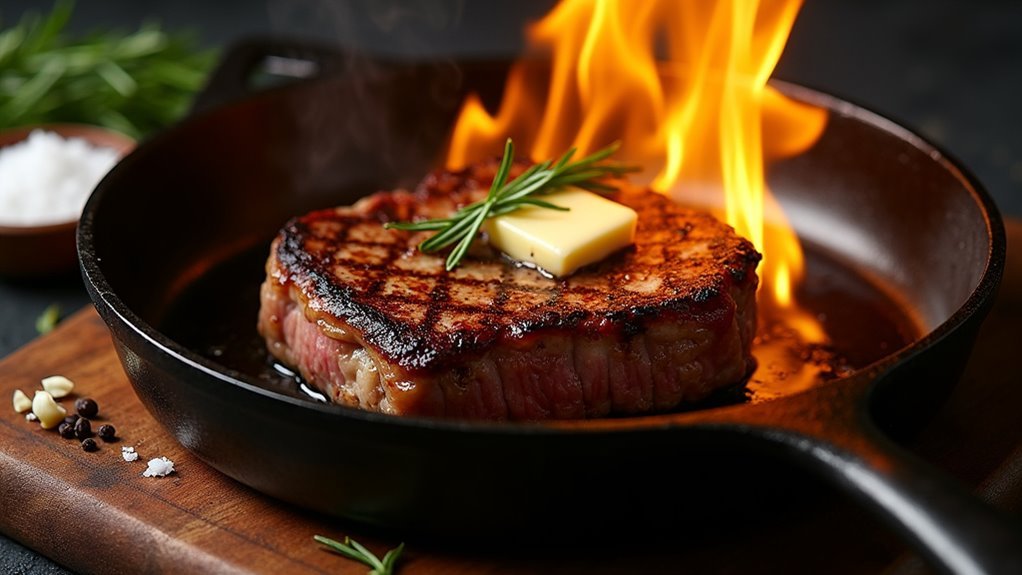
Achieving a perfect sear after sous vide cooking transforms your dish from good to extraordinary.
After all that precise temperature control, you’ll want to nail this final step that adds texture, flavor, and visual appeal.
Pat your meat thoroughly dry first—I can’t stress this enough.
Any moisture will steam rather than sear, and you’ll miss that beautiful Maillard reaction.
Heat your cast iron skillet until it’s smoking hot.
Add a high smoke-point oil like grapeseed or avocado, then sear each side for just 30-45 seconds.
Perhaps try butter and herbs at the end for extra flavor, though it’s not strictly necessary. Adding this final sear not only enhances flavor but also creates a textured crust that complements the perfectly cooked interior of your meat.
Five Must-Try Sous Vide Recipes for Beginners
Starting your sous vide journey doesn’t have to be complicated – these five beginner-friendly recipes will help you master the technique while creating impressive meals.
First, try Sous Vide Steak – perhaps the perfect introduction since it’s nearly impossible to overcook. Chicken Piccata offers tender, juicy results that’ll convert any skeptic. I think Garlic Lemon Butter Salmon is worth attempting early on – it’s quick and the flavors are incredible.
For weekend projects, Starbucks Copycat Egg Bites are surprisingly simple yet impressive. Finally, when you’re feeling confident, tackle a Sous Vide Chuck Roast – it transforms an inexpensive cut into something truly special, showcasing the precise temperature control essential for sous vide desserts.
Expert Tips and Troubleshooting Common Issues
Even after mastering the basics of sous vide cooking, you’ll inevitably encounter some head-scratching moments when results don’t match your expectations. I think we’ve all been there – that perfectly timed steak that somehow ended up tough, or chicken that seemed a bit too pink for comfort.
| Issue | Solution |
|---|---|
| Bag floating | Use sous vide weights or heavy spoons |
| Rubbery texture | Lower your cooking temperature slightly |
| Insufficient sear | Pat meat extremely dry before searing |
| Watery results | Don’t overfill bags with vegetables |
| Temperature drop | Pre-heat water longer before adding food |
Perhaps the most overlooked trick is resting your meat post-sear. This redistributes juices and guarantees perfection on the plate. Additionally, keeping your cooking temperature consistent is crucial for achieving desired results like tender, flaky fish or juicy meats.
Frequently Asked Questions
Can You Sous Vide Frozen Food Directly Without Thawing?
In a million years, you’d never guess how easy it is! You can sous vide frozen food directly, but you’ll need to add 50% more cooking time to guarantee it’s thoroughly cooked.
Is It Safe to Leave Sous Vide Food at Room Temperature?
No, you shouldn’t leave sous vide food at room temperature for over two hours. It can enter the danger zone (40-140°F), where bacteria multiply rapidly. Refrigerate promptly after cooking.
Can Sous Vide Bags Be Reused for Multiple Cooking Sessions?
You shouldn’t reuse sous vide bags as they can harbor bacteria and may degrade after exposure to heat. It’s safer to use fresh bags for each cooking session.
How Does Altitude Affect Sous Vide Cooking Times and Temperatures?
At higher altitudes, water boils at lower temperatures. You’ll need to increase your sous vide temperature slightly (about 1°F per 500ft elevation) for the same results, but cooking times remain unchanged.
Can Sous Vide Cooking Help Tenderize Tough, Inexpensive Cuts of Meat?
Yes, sous vide cooking excels at tenderizing tough cuts. You’ll transform cheap meats like chuck roast into buttery-soft delicacies by breaking down collagen during the long, low-temperature cooking process.