To master sous vide chuck roast, you’ll need to cook at 136°F for 48 hours—this transforms tough collagen into gelatin, creating tender, edge-to-edge pink meat. Season simply with salt, herbs like rosemary and thyme, and a light coating of oil before vacuum sealing. After cooking, pat the meat completely dry, then sear quickly (1-2 minutes per side) in a screaming-hot cast iron pan. This method works for frozen roasts too, no extra time needed.
The Science Behind Sous Vide Chuck Roast
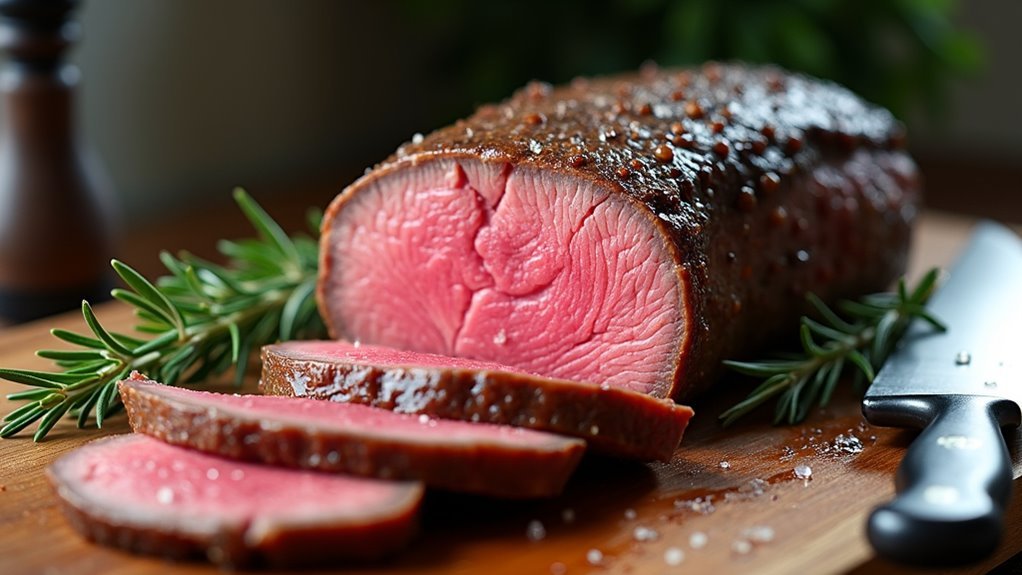
While many home cooks might view sous vide as just another trendy cooking method, the science behind it truly transforms tough cuts like chuck roast into something extraordinary.
It’s all about collagen conversion – that tough connective tissue in chuck roast slowly breaks down into gelatin at precise temperatures.
What makes sous vide special is the controlled environment. When you cook at exactly 136°F for 48 hours, you’re giving those tough fibers time to soften without overheating the proteins.
I think this precision is why you’ll get that perfect edge-to-edge rosy color that’s nearly impossible with conventional methods. Additionally, cooking sous vide allows for the retention of essential nutritional value, making this method even more advantageous for maintaining the quality of your food.
Preparing Your Chuck Roast for Sous Vide Success
Three critical steps stand between you and sous vide chuck roast perfection, and they all happen before your meat touches the water bath.
First, proper trussing with butcher’s twine maintains that appealing round shape and guarantees even cooking throughout.
Then comes the seasoning—I think a balanced approach works best, with salt as your non-negotiable foundation.
For truly phenomenal results, consider:
- An aromatic blend of rosemary and thyme that’ll make your kitchen smell heavenly
- A light coating of olive oil to help those herbs adhere properly
- A restrained hand with garlic powder instead of fresh (which can turn bitter)
To elevate the flavor profile further, you might also experiment with perfect doneness as achieved through precise temperature control from sous vide cooking techniques.
Temperature and Time Guidelines for Perfect Results
Now that your chuck roast is properly prepared, let’s talk about the heart of sous vide cooking—getting the temperature and time just right.
I think this is where most people get nervous, but it’s actually quite simple.
For that perfect edge-to-edge rosy color, aim for 136°F for 48 hours. Yes, that’s two full days!
If you prefer medium doneness, 145°F works well.
Perhaps the most important thing to remember is avoiding temperatures that are too high during long cooks—it’ll ruin your meat’s texture.
Temperature discipline is essential for long sous vide cooks—excessive heat destroys the delicate proteins that give meat its perfect texture.
Coming from frozen? No problem. The same 48-hour window should be plenty. Additionally, for enhanced flavor infusion, consider using vacuum sealing for marinating your chuck roast before sous vide cooking to achieve a deeper flavor penetration.
Searing Methods to Enhance Flavor and Appearance
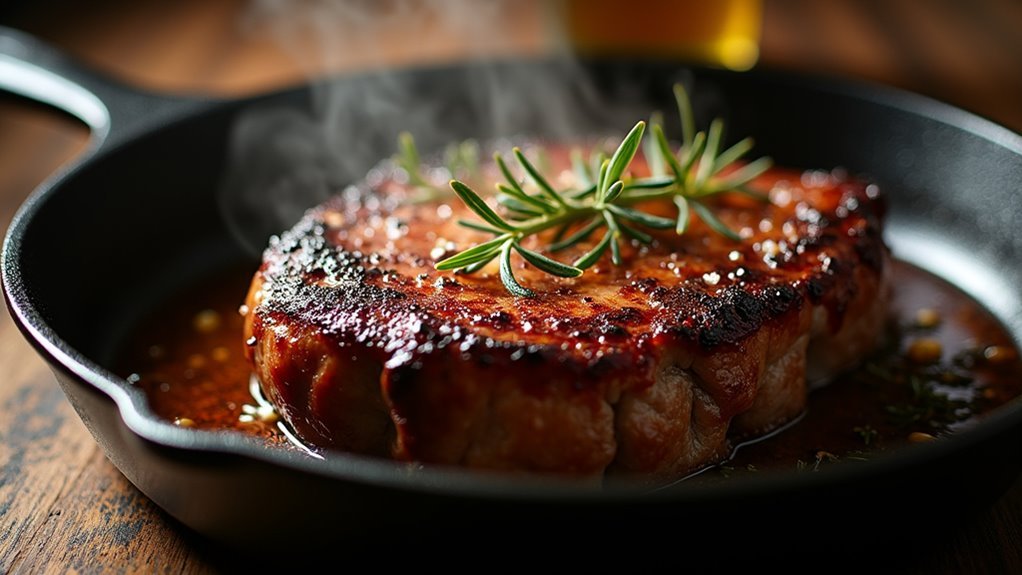
After your chuck roast has spent those long hours in the sous vide bath, it’s time for perhaps the most exciting part—the sear.
This final step transforms your perfectly cooked meat from pale and unappetizing to mouthwatering with that delicious crust we all crave.
For the best results when searing your chuck roast:
- Pat the meat completely dry—moisture is the enemy of a good crust!
- Use extremely high heat for a quick 1-2 minute sear per side
- Consider a cast iron pan, torch, or hot grill depending on what you have available
Additionally, vacuum sealing your roast prior to cooking can help protect against moisture, ensuring your meat retains its juicy flavor without unwanted liquid interference.
I think the sear is where the magic happens, turning science into art.
From Frozen to Fabulous: Working With Cold Cuts
Many home cooks wonder if they’ve ruined dinner plans when they realize they forgot to defrost that chuck roast. Good news! Your sous vide setup can handle frozen cuts perfectly well, perhaps even with advantages.
| Frozen Chuck Roast Tips | Details |
|---|---|
| Repackaging | Not necessary unless bag is damaged |
| Cook Time | Same 48 hours as thawed meat |
| Temperature | Maintain 136°F for medium-rare |
| Water Level | Check more frequently for evaporation |
| Seasoning | Apply immediately before cooking |
Simply place your frozen roast directly in the water bath. I think the only real difference you’ll notice is that it’ll take slightly longer to come up to temperature initially. The extended 48-hour cook time guarantees it’ll still become wonderfully tender. Additionally, using vacuum sealing can enhance the flavor retention of your chuck roast, ensuring that the taste remains rich and enjoyable.
Community Tested Tips and Variations
Community wisdom has transformed the way I approach sous vide chuck roast over the years.
I’ve discovered that what works in my kitchen mightn’t be universal, but sharing these experiences has elevated all our cooking.
Several reader innovations stand out:
- Try combining sous vide with 1-2 hours of smoking at 225°F afterward for incredible bark without losing tenderness.
- Consider a coffee rub (just use it after cooking to avoid acid problems).
- Use the bag juices for an intensely flavorful gravy rather than discarding.
Perhaps the most valuable lesson?
Don’t be afraid to experiment—even “mistakes” usually taste pretty good. Sous vide cooking empowers home cooks to achieve restaurant-quality results while providing precise temperature control for perfectly cooked meat.
Frequently Asked Questions
Can I Reuse the Sous Vide Water for Multiple Cooking Sessions?
Yes, you can reuse your sous vide water for multiple sessions. Just make sure you’re using clean containers and regularly check for any debris or contamination between uses.
Does Sous Vide Chuck Roast Shred Well for Sandwiches and Tacos?
You’re barking up the right tree! Sous vide chuck roast shreds beautifully for sandwiches and tacos, especially when cooked longer (48 hours) at 136°F, giving you that perfect pull-apart texture you’re craving.
How Do Leftovers Reheat Without Becoming Overcooked or Dry?
Reheat leftovers at a low temperature (275°F) with a splash of beef broth. You’ll maintain moisture while avoiding overcooking. Alternatively, use your microwave on 50% power with a damp paper towel covering.
What Wine Pairs Best With Sous Vide Chuck Roast?
While you might worry about wine selection being complicated, it’s not! You’ll find a bold red like Cabernet Sauvignon or Malbec pairs beautifully with your sous vide chuck roast’s rich flavors.
Can I Add Vegetables to the Sous Vide Bag With Chuck Roast?
You shouldn’t add vegetables to the sous vide bag with chuck roast. They’ll release water, diluting flavors, and cook at different rates. Instead, cook your veggies separately after the meat’s done.