Achieving restaurant-quality steak frites at home might seem intimidating, but sous vide cooking makes it surprisingly accessible. The method guarantees perfect edge-to-edge doneness at 131°F for ribeye, while properly soaked and coated potatoes deliver golden, crispy frites. A cast iron skillet provides that essential final sear for a beautiful crust. Perhaps the most satisfying part is how consistent results become with this technique. The perfect pairing awaits in your kitchen.
Sous Vide Cooking: The Secret to Perfectly Tender Ribeye
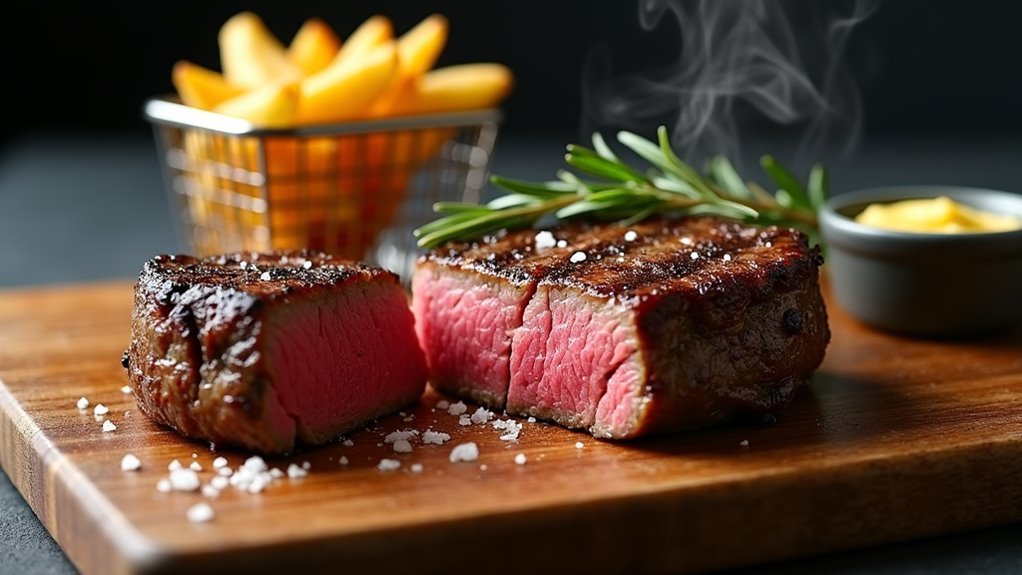
While many home chefs struggle with achieving that perfect steak consistency, sous vide cooking has revolutionized the way ribeye can be prepared at home.
By maintaining a precise temperature of 55C/131F for about 1.5 hours, this method breaks down the collagen in the meat for enhanced tenderness.
Temperature precision is the secret weapon in sous vide cooking, transforming tough ribeye into butter-soft perfection through targeted collagen breakdown.
What makes sous vide special is the edge-to-edge rosy color it creates – perhaps the most distinctive feature compared to traditional methods.
You’ll need reliable equipment though; the Anova Precision Cooker or Breville Joule are solid choices.
The Anova offers both manual and mobile control, which I find particularly helpful for kitchen multitaskers. Additionally, precision in temperature and time is crucial for achieving perfect doneness, ensuring your steak cooks just right every time.
Essential Equipment for Restaurant-Quality Steak Frites
Success in creating restaurant-quality steak frites at home relies heavily on having the right tools at your disposal. The difference between a good steak and a great one often comes down to equipment that maintains precise temperature control and enables proper searing techniques.
I think most home cooks underestimate how significant these tools really are.
- Sous Vide Machine – Either an Anova Precision Cooker with manual controls or the Breville Joule (though this one requires a mobile device)
- 12-quart Container with Lid – Reduces evaporation during longer cooking sessions
- Cast Iron Skillet – Perhaps the most important tool for achieving that restaurant-quality sear after sous vide cooking. Incorporating a sous vide cooking method not only ensures consistent doneness but also enhances the steak’s juiciness and flavor.
Step-by-Step Cooking Method: From Water Bath to Sizzling Sear
Mastering the perfect steak begins with precise temperature control in the sous vide water bath. Setting the machine to 55°C/131°F creates that coveted edge-to-edge rosy interior that’s nearly impossible with traditional methods.
After seasoning the ribeye with salt, pepper, and perhaps some crushed garlic and rosemary, it’s sealed—either vacuum-packed or using the water displacement method—and immersed for 1.5 hours.
This time allows collagen breakdown while maintaining moisture and preserving nutrients through vacuum sealing technology.
The final step transforms good into extraordinary: thoroughly pat the steak dry (this is essential), then sear in a screaming-hot cast iron skillet for just 60-90 seconds per side.
The result? A perfect crust encasing that precisely cooked interior.
Mastering Crispy Frites and Flavorful Dipping Sauce
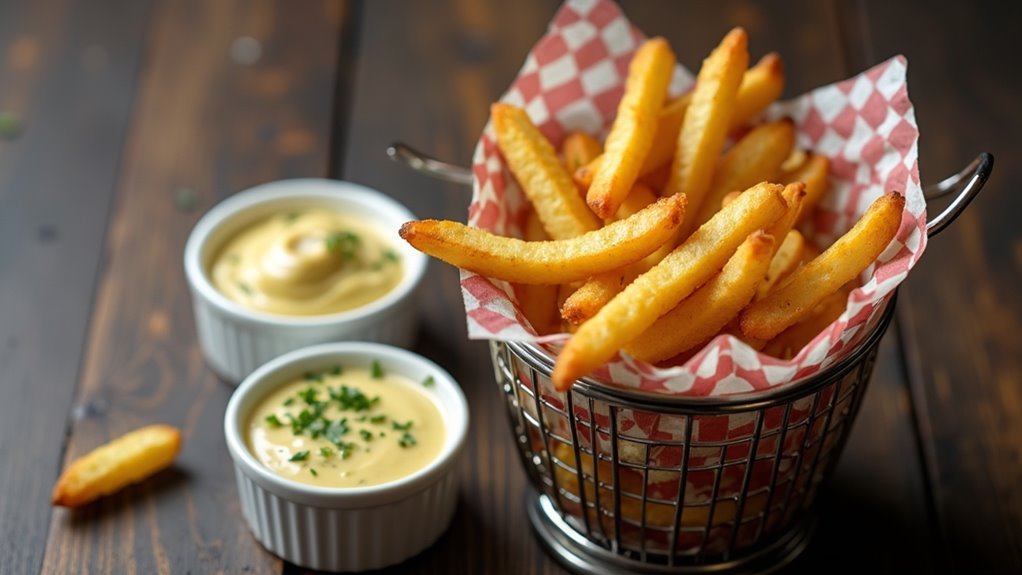
The perfect steak deserves equally magnificent companions, and nothing complements a beautifully cooked ribeye like golden, crispy frites and a rich, flavorful dipping sauce.
Achieving that perfect crunch requires attention to detail and perhaps a bit of patience with the process.
- Soaking cut potatoes in cold water removes excess starch, preventing browning and ensuring maximum crispiness.
- The flour-paprika-salt-pepper coating creates that distinctive golden exterior that’s irresistible.
- A sauce combining mayonnaise with both smooth dijon and whole grain mustard provides textural contrast and tangy flavor.
For best results, fry potatoes individually rather than crowding the pan—it takes longer but delivers superior crispiness. Most importantly, you can enhance the preservation of your meal’s quality by utilizing vacuum sealing methods to extend shelf life.
Frequently Asked Questions
Can I Reuse the Sous Vide Water Between Different Cooking Sessions?
Yes, sous vide water can be reused between cooking sessions. Users should cover the container during storage to prevent contamination and discard water if it appears cloudy or develops odors.
How Long Can I Refrigerate the Steak After Sous Vide Before Searing?
Like Sleeping Beauty’s slumber, sous vide steak remains safe in refrigeration for up to 3-5 days before searing. Properly chilled and stored, it maintains quality while awaiting its final transformation by heat.
What Wine Pairs Best With Steak Frites?
Traditional wine pairings for steak frites include bold reds such as Bordeaux, Cabernet Sauvignon, or Malbec. Their robust tannins complement the richness of ribeye while cutting through the dish’s fattiness.
Can I Prepare the Potatoes or Sauce in Advance?
Both components can be prepared in advance. The cut potatoes can be soaked in cold water for several hours. The sauce can be refrigerated for up to three days before serving.
Is Clarified Butter Better Than Oil for the Final Steak Sear?
Like a ballerina’s final move, the sear demands precision. Clarified butter offers higher smoke point and richer flavor than oil, making it superior for that golden crust on sous vide ribeye.