To achieve perfect sous vide steak, you’ll need to start with the right cut—ribeye and strip steak are fantastic options, though flank and hanger steaks also transform beautifully with this method. Set your temperature precisely (131°F for medium-rare), cook for at least 1½ hours, then finish with a quick, hot sear after patting dry. Whether you choose bone-in for extra flavor or boneless for ease, proper vacuum sealing guarantees even cooking throughout. The following techniques will elevate your steak game considerably.
Selecting the Ideal Steak Cut for Sous Vide
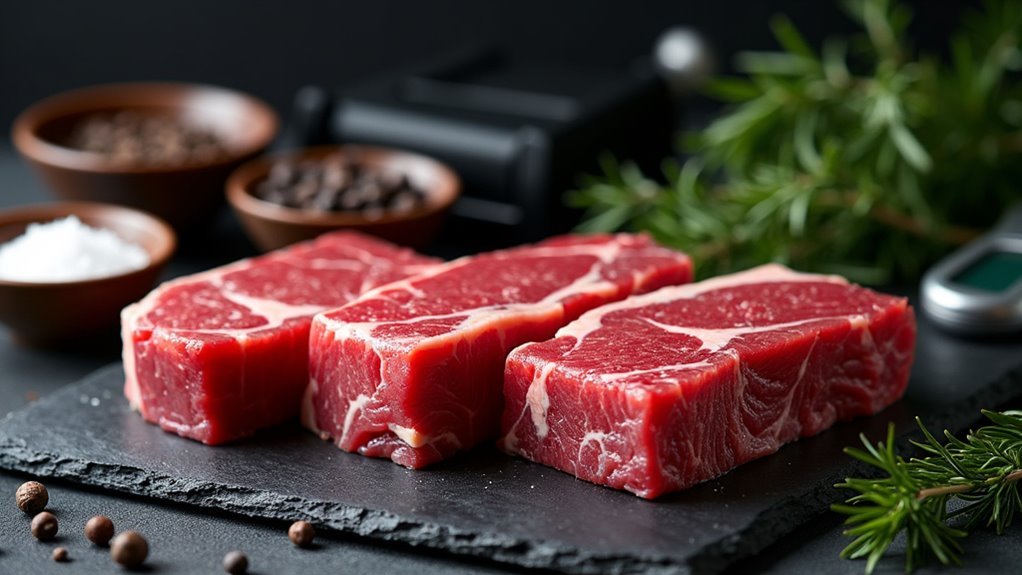
Three key factors come into play when selecting the perfect steak for sous vide cooking. Thickness, marbling, and personal preference will determine your results.
Success with sous vide steak depends on thickness, marbling, and your personal taste preferences.
For the best experience, I’d recommend cuts with excellent marbling that are at least 1½ inches thick. Ribeye is perhaps my favorite, but strip steak, porterhouse, and filet mignon work beautifully too.
Don’t overlook less expensive options like flank or hanger steak – they’re transformed by sous vide’s gentle cooking process.
Both bone-in and boneless work well, though I think the bone adds a certain richness to the final flavor.
Quality matters, so visit your local butcher if possible.
Bone-in vs. Boneless: Making the Right Choice
Although both options will yield delicious results, the choice between bone-in and boneless steaks often comes down to personal preference and cooking goals.
Many chefs, myself included, tend to prefer bone-in cuts for their enhanced flavor profile and juiciness, especially when using the sous vide method.
The meat closest to the bone simply tastes better, I think. There’s something about that extra richness that makes bone-in steaks worth the slight inconvenience of working around the bone.
Plus, if you’re splurging on grass-fed or Wagyu beef, why not maximize that flavor experience?
That said, boneless steaks are perfectly fine too—perhaps easier to handle for beginners. Additionally, vacuum sealing extends shelf life for storing prepped steak, allowing for convenience and reduced spoilage.
Mastering Vacuum Sealing Techniques
Once you’ve selected your perfect cut, you’ll need to properly seal your steak for sous vide success. This step is essential – air is the enemy of even cooking, and I think many home chefs underestimate its importance.
The Anova vacuum sealer works wonderfully if you’ve got one, but don’t worry if you don’t. You can actually use the water displacement method instead – just submerge your ziplock bag slowly into water, and the pressure naturally pushes air out.
If you’re using marinades, make sure your sealer can handle liquids. Perhaps try a test run first with something less expensive. Remember that vacuum sealing liquids can lead to spillages, so it’s best to freeze them first for optimal results.
Temperature and Timing: The Science of Sous Vide Perfection
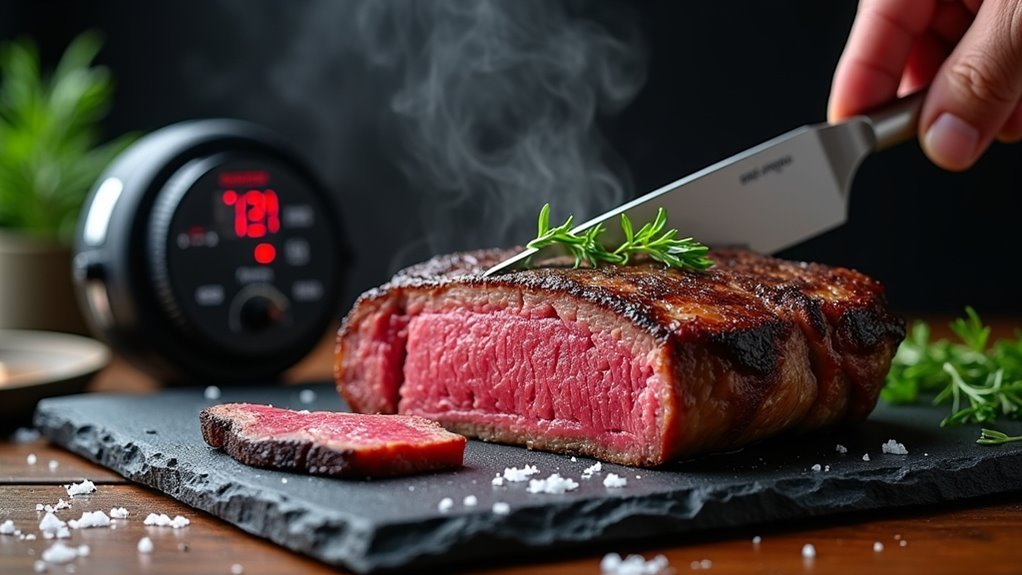
When it comes to sous vide cooking, temperature and timing aren’t just suggestions—they’re the scientific foundation of your perfect steak. Your choice here determines exactly how your steak turns out, every single time.
For that ideal medium-rare, aim for 131°F (55°C). I think this sweet spot delivers that restaurant-quality pink center most steak lovers crave.
If you prefer medium, bump it up to around 140°F.
Timing matters too. While 1½ hours works for most cuts, don’t be afraid to experiment.
Sometimes a longer bath—perhaps 3 hours for tougher cuts—helps break down connective tissue without overcooking. Sous vide method ensures tender and juicy results, and trust me, the precision is worth it.
The Art of the Perfect Post-Sous Vide Sear
Your perfectly heated sous vide steak isn’t complete until you’ve given it that mouthwatering seared crust. This final step transforms your tender meat into a restaurant-worthy masterpiece.
First, thoroughly pat your steak dry with paper towels – moisture is the enemy of a good sear. Then season generously with salt or your favorite blend. I think this is where many home cooks hesitate, but don’t be shy!
Moisture sabotages your perfect sear. Dry that steak completely, then don’t hold back on seasoning.
Heat your cast iron pan until it’s smoking hot, or fire up that grill. Perhaps a searing torch works for you? Whatever method you choose, aim for just 1-2 minutes per side. You’ve waited this long – don’t ruin it by overcooking now. Additionally, using vacuum sealing prior to cooking can enhance the flavor and texture of your steak.
Community Tips and Success Stories
The passionate feedback from our sous vide community never fails to inspire me.
You’ve shared countless success stories that demonstrate just how transformative this cooking method can be for home chefs.
One reader mentioned, “I think my family actually applauded when I served them these steaks!”
Another shared that after years of overcooked disappointments, they finally achieved the perfect medium-rare throughout.
Perhaps the most valuable contributions are your creative tweaks—adding herb sprigs to the bag, experimenting with pre-sear techniques, or finishing with compound butter.
These small touches, shared between passionate cooks, elevate all our meals, showcasing the beauty of sous vide cooking that retains natural juices and flavors.
Frequently Asked Questions
Can I Reuse the Same Sous Vide Water for Multiple Cooking Sessions?
You can absolutely reuse sous vide water a million times! It’s perfectly safe for multiple cooking sessions—just make sure it stays clean and topped off when needed for consistent results.
How Do Flavored Oils Affect the Sous Vide Process and Final Taste?
Flavored oils can enhance your steak’s taste when added to the sous vide bag. They’ll infuse gradually during cooking, but use them sparingly as they become more concentrated than with traditional methods.
Will Pre-Searing Before Sous Vide Cooking Enhance the Final Results?
Pre-searing (reverse searing) isn’t necessary and may slightly reduce juiciness. You’ll get better results by focusing on a strong post-sear after sous vide, which creates the perfect Maillard reaction.
Can I Sous Vide Frozen Steak Directly Without Thawing First?
Yes, you can sous vide frozen steaks directly without thawing. Just add 50% more cooking time to your standard duration to guarantee even cooking and proper temperature throughout the meat.
How Does Aging Steak Before Sous Vide Affect Texture and Flavor?
Aging develops deeper flavor and tenderizes your steak by breaking down proteins. You’ll notice enhanced umami notes and a buttery, melt-in-your-mouth texture when you sous vide aged beef.