I’ve been using vacuum sealer bags for years, and honestly, they’ve transformed how I store food. You’re probably wondering if they’re worth the investment—they absolutely are. The right vacuum bag can extend your food’s shelf life by months, not just days. I’ll share what I’ve learned about materials, sizes, and which bags work best for different foods. Plus, I’ve discovered some eco-friendly alternatives that might surprise you.
Types of Vacuum Sealer Bags: Materials and Thickness Options
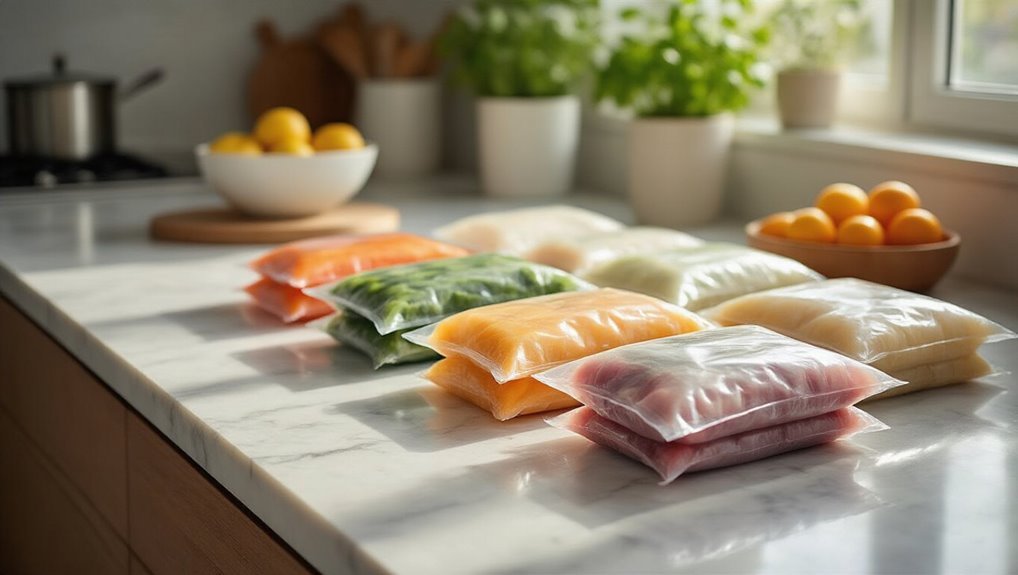
When it comes to vacuum sealer bags, I’ve found that understanding the different materials and thickness options can make a huge difference in your food preservation results.
Understanding the importance of the oxygen barrier in vacuum bags helps explain why multi-layer designs with PE, nylon, and EVOH are so effective.
Most quality bags are actually multi-layered, combining materials like PE, nylon, and EVOH to create strong oxygen barriers—it’s pretty impressive engineering, honestly.
For thickness variations, you’ll typically find options from about 3 mil (which is standard) up to 5 mil or thicker.
I’ve learned the hard way that thicker bags are definitely worth it for items with sharp edges or heavy contents.
I particularly love the embossed or channeled bags because their textured surface helps air flow out better during sealing.
And if you’re storing coffee or spices, those foil vacuum bags are amazing—they block both oxygen and light completely!
Selecting the Right Size and Style for Your Food Storage Needs
When I’m selecting vacuum sealer bags, I’ve found that getting the size right makes all the difference—too small and your food won’t fit, too large and you’ll waste material and risk poor sealing.
The material thickness matters too, especially if you’re storing items with sharp edges that might puncture standard 3 mil bags (I learned this the hard way with some bone-in meats).
I always make sure the bags I choose are compatible with both my sealer model and what I’m storing, whether I need boilable bags for sous vide cooking or textured channel bags for better air extraction.
Budget-friendly options often pair compact design with practical features like a built-in cutter for quick bag preparation.
Choosing Proper Dimensions
Why do so many people overlook the importance of choosing the right vacuum sealer bag dimensions? I think it’s because they’re enthusiastic to start preserving food without realizing that proper sizing makes all the difference.
When selecting bags, I always recommend leaving 2-3 inches of extra space beyond your food item. This ensures proper sealing and—wait, actually it gives enough room for both the seal and vacuum process.
Using measuring tools and consulting bag size charts can save you a lot of headache later.
For portion control, I match my bag to how I’ll use the food. Bulk items? I go with gallon sizes. Individual servings? Smaller bags work perfectly.
Material Matters Most
Beyond the size of your bags, the material composition represents the backbone of effective vacuum sealing success. I’ve found that material innovations have completely transformed what we can accomplish with home preservation. The thickness, measured in mils, isn’t just a number—it’s your food’s first line of defense against freezer burn and oxidation.
| Material Type | Best Uses | Sealing Technologies |
|---|---|---|
| Embossed | Solid foods, meats | Channel vacuum systems |
| Smooth | Liquids, sous vide | Direct seal methods |
| Specialty (Foil/Boilable) | Long-term storage | Heat-resistant bonding |
When I’m storing sharp items like bones, I’ll always reach for thicker 5 mil bags. Trust me, the frustration of a punctured bag isn’t worth saving a few cents on thinner materials!
Compatibility With Contents
Selecting the right bag for what you’re storing isn’t just about preventing waste—it’s the difference between perfectly preserved food and a freezer disaster.
I’ve learned that food compatibility means matching your bag to your contents. For liquids or items with sharp edges, I always go with thicker bags (5+ mil)—trust me, nothing’s worse than punctures ruining your storage!
Bag flexibility is about more than just material. I think about portion sizes too. Smaller bags work great for individual servings—they thaw faster and make meal prep so much easier.
And you know what? The bag style matters tremendously. If I’m doing sous vide cooking, I’ll definitely choose boilable bags, while regular storage usually works fine with standard embossed ones.
Your vacuum sealer model matters too—check what it handles best.
How Vacuum Sealer Bags Extend Food Shelf Life
I’ve found that the oxygen barrier technology in vacuum sealer bags is truly impressive—it keeps harmful air out while locking freshness in. From a preservation science perspective, removing air and moisture helps inhibit bacterial growth, which oxygen barrier technology complements this approach. This is why my food stays edible for 3-5 times longer than conventional storage methods.
You’ll notice the moisture control benefits right away, especially when freezing meats or veggies. The bags prevent that annoying freezer burn that ruins texture and flavor.
In my experience, nothing preserves the original taste and nutritional value of foods quite like these specialized bags. This makes them worth every penny if you’re serious about reducing food waste.
Oxygen Barrier Technology
At the heart of vacuum sealer technology lies the innovative oxygen barrier design that’s revolutionizing how we preserve food. What makes these bags so effective is their unique construction of multiple layers, including a specialized foil or film layer that blocks oxygen permeability.
I’ve found that these barrier materials are absolute game-changers for long-term storage. In my experience, they extend shelf life by 3-5 times compared to regular storage methods!
It’s not just about keeping air out—these bags actually prevent oxidation and bacterial growth that would normally spoil your food.
What I really love is that the opaque multilayer construction blocks light and moisture too. I think that’s why commercial food operations rely on them so heavily—they’re probably the most effective way to preserve quality and freshness.
Moisture Control Benefits
While vacuum sealer bags excel at keeping oxygen out, their moisture control capabilities might be the most underrated feature that dramatically extends food shelf life.
I’ve found that the humidity control these bags provide creates a perfect environment for preservation. They form a moisture barrier that locks in the natural juices while keeping external dampness at bay.
In my experience, this dual action is why foods stay fresh up to five times longer than with traditional storage.
Think of it like creating a protective cocoon around your food—it prevents freezer burn and dehydration, which, let’s face it, ruins both texture and flavor.
What’s really impressive is how proper moisture management prevents liquid buildup that could otherwise become a breeding ground for spoilage.
It’s a game-changer for long-term food storage!
Keeping the Sealing Area Clean: Techniques for Perfect Seals
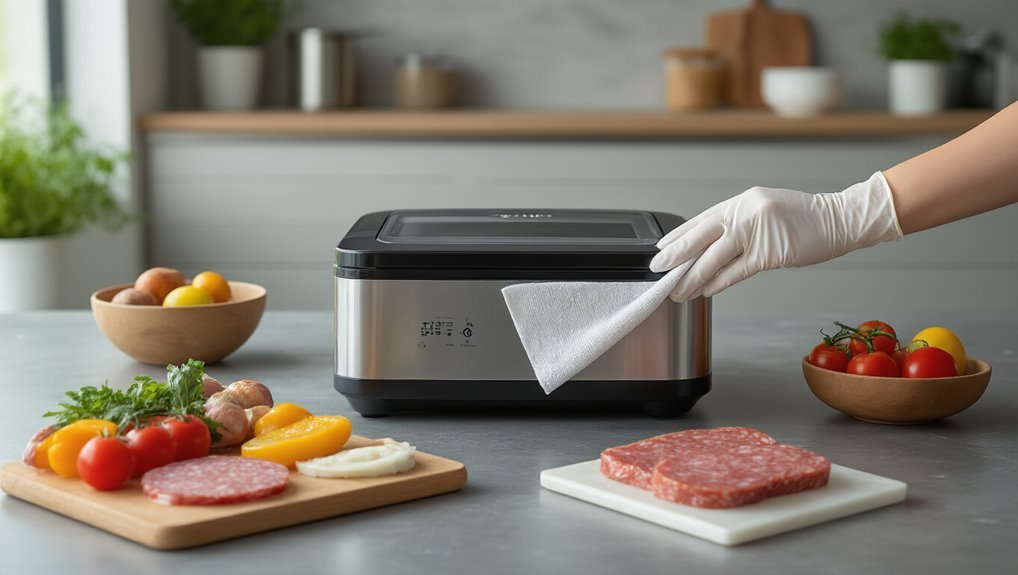
Although perfect vacuum sealing seems simple in theory, it’s the little details that make or break your food preservation efforts. I’ve found that proper sealing rim maintenance is essential—always fold the bag’s top edge outward to create a clean work zone. One of my go-to spill prevention techniques is using a funnel when transferring messy foods.
Modern vacuum sealers with liquid detection improve consistency across containers and reduce seepage risks.
| Technique | Problem It Solves | Emotional Benefit |
|---|---|---|
| Edge Folding | Food Contamination | Confidence |
| Rim Wiping | Moisture Interference | Relief |
| Using Funnels | Messy Transfers | Satisfaction |
| Pre-freezing Liquids | Seepage Issues | Peace of Mind |
| Double-sealing | Seal Failures | Security |
Trust me, there’s nothing more frustrating than wasted food from a failed seal. These simple steps will save you money and keep your foods fresh longer!
Differences Between Vacuum Sealing and Traditional Storage Methods
Because I’ve tested nearly every storage method imaginable in my home kitchen, I can tell you that vacuum sealing stands head and shoulders above traditional storage options. The difference is striking – vacuum sealers completely remove air, creating an environment where bacteria simply can’t thrive, offering superior microbial protection that ziplock bags can’t match.
What I’ve noticed most is the flavor preservation. When you vacuum seal foods, you’re locking in all those nuanced flavors that would otherwise dissipate. Traditional containers just don’t have the multi-layered oxygen barriers that quality sealer bags provide.
And freezer burn? Well, that’s practically eliminated. I once stored two identical steaks – one vacuum sealed, one in a regular freezer bag – and after three months, you wouldn’t believe they were the same cut of meat!
Regular maintenance, including air filter maintenance, helps prevent loss of suction and extends the sealer’s life.
Best Practices for Storing Liquids and Moist Foods
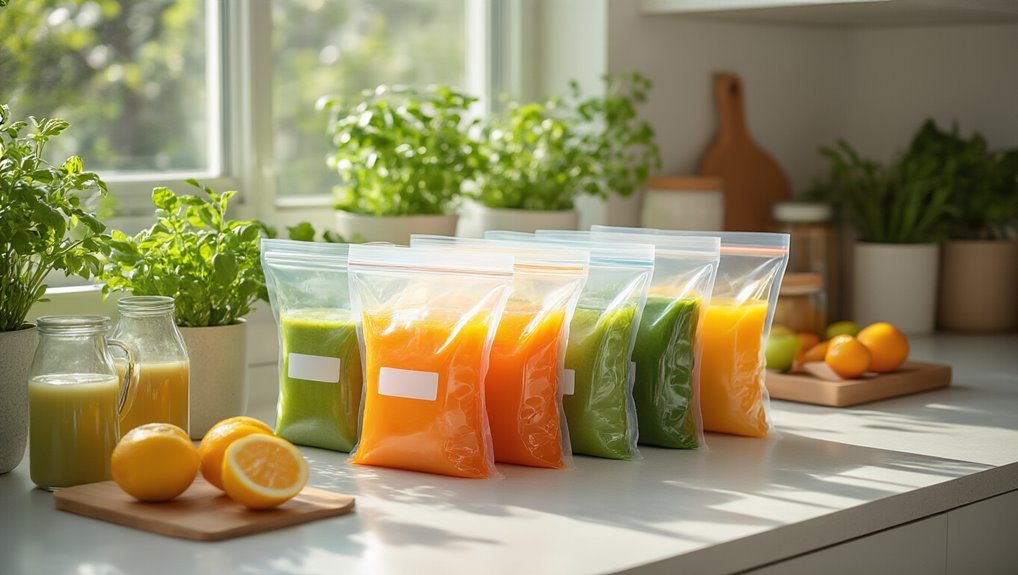
Storing liquids and moist foods presents a unique challenge that I’ve tackled countless times in my vacuum sealing adventures.
Vacuum sealing liquids requires special techniques I’ve mastered through years of trial and error.
The trick? Liquid freezing! I’ve learned that freezing liquids or moist items into small, firm shapes before sealing prevents those frustrating spills that ruin a good seal.
I always recommend bag wiping – it’s such a simple step that many folks skip. Just take a clean cloth and wipe the rim after filling. This removes moisture that might interfere with creating a proper seal.
For soups or sauces that you can’t freeze first, try using a vacuum sealer with a “moist” setting.
Or maybe portion things into smaller amounts – I’ve found this helps tremendously with controlling liquids during the sealing process.
Another key detail is leaving headroom in the bag to allow for liquid expansion when freezing.
Eco-Friendly and Reusable Vacuum Sealer Alternatives
While I love the efficiency of traditional vacuum sealer bags, I’ve been exploring greener alternatives that don’t leave me feeling guilty about my plastic footprint. Reusable silicone options like Stasher bags have become my go-to for sous vide cooking and everyday storage—no vacuum sealer required!
I’ve also discovered compostable vacuum bags made from plant-based packaging that can handle heat up to 85°C. They’re biodegradable plastics without the environmental guilt. Actually, wait—they’re not technically plastics at all, which is even better!
Some reusable bags feature zip-lock mechanisms that create an airtight seal without fancy equipment. Most eco-friendly options are BPA-free too, so I’m not sacrificing food safety for sustainability.
It’s nice knowing I can preserve food without preserving plastic waste forever. As demand grows, reusable silicone bags offer durable storage that reduces waste.
Frequently Asked Questions
How to Choose the Right Vacuum Sealer Bags?
I’d recommend matching your packaging materials to food type, considering thickness and size. Choose bags compatible with your sealer’s techniques—external or chamber—and prioritize food-grade, BPA-free options for safety.
What Should You Not Put in a Vacuum Bag?
I don’t recommend sealing sharp objects, liquids, powdery items, flammable products, or certain perishables. For food safety, avoid high-moisture items unless pre-frozen. Follow these storage tips to prevent seal failures.
How to Properly Use Vacuum Seal Bags?
I’ll guarantee your food’s safely stored by teaching you my vacuum sealing techniques. Cut compatible bags with extra space, wipe rims clean, remove all air, and double-check seals for leak-free storage.
What to Know Before Buying a Vacuum Sealer?
Did you know vacuum sealers extend food shelf life by 5x? Before buying one, I’d consider your storage containers, sealer type, bag compatibility, and food preservation needs for ideal freshness.