We’re about to explore the fascinating world of vacuum sealing technology – a game-changer in modern food preservation. Let’s cut through the fluff and get straight to how these machines transform our kitchen capabilities. From chamber sealers to handheld units, there’s a lot more going on than just sucking air out of bags. The science behind this technology isn’t rocket science, but it’s clever enough to revolutionize how we store and preserve our food.
The Science Behind Vacuum Sealing Technology
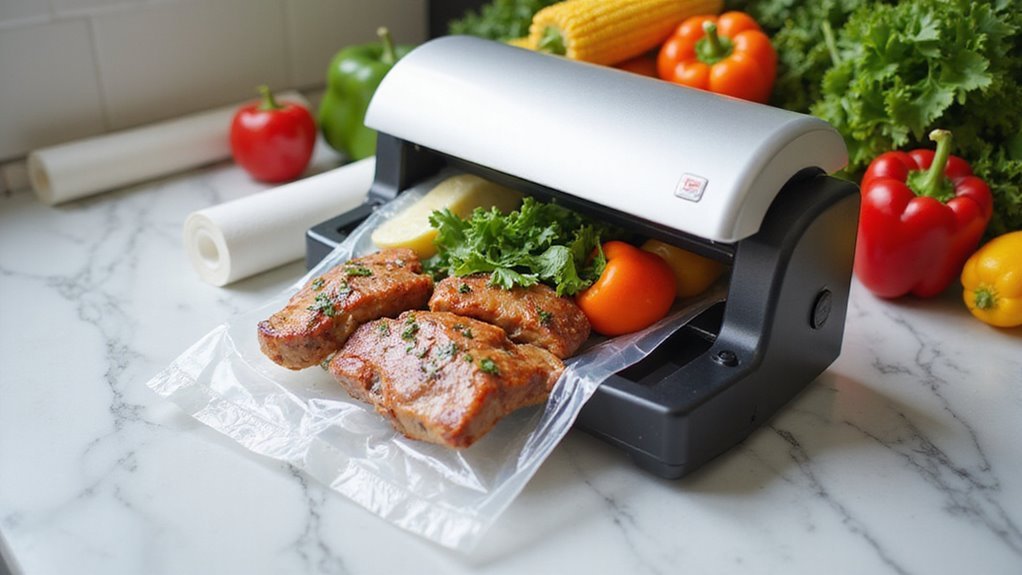
While many kitchen gadgets promise to revolutionize food storage, vacuum sealers actually deliver on that promise through legitimate scientific principles.
We’re talking about sophisticated air removal technology that creates a vacuum using specialized pumps and sealing bars.
Here’s what happens: the vacuum pump extracts oxygen – bacteria’s best friend – while the sealing bar forms an airtight seal.
Whether you’re using edge or chamber types of sealers, this one-two punch dramatically extends shelf life.
It’s simple physics: no oxygen means reduced spoilage and better food preservation.
Additionally, vacuum sealing extends shelf life by preventing freezer burn and maintaining nutrients, ensuring your food stays fresh longer.
The science isn’t complicated, but it’s revolutionizing how we store food.
Essential Components of Modern Vacuum Sealers
Modern vacuum sealers pack an impressive array of components that work in perfect harmony to keep your food fresh.
Let’s break down the essentials: The vacuum chamber and vacuum pump create negative pressure to remove air from vacuum bags. A sealing bar then melts the bag’s material, creating an airtight seal that locks freshness in.
We’ll find a control panel that lets us adjust settings for different foods – vital for perfect results every time. In higher-end models, automatic pressure regulation guarantees consistent vacuum packaging. Additionally, chamber vacuum sealers are particularly effective for sealing liquid-rich foods, ensuring that nothing leaks during the process.
Each component plays its part in this precision food preservation dance.
Different Types of Vacuum Sealers and Their Functions
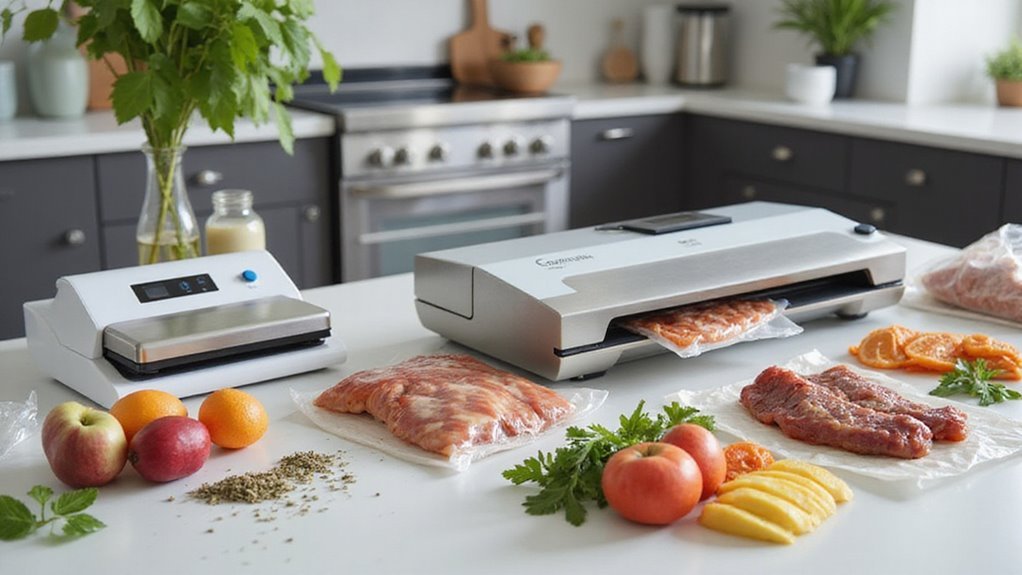
Today’s vacuum sealers come in three distinct types, each engineered for specific preservation needs. Let’s break down how each type functions to keep food fresh:
| Type | Function | Bag Compatibility |
|---|---|---|
| Edge | Built-in compressor, ideal for home use | Channeled bags only |
| Nozzle | Retractable nozzle with gas flush option | Multiple bag types |
| Chamber | Creates complete vacuum environment | Smooth or textured bags |
We’ll find chamber vacuum sealers excel at handling liquids, while external vacuum sealers offer portability. Edge vacuum sealers provide the perfect entry point for home food packaging. Each type’s vacuum cycle varies, ensuring best preservation based on your specific needs. Additionally, using vacuum sealers can significantly reduce food waste, which is a crucial benefit for both commercial and home kitchens.
Step-by-Step Vacuum Sealing Process Explained
Understanding the vacuum sealing process requires mastering five essential steps that transform ordinary food storage into an art of preservation.
Let’s break down how a vacuum sealer works: First, we’ll place our foods in the vacuum bag, spacing them properly.
Next, we’ll align the bag’s open end with the sealing bar and close the lid. The automatic vacuum kicks in, working to remove air and create a vacuum that’ll prevent freezer burn. This process is crucial as it creates an oxygen-depleted environment, which helps inhibit bacterial growth.
Once it’s done, the sealer creates an airtight seal by heat-fusing the bag.
Finally, the lid pops open, and we’ve got perfectly sealed food ready for extended shelf life.
Best Practices for Effective Food Preservation
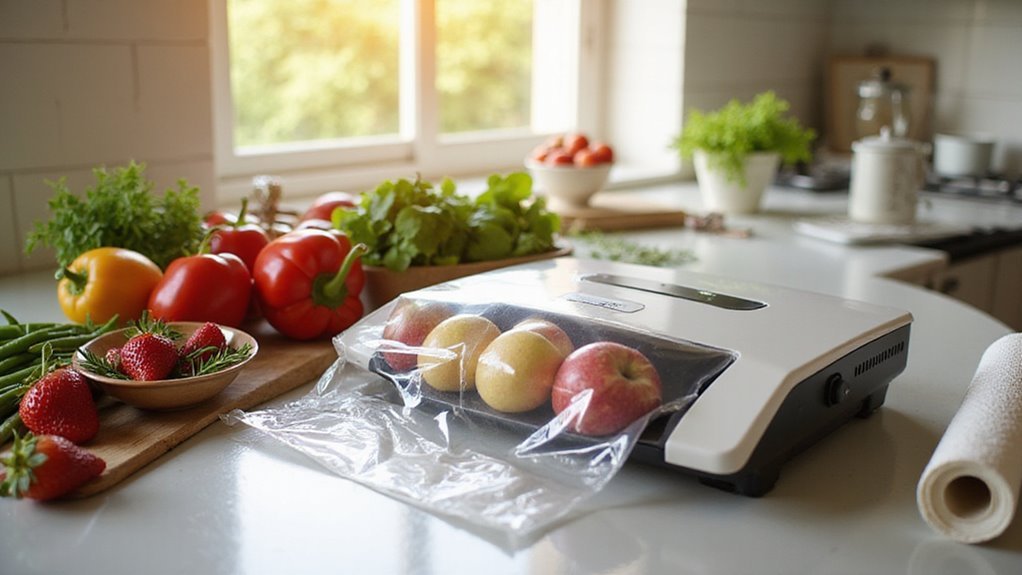
Several critical practices determine the success of your vacuum sealing efforts.
Let’s tackle the essentials: We’ve got to cool food to room temperature before placing food in bags – it’s non-negotiable for preventing bacteria growth.
When it comes to types of food, blanch those vegetables first – your broccoli and carrots will thank you.
Don’t skimp on headspace in those bags, and always use proper vacuum-sealed bags to avoid freezer burn.
Skip the delicate items – soft fruits and cheeses won’t survive the process. Additionally, it’s important to use high-quality bags to prevent issues like plastic poisoning and ensure food safety.
The benefits of vacuum sealing are massive, but only if you follow these rules religiously.
Maintenance and Care for Your Vacuum Sealer
The proper care of your vacuum sealer isn’t rocket science, but it’s absolutely essential for keeping that investment running smoothly.
Let’s plunge into the key maintenance steps that’ll maximize your device’s lifespan and guarantee optimal sealing every time.
- Always unplug before cleaning and wipe down the sealing bar after each use – food residue is your enemy.
- Keep those foam seals pristine to prevent air leaks that’ll compromise your preservation efforts.
- Remember replacement parts are available for decades – don’t hesitate to swap out worn components for peak performance.
- Regular checks on the vacuum sealer can prevent many issues that lead to poor sealing.
Frequently Asked Questions
What Are the Disadvantages of Vacuum Sealing Food?
Ever wondered about vacuum sealing drawbacks? We’ve found they include higher cost considerations, texture damage, potential nutrient loss, strict storage needs, special bags, precise techniques, bacterial risks, air leakage, flavor changes, and equipment upkeep.
How Does a Vacuum Sealer for Food Work?
We’ll place food in special vacuum bags, then let the sealer remove air through suction. Once air’s extracted, the machine heat-seals the bag, creating an airtight environment that preserves freshness longer.
How Long Will Vacuum Sealed Food Last?
We’ll get better shelf life from vacuum sealed foods – 1-3 years in freezers, 1-2 weeks refrigerated, and indefinitely for pantry items when stored properly. That’s considerably longer than non-sealed storage methods.
Can Bacteria Grow in Vacuum Sealed Food?
Yes, bacteria can grow in vacuum sealed food. While we reduce aerobic bacterial growth through vacuum sealing, anaerobic bacteria thrive without oxygen. Proper temperature control and storage methods are essential for food safety.