Vacuum sealing vegetables for weekly meal prep is a game-changer for busy folks like us. We’ve found it extends produce life up to two weeks while cutting prep time considerably. Just wash, dry, and portion your veggies—remembering to blanch cruciferous ones first. Sturdy vegetables like carrots work best, but avoid sealing mushrooms and fresh garlic. Always label your bags with dates and contents. The time you’ll save makes healthy eating so much more doable throughout your hectic week.
Benefits of Vacuum Sealing for Time-Saving Meal Prep
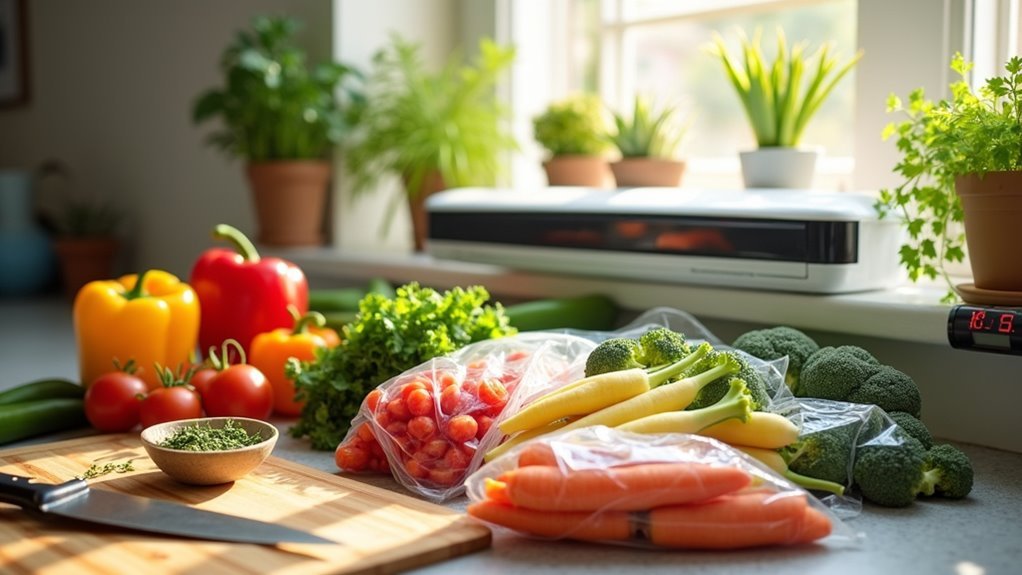
When we’re racing against the clock every day, finding ways to streamline our meal preparation becomes critical, and vacuum sealing vegetables might just be the game-changer we’ve been looking for.
Vacuum seal bags extend fresh produce shelf life up to two weeks in the refrigerator, which means we can prep once and enjoy throughout the week.
I think what’s truly remarkable is how this simple technique cuts down on food waste while making healthy eating more convenient.
By portioning vegetables during meal prep sessions, we’re fundamentally creating grab-and-go ingredients that transform cooking from a nightly chore to a quick assembly.
Perhaps the most impressive benefit? Vacuum sealing makes our prep work two to five times more efficient than traditional methods – that’s time we can spend doing things we actually enjoy! Additionally, vacuum sealing extends shelf life of fresh produce by 3 to 5 times, ensuring we always have nutritious ingredients ready to go.
Best Vegetables for Vacuum Sealing: Selection Guide
Now that we’ve covered how vacuum sealing can revolutionize our meal prep routine, let’s explore which vegetables actually perform best with this method.
Cruciferous veggies like broccoli and cauliflower need a quick blanching first – this preserves their color and nutrients while preventing freezer burn. I think this extra step is definitely worth it for the extended shelf life.
Sturdier options such as carrots and bell peppers can go in fresh – just cut them into meal-sized portions first for more efficient storage.
Surprisingly, even delicate lettuce works well, lasting up to two weeks when vacuum sealed.
Perhaps most important is knowing what to avoid: mushrooms, garlic and fresh onions can actually become dangerous when sealed this way.
For maximum convenience, we’ve found that pre-roasted or marinated vegetables seal beautifully for ready-to-go meal prep options. Additionally, ensuring proper food handling practices during the prep and sealing process can help maintain food safety and quality.
Step-by-Step Process for Prepping and Sealing Vegetables
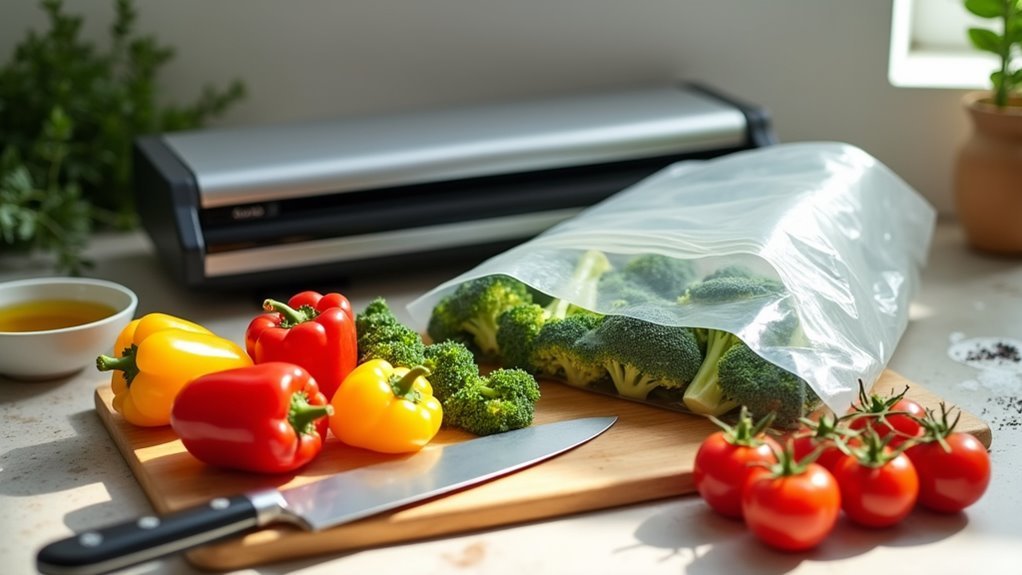
Three essential steps form the backbone of successful vegetable vacuum sealing for meal prep.
First, wash and thoroughly dry your vegetables before chopping them into meal-friendly portions. Some vegetables, particularly cruciferous ones, benefit from a quick blanch (about 1-4 minutes) followed by an ice bath to preserve their texture and flavor and nutrients.
Next, prepare your vacuum seal bags – either pre-cut or custom-sized from rolls. We’ve found portioning vegetables according to how you’ll actually use them saves time later. Perhaps the most important step is labeling! Trust me, you’ll appreciate knowing what’s what and when it was sealed.
Finally, store them properly. Refrigerated sealed veggies last about two weeks, while freezing extends shelf life considerably.
Vacuum sealing helps lock in freshness, making your meal prep much more efficient and less wasteful.
Storage Tips to Maximize Freshness and Quality
Proper storage of your vacuum-sealed vegetables isn’t just a minor detail—it’s actually the make-or-break factor that determines whether your meal prep efforts pay off.
We’ve found that refrigerated vacuum-sealed veggies can stay fresh for up to two weeks, which is pretty impressive compared to traditional methods.
Always label your vacuum-sealed bags with contents and date—trust us, you’ll thank yourself later when trying to identify what’s what.
Store them flat in the freezer to save space and prevent crushing delicate items.
Don’t forget that blanching vegetables before vacuum sealing is essential for preserving color, texture, and nutrients.
And here’s an important food safety tip: avoid vacuum sealing fresh onions, garlic, and mushrooms, as they’re prone to bacterial growth.
Perhaps it’s better to store those separately. Additionally, vacuum sealing fresh produce can significantly extend shelf life, allowing you to enjoy your meal prep for even longer.
Quick and Delicious Recipe Ideas Using Vacuum-Sealed Veggies
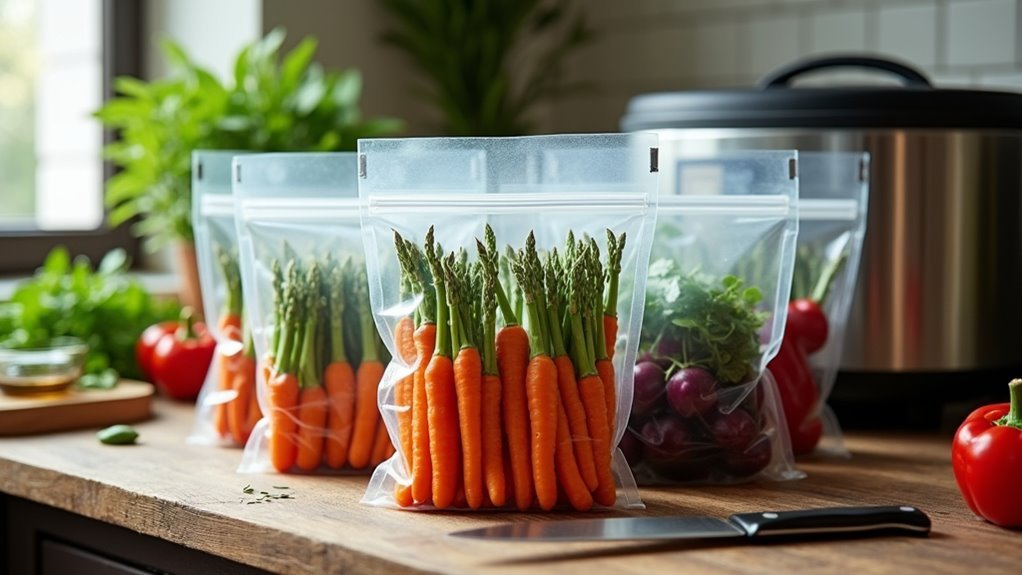
Vacuum-sealed veggies are perfect for weeknight cooking when time is tight. We love tossing vacuum seal fresh broccoli or cauliflower into stir-fries for a nutritious meal that’s ready in under 15 minutes. For something even simpler, quick salads come together instantly when you add pre-sealed cherry tomatoes and cucumbers to your greens. Feeling creative? Try adding vacuum-sealed roasted bell peppers to pasta dishes or use shredded carrots in wraps. Perhaps our favorite hack is prepping zucchini noodles as a low-carb pasta alternative—they stay crisp for up to two weeks and can transform meal prep from a chore into a simple pleasure. Not only do vacuum-sealed vegetables maintain food freshness during storage, but they also minimize waste effectively, ensuring you enjoy your meals while making the most of your ingredients.
Common Mistakes to Avoid When Vacuum Sealing Produce
Despite our best efforts, vacuum sealing vegetables can sometimes lead to disappointing results if we’re not careful about our technique.
We’ve found that one of the biggest mistakes is failing to blanch cruciferous veggies like broccoli before sealing, which can really affect their quality and nutritional value.
Another issue we often see isn’t drying produce thoroughly. Excess moisture is practically an invitation for freezer burn!
And those air pockets from using the wrong size bags? They’re definitely working against your goal of keeping food fresh longer.
Don’t forget to pre-freeze soft fruits before vacuum sealing—trust us, nobody wants mushy berries.
Perhaps most importantly, always label your vacuum sealed food with contents and dates. We think there’s nothing more frustrating than playing “mystery vegetable” in your freezer months later! Remember, to ensure food safety, it’s vital to cool food to safe temperature before vacuum sealing.
Frequently Asked Questions
How Long Will Fresh Vegetables Last in a Vacuum Sealed Bag?
Wait until you see this! We’ve found vacuum sealed veggies can last 1-2 weeks longer refrigerated and 8-12 months frozen. Freshness duration varies by vegetable selection, with ideal temperatures ensuring flavor retention.
Is Vacuum Sealing Good for Meal Prep?
We’ve found vacuum sealing offers major meal prep benefits! It’s a time-saving technique that guarantees food preservation and nutrition retention. For long-term storage, it’s unbeatable—make your prep work last all week.
Which Vegetables Cannot Be Vacuum Sealed?
We can’t vacuum seal mushrooms, garlic cloves, leafy greens, bell peppers, whole tomatoes, and cucumbers without special preparation. They’ve got high moisture content that promotes bacterial growth when sealed.
How Do You Meal Prep Vegetables for the Week?
We’re drowning in fresh vegetables! Let’s wash and blanch them, portion into containers with recipe ideas noted, then use proper storage techniques and freezing methods to maintain nutrient preservation all week long.