Sous vide cheesecake delivers irresistible creaminess impossible to achieve with traditional baking. This method uses precise temperature control (176°F) to perfectly coagulate proteins while preventing moisture loss. Home chefs generally prepare the mixture in 4 oz. mason jars, cook submerged for 1.5 hours, then refrigerate at least 6 hours. The result? A velvety texture that’s perfect with graham cracker crust, berry compote, or perhaps a drizzle of salted caramel. The technique might seem technical, but the reward is worth every minute.
The Science Behind Sous Vide Cheesecake
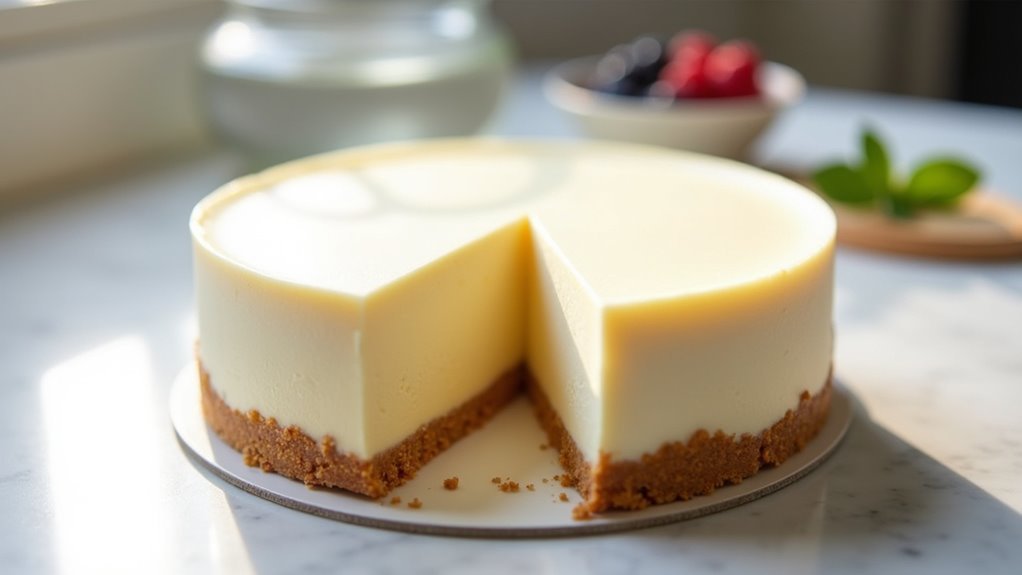
When it comes to creating the perfect cheesecake, traditional baking methods often leave room for inconsistency—perhaps too dry around the edges or undercooked in the center.
This is where sous vide cooking truly shines. The water bath technique maintains a precise 80°C/176°F temperature throughout the cooking process, ensuring proteins in the eggs and dairy coagulate evenly.
Unlike conventional ovens with their fluctuating heat, sous vide eliminates the guesswork. The controlled environment also prevents moisture loss, resulting in that creamy, velvety texture that many bakers struggle to achieve. Additionally, using vacuum sealing to package ingredients before sous vide cooking enhances flavor retention and freshness.
I think that’s why so many home chefs are converting to this method—consistent results every time.
Essential Equipment and Ingredients
Gathering all the necessary equipment and ingredients for sous vide cheesecake might seem intimidating at first, but simplicity is actually key to this method. The essentials include a reliable sous vide device like the Anova Precision Cooker or Breville Joule, and 4 oz. canning jars—Ball mason jars work perfectly.
For ingredients, you’ll need cream cheese, eggs, sugar, vanilla, and graham crackers for the crust.
Perhaps the most important tool is a 12-quart container, which provides more space than a standard pot. A lid helps minimize water evaporation during the 80°C/176°F cooking process that creates that dreamy, creamy texture we’re after. Utilizing methods like vacuum sealing can further enhance the preservation of your cheesecake ingredients before cooking.
Step-by-Step Cooking Process
To begin the sous vide cheesecake cooking process, one should first prepare the water bath by filling a 12-quart container with water and setting the sous vide machine to precisely 80°C/176°F.
While the water heats, prepare the jars by placing cheesecake mixture into 4 oz. canning jars, perhaps leaving about 1/2 inch of space at the top.
Once the water reaches temperature, gently tighten the jar lids with fingertips—not too tight—and carefully submerge them.
Cook for one and a half hours, then remove and cool before refrigerating for at least 6 hours. Vacuum sealing leftover cheesecakes not only extends their freshness but also enhances overall food safety.
- Make certain jars are submerged but not touching the container bottom
- Check water level occasionally to prevent evaporation issues
- Remove jars carefully using tongs to avoid burns
Serving Suggestions and Variations
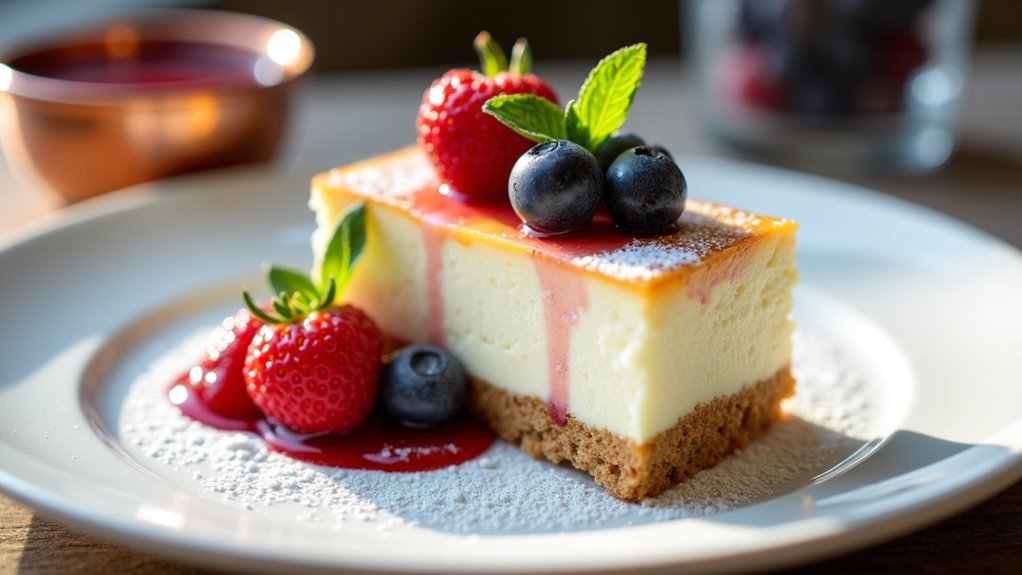
These delightful sous vide cheesecake jars can be dressed up in numerous ways to suit any occasion or taste preference.
The classic graham cracker crust sprinkled on top adds a wonderful textural contrast, while a mixed berry compote provides a bright, tangy counterpoint to the creamy sweetness.
For those feeling a bit adventurous, perhaps a drizzle of salted caramel or chocolate ganache would transform these into decadent dinner party desserts.
I think adding seasonal elements works beautifully too—fresh mint and sliced strawberries in summer, or warming spices like nutmeg and cinnamon in winter months.
Frequently Asked Questions
Can I Use Silicone Molds Instead of Mason Jars?
Silicone molds aren’t recommended for sous vide cheesecake as they lack rigidity for proper setting and may float. Mason jars provide better structure and seal while allowing pressure release during cooking.
How Do I Prevent Water From Seeping Into the Jars?
Nearly 86% of sous vide jar leakage results from overtightened lids. To prevent water seepage, tighten jar lids only “fingertip tight” – just until resistance is met, allowing air to escape while keeping water out.
Is the Texture Different From Traditional Oven-Baked Cheesecake?
Yes, sous vide cheesecake has a significantly creamier, silkier texture compared to oven-baked versions. The water bath’s precise temperature control creates a more uniform, custard-like consistency throughout.
Can These Cheesecakes Be Frozen for Later Consumption?
Yes, sous vide cheesecakes can be frozen for later consumption. They maintain excellent texture when properly sealed and can be stored frozen for up to three months before thawing in the refrigerator overnight.
What Causes the Cheesecake to Crack and How to Avoid It?
Nearly 80% of traditional cheesecakes develop cracks. Cracks form from rapid temperature changes and overmixing. Sous vide prevents this through controlled temperature and gentle cooking, maintaining consistent moisture throughout the process.