Understanding Vacuum Food Sealer Components: A Complete Guide
Vacuum food sealers contain several essential components that work together to ensure optimal food preservation and storage. The vacuum chamber serves as the primary mechanism, creating an airtight environment by extracting oxygen from bags or containers. This precision-engineered space works alongside the sealing bar, which applies controlled heat to create hermetic seals.
The pressure control system represents a crucial technological advancement, utilizing sensors and regulators to prevent food damage while maintaining effective vacuum levels. Modern units feature digital control panels that allow users to adjust settings based on food type and texture sensitivity.
Key components include:
- Vacuum pump mechanism
- Heat-sealing elements
- Pressure sensors
- Air extraction channels
- Control interface
- Gasket seals
- Drip tray system
Professional-grade sealers incorporate additional features like adjustable vacuum strength, multiple sealing modes, and pulse vacuum functions for delicate items. These components work synergistically to extend food shelf life while preserving nutritional value and preventing freezer burn.
The sealing mechanism's quality directly impacts preservation effectiveness, with commercial-grade units utilizing dual-seal technology for enhanced reliability. Understanding these core elements helps users maximize their sealer's performance and maintain optimal food storage conditions.
Essential Components and Their Functions
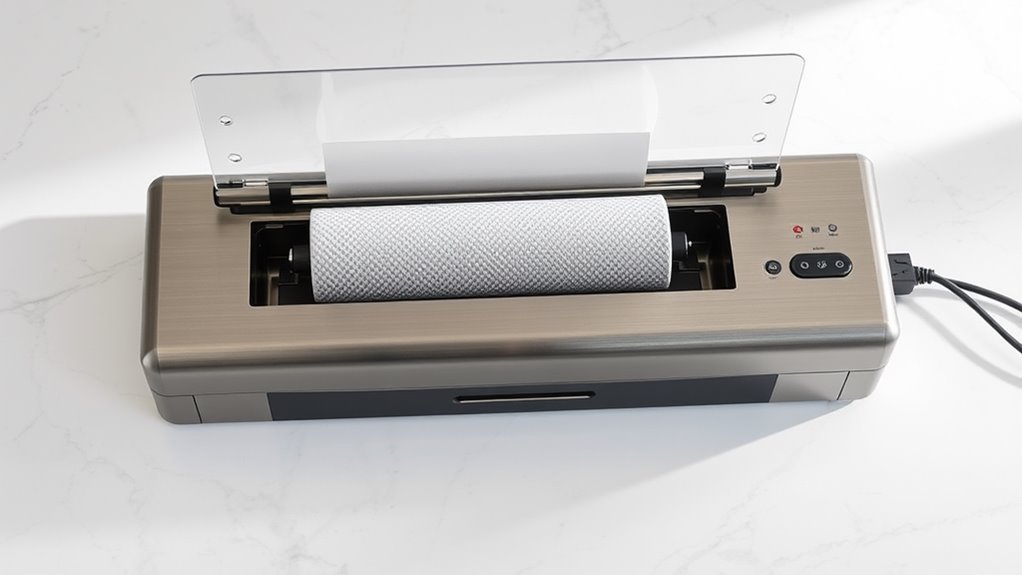
A vacuum food sealer's essential components work together like a well-orchestrated machine to create an airtight environment for your food.
Working alongside it, the powerful vacuum pump removes air from your bags, creating the perfect environment for food preservation.
A highlight is how the sealing bar then steps in to create an airtight seal, using heat to fuse the bag's edges together.
You'll find the controls incredibly user-friendly, allowing you to adjust settings for different foods.
Whether you're sealing delicate berries or hardy meats, you can fine-tune the vacuum strength and sealing time to get perfect results every time.
Think of them as the unsung heroes that keep your vacuum sealer performing at its best.
In addition, understanding the importance of proper storage temperatures can greatly enhance the effectiveness of vacuum sealing.
When these parts work in harmony, you'll achieve consistently reliable food storage that lasts.
Vacuum Chamber Design
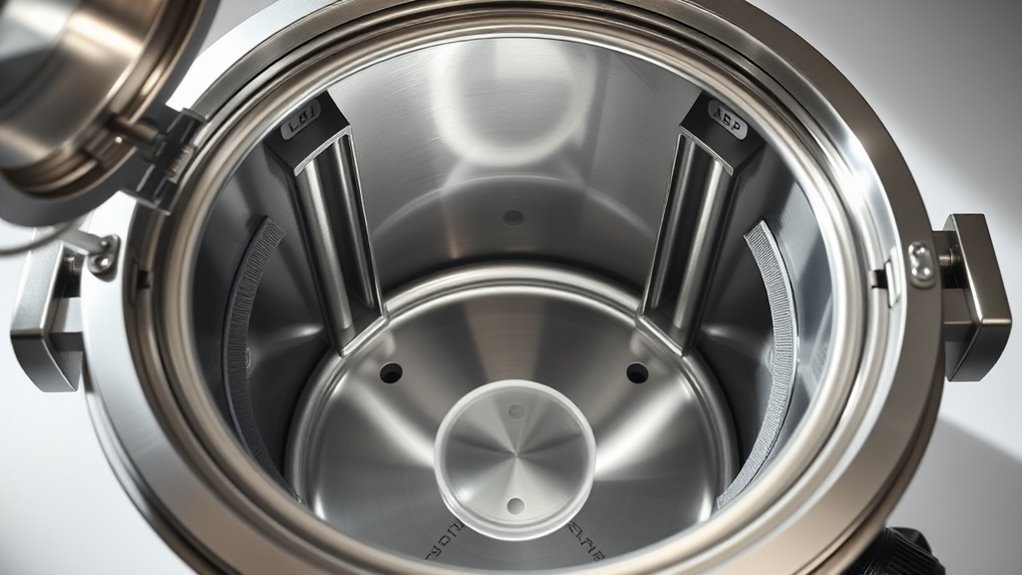
At its core, you'll find an open-top configuration with a specialized sealing strip at the bottom – that's where the magic happens! The chamber creates an airtight environment that's essential for proper vacuum packaging.
A highlight is this design is how it adapts to different models, with some chambers spacious enough to handle multiple bags at once.
Here's something really cool: if you're working with liquid-rich foods, the chamber's design prevents any moisture from getting into the vacuum pump. That's a game-changer!
A clean, well-kept chamber is your ticket to consistently perfect seals every time. Additionally, regular maintenance of these components is key to ensuring optimal functionality and longevity of your vacuum sealer.
Sealing Mechanism and Controls
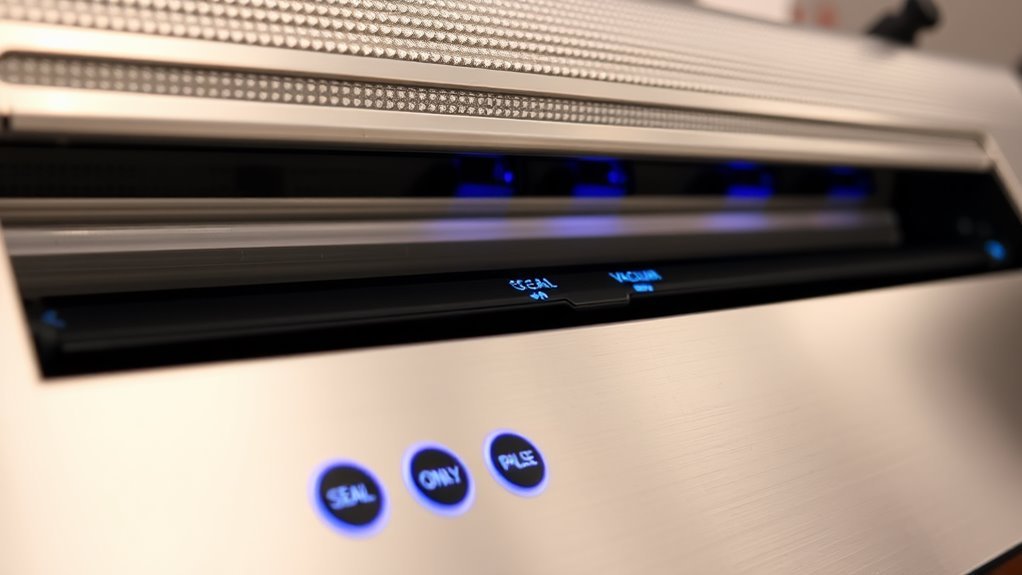
Precise control over the sealing mechanism serves as your gateway to perfectly preserved food.
When you're working with different types of food, you'll love how the control panels let you adjust both vacuum strength and sealing time to match your specific needs. You'll get consistently perfect seals every time.
You can't stress enough how important the safety features are in modern vacuum sealing systems. The automatic shut-off mechanism prevents overheating, so you won't have to worry about damaging your sealer or compromising your food's preservation. Additionally, understanding routine maintenance is crucial for ensuring your vacuum sealer operates effectively over time.
Whether you're preserving summer berries or prepping meals for the week, these intelligent controls guarantee you'll get reliable results while keeping your sealer running smoothly for years to come.
Pressure Management Systems
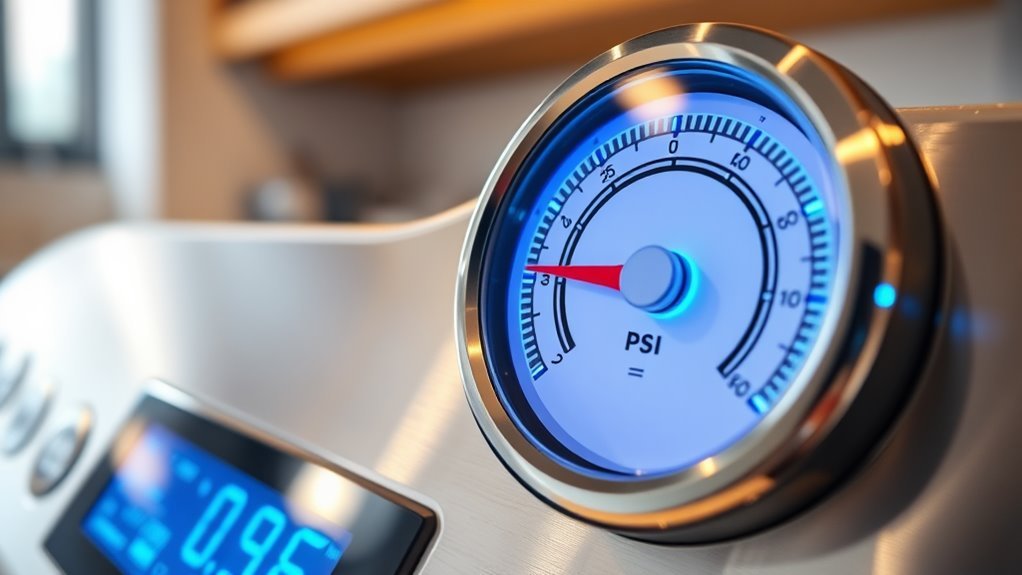
Modern pressure management systems form the backbone of effective vacuum sealing technology. You can't stress enough how these sophisticated systems work tirelessly to maintain the perfect vacuum levels you need for preserving your food.
When you're using vacuum sealers with automated pressure regulation, you're getting consistent, reliable results that greatly reduce spoilage rates.
The vacuum pump works in harmony with built-in pressure sensors to monitor and adjust the internal pressure continuously.
It's like having a personal food preservation expert watching over every seal! You'll notice the difference when you're packaging different types of foods – the system automatically adapts to guarantee you get that perfect airtight seal every time.
why maintenance matters: regular checks of your pressure management systems are essential. Loss of suction power can often arise from neglected maintenance, affecting your vacuum sealer's effectiveness.
We recommend inspecting the seals and vacuum pump periodically. When you take care of these components, they'll reward you with consistent performance and longer-lasting food storage.
Your future self will thank you for this attention to detail!
Safety Features and Protection Systems
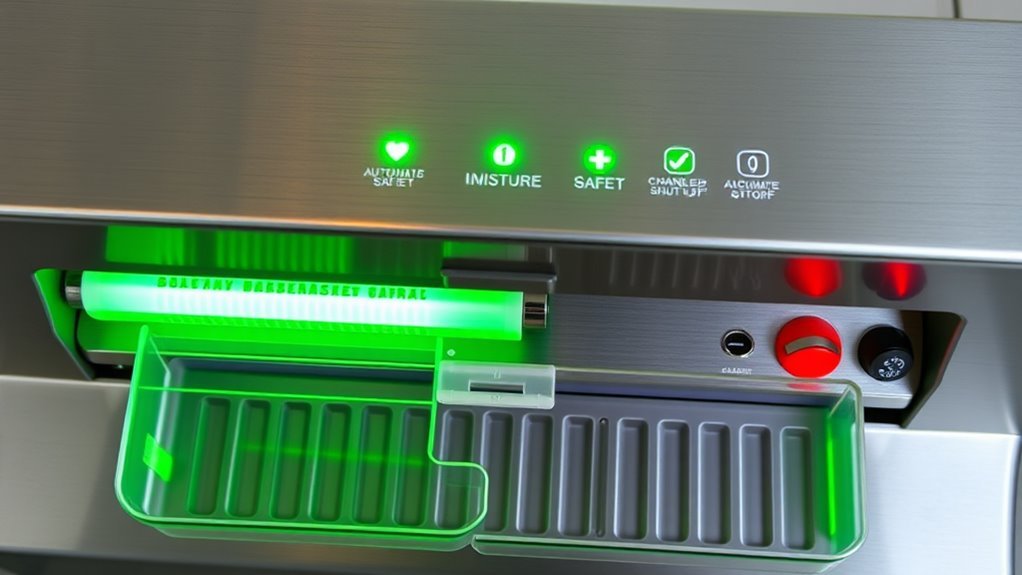
Safety features built into vacuum food sealers play three critical roles: protecting users, preventing equipment damage, and guaranteeing consistent sealing quality.
When you're busy in the kitchen, it's reassuring to know your machine will turn itself off after a period of inactivity or once sealing is complete.
If something goes wrong, you'll love having an emergency stop button right at your fingertips – it's like having an instant "undo" button for safety!
The sophisticated pressure sensors and temperature controls work behind the scenes to keep everything running smoothly. Additionally, regular checks on the vacuum sealer can help prevent many common seal bar problems that might compromise performance.
Meanwhile, the temperature controls guarantee the sealing element stays at the perfect heat level, leading to reliable operation every time.
These integrated safety systems don't just protect you – they help your sealer last longer and perform better.
Conclusion
From the precision of the vacuum chamber to the reliability of the sealing mechanism, every component plays its vital role. Now that you understand the inner workings of your vacuum food sealer, you'll be better equipped to preserve your food effectively and reduce waste in your kitchen.