Mastering sous vide cooking requires understanding the delicate dance between time and temperature. Temperature controls doneness—like that perfect 133°F medium-rare steak—while time transforms texture by breaking down tough fibers. The magic happens when you discover your personal sweet spot for different cuts. Some meats shine with longer cooking times, while others need just the minimum. Perhaps the greatest reward comes when you start experimenting beyond conventional wisdom and find your own preferred balance.
The Inseparable Dance of Time and Temperature in Sous Vide
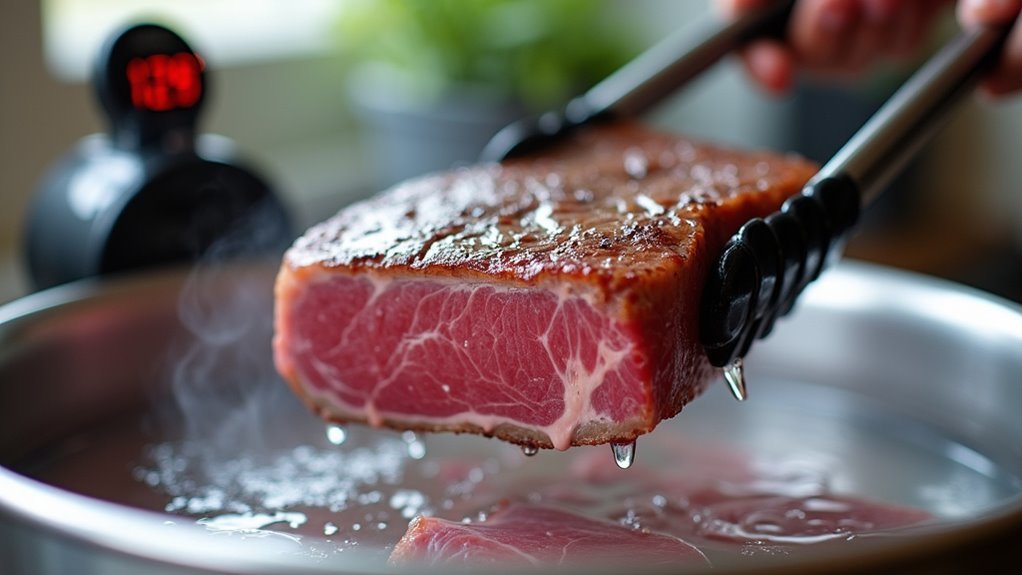
When mastering the art of sous vide cooking, understanding the relationship between time and temperature is perhaps the most critical foundation for success.
These two elements work together in a delicate balance that determines not just doneness, but texture, flavor, and overall eating experience.
Time influences tenderness, breaking down tough fibers, while temperature controls how “done” your food becomes.
A reliable sous vide device is essential here – accuracy matters tremendously when cooking within such precise parameters.
What makes this cooking method special is its personalization potential.
You might prefer your steak at exactly 133°F, while someone else might want theirs at 129°F.
It’s this customization that makes sous vide so rewarding. Implementing a proper cooling down routine for your sous vide device ensures its longevity and performance.
Achieving Perfect Doneness Through Temperature Control
Unlike the dramatic searing of traditional cooking methods, temperature control in sous vide offers precise, predictable results every time a cook drops food into that water bath.
The beauty lies in its simplicity – set the temperature to match your desired doneness, and that’s exactly what you’ll get.
Set it, forget it, perfect results—sous vide cooking elegantly eliminates guesswork from your culinary creations.
For instance, a perfectly medium-rare steak happens consistently at 133°F, while eggs transform differently at various temperature points.
I think what’s particularly remarkable is how the entire food cooks uniformly, without those gradient layers of doneness that conventional methods produce.
Perhaps the greatest advantage is reliability – temperatures remain stable throughout cooking, eliminating timing anxiety almost entirely. This approach also enhances nutrient preservation, allowing you to enjoy vegetables at their peak flavor while retaining their health benefits.
Mastering Tenderness With Strategic Cooking Times
Time transforms food in ways temperature alone cannot achieve. While precise temperatures determine doneness, it’s the strategic application of time that develops that melt-in-your-mouth tenderness we all crave.
The beauty of sous vide cooking lies in this relationship. Minimum cooking times guarantee safety and baseline texture, while extended periods break down tough collagen fibers in meats.
Perhaps the most valuable skill is finding that sweet spot—where food becomes perfectly tender without losing its structural integrity.
Experimentation is essential. A steak might be technically “done” after an hour, but three hours might yield a texture that better suits your preference.
Personalizing Your Sous Vide Journey Through Experimentation
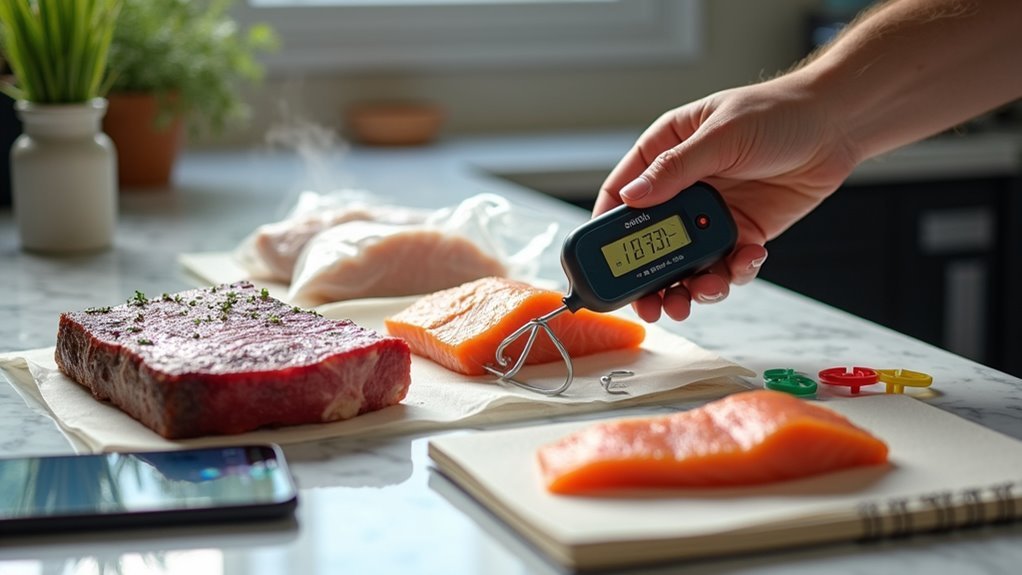
Every sous vide journey becomes truly remarkable once cooks begin to experiment beyond standard recipes and recommendations. The true magic happens when personal preferences guide adjustments to both time and temperature variables.
| Cut Type | Standard Time | Experimental Range |
|---|---|---|
| Tough cuts | 24-48 hours | 12-72 hours |
| Tender steaks | 1-2 hours | 45 min-4 hours |
| Delicate fish | 30-45 min | 20-60 min |
Perhaps the most rewarding aspect is discovering that perfect texture that might differ from conventional wisdom. Some cooks might prefer their chicken breast at 145°F rather than 150°F, finding it juicier while still safe to eat. This cooking method is particularly effective for achieving perfect doneness with meat, such as burgers, while avoiding the risk of overcooking.
Frequently Asked Questions
Can Sous Vide Cooking Help With Meal Prepping?
Sous vide cooking facilitates meal prepping by allowing batch cooking with precise temperature control. Items can be cooked, rapidly cooled, and refrigerated or frozen for later reheating without quality loss.
How Do Power Outages Affect In-Progress Sous Vide Cooking?
Like a tightrope walker suddenly plunged into darkness, power outages interrupt sous vide cooking. Food safety becomes compromised if temperatures fall below 130°F for over four hours, potentially requiring disposal.
Is It Safe to Leave Sous Vide Unattended Overnight?
Leaving sous vide unattended overnight is generally safe when using quality equipment with proper water levels and secure setups, though monitoring via smart devices adds an extra safety layer.
Which Foods Should Never Be Cooked Sous Vide?
Danger lurks in sous vide preparation of raw garlic, certain leafy greens, and some fish species. Foods requiring high temperatures to eliminate specific bacteria or those containing volatile compounds should be avoided entirely.
How Do Altitude Changes Impact Sous Vide Temperature Settings?
Altitude affects water’s boiling point, requiring sous vide temperature adjustments. At higher elevations, water boils at lower temperatures, necessitating longer cooking times to achieve proper doneness and food safety.