Have you ever wondered how those meal-prep enthusiasts keep their food fresh for weeks? I’ve been on a mission to find the perfect vacuum sealer after watching my carefully prepped ingredients spoil too quickly. It’s not just about extending shelf life—it’s about saving money and reducing waste. I think the right vacuum sealer depends entirely on your specific needs, and I’ve discovered some surprising differences between models that could make or break your preservation game.
External vs. Chamber Vacuum Sealers: Understanding the Differences
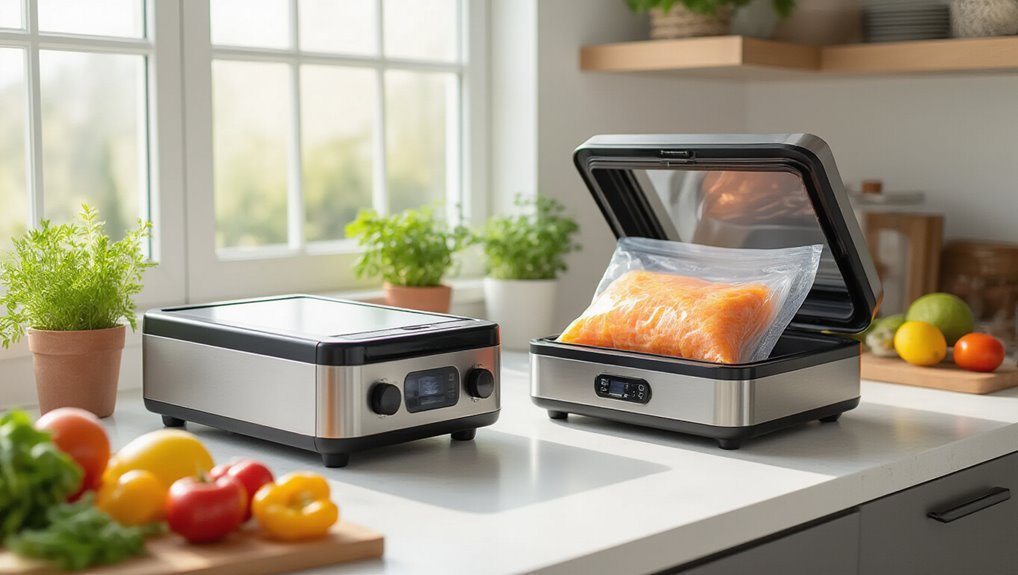
When I first started exploring vacuum sealers, I was honestly a bit confused about the different types available. After testing both, I’ve found external models are more compact and wallet-friendly—perfect if you’re just preserving occasional leftovers like me.
External vacuum sealers offer a budget-friendly, space-saving option for casual food preservers like myself.
For serious food preservation, though, chamber sealers are game-changers. They’re bulkier, yes, but they handle liquids beautifully, while external units often, well, struggle with anything wet.
The sealing cycle duration is typically longer with chamber models, but the results are worth it.
Vacuum bag compatibility is another consideration. External sealers need textured bags, whereas chamber units work with smooth-sided pouches.
I think for most home cooks, external models make sense unless you’re frequently preserving soups or marinades.
Durable stainless steel construction in many external models contributes to longevity and easy cleaning Stainless steel.
Top External Vacuum Sealers for Home Kitchens
I’ve found that budget-friendly external vacuum sealers like the Nesco VS-12 or Geryon offer impressive value without breaking the bank.
A simple reminder: maintaining a consistent freezer temperature helps maximize the effectiveness of budget sealers alongside proper storage practices.
When comparing sealing performance, I’ll admit the external models struggle a bit with liquids compared to chamber sealers.
But they’re perfectly adequate for most home preservation tasks.
For my money, these affordable options strike the right balance between functionality and cost.
They make ideal starting points if you’re new to vacuum sealing.
Budget-Friendly External Options
Why spend a fortune on food preservation when budget-friendly external vacuum sealers can do the job just as well for everyday needs? I’ve found models like the Nesco VS-12 Deluxe and Geryon offer impressive functionality at just $40-$60. They’re perfect when you’re just getting started with vacuum sealing and don’t need all those fancy features.
| Model | Best For | Limitations |
|---|---|---|
| Nesco VS-12 | Beginners | Struggles with liquids |
| Geryon | Small kitchens | Limited bag sizes |
| FoodSaver FM2000 | Occasional use | Basic features only |
| KOIOS | Budget-conscious | Less durable |
| Anova Precision | Tech-savvy users | Slightly higher price |
For vacuum sealer maintenance, I’d recommend wiping the sealing strip after each use. And here’s a food storage tip: pre-freeze liquidy items before sealing!
Sealing Performance Comparison
Although all vacuum sealers promise to extend food life, not all machines deliver the same level of performance when it comes to actual sealing quality. In my experience, the Nesco VS-12 Deluxe offers impressive vacuum strength with its double-seal technology that works great for most dry foods.
The FoodSaver VS5960, I think, hits the sweet spot between sealing speed and versatility with six different modes.
Chamber models like the JVR Vac100 blow external sealers away when handling liquids—something the Geryon struggles with, despite being compact and affordable.
For serious meat preservation, you’d probably want the Meat! Chamber sealer. Its 16-inch bar handles large cuts that would, um, actually be impossible to seal with smaller models.
The right choice really depends on what you’re sealing most frequently.
Premium Chamber Vacuum Sealers Worth the Investment
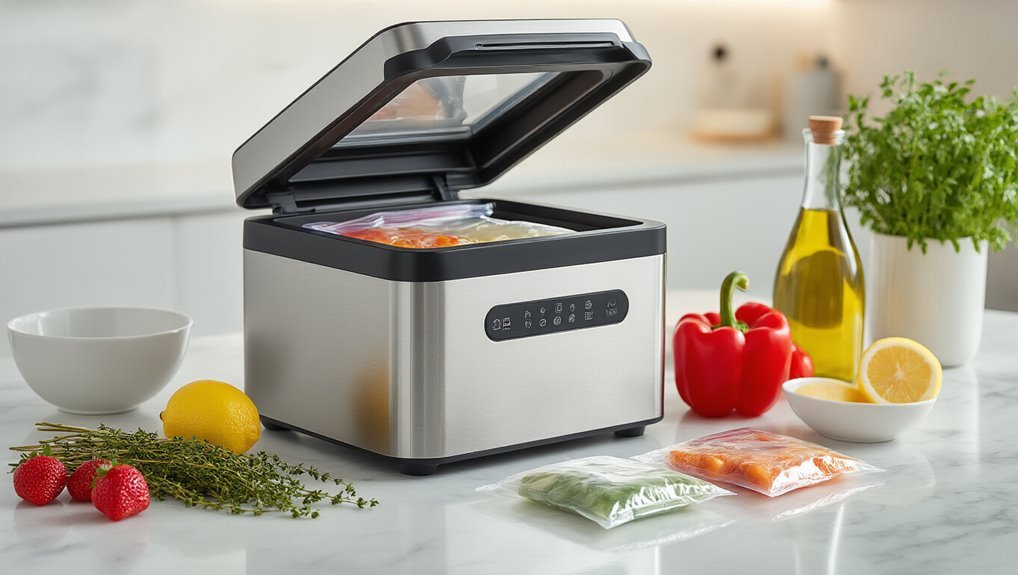
Yes, they’re heavy beasts (often 70+ pounds), but that extra weight translates to professional-grade sealing power that’s transformed how I preserve soups and marinades.
Sous vide methods rely on precise temperature control to maintain moisture and flavor.
If you’re wondering whether the investment’s worth it, I’d say it depends on how often you’re dealing with moist foods and liquids—for me, the extended shelf life alone justified the counter space sacrifice.
Heavy-Duty Liquid Handling
When you’re dealing with lots of liquids, soups, and stews, standard vacuum sealers just don’t cut it anymore. I’ve found that heavy-duty chamber models like the Vevor DZ-260A and JVR Vac110 are game-changers for maintaining food storage organization while preserving the natural vacuum sealing textures of wet ingredients.
What I love about these machines is how they completely transform the sealing process. Instead of struggling with liquid spillage, the chamber evacuates air from the entire environment around your bag—not just sucking from one end.
You can adjust both vacuum and seal times, which, trust me, makes a huge difference when you’re working with delicate items.
They’re pricey, yeah, but if you’re serious about sous vide cooking or bulk preservation, these 16-inch capacity workhorses are worth every penny.
Space Vs Sealing Power
The biggest dilemma you’ll face with premium chamber vacuum sealers isn’t whether they’re effective—it’s where on earth you’re going to put them. At over 50 pounds and roughly 20 inches long, these beasts demand serious countertop real estate.
I’ve found the trade-off is absolutely worth it though. The vacuum chamber creates seals that external models simply can’t match, especially with liquids or delicate foods.
| Feature | Chamber Sealer | External Sealer |
|---|---|---|
| Weight | 50+ pounds | 5-10 pounds |
| Footprint | Large (20″+) | Compact |
| Sealing capacity | Up to 16″ pouches | Limited |
| Liquid handling | Excellent | Poor-Fair |
| Price point | High investment | Budget-friendly |
Look, I won’t sugarcoat it—you’ll need dedicated space, but the sealing power is unmatched.
Key Features to Consider When Choosing a Vacuum Sealer
Selecting the right vacuum sealer involves understanding several crucial features that’ll make or break your food preservation experience.
For consistent results across different foods, precise temperature control is a foundational benefit of proper sealing.
In my experience, adjustable sealing modes are non-negotiable—you’ll want options for moist, dry, and gentle settings to handle everything from juicy steaks to delicate herbs.
I think the accessory port is often overlooked, but it’s actually super valuable if you preserve in jars or canisters.
Also, pay attention to sealing width—I’ve found 10mm to be the sweet spot for most foods.
Don’t forget about control options! Pulse functions give you, well, more precision when dealing with liquids that might otherwise get sucked up.
And trust me, easy-to-clean components aren’t just convenient; they’re essential for maintaining hygiene and extending your sealer’s lifespan.
Sealing Liquids and Moist Foods: Special Considerations
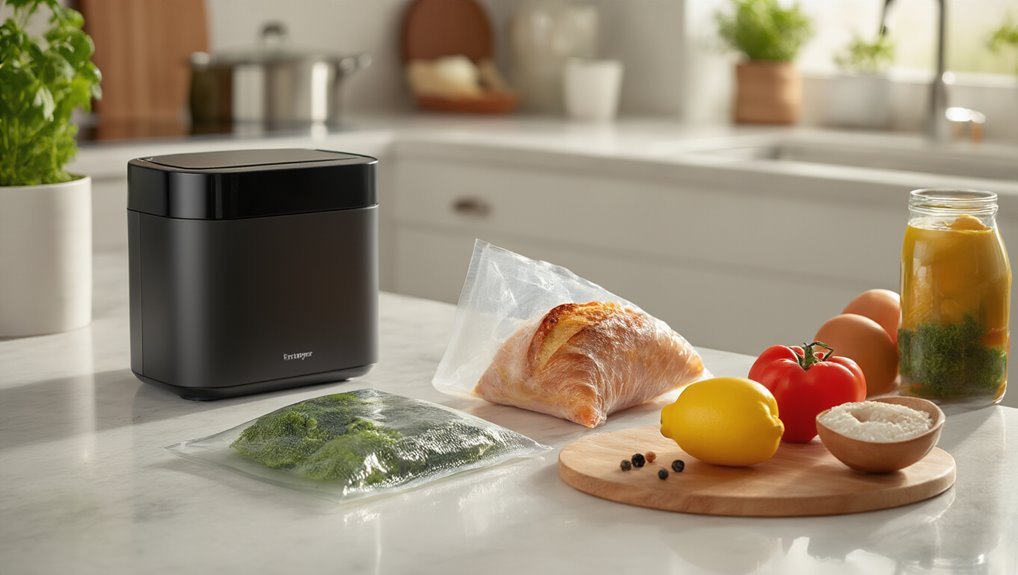
Handling liquids in a vacuum sealer often becomes the trickiest part of food preservation, doesn’t it?
In my experience, chamber vacuum sealers are your best bet for soups and marinades because they create that perfect environment where liquids don’t bubble up during sealing.
For those using external sealers, here are some workarounds I’ve found effective:
- Pre-freeze your liquids first (yeah, it’s extra work, but worth it)
- Use thicker vacuum bag materials that can withstand moisture
- Adjust the sealing temperature lower for wet foods
- Try the double-seal technique when dealing with particularly juicy items
I’ve learned that the right technique matters more than fancy equipment sometimes.
If you’re sealing lots of stews or soups, though, I’d definitely recommend investing in a chamber model.
Regular maintenance and understanding common issues can keep seals reliable over time, reducing the risk of air leaks.
Space and Weight Considerations for Your Kitchen Setup
When I’m helping clients choose the right vacuum sealer, I always stress that your kitchen’s layout matters more than you might think.
You’ll need to take into account whether you can spare 20 inches of counter space for a hefty chamber sealer that weighs 60+ pounds, or if you’d prefer a compact external model that can be tucked away in a drawer.
I personally recommend measuring your available storage space before committing to a purchase – there’s nothing worse than bringing home a new appliance only to realize it won’t fit anywhere!
Additionally, store it in a dry and moderate-temperature location to maintain performance over time dry storage.
Storage Footprint Comparison
Where you’ll store your vacuum sealer mightn’t be your first consideration when shopping for one, but trust me, it should be! Different vacuum sealer materials impact both weight and sealing speed, which ultimately affects how easily you can move and store the device.
Here’s how the footprints compare:
- External vacuum sealers – Lightweight champions at 2-6 pounds and about 15 inches long, perfect for small kitchens.
- Chamber sealers – The heavyweights at 70+ pounds measuring 20-25 inches, needing dedicated counter space.
- Handheld sealers – Ultra-portable at under 2 pounds, easily tucked in a drawer.
- Commercial models – Well, these are massive… probably not what you’re looking for unless you’re running a restaurant!
I’ve found that selecting the right size makes all the difference in how often I actually use my sealer.
Counter Space Requirements
Three essential factors determine whether a vacuum sealer will be a kitchen hero or storage headache: counter space, weight, and accessibility.
When I’m shopping for a sealer, I always measure my available counter space first. External models are my go-to for smaller kitchens—they’re under 6 pounds and about 15 inches long, which means I can easily tuck them away when not using them. Plus, their lighter weight doesn’t compromise seal quality much.
Chamber sealers? Well, they’re beasts—60+ pounds and need permanent homes.
I’ve found their noise levels are actually worth considering too. The smaller units tend to be quieter, which is something you don’t think about until you’re sealing food at midnight!
In my experience, compact models under 20 inches are perfect if, like me, you’re working with limited space.
Maintenance and Cleaning Tips for Longevity
Although vacuum sealers are fairly low-maintenance appliances, proper cleaning and maintenance will considerably extend their lifespan and keep them functioning at peak performance.
In my experience, establishing regular maintenance routines for vacuum sealers prevents costly repairs down the road.
Here’s what I recommend:
- Disassemble and clean the sealing bar and gaskets regularly – food residue buildup is the enemy of a good seal.
- Wipe down the chamber with a damp cloth – never use harsh chemicals that might damage surfaces.
- Replace vacuum pump oil every 6-12 months – it’s something many folks forget but makes a huge difference.
- Make sure everything’s completely dry before reassembling – moisture can lead to mold or even corrosion.
Regular maintenance should also consider the role of air removal in preserving freshness, ensuring the seal remains strong over time.
Budget-Friendly Options That Don’t Sacrifice Quality
Now that we’ve covered keeping your vacuum sealer in top condition, let’s talk about getting a good machine without breaking the bank. I’ve found that affordable models like the Nesco VS-12 and Geryon offer impressive performance under $50. In my experience, these economical options don’t sacrifice much in terms of functionality.
| Model | Vacuum Bag Compatibility | Noise Level | Price |
|---|---|---|---|
| Nesco VS-12 | Universal | Moderate | ~$45 |
| Geryon | Most brands | Quiet | ~$38 |
| Vevor DZ-260A | Custom sizes | Louder | ~$50 |
What I really appreciate about these budget sealers is their compact design—perfect if you’re short on counter space like me. They’ll handle most home food storage needs, and with proper use, they can even tackle liquids without making a mess. Canning offers long-term storage without refrigeration, which can complement vacuum sealing for a complete preservation strategy long-term storage.
Specialized Uses: Jar Sealing, Retort Capabilities, and Mylar Bags
When you’re ready to take your vacuum sealing to the next level, specialized attachments and capabilities open up exciting preservation possibilities.
I’ve found that advanced vacuum sealing techniques dramatically extend ingredient preservation timeframes beyond what standard models offer.
With proper refrigeration or freezing, these capabilities can further deliver extended shelf life while preserving nutrients.
Here are the specialized functions worth considering:
- Jar sealer attachments – perfect for storing liquids and delicate items that would be crushed in bags
- Retort capabilities – models like the JVR Vac110 maintain seals during high-temperature processing
- Mylar bag compatibility – combined with oxygen absorbers, these create nearly indefinite shelf life for dry goods
- Chamber sealing versatility – allows you to use specialized packaging materials that external sealers can’t handle
In my experience, these specialized features are game-changers if you’re serious about long-term food storage or canning.
Real User Experiences and Recommendations
After testing dozens of vacuum sealers and talking with fellow food preservation enthusiasts, I’ve discovered that real-world experiences often tell a more practical story than manufacturer claims. For long-term storage, vacuum sealing shines for nutrient preservation and preventing freezer burn. The praise for vacuum chamber models is consistent – they’re simply unbeatable for sealing liquids without mess, while external sealing units win points for convenience and counter space.
| Model Type | Strength | Weakness |
|---|---|---|
| Chamber | Perfect for liquids | Higher price point |
| External Basic | Budget-friendly | Can’t handle moisture |
| External Premium | Built-in cutters | Uses more bag material |
| Chamber Commercial | Adjustable settings | Large footprint |
| Handheld | Ultra portable | Limited sealing power |
I’ve found that users who preserve frequently swear by models with adjustable settings. It’s like having a fine-tuned instrument rather than a one-size-fits-all approach.
Frequently Asked Questions
How to Choose the Right Vacuum Sealer?
Like finding a diamond in the rough, I’d recommend prioritizing seal quality first. I’d also consider the brand reputation, vacuum strength, size requirements, and whether I need liquid-sealing capabilities.
What Is the Best Rated Vacuum Sealer for Food?
I’d recommend the Anova Precision Vacuum Sealer Pro or Nesco VS-12 Deluxe. Both offer exceptional durability with multiple sealing modes. They’re pricier than basic models, but their cost is justified by reliable performance.
Is Higher Kpa Better for a Vacuum Sealer?
Yes, higher KPa generally means better vacuum sealing performance and stronger seal strength. However, I’d caution that extremely high KPa might crush delicate foods, so consider what you’re actually sealing.
What Vacuum Sealer Does America’s Test Kitchen Recommend?
America’s Test Kitchen absolutely raves about the FoodSaver VAC5900! I’ve noticed they love its exceptional sous vide compatibility and superior bag sealing features, including handy moist/dry modes for different foods you’ll preserve.