I bet you didn’t know that the difference between chamber and regular vacuum sealers goes way beyond just price point. After testing both types extensively in my kitchen, I’ve discovered there’s a whole world of functionality that separates these machines—and it might completely change how you preserve food. The right choice depends on what you’re sealing, how often you’ll use it, and whether you’re willing to trade counter space for performance. Let’s settle this debate once and for all.
Understanding the Core Differences in Sealing Technology
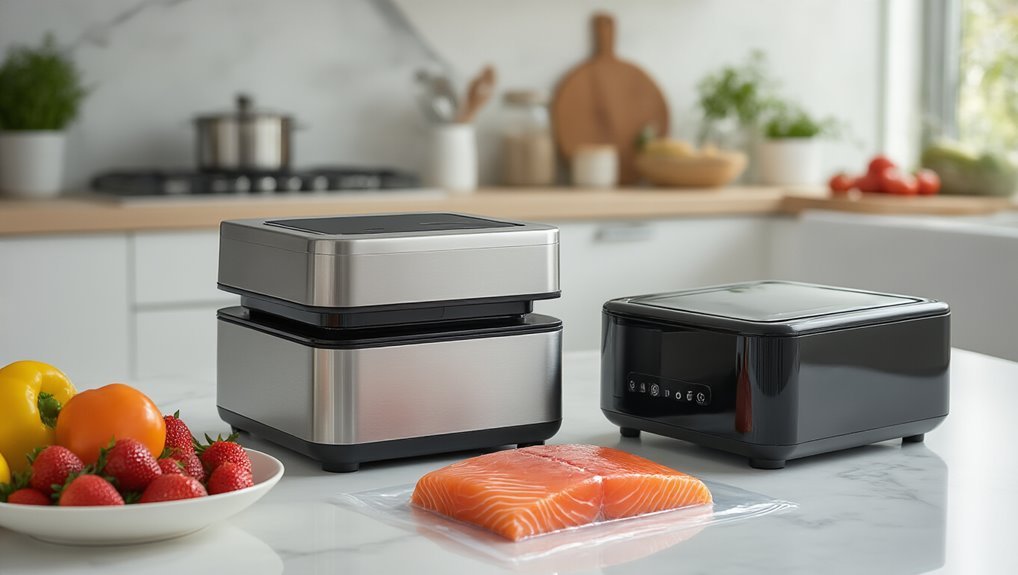
When I first started comparing chamber vacuum sealers with regular vacuum sealers, I was honestly a bit confused about what made them so different. The core difference, I’ve found, lies in how they actually remove air—chamber models evacuate air from both the chamber and bag simultaneously, while regular sealers only suck air from the bag itself.
This fundamental distinction affects seal integrity in a big way. Chamber sealers create more complete vacuums, which is why they’re better with liquids—something I learned the hard way after a marinaded chicken disaster with my regular sealer!
In practice, considering heat processing and its impact on safety helps explain why some systems pair with canned goods for extended shelf life. Plus, maintenance considerations differ too. Chamber models can handle multiple bags at once and achieve higher pressures, but they’re bulkier. Regular sealers are simpler to maintain but, well, they’re just not as effective for delicate items.
Performance Comparison: Speed, Efficiency, and Vacuum Strength
When I tested both sealer types side-by-side, I noticed chamber models consistently outperformed regular sealers in processing time. Additionally, they often feature an automatic sealing process that minimizes manual steps. You can actually seal multiple bags while external models require one-by-one handling.
I’m particularly impressed by chamber sealers’ vacuum strength. They reach around -30 inches of Hg compared to the -25 to -28 in external models, which makes a real difference when you’re preserving foods long-term.
This superior vacuum power, combined with faster operation, makes chamber sealers the clear winner for serious food preservation, though they’ll cost you more upfront.
Sealing Time Variances
Although both sealing systems get the job done, their performance timelines couldn’t be more different. I’ve noticed chamber units take their sweet time—about 20-30 seconds per bag compared to just 8-12 seconds with regular models.
But don’t be fooled by numbers alone! What chamber sealers lack in speed, they make up for in thoroughness. Their user interface typically offers adjustable vacuum settings that regular units can’t match.
In my experience, the seal bar durability of chamber models also tends to be superior when processing multiple bags. Sure, waiting an extra 15 seconds might seem tedious, but I think it’s worth it for near-complete air removal.
Vacuum Pressure Capabilities
Despite having longer sealing times, chamber vacuum sealers absolutely dominate when it comes to vacuum pressure capabilities.
I’ve noticed they can remove over 99.9% of air, while regular sealers typically max out around 95-98%. That’s a huge difference when you’re trying to preserve delicate items!
Material compatibility is another area where chamber sealers shine – they handle liquids and thick contents without losing vacuum strength.
Regular sealers, well, they struggle with anything remotely moist.
In terms of noise levels, I find both types pretty comparable, though chamber models sustain their humming longer during operation.
If you’re processing multiple items, a chamber sealer maintains consistent pressure throughout, which I think makes the extra few decibels worth it for serious food preservation.
Cost Analysis: Initial Investment vs. Long-Term Value
The price tag on a chamber vacuum sealer might make you wince at first glance, as they’ll typically set you back somewhere between $600 and $2,500. That’s a significant jump from the $100-$200 you’d spend on a regular external vacuum sealer.
But here’s the thing about cost – it’s not just about the upfront investment. When I consider energy efficiency and maintenance costs over time, chamber sealers actually offer better long-term value for serious users.
I’ve found that external sealers can nickel-and-dime you with replacement parts and pricier bags, kind of like printers with their expensive ink cartridges.
For frequent use, I’d say the chamber sealer is like buying quality boots instead of cheap ones – costs more initially but saves money in the long run. Over time, the energy efficiency of chamber sealers can translate into noticeable savings on electricity and bag usage, reinforcing the value of the initial investment long-term freshness.
Food Compatibility: Which Sealer Works Best for What
When it comes to food compatibility, I’ve learned that chamber vacuum sealers and external sealers each have their sweet spot.
Vacuum sealing relies on oxygen removal to slow bacterial growth and preserve quality.
For liquids and marinades, there’s really no contest. My chamber sealer handles these without any mess, while my external unit… well, let’s just say I’ve cleaned up enough spills to learn that lesson! The difference is in the sealing techniques each uses.
I’ve found that chamber sealers are incredibly versatile with food types. They work with standard bags, mesh bags, even pouch alternatives. They’re perfect for those oddly shaped foods that might get crushed in a regular sealer.
Meanwhile, external vacuum sealers are my go-to for dry foods like jerky, nuts, or coffee beans. They’re simpler to use, but definitely limited when moisture enters the picture.
Space and Convenience Factors for Home and Professional Users
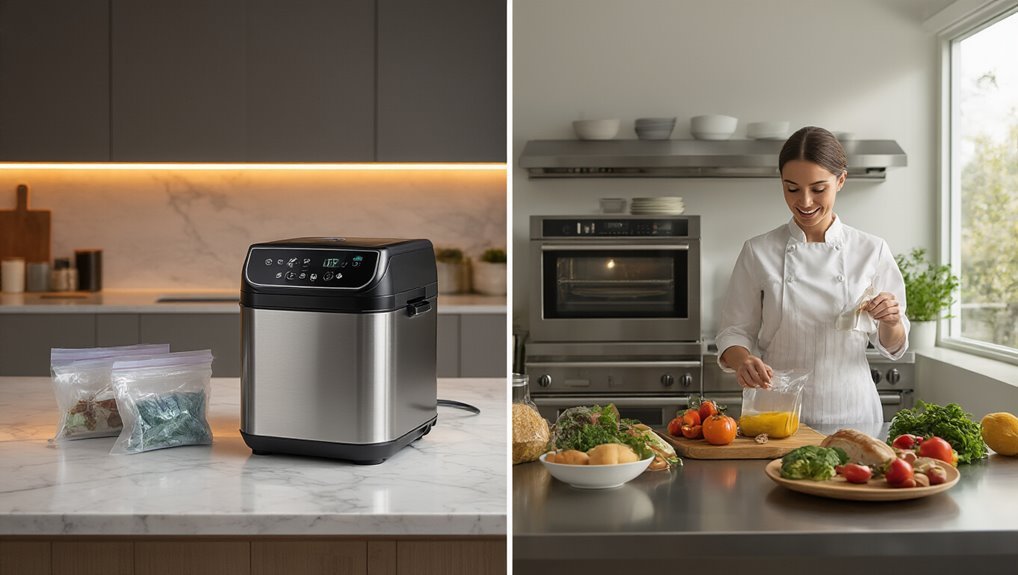
As I’ve explored both types of vacuum sealers in my kitchen, size matters more than you might initially think.
Budget options like Dincken and KOIOS offer solid sealing performance for home use, which keeps both food fresh and costs low budget sealers.
Chamber models, with their bulky design aesthetics, demand significant counter space and are honestly challenging to move around. I’ve found that external sealers, being more compact, fit nicely in my cabinet when not in use.
The noise levels are another consideration—chamber models tend to run quieter, which I appreciate when I’m sealing items late at night.
But for most home users, I think the convenience of a regular sealer outweighs the professional capabilities of chamber models.
In professional settings, well, that’s different. If you’ve got dedicated space, a chamber sealer makes sense.
For the rest of us with modest kitchens? The regular sealer is probably your best bet.
Real-World Applications and User Experiences
Having spent years testing both vacuum sealer types, I’ve found that real-world applications tell the true story of which machine shines where. In practice, quick freezing speeds ice crystal formation and helps preserve texture. In my experience, chamber sealers absolutely dominate when it comes to seal durability. I’ve sealed hundreds of bags for sous vide cooking, and chamber models consistently produce those perfect, bubble-free seals—especially with liquid-rich foods that would wreak havoc on regular sealers.
But let’s talk user convenience. For quick, everyday tasks like sealing leftover chips or portioning dry foods, I reach for my regular sealer without hesitation. It’s just more practical, you know?
Professional chefs I’ve interviewed all say the same thing: they’ll splurge on chamber models for high-volume work, but—wait, actually—most home cooks are perfectly fine with regular sealers for occasional use.
Frequently Asked Questions
Are Chamber Vacuum Sealers Better Than Regular Vacuum Sealers?
Yes, I’d say chamber vacuum sealers are better for serious food preservation. They seal liquids perfectly and offer superior results, but they’re pricier than regular models in any cost comparison.
What Is the Difference Between Chamber Sealer Bags and Vacuum Sealer Bags?
I’ve found chamber bags are thicker and more reusable, like a stronger marriage counseling relationship, while regular vacuum bags are like limited space exploration missions—one-way journeys with less durability for liquids.
What Are the Benefits of a Chamber Vacuum Sealer?
I love chamber vacuum sealers for superior food preservation. They’re more efficient at sealing liquids without mess, offer faster sealing times, and provide customizable vacuum levels for delicate foods.
Which Type of Vacuum Sealer Is Best?
Like a chef choosing the perfect knife, I’d say the “best” depends on your needs. For serious Sous Vide and advanced food preservation, I prefer chamber sealers; for occasional use, regular sealers work fine.