I’ve spent years testing different bags with my chamber vacuum sealer, and trust me, choosing the right ones matters more than you’d think. Most people focus solely on their machine but overlook that the bags determine how well foods preserve. I’ve had fish spoil prematurely and freezer burn ruin expensive steaks just because I skimped on quality. Ever tried to seal liquids with the wrong bag? Yeah, not pretty. The perfect bag depends on several essential factors…
Understanding Chamber Vacuum Sealer Bag Materials
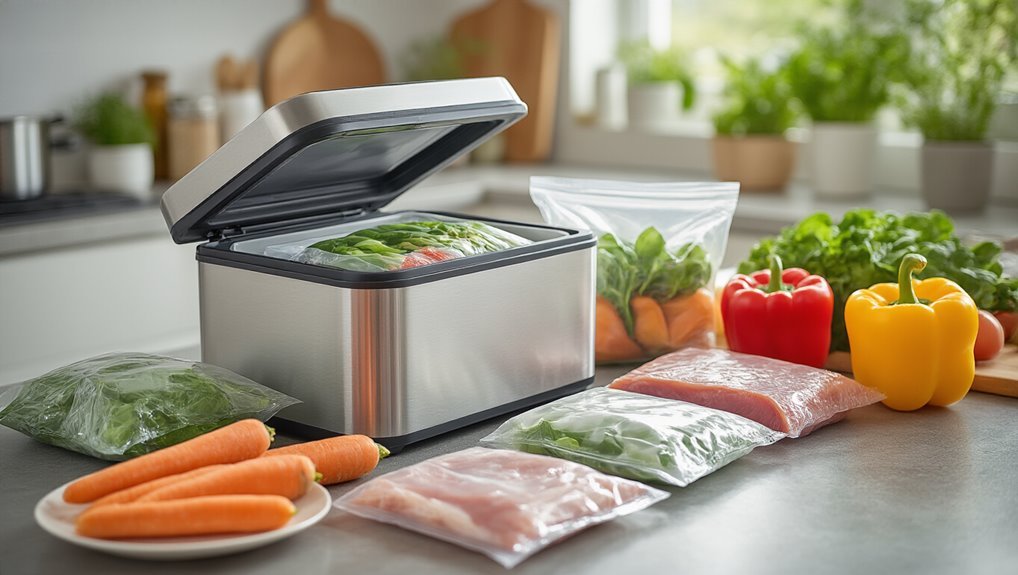
While selecting the right vacuum sealer bag, I’ve found that understanding the material composition is vital for successful food preservation. I typically look for bags made from multi-layer materials—polyethylene, nylon, or foil—which offer excellent chemical resistance against oils, acids, and moisture.
Multi-layer vacuum sealer bags provide superior protection against oils and moisture, essential for preserving your food’s freshness and flavor.
These pouches are remarkably versatile, with flexibility options ranging from standard 3-mil thickness to heartier 5-mil bags that resist punctures better. When I’m planning sous vide cooking, I always check for bags that can handle temperatures up to 212°F.
You know what’s really important to me? Food safety. I make sure my bags are BPA-free and FDA-approved.
The smooth, non-textured surface of chamber bags might seem like a small detail, but it’s actually essential for creating that perfect vacuum seal your chamber machine needs. This approach is consistent with the vacuum sealing benefits long known in both professional kitchens and home setups.
Key Differences Between Chamber and External Vacuum Bags
When I’m comparing chamber and external vacuum bags, I’m struck by their fundamental differences in structure and how they’re sealed.
In all sous vide applications, ensuring proper heat distribution is crucial for safety and texture.
Chamber bags feature smooth surfaces and thicker materials (usually 3+ mil) that can withstand high temperatures for sous vide cooking.
External bags have those textured, mesh-lined surfaces to help air escape.
You’ll need to match your bag type to your sealing method — chamber vacuum sealers require smooth bags that can handle the pressure difference inside the chamber, while external sealers need those textured bags to work properly.
Structure and Composition Variations
Although chamber and external vacuum bags might look similar at first glance, they’re actually quite different in their structure and composition. Chamber bags feature a smoother, thinner packaging design that’s optimized for complete immersion in chamber sealers.
External bags have textured surfaces to help with air removal. I’ve found that chamber bags provide a superior moisture barrier thanks to their multi-layered construction that handles high-temperature cooking methods like sous vide.
In my experience, material flexibility is another key difference. Chamber bags feel more pliable, making them perfect for professional cooking techniques.
External bags, on the other hand, are typically sturdier for everyday use. When you’re choosing between the two, consider whether you need custom-cut bags (external) or pre-cut options ready for sealing (chamber).
Sealing Method Requirements
Because the sealing method you choose directly impacts which bags you’ll need, understanding the differences is essential.
Chamber vacuum sealer bags typically feature smooth surfaces, while external vacuum bags have textured linings. This bag texture isn’t just a design choice—it’s vital for functionality.
In my experience, the textured surface in external bags creates channels for air to escape during sealing, which is, well, absolutely necessary for them to work properly.
Chamber sealers don’t need this texture because—wait, let me rephrase that—they create a vacuum in the entire chamber, not just inside the bag.
When considering sealing compatibility, remember that while chamber machines can use both smooth and textured bags, external sealers can’t effectively use smooth chamber bags.
I’ve found this distinction makes all the difference in successful food preservation.
Selecting the Appropriate Bag Size and Thickness
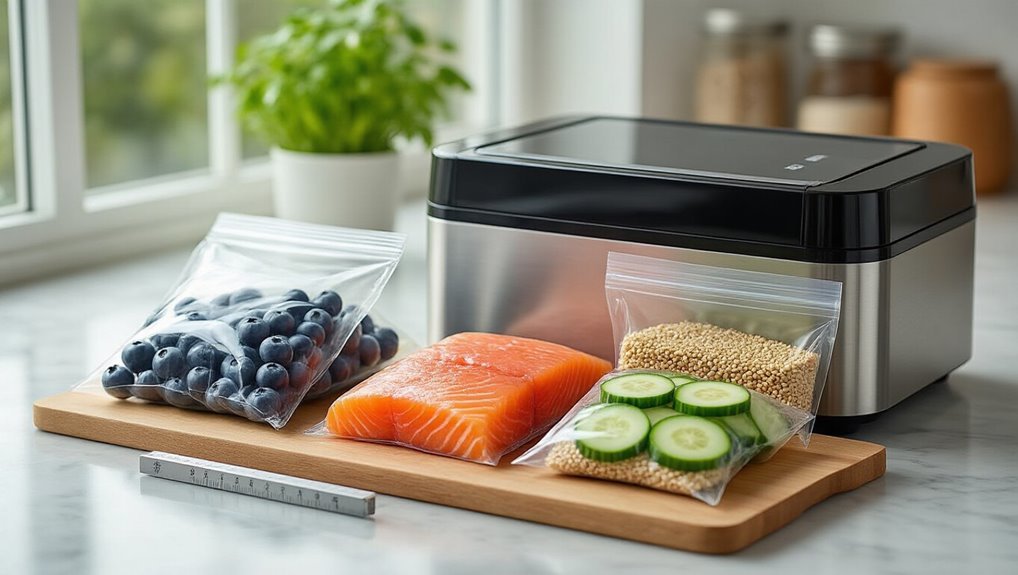
Have you ever tried vacuum sealing a huge roast in a tiny bag? Trust me, it’s a frustrating experience I don’t recommend. When choosing chamber vacuum sealer bags, size really matters.
For bulk items like that roast, I prefer 12″ x 12″ bags, while I’ll grab 6″ x 10″ bags for smaller portions. Custom bag sizes are also available if you’re packaging something unusual—I actually discovered reusable pouch options that work great for oddly shaped items.
Thickness is just as essential. Think of it like this: bag thickness is to vacuum sealing what tire thickness is to roads. For everyday storage, 3 mil works fine, but for sous vide cooking at high temps? I always go with 4-5 mil for durability. You’ll thank me later. Remember that proper bag thickness helps prevent freezer burn in long-term storage freezer burn.
Heat Resistance and Cooking Applications
When I’m cooking sous vide or reheating meals, I need vacuum bags that won’t melt or leach chemicals into my food. Chamber machine pouches rated for 212°F are my go-to for sous vide cooking. In addition, choosing bags with documented heat resistance helps maintain safety and flavor during cook cycles.
While 3 mil thick bags provide the durability needed for higher temperatures.
I always check the manufacturer’s specifications for heat resistance before using any vacuum bag for cooking – trust me, it’s worth taking that extra minute to avoid a potential mess or safety issue.
Temperature Tolerance Ranges
If you’re planning to use your vacuum sealed foods for cooking applications, understanding the temperature tolerance of your bags is absolutely critical.
Standard chamber vacuum sealer bags (typically 3 mil thick) can withstand temperatures up to 212°F, perfect for boiling and sous vide cooking.
I’ve found that higher-quality bags might even handle up to 230°F for short periods—which gives you more flexibility in your vacuum sealing art.
When creating custom bag designs for your cooking needs, always check the manufacturer’s specifications. You don’t want your bags melting during that perfect sous vide session!
In my experience, the best heat-resistant pouches are BPA-free and specifically tested for cooking.
I think it’s worth investing in proper cooking-grade bags rather than, um, risking cheaper alternatives that might compromise your food’s safety and flavor.
Sous Vide Applications
Sous vide cooking has completely revolutionized my approach to perfectly cooked meals, and vacuum sealer bags are the unsung heroes of this culinary technique.
I’ve found that 3 mil chamber bags are ideal since they can handle temperatures up to 212°F—perfect for those long, slow cooking sessions.
What I love most about these bags is how they enhance flavor infusion while maintaining perfect moisture control.
The food-grade, BPA-free materials mean I don’t have to worry about chemicals leaching into my 48-hour short ribs.
Trust me, those reinforced seals are lifesavers! Nothing worse than finding your beautiful steak floating in sous vide water.
The pre-printed temperature guidelines on many bags have saved me countless times—especially when I’m, um, trying to remember if it’s 131° or 133° for medium-rare.
Food Safety Certifications and Standards
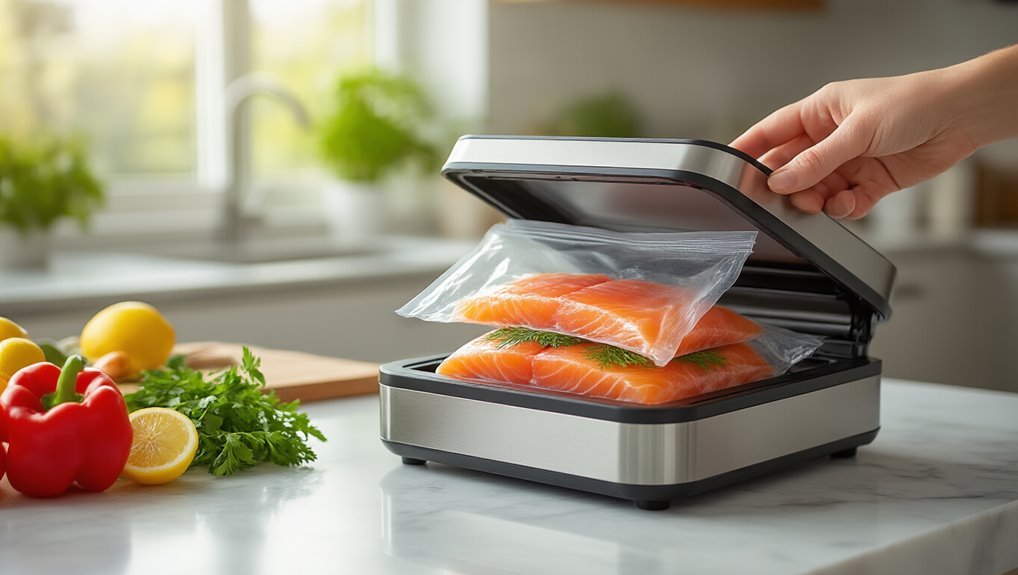
As you’re searching for vacuum sealer bags, safety certifications should be at the top of your priority list. I’ve learned that FDA approval is non-negotiable when it comes to food storage solutions. In my experience, checking for BPA-free certification is equally important since you don’t want harmful chemicals leaching into your food during sous vide cooking. Additionally, prioritize FDA approval along with BPA-free certification to ensure comprehensive food safety.
| Certification | What It Means | Why It Matters | Brand Reputation | User Reviews |
|---|---|---|---|---|
| FDA Approved | Safe for food contact | Prevents contamination | Trusted brands highlight this | Often mentioned first |
| BPA-Free | No harmful bisphenol A | Healthier long-term storage | Quality brands emphasize this | Users prioritize this feature |
| NSF Certified | Meets professional standards | Restaurant-grade safety | Enhances brand credibility | Professionals comment on this |
| USDA Compliant | Meets agricultural standards | Suitable for meat preservation | Indicates quality manufacturing | Meat enthusiasts note this |
| Heat-Resistant Rating | Safe at specific temperatures | Critical for sous vide | Top brands specify limits | Frequently discussed in reviews |
Cost-Effectiveness and Bulk Purchasing Options
Three key factors have revolutionized my approach to vacuum sealer bags: cost, quantity, and long-term value.
I’ve learned that smart pricing strategies can make a huge difference in my budget, especially when I’m running a busy kitchen.
When I compare bulk purchases to smaller quantities, the savings are honestly shocking. Here’s what I’ve discovered:
- Buying packs of 2000 bags can slash per-unit costs by up to 50%
- Supplier reliability matters—inconsistent quality negates any savings
- The upfront investment feels steep, but actually pays off within months
Storage space is something you’ll need to evaluate, though. I once bought too many and, well, had to reorganize my entire pantry!
In my experience, bulk purchasing is worth every penny if you’re sealing foods regularly. This practice also maximizes long-term value by delivering an Extended shelf life that keeps perishables usable longer.
Storage Capacity and Shelf Life Extension
The most impressive benefit I’ve discovered about quality vacuum sealer bags is their remarkable ability to extend food shelf life. In my experience, these chamber bags can stretch your food’s freshness by 3 to 5 times compared to regular storage methods!
I’m particularly impressed with the 3 mil thickness options—they’re durable enough for long-term storage without tearing.
What’s really changed my food storage game is how these bags maximize storage capacity while preventing freezer burn. You know, I’ve found that matching the right bag size to your portions makes all the difference. Whether I’m storing small herbs or large meat cuts, there’s a perfect chamber bag for the job.
The airtight seal these bags create is, well, basically like pressing pause on food spoilage.
This technique also supports extended shelf life, by slowing oxidation and protecting nutrients.
Reusability and Environmental Considerations
When it comes to cleaning vacuum sealer bags for reuse, I’ve found that a thorough rinse with warm, soapy water works wonders if you’re trying to extend their life. This aligns with the idea of long-term shelf life, where durable packaging and careful cleaning contribute to lasting safety over time.
I’m always careful to inspect each bag for tiny tears or weak spots before using them again, since one small hole can ruin your food storage efforts.
While reusing standard bags a few times is possible, I’ve recently switched to silicone alternatives that are specifically designed for multiple uses.
They’re a bit pricier upfront but far better for reducing my household plastic waste.
Cleaning for Reuse
Although many vacuum sealer bags are marketed as single-use items, I’ve found that properly cleaning and reusing them can considerably reduce waste while saving you money in the long run. DIY sealing enthusiasts like myself know that vacuum bag recycling isn’t just possible—it’s practical when done correctly.
For effective cleaning and reuse, I recommend:
- Wash thoroughly with warm, soapy water, removing all food particles that could harbor bacteria.
- Rinse completely and dry bags upside down on a rack (any moisture left can cause mold—trust me, I learned this the hard way!)
- Store in a cool, dry place away from sunlight to prevent degradation.
Remember to inspect bags before each reuse. If they’re damaged or won’t hold a seal anymore, it’s time to retire them.
Sustainable Alternatives Available
Beyond simply reusing traditional vacuum bags, environmentally conscious food storage has made impressive strides in recent years. I’m particularly excited about the silicone options like Stasher bags that can be used hundreds of times for both storage and sous vide cooking.
If you’re looking to eliminate plastic waste entirely, there are now excellent vacuum bags made from biodegradable films and compostable materials derived from plants. I think these are game-changers for those of us trying to reduce our environmental footprint.
What’s really cool—actually, what I appreciate most—is that many sustainable alternatives don’t sacrifice functionality. They still withstand freezing, microwaving, and even boiling temperatures.
Just remember to inspect them carefully between uses to ensure they’ll still seal properly.
Specialized Bags for Specific Food Types
Why would you use the same bag for delicate cheese that you’d use for bulky cuts of meat? That’s like wearing sneakers to a black-tie event—technically possible but not ideal for flavor preservation or moisture control.
Using the wrong storage bag is like bringing a hammer to perform surgery—functional but lacking the finesse quality ingredients deserve.
I’ve found that specialized chamber vacuum bags make a world of difference when storing different foods.
When selecting the right bag for your needs, consider these key factors:
- Material thickness – Delicate items like cheese need that 3-5 mil thickness for protection.
- Size appropriateness – Pre-cut bags with tear notches save time in busy kitchens.
- Specialized features – Retort pouches for sous vide cooking versus standard pouches for dry storage.
Additionally, prioritizing material thickness can help ensure delicate items like cheese are protected during storage.
Troubleshooting Common Chamber Vacuum Sealing Issues
When your vacuum sealer suddenly stops creating those perfect, airtight pouches, it’s enough to make you want to toss the whole machine out the window. I’ve been there myself, trust me. Remember that proper sealing also plays a key role in nutrient retention, helping preserve vitamins during storage.
First, check if your bag is properly positioned without any folds. I think the most overlooked issue is actually debris on the sealing strip—clean it before each use!
You know what else matters? Using the right thickness. Stick with 3 mil pouches exclusively for chamber sealers.
For long-term vacuum bag storage, proper sealing is *essential*. If your pump seems weak, it might need servicing.
And don’t forget about proper bag disposal methods—these thick bags aren’t always recyclable in standard programs, so check your local guidelines.
Frequently Asked Questions
How Do I Know Which Vacuum Bag to Buy?
I’d match my bag to my sealer type, prioritize food safety with BPA-free options, and consider storage durability by selecting appropriate thickness for my needs—3 mil for sous vide cooking.
Are All Vacuum Sealer Bags Interchangeable?
No, vacuum bags aren’t interchangeable. I recommend checking your machine’s requirements for packaging materials before purchase. Store your specific bags properly to maintain their sealing effectiveness for future use.
Is Higher Kpa Better for a Vacuum Sealer?
Like a mountain peak, higher Kpa offers better preservation—but there’s a summit. I’d say yes, generally, but only to a point. Consider vacuum bag durability and sealer compatibility when setting your pressure.
What Is the Best Thickness for Vacuum Seal Bags?
I’d recommend 3-4 mil thickness for most uses. It offers ideal balance between bag material durability and seal strength, while 5 mil is best for high-temperature sous vide cooking.