Sous vide cooking is like having a secret weapon in my kitchen arsenal—one that transforms ordinary ingredients into extraordinary meals. I’ve been experimenting with this method for years, and I’m constantly amazed by how it preserves nutrients while intensifying flavors naturally. No more dried-out chicken or overcooked vegetables. If you’re looking to elevate your cooking while actually making healthier meals (with less effort, I might add), you’ll want to understand why chefs and home cooks alike are embracing this technique.
What Makes Sous Vide Cooking Different From Traditional Methods
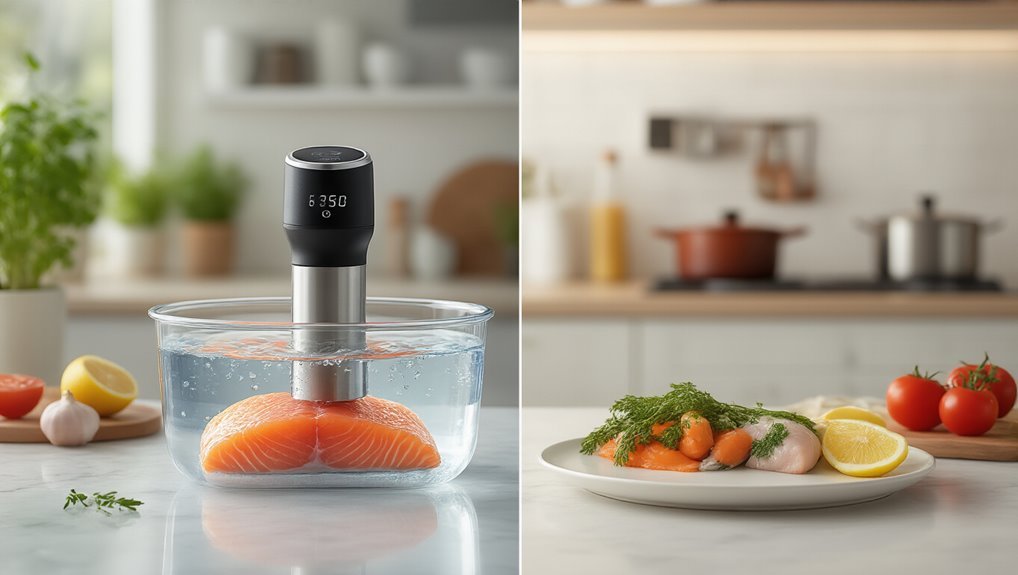
How does sous vide actually differ from the cooking methods you’ve used your whole life?
Well, it’s a complete rethinking of heat transfer.
Instead of subjecting food to inconsistent, often too-high temperatures, sous vide uses a precisely controlled water bath that never exceeds your target doneness temperature.
I think the vacuum seal is where the magic really happens.
When you seal food this way, you’re creating an environment where moisture can’t escape and flavors concentrate rather than evaporate.
It’s like… imagine cooking in a perfect little ecosystem rather than the harsh desert of an oven or grill.
The process is incredibly forgiving too.
If dinner’s running late? No problem—the food won’t overcook, even if it stays in the bath longer than planned.
Vacuum sealing reduces air pockets and improves heat transfer, leading to more consistent results heat transfer.
Preserve More Nutrients With Precise Temperature Control
I’ve found that sous vide cooking is actually incredible for preserving minerals like magnesium and iron that would normally get lost when you boil foods.
Additionally, vacuum sealing helps protect nutrients by reducing exposure to water and air, and precise temperature control minimizes leaching and heat damage.
When I cook my veggies or legumes at precisely controlled temperatures, those nutrients stay put instead of leaching into cooking water that’s just going down the drain.
You’ll notice the difference not just in flavor but in nutritional value too, as the gentle, even heat protects temperature-sensitive vitamins that would otherwise be destroyed by traditional high-heat methods.
Mineral Retention Superiority
When it comes to preserving those precious minerals in your food, sous vide cooking really stands out from traditional methods.
I’ve found that this technique substantially increases mineral content in cereals and legumes compared to traditional boiling—we’re talking impressive gains in zinc, iron, potassium, and copper.
What I love about sous-vide is its remarkable bioavailability improvements.
You know how sometimes nutrients are present but your body can’t access them?
Well, the gentle, precise temperature control creates ideal conditions for absorption enhancement.
In my experience, the sealed environment prevents minerals from leaching into cooking water—something that happens all too often with boiling.
There are a few exceptions, like potassium in cereal soup, but overall, if you’re looking to maximize the mineral content of your meals, sous-vide is probably your best bet.
Temperature-Protected Nutrients
The magic behind sous vide’s nutrient-preserving power lies in its precise temperature control. Unlike traditional boiling which blasts food with high heat, I’ve found that sous vide’s gentler approach maintains enzyme stability, keeping more of those heat-sensitive nutrients intact.
What’s really fascinating is how the vacuum-sealed environment prevents water-soluble nutrients from escaping into cooking water. I’ve seen studies showing notably higher levels of minerals like magnesium, iron, and zinc in sous vide cooked foods compared to traditional methods.
This careful temperature management enhances nutrient bioavailability too. When I prepare vegetables sous vide, they retain more minerals while still achieving that perfect tender texture.
It’s kind of like giving your food a protective bubble—the precise heat delivers the cooking you want without the nutrient destruction you don’t.
Enhance Flavors Naturally While Using Less Salt and Fat
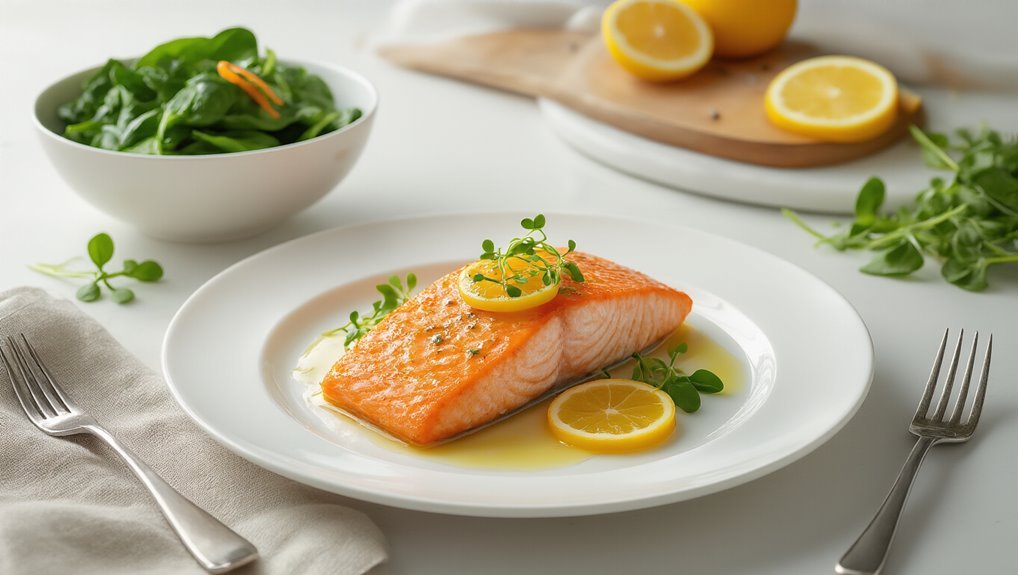
Although many home cooks rely on heavy doses of salt and fat to make their dishes taste amazing, sous vide cooking offers an invigorating alternative that’ll change the way you think about flavor.
The vacuum-sealed environment works like a flavor incubator, allowing herb infusion to happen gradually and completely throughout the cooking process.
I’ve found that when I cook sous vide, I’m using about half the salt I used to, yet achieving a deeper umami balance in my dishes.
The gentle heat preserves moisture, so everything stays naturally juicy without butter baths or oil drenches.
What’s really cool—wait, what I meant to say is that the concentrated flavors need just a quick sear to finish, and you’ll get restaurant-quality results without drowning your food in heavy sauces.
This method’s precision temperature control helps you achieve uniform results every time.
Turn Tough, Inexpensive Cuts Into Tender, Nutritious Meals
I’ve discovered that sous vide cooking can turn those tough, collagen-rich cuts into melt-in-your-mouth meals while keeping more of their natural minerals intact.
The best part? I’m now serving what tastes like $30 restaurant entrées from $10 worth of meat—my guests never believe I used such inexpensive cuts.
This method hinges on temperature control, a critical factor in preserving minerals and texture.
Collagen-Rich Cuts Transform
Transforming tough, collagen-rich cuts of meat is where sous vide cooking truly shines in my kitchen.
I’ve found that the precise, low temperatures work magic on the collagen transformation process, breaking down those tough fibers into gelatin without drying out the meat.
It’s actually pretty amazing how the tenderness mechanics work—the extended cooking time at controlled temperatures guarantees every bit of collagen softens evenly.
Before I discovered sous vide, I’d often avoid cheaper cuts because, well, they’d end up like shoe leather.
Now? I can turn those same economical cuts into restaurant-worthy dishes.
The best part is finishing with a quick sear that gives you that delicious crust while maintaining all the tender, juicy goodness inside.
Trust me, your budget and your taste buds will thank you.
Enhanced Mineral Retention
The nutritional benefits of sous vide extend far beyond just flavor and texture—they’re actually quite remarkable when it comes to mineral retention.
When I cook tougher, less expensive cuts sous vide, I’m not just saving money; I’m dramatically increasing their bioavailable minerals compared to traditional boiling methods.
My favorite aspect is how the sealed environment preserves essential minerals that would normally be lost in cooking water.
We’re talking significant increases—like 862 mg more zinc and 314 mg more iron!
This cooking method also appears to disrupt antinutrient interactions that typically block mineral absorption in legumes and cereals.
I’ve found that even humble ingredients like pearl barley show higher ash content when cooked sous vide, though there are exceptions depending on what you’re cooking.
In my experience, it’s like getting a nutritional upgrade without spending more on premium cuts.
Budget-Friendly Gourmet Results
While talking about all these impressive nutritional benefits is great, let’s talk money—because that’s what convinced me to start using sous vide in the first place. This thrifty technique turns those tough, cheaper cuts that I’d normally pass up into mouthwatering meals.
I recently transformed a $12 two-pound roast into what tasted like a $50 restaurant entree. The precision cooking means I waste almost nothing—no more overcooked disasters or spoiled leftovers!
What I love most about this economic indulgence is batch cooking.
I’ll buy in bulk, portion everything out with different marinades, then cook and freeze for later.
It’s like… well, having a personal chef on a budget.
You’re basically upgrading your ingredients without upgrading your spending—and who doesn’t want that?
Create Perfect Meals Every Time Without Culinary Training
Have you ever wished you could cook restaurant-quality meals at home without years of culinary school?
With sous vide, you can!
I’ve found that this technique gives me steady confidence in the kitchen because it’s nearly impossible to overcook anything. The precise temperature control means your food reaches exactly the doneness you want—every single time.
You’ll love the hands-free approach.
Just set the water bath, drop in your food, and walk away!
The instant feedback from app-assisted timers tells you when to finish with a quick sear.
I think this is what makes sous vide so revolutionary—you don’t need to hover anxiously over your cooking.
Wait, did I mention you can cook different items to different doneness levels in the same bath?
Well, you absolutely can!
It’s foolproof cooking at its finest.
In addition, sous vide’s precise temperature control is backed by decades of culinary science, ensuring safe temperatures and consistent results.
Save Money and Reduce Food Waste With Sous Vide
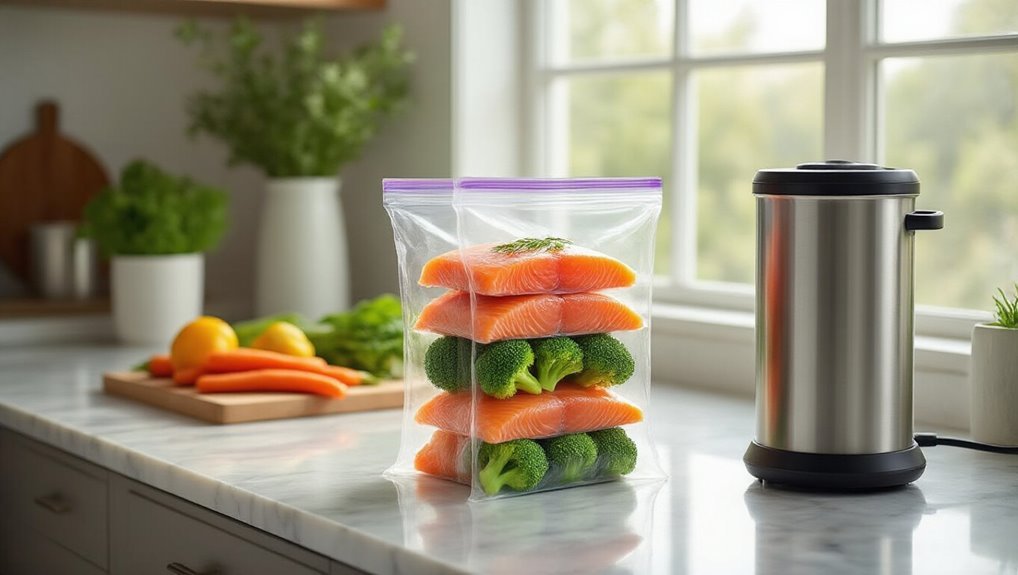
The truth is, it’s actually one of the best ways I’ve found to save money and reduce waste in my kitchen.
Vacuum sealing also helps preserve vitamins and minerals, keeping nutritional value intact.
I’ve transformed tough, inexpensive cuts into melt-in-your-mouth meals that my family raves about.
The precision cooking means I’m not throwing away overcooked disasters anymore—which used to happen way too often, if I’m being honest.
What’s really changed my grocery budget is the bulk storage and portion planning potential.
I can buy larger quantities when they’re on sale, prep multiple meals at once, and vacuum seal them for later.
There’s something incredibly satisfying about opening your freezer to find perfectly portioned, ready-to-cook meals waiting for you after a long day.
Streamline Your Weekly Meal Prep in One Cooking Session
Additionally, using stackable canisters can help organize different flavors across batches while maximizing space and freshness.
Speaking of making the most of your time and money, let’s talk about how sous vide can completely transform your approach to meal prep.
I’ve found that batch scheduling an entire week’s worth of proteins in one afternoon has been a game-changer for my weekly planning.
With sous vide, I can prepare different flavors simultaneously in the same water bath—talk about efficiency!
Here’s why I think you’ll love sous vide meal prep:
- Portion and vacuum seal multiple meals at once, then refrigerate or freeze for up to months
- Reheat perfectly without overcooking thanks to precise temperature control
- Experiment with different seasonings across portions for variety without extra effort
- Reduce weeknight stress knowing quality dinners are ready in minutes
Cook Vegetables and Grains for Maximum Nutrition and Flavor
The transformative power of sous vide cooking extends beautifully to vegetables and grains, where I’ve discovered it truly shines for health-conscious eaters.
Sous vide elevates plant-based cooking, preserving both nutrients and flavors for those who prioritize health without sacrificing taste.
Unlike boiling, which often leaves nutrients swimming in your pot water, the vacuum-sealed environment preserves vitamins and minerals while concentrating flavors.
I’m constantly amazed by the texture retention in everything from seasonal pairings of butternut squash and farro to delicate asparagus.
You know how vegetables can get mushy and lifeless?
Well, that’s a thing of the past with sous vide.
The precise temperature control creates this self-braising effect that, in my experience, delivers consistently perfect results.
What I love most is how I can prep a batch of nutrient-dense grains and veggies ahead of time without sacrificing their integrity or nutritional value.
This method also champions nutrient retention by minimizing air exposure and oxidation.
Frequently Asked Questions
Is Sous Vide Cooking Healthier?
Yes, I’d say sous vide is healthier. It enhances nutrient preservation through precise temperature control and improves food safety while using less added fats than traditional cooking methods.
What Are the Major Benefits of Cooking Sous Vide?
Ever wondered why chefs love sous vide? I’m hooked on its perfect texture preservation, even temperature cooking, nutrient retention, and consistent doneness. Plus, I can prepare meals ahead without sacrificing flavor.
What Is the Downside of Sous Vide?
I’ve found sous vide requires significant time investment and upfront equipment cost. You’ll need specialized gear beyond basic cooking tools, and dishes often need additional finishing steps for proper texture.
Do High End Chefs Use Sous Vide?
Like master painters choosing the finest brushes, yes, I’m seeing high-end chefs embrace sous vide in their training and kitchen workflow—it guarantees precision, consistency, and efficiency during service hours.