I’ve been experimenting with sous vide beyond the typical protein routine, and honestly, it’s changed my entire approach to cooking. Sure, steaks come out perfect every time, but have you tried making silky smooth scrambled eggs or infusing oils that capture flavors you can’t get any other way? I think the magic happens when you start treating vegetables and desserts with the same precision. The possibilities are endless once you realize that temperature control isn’t just for meat—it’s for transforming everyday ingredients into something unexpected.
Surprising Sous Vide Desserts: Custards, Cheesecakes and Chocolate
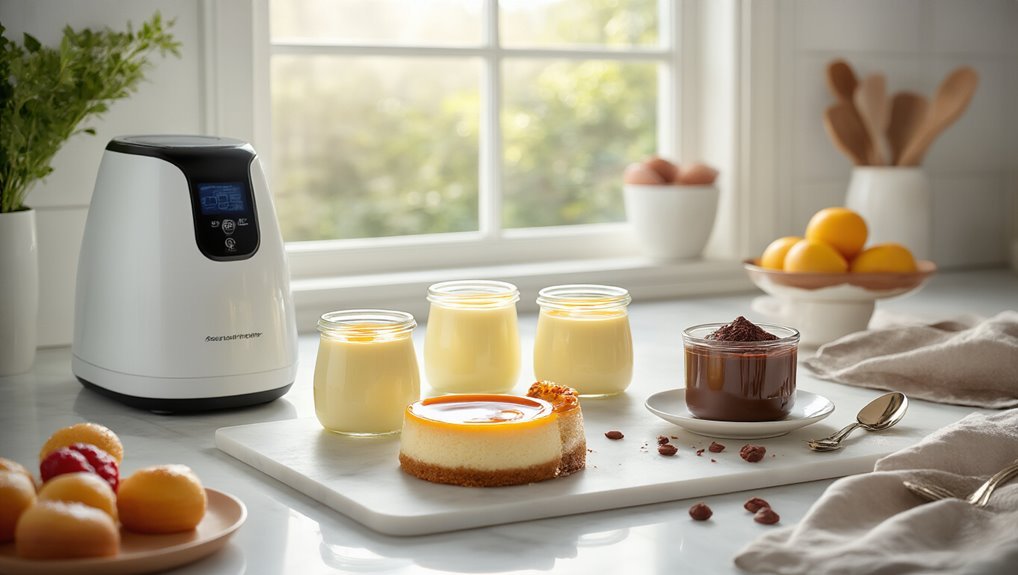
When did you last surprise your dinner guests with a dessert that seems almost magical in its texture? I’ve fallen hard for sous vide desserts, and honestly, you might too.
Sous vide desserts transform ordinary ingredients into extraordinary textures that will leave your guests wondering about your secret technique.
The magic happens when you cook custards at that perfect temperature—they never curdle and stay incredibly smooth.
I think cheesecakes benefit the most; sealed in jars and water-bathed to perfection, they’re uniformly creamy without that dreaded overbaked edge.
What really gets me excited is the texture control possible with chocolate desserts.
You can nail that perfect ganache consistency every time.
That continuity comes from reliable temperature control, a core advantage of the sous vide method.
And the flavor infusions?
Well, they’re on another level.
Try making toasted cream for that browned-butter depth or slow-extracting vanilla—it’s like having a dessert lab in your kitchen.
Trust me, these aren’t just recipes; they’re little miracles.
Sous Vide Vegetables That Transform Texture and Flavor
Switching from sweet to savory, I’ve discovered that vegetables might be the unsung heroes of sous vide cooking. The transformation is nothing short of magical!
Take carrots, for instance.
When sous vide and finished with a careful glaze, they develop an almost surreal intensity of flavor while maintaining perfect texture from edge to edge.
I think it’s impossible to achieve this balance with traditional methods.
That’s where precise temperature control comes into play, ensuring even texture from edge to edge.
Corn on the cob might be my favorite though.
The precise temperature control locks in all that natural sweetness and juice.
The corn texture becomes, well, I’d call it the ideal middle ground between raw crispness and that juicy, plump quality we’re all after.
What makes these techniques special is how preserve what’s naturally great about the vegetable while somehow enhancing it.
Scrambled Eggs and Breakfast Dishes Perfected With Sous Vide
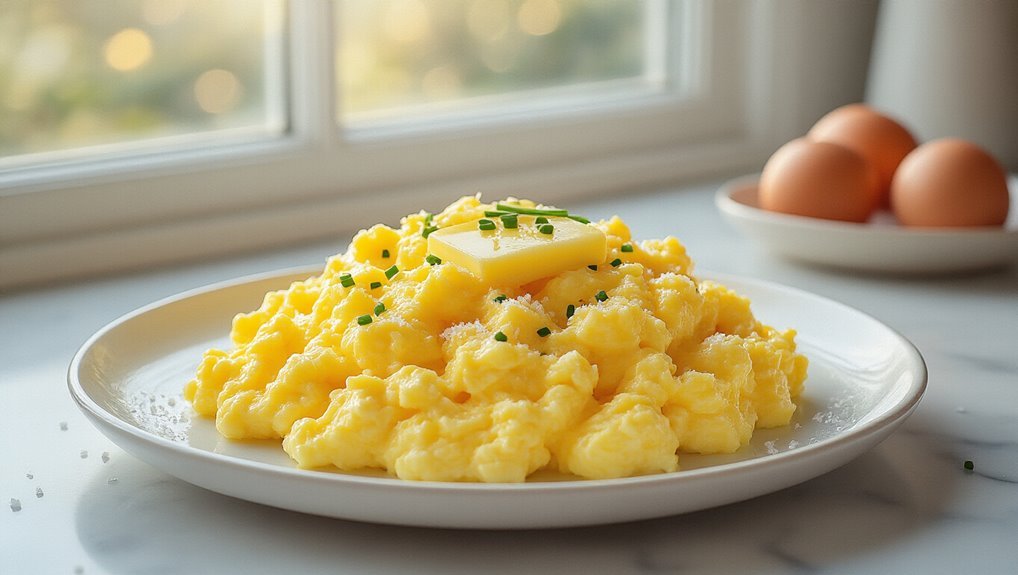
I’ve never been more impressed with breakfast than when I tried sous vide scrambled eggs, which achieve a silky texture that’s simply impossible on the stovetop.
You can dial in the exact temperature for perfectly controlled yolks, whether you prefer them jammy or fully set.
What really blew me away was the custard-like consistency—it’s like having restaurant-quality eggs at home without the constant stirring and timing anxiety.
This precision comes from precise temperature control, a cornerstone of sous vide cooking.
Silky Texture Success
Although scrambled eggs might seem like the last thing you’d cook sous vide, they’re actually one of the most remarkable breakfast transformations you’ll experience with this technique.
The mouthfeel science behind this is fascinating—sous vide creates this ultra-gentle, controlled environment where proteins coagulate more evenly than they ever could in a pan.
I’ve found the texture optimization to be night and day compared to traditional methods.
You’ll end up with this silky, custard-like consistency that’s nearly impossible to achieve otherwise.
What I love most is how consistent the results are.
Every time, you get that restaurant-quality smoothness without the constant stirring and monitoring.
It’s like, well, having a breakfast chef in your kitchen without actually hiring someone!
Temperature-Controlled Yolks
The secret to mastering egg perfection lies in precise temperature control.
With sous vide, I’ve discovered a way to achieve yolk stability that’s simply impossible with traditional methods.
Setting my circulator to 63–65°C gives me those silky, custard-like scrambled eggs with precise emulsification throughout—no more curdled, rubbery messes!
- Ultra-smooth texture – Cook at lower temps (145–149°F) for pourable, creamy scrambled eggs perfect for breakfast bowls
- Traditional firmness – Bump up to 70–72°C for firmer curds that still maintain moisture
- Versatile applications – Create consistent egg yolk sauces or perfectly set yolks for breakfast dishes every time
I think the magic is in the edge-to-edge consistency. You’re fundamentally controlling the protein structure at a molecular level, which, well, changes everything about breakfast.
Custard-Like Consistency
Perfection in breakfast eggs remains elusive for many home cooks until they’ve tried sous vide scrambling.
I’ve discovered that treating eggs as a custard system fundamentally transforms their texture—creating silky, velvety results that conventional methods can’t match.
The magic lies in custard physics: proteins set gradually and uniformly at precise, gentle temperatures.
This slow gelation dynamics prevents the rubbery, curdled outcome we’ve all experienced from overheated pans.
What I love most?
Every bite maintains consistent creaminess from edge to center.
No more chalky corners or grainy sections!
I typically finish mine with a quick final stir in a warm pan—just enough to add sheen without sacrificing that custard-like core.
Trust me, once you experience this texture, you’ll never scramble eggs the old way again.
DIY Sous Vide Infusions: Oils, Extracts, and Cannabis Butter
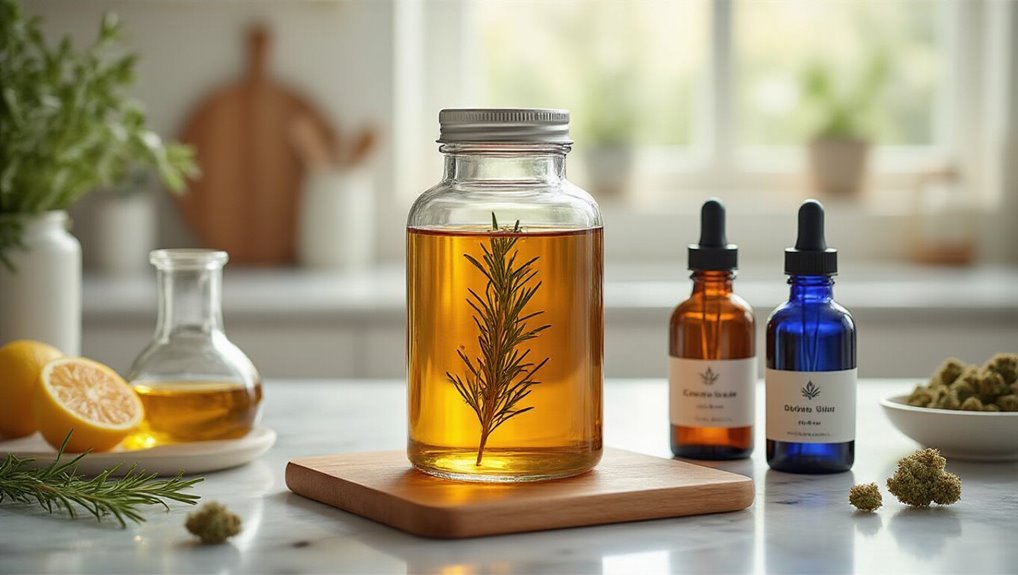
I’ve found that sous vide isn’t just for steaks and eggs—it’s actually perfect for creating botanical extractions with incredible depth.
You can infuse oils with herbs or garlic at precisely controlled temperatures, getting all the flavor without any of those burnt notes you’d get on the stove.
My personal favorite is making cannabis butter this way because it extracts cannabinoids so efficiently, and you’ll never worry about scorching or uneven results. Vacuum sealing also minimizes oxidation during long infusions, preserving color and aroma and offering oxidation prevention.
Flavorful Botanical Extractions
Why settle for store-bought extracts when sous vide can unlock the full potential of botanical flavors right in your kitchen? I’ve found that precise temperature control creates cleaner, more vibrant infusions than traditional methods.
My vanilla tinctures come out noticeably richer when the beans steep gently in vodka or glycerin, and citrus essences retain their bright, aromatic notes without that bitter edge from overheating.
Here’s what I love about sous vide botanical extractions:
- Consistency – you’ll get the same potency and flavor profile every time
- Gentleness – lower temperatures preserve delicate aromatics that might otherwise evaporate
- Versatility – from cannabis butter to herb-infused oils, the applications are practically endless
Trust me, once you’ve tasted the difference, you’ll never go back to conventional infusion methods.
Precise Butter Infusions
Moving from botanical extractions to butter, we’re entering a whole new world of flavor possibilities.
I’ve found that sous vide provides unparalleled precision for butter emulsions, maintaining perfect texture stabilization throughout the infusion process.
You know what’s fascinating?
The method allows herbs and spices to slowly release their essences at controlled temperatures without ever separating the fat—something that’s nearly impossible with stovetop methods.
I’ve experimented with everything from garlic-thyme butter to, well, more unconventional cannabis infusions where precise potency control is essential.
In my experience, the sweet spot is usually several hours at lower temperatures.
Maybe the most surprising benefit is how the vacuum-sealed environment preserves delicate flavors that would otherwise dissipate.
It’s like giving the butter a gentle spa treatment rather than a harsh cooking session!
Quick Sous Vide Hacks for Everyday Ingredients
Ever wondered how your basic kitchen staples could be transformed into gourmet delights with minimal effort? I’ve discovered that sous vide isn’t just for fancy proteins—it’s actually perfect for elevating the humble ingredients hiding in your kitchen.
- Corn on the cob becomes extraordinary when sous vided—juicier kernels with intense flavor that’s miles better than boiled. Finish with a quick sauté for color.
- Rice textures reach perfection in a water bath, and I sometimes add pesto emulsions afterward for an instant flavor upgrade.
- Vanilla extract made sous vide? Yes! I control the temperature precisely, which speeds up infusion time and creates a consistent depth of flavor that’s transformed my baking.
And the magic comes from precise temperature control that governs texture and infusion throughout the process, even for everyday ingredients.
Weekend Sous Vide Projects: Complex Dishes Worth the Wait
While quick sous vide recipes satisfy our weeknight cravings, there’s something deeply rewarding about the projects that demand patience.
I’ve found that proper cut selection makes all the difference—tough cuts like beef short ribs or chuck roast transform magically after 24-48 hours at 135°F.
My timing strategies have evolved through trial and error.
For instance, I start boneless leg of lamb on Saturday morning, and by dinner time, it’s melt-in-your-mouth tender.
Coffee-rubbed pork ribs? Those need a full day and a half.
But here’s the thing—these long cooks are mostly hands-off.
I simply set up the bath and walk away.
The weekend projects might test your patience, but trust me, that first bite of perfectly rendered beef brisket makes the wait worthwhile. This modern flexibility hinges on vacuum sealing, which preserves moisture and ensures even heat distribution.
Frequently Asked Questions
What Are Common Mistakes in Sous Vide Chicken?
I’ve seen catastrophically ruined chicken through temperature mistakes like cooking too low without proper time. Timing errors, improper sealing, skipping the sear, and neglecting to chill properly are my top pitfalls.
Can You Sous Vide Chicken and Vegetables Together?
Yes, I can sous vide chicken and vegetables together, but I’ll get better texture outcomes using separate bags. Proper sealing methods prevent cross-contamination while ensuring each component cooks perfectly at compatible temperatures.
What Is the Downside of Sous Vide?
You’d think cooking in a bag would be simple! I’ve found sous vide demands significant time commitment, specialized equipment cost, extra finishing steps, and strict food safety protocols.
What Foods at Costco Utilize the Sous Vide Technique?
I can’t identify specific Costco sous vide products from the information provided. When shopping, I look for vacuum-sealed items with sous vide labeling that offer bulk pricing and quality product sourcing.