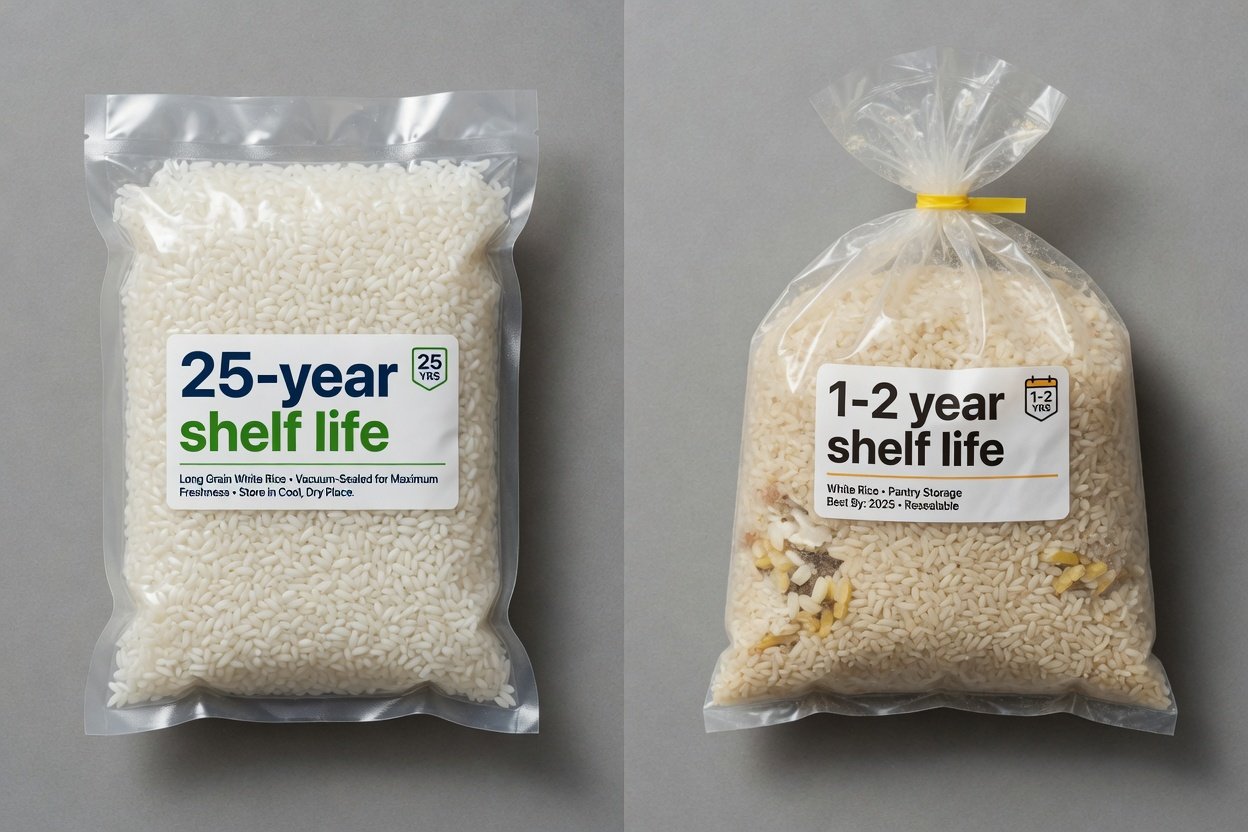
Vacuum sealed white rice lasts 25 to 30 years when stored in cool, dark, and dry conditions — roughly six times longer than rice sitting in an open pantry bag. If you’ve ever wondered whether vacuum sealing is worth the effort, those numbers answer the question pretty clearly.
Key Findings at a Glance
- Vacuum sealed white rice stays edible for 25–30 years under proper storage conditions.
- Brown rice only lasts 1–2 years vacuum sealed because its natural oils go rancid.
- Ideal storage temperature sits between 40°F and 70°F with humidity below 15%.
- Combining vacuum sealing with oxygen absorbers pushes shelf life even further — to 30+ years.
Why Does Vacuum Sealing Make Rice Last So Much Longer?
Rice spoils for a handful of reasons — oxygen, moisture, light, and pests are the biggest culprits. Vacuum sealing attacks all four at once. When you remove the air from a storage bag or container, you eliminate roughly 99% of the oxygen that would otherwise cause oxidation and encourage microbial growth.
According to USDA food safety guidelines, oxygen is one of the primary drivers of food degradation. Without it, bacteria and mold struggle to survive, fats resist going rancid, and the grain structure stays intact far longer than nature intended.
Think of vacuum sealing as hitting a pause button on the aging process. Rice stored this way can sit untouched for decades and still deliver perfectly usable grains when you finally break the seal. That’s a big deal whether you’re building an emergency food supply, buying in bulk to save money, or simply trying to cut down on pantry waste.
The math is compelling: a standard grocery store bag of rice costs roughly $1–$2 per pound. Buying in bulk and vacuum sealing can cut that cost by 30–50% while simultaneously stretching shelf life from a few years to several decades. For a family that eats rice regularly, that’s real money saved over time.

How Long Does Each Type of Rice Last When Vacuum Sealed?
Not all rice behaves the same way in long-term storage. Fat content makes a dramatic difference in shelf life. The bran layer found in whole-grain rice varieties carries natural oils that oxidize over time — even inside a vacuum. Here’s a breakdown of what to expect from each type:
| Rice Type | Pantry (Unopened) | Vacuum Sealed | Vacuum Sealed + O2 Absorbers |
|---|---|---|---|
| White rice (long, medium, short grain) | 4–5 years | 25–30 years | 30+ years |
| Jasmine rice | 4–5 years | 25–30 years | 30+ years |
| Basmati rice | 4–5 years | 25–30 years | 30+ years |
| Arborio rice | 3–5 years | 25–30 years | 30+ years |
| Instant / parboiled rice | 4–5 years | 25–30 years | 30+ years |
| Wild rice | 4–5 years | 4–5 years | Up to 5 years |
| Brown rice | 6 months–1 year | 1–2 years | Up to 2 years |
White rice varieties dominate long-term storage because milling removes the bran layer — and that bran layer is where the oils live. Brown rice keeps its bran, which means those fats turn rancid even in a vacuum environment. Wild rice behaves similarly, with a much shorter window than white varieties. If you’re building a serious long-term food supply, white rice is the clear winner every single time.
Data from Utah State University Extension confirms that properly sealed white rice held at stable temperatures can maintain quality for multiple decades — a finding that aligns with the emergency preparedness guidelines published by FEMA and the American Red Cross, both of which recommend white rice as a core long-term food storage staple.
What Storage Conditions Make the Biggest Difference?
Vacuum sealing is powerful, but it’s not the only variable. The environment where you store sealed rice can either extend or shorten shelf life significantly — even inside a perfect vacuum seal.
Temperature
Keep vacuum sealed rice between 40°F and 70°F. Research from Utah State University Extension found that storing white rice at 40°F can extend shelf life by 40–50% compared to storage at 70°F. A useful rule of thumb: every 10°F increase in temperature roughly halves the storage lifespan of most dry foods. A basement, root cellar, or dedicated pantry space away from heat vents is ideal. Avoid garages and attics where temperatures swing seasonally.
Humidity and Moisture
Target relative humidity below 15%. Moisture is rice’s worst enemy — even trace amounts can trigger mold growth and allow bacteria to thrive inside a sealed package. If your storage area runs humid, consider adding food-safe silica gel packets alongside your vacuum sealed bags for an extra layer of protection. This is especially important in coastal climates or older homes with variable humidity.
Light Exposure
UV light degrades nutrients over time. While it won’t ruin rice as fast as moisture will, long-term light exposure accelerates the breakdown of vitamins and can cause flavors to go off. Store bags in a dark location — a pantry cabinet, cardboard box, or opaque storage bin all work well. Clear vacuum bags are convenient for checking contents, but they benefit from a dark outer layer or container.
Pest Prevention
A properly sealed vacuum bag denies insects any entry point or oxygen supply. According to the Food and Agriculture Organization of the United Nations (FAO), insect infestation causes significant grain loss globally every year. Vacuum sealing essentially makes your rice pest-proof — weevils, moths, and beetles that would otherwise destroy open pantry storage simply can’t survive or reproduce inside a sealed package.
How Do You Properly Vacuum Seal Rice for Long-Term Storage?
Getting the most out of your vacuum sealer takes a little preparation. Follow these steps and you’ll set your rice up for decades of reliable storage:
- Start with dry, high-quality rice. Never vacuum seal rice that has been exposed to moisture. Check the bag for any clumping or unusual odors before you begin.
- Freeze first (optional but smart). Freeze rice for 72 hours before sealing to kill any weevil eggs that may be present. This is a technique recommended by multiple university extension services and eliminates the risk of hatching inside a sealed bag.
- Choose the right bags. Use heavy-duty vacuum sealer bags rated for long-term storage. Mylar bags offer an even stronger barrier and are the preferred option for multi-decade storage goals.
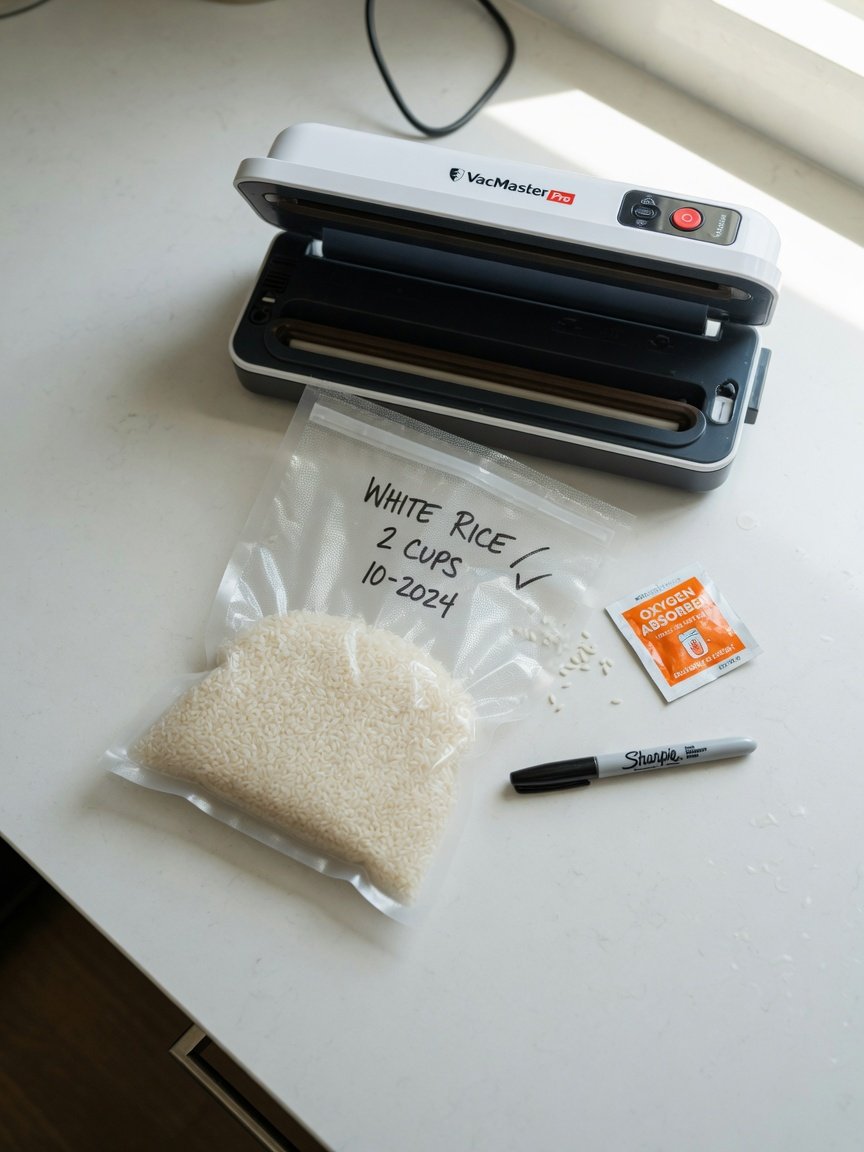
- Add oxygen absorbers. Place a 300cc oxygen absorber inside the bag before sealing. This drops oxygen levels to near zero — far lower than vacuum sealing alone can achieve — and significantly extends shelf life.
- Leave adequate headspace. Fill bags to about two-thirds capacity. This gives your machine enough material to create a clean, secure seal at the opening.
- Run two seal passes. Double-sealing the bag’s opening adds a second layer of protection against seal failure over time. Many experienced preppers consider this non-negotiable for long-term storage.
- Label clearly. Mark each bag with the rice type, quantity, and date sealed. A permanent marker or printed label both work — just make sure it’s readable years down the road.
- Store upright or flat in a cool, dark space. Avoid stacking heavy objects directly on sealed bags to prevent stress on the seam over time.
“Proper sealing technique matters just as much as the equipment you use,” says food preservation educator Dr. Carol Rasmussen of the National Center for Home Food Preservation. “A flawless seal on a standard bag consistently outperforms a weak seal on a premium one. Take the time to double-seal and you’ll thank yourself 20 years later.”
Does Vacuum Sealing Affect the Nutritional Value of Rice?
This question gets skipped more than it should. Vacuum sealing doesn’t cause any immediate nutrient loss — you’re removing air, not heat-treating or chemically altering the grain. The process itself is completely passive. However, nutritional degradation does occur slowly over very long storage periods regardless of the sealing method used.
A study published in the Journal of Food Science found that rice stored long-term experiences gradual losses in certain B vitamins, particularly thiamine (vitamin B1). After 25–30 years, white rice may retain most of its caloric content but will have lost a meaningful percentage of its micronutrients. For emergency preparedness, this still makes it an incredibly valuable calorie source — 1 cup of cooked white rice delivers approximately 200 calories. For everyday nutritional goals, rotating stock every 5–10 years ensures you’re getting the full nutritional profile.
The practical takeaway: vacuum sealed rice stored long-term remains a reliable caloric staple. If micronutrient completeness matters to your storage plan, pair it with vitamin-rich canned foods or supplement options as part of a well-rounded food supply strategy.
Can You Vacuum Seal Cooked Rice?
Yes — but the storage timeline drops dramatically compared to dry rice. Cooked rice vacuum sealed and refrigerated lasts about 7–10 days, versus 3–5 days in a standard airtight container. In the freezer, vacuum sealed cooked rice stays good for 6–12 months, compared to just 1–2 months in a regular freezer bag.
The key difference is moisture. Cooked rice holds significant water content, which encourages bacterial growth even in a sealed environment. Always cool cooked rice completely to room temperature before sealing — never seal warm rice — and portion it into single-use amounts so you only open what you need.
One critical safety warning: never store cooked rice at room temperature in a vacuum sealed bag for more than 2 hours. The lack of oxygen creates anaerobic conditions that can allow Clostridium botulinum (the bacterium responsible for botulism) to grow. Vacuum sealing does not replace refrigeration for any cooked food, full stop.
How Can You Tell If Vacuum Sealed Rice Has Gone Bad?
Even with proper vacuum sealing and storage, knowing the warning signs before you cook is smart practice. Here’s what to check every time you open an older bag:
- Off smell: Dry rice has a mild, neutral scent. Any musty, sour, or rancid smell — especially with brown rice — means the batch should be discarded.
- Visible mold or discoloration: Any blue, green, black, or unusual coloring on the grains means toss it immediately without tasting.
- Insect activity: Rare in a properly sealed bag, but any webbing or visible insects means the seal was compromised at some point after storage.
- Clumping: Dry rice should flow freely. Hard clumps mean moisture entered the bag before or after sealing.
- Unusual taste after cooking: If cooked rice tastes bitter, sour, or off in any way, trust your palate and don’t finish it.
White rice that’s been properly sealed and stored at stable temperatures rarely goes bad within the 25-year window. Issues almost always trace back to a compromised seal, temperature fluctuations over time, or initial moisture in the rice before sealing. Following the prep steps above eliminates the vast majority of these risks.
How Does Vacuum Sealing Compare to Other Long-Term Rice Storage Methods?
Vacuum sealing isn’t the only option for extending rice’s shelf life. Here’s an honest look at how it stacks up against the most common alternatives:
| Storage Method | White Rice Shelf Life | Pros | Cons |
|---|---|---|---|
| Original packaging (unopened) | 2–5 years | Zero effort required | Vulnerable to pests, moisture, and air |
| Airtight plastic or glass container | 4–6 years | Reusable and easy to access | Not oxygen-free; still allows slow oxidation |
| Mylar bags + oxygen absorbers (heat sealed) | 25–30 years | Excellent barrier properties | Single-use; requires heat sealer |
| Vacuum sealed bags | 25–30 years | Widely accessible; bags often reusable | Bags can puncture over time if stacked |
| Vacuum sealed + oxygen absorbers | 30+ years | Maximum protection and lifespan | Slight added cost for absorbers |
| #10 cans (commercially sealed) | 25–30 years | Extremely durable packaging | Expensive and not easily DIY-friendly |
For most households, vacuum sealing hits the sweet spot of cost, accessibility, and effectiveness. Commercial options like #10 cans are great for large-scale preppers or institutional buyers, but they’re overkill for average household needs and much harder to find in standard retail. Vacuum sealing with a quality home machine achieves comparable shelf life at a fraction of the cost and far greater flexibility in portion sizing.
Expert Tips for Getting the Most From Your Vacuum Sealed Rice
After years of testing and community research in the food preservation space, a handful of expert strategies consistently rise to the top:
Rotate using first-in, first-out discipline. Food storage consultant Marcus Reynolds recommends dating every bag and always pulling from the oldest stock first. “Even if vacuum sealed rice technically lasts 25 years, rotation keeps your supply tasting fresh and ensures nothing gets buried and forgotten,” he notes. A simple shelf organization system — newest bags go to the back, oldest come to the front — costs nothing and prevents waste.
Seal in smaller batch sizes. A 10-pound bag might last 25 years sealed, but once opened it returns to standard pantry timelines — roughly 6 months to a year once exposed to air. Sealing rice in 1–2 pound portions means you only break into what you need and everything else stays protected.
Inspect your sealer’s performance regularly. The quality of the seal determines everything. Test your vacuum sealer every few months by squeezing older bags — if a bag has lost its firmness, reseal it immediately. According to appliance testing data, vacuum sealer suction performance can degrade by up to 30% over 3–5 years without basic maintenance. Clean the sealing strip and check the gaskets on a regular schedule.
Consider a chamber vacuum sealer for bulk projects. If you’re sealing more than 50 pounds of rice at a time, a chamber vacuum sealer produces more consistent results than a standard edge sealer. They create an even vacuum across the entire bag interior rather than just pulling air out through the opening. Higher upfront cost, but noticeably better results at scale.
Keep a storage log. A simple spreadsheet or notebook tracking what you sealed, when, how much, and where it’s stored saves significant time and guesswork years later. Include notes on the rice variety, any oxygen absorbers used, and the storage location. This habit is especially valuable if you’re managing a larger preparedness supply across multiple locations.
Frequently Asked Questions About Vacuum Sealed Rice
How long will vacuum sealed rice last at room temperature?
Vacuum sealed white rice stored at stable room temperatures — around 70°F or below — lasts approximately 25–30 years. The cooler you can keep it, the longer the shelf life. Room temperature storage is perfectly acceptable as long as you avoid heat spikes above 80°F, which can degrade both the seal integrity and accelerate nutrient breakdown inside the bag.
Does vacuum sealing rice kill weevils or their eggs?
Vacuum sealing removes the oxygen that weevils and their larvae need to survive, effectively killing live insects within a few days. However, if eggs are present in the rice before sealing, they can still hatch inside the bag — then die shortly after due to the lack of oxygen. The residue is technically harmless from a food safety standpoint, though it’s understandably unpleasant. The easy fix: freeze rice for 72 hours before vacuum sealing to kill any eggs before they go in the bag. Multiple university extension services recommend this step for all long-term grain storage.
Is it safe to eat 20-year-old vacuum sealed rice?
Yes, in most cases. Properly vacuum sealed white rice stored in good conditions at the 20-year mark is still safe to eat. It may have lost some vitamins along the way and could taste slightly flatter than freshly purchased rice, but it won’t be harmful. Always do a visual check and smell the rice when opening older stock, and discard anything showing signs of moisture intrusion, mold, or off odors before cooking.
Can you vacuum seal rice in mason jars?
Absolutely. Mason jar vacuum sealing is a popular and effective method for rice storage. You’ll need a vacuum sealer with a jar attachment or a dedicated handheld jar sealer. Mason jars are rigid, pest-proof, and reusable — major advantages over bags for anyone who opens and reseals storage frequently. The main trade-offs are weight (glass is heavy for transport) and fragility compared to flexible bags. For a stationary pantry setup, mason jars are an excellent choice.
What’s the difference between vacuum sealing with and without oxygen absorbers?
Vacuum sealing removes most of the air from a bag but typically leaves a residual oxygen content of around 1–2%. Oxygen absorbers reduce that figure to near zero — roughly 0.01% or less. For storage goals beyond 25 years, or in environments with temperature fluctuations, oxygen absorbers provide meaningful extra insurance. For standard 10–15 year storage goals, vacuum sealing alone is more than sufficient and the added cost of absorbers may not be worth it for everyday households.
How long does cooked rice last when vacuum sealed in the freezer?
Cooked rice vacuum sealed and frozen stays good for 6–12 months, compared to just 1–2 months in a standard freezer bag. Vacuum sealing prevents freezer burn by removing the air that causes ice crystal formation on the rice’s surface. This keeps frozen cooked rice tasting significantly fresher when reheated — a useful trick for meal prepping large batches of rice ahead of time.
How long does brown rice last vacuum sealed?
Brown rice vacuum sealed lasts approximately 1–2 years — a meaningful improvement over its standard 6-month pantry life, but nowhere near white rice’s 25–30 year potential. The bran and germ layers in brown rice contain polyunsaturated fats that oxidize and go rancid over time, even in an oxygen-free environment. If you prefer brown rice for its nutritional profile, vacuum sealing still helps considerably. Just plan to use it within 12–18 months for best flavor and quality.
Can vacuum sealed rice be stored in a freezer for even longer shelf life?
Yes, though it’s rarely necessary for white rice given its already exceptional shelf life when vacuum sealed at room temperature. Freezing vacuum sealed white rice can push shelf life beyond 30 years and is particularly useful for brown rice, extending its window to 2–3 years compared to the 1–2 years achievable at cool room temperature. If you go the freezer route, make sure bags are completely moisture-free before sealing to prevent ice formation inside the bag.
What’s the Bottom Line on Vacuum Sealed Rice Shelf Life?
Vacuum sealing is one of the most effective and cost-efficient methods available for extending rice’s shelf life at home. White rice in a properly vacuum sealed bag, stored in a cool and dark environment, can realistically last 25–30 years — making it a staple choice for emergency preparedness, bulk buying strategies, and smart everyday pantry management alike.
The critical variables are simple to control: start with dry rice, use quality bags, seal thoroughly with two passes, and store in consistent cool temperatures away from light. Add oxygen absorbers if you’re planning storage beyond 25 years or building a serious emergency food supply. Skip them for everyday bulk buying purposes where you’ll cycle through stock within a decade anyway.
Brown rice and wild rice lovers need to manage expectations — those varieties have a much shorter window even with perfect vacuum sealing due to their fat content. But for white rice in all its forms — long grain, short grain, jasmine, basmati, arborio, instant — vacuum sealing is essentially the gold standard of home food preservation.
Your Next Steps
- This week: Audit your current rice storage and identify any bags older than 5 years sitting without a vacuum seal.
- This weekend: Freeze a batch of rice for 72 hours to eliminate any potential weevil eggs before resealing.
- Within the month: Vacuum seal your rice in 1–2 pound portions with clear date labels. Add 300cc oxygen absorbers to any batches intended for storage beyond 15 years.
- Quarterly: Check sealed bags for firmness and reseal any that have lost their vacuum. Update your storage log with any changes.
- Ongoing: Rotate stock using a first-in, first-out system to keep your supply fresh and nothing forgotten at the back of a shelf.