I’ve found that cooking corned beef sous vide creates an irresistibly tender result that’s impossible to achieve with traditional methods. By setting your immersion circulator to 180°F and letting the meat bathe for 10 hours, the tough collagen transforms into silky gelatin while maintaining perfect sliceability. I always add some beef stock or beer to the bag for extra flavor. The patience pays off when you finish with a quick sear—the texture will convert any corned beef skeptic.
The Science Behind Perfect Corned Beef Tenderness
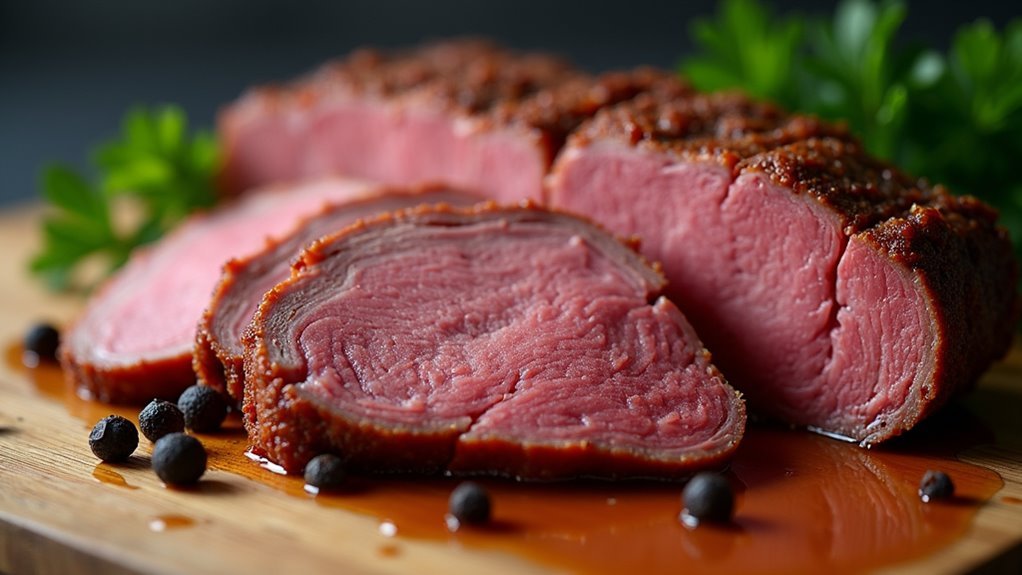
When it comes to transforming a tough cut like corned beef into something melt-in-your-mouth tender, the magic really happens in understanding the science of collagen breakdown. At around 180°F (82°C), the collagen in the meat slowly converts to gelatin over time—and I mean really over time, like 10+ hours.
I’ve found that patience is perhaps the most critical ingredient here. The extended cooking allows that tough connective tissue to soften completely while keeping the meat intact enough to slice. Vacuum sealing preserves the freshness of stored food effectively, ensuring that your ingredients maintain their quality during the cooking process.
It’s not just about cooking until it’s done; it’s about cooking until it’s perfect.
Essential Equipment for Sous Vide Success
Four key pieces of equipment will transform your sous vide corned beef experience from good to extraordinary.
I’ve learned that investing in a reliable sous vide machine (I prefer the Anova Precision Cooker) makes all the difference in maintaining that essential 180°F temperature for hours.
You’ll also want a spacious container—I think a 12-quart Rubbermaid works perfectly.
Don’t forget a lid to prevent evaporation during that long 10-hour cook!
Lastly, a quality cast iron skillet for searing.
Perhaps Lodge is best for the value, though any heavy pan works.
Trust me, this setup has revolutionized my St. Patrick’s Day traditions. Additionally, using a suitable vacuum sealer ensures optimal flavor and moisture retention during the sous vide process.
Preparing Your Corned Beef: Ingredients and Marinades
Now that we’ve got our equipment sorted, let’s talk ingredients—the star of the show being your corned beef brisket. I typically look for a 3-4 pound cut with good marbling, though you can certainly go larger if you’re feeding a crowd.
For maximum flavor, I think these additions really make a difference:
- Pickling spice (either use what comes with your brisket or make your own)
- 1 cup beef stock (or substitute with beer—I’ve had great results with Heffivisson)
- Optional marinade: equal parts Worcestershire sauce, soy sauce, and perhaps a sweetener
- Consider soaking in cold water first if you’re sensitive to salt. Additionally, vacuum sealing your brisket with a marinade allows for shorter marinating times, enhancing the infusion of flavors.
Step-by-Step Cooking Process
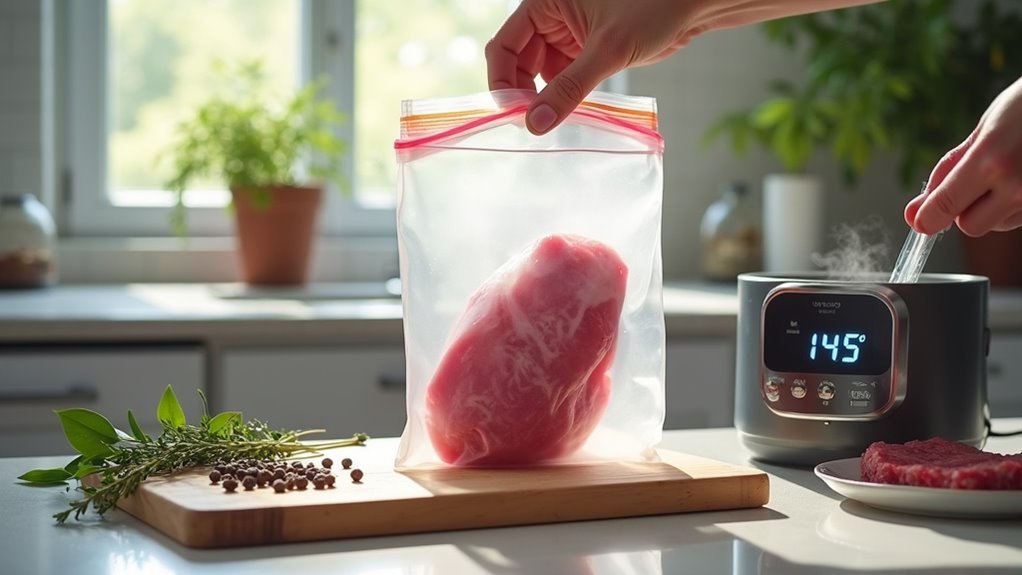
The process of sous vide cooking corned beef follows a beautiful simplicity that I’ve come to appreciate after years of traditional boiling. I find the precision of temperature control creates that perfect balance between tenderness and sliceability that’s often missed with other methods. Additionally, vacuum sealing cooked meat effectively extends meat shelf life and preserves its quality, making it an ideal method for storing sous vide dishes.
Here’s my basic timeline for foolproof results:
| Step | Time | Action | Temperature | Notes |
|---|---|---|---|---|
| Prep | 10 min | Remove packaging | Room temp | Never cook in store plastic |
| Bag | 5 min | Seal with stock | N/A | Double-bag if needed |
| Bath | 10 hrs | Sous vide | 180°F (82°C) | I check water level hourly |
| Rest | 15 min | Remove from bag | Room temp | Save juices! |
| Finish | 5 min | Sear or broil | High heat | Creates perfect crust |
Finishing Techniques and Serving Suggestions
Once your corned beef has achieved that perfect tenderness in the sous vide bath, proper finishing techniques can elevate it from merely good to absolutely memorable.
I’ve found that a quick sear in a cast iron skillet adds incredible texture and depth of flavor to the finished product.
- Brush with mustard and broil for 3-5 minutes for a caramelized crust
- Sear all sides in a hot cast iron skillet for 30-60 seconds per side
- Rest for 10 minutes before slicing against the grain
- Serve with classic sides like cabbage and potatoes roasted in the bag juices
Additionally, using a FoodSaver vacuum sealer can help preserve the corned beef’s freshness before cooking.
Storage, Reheating, and Creative Leftover Ideas
Properly storing your leftover corned beef is essential if you want to enjoy it for days after your initial feast.
I always refrigerate mine in an airtight container for up to 4 days, though honestly it rarely lasts that long in my house!
For reheating, I think brushing with mustard before warming at 325°F for about 30 minutes works wonderfully.
Follow with a quick broil for that perfect texture.
Leftovers? Make Reuben sandwiches!
Or perhaps chop it into breakfast hash with potatoes.
My personal favorite might be corned beef tacos with cabbage slaw – unconventional but delicious.
Additionally, using vacuum sealing methods can significantly extend the shelf life of your leftovers if you wish to store them for longer periods.
Frequently Asked Questions
Can I Use a Steam Bath Instead of Sous Vide?
I wouldn’t recommend a steam bath instead of sous vide for corned beef. You’ll lose the precise temperature control needed for that perfect tenderness at 180°F over 10 hours.
How Does Sous Vide Affect the Pickled Flavor Profile?
When I sous vide corned beef, the pickled flavor mellows slightly while becoming more evenly distributed. It’s a gentler extraction that preserves the essence without overwhelming the meat’s natural taste.
Is Gray Corned Beef Better Than Pink for Sous Vide?
I find both gray and pink corned beef work well for sous vide, though pink (cured with nitrates) maintains a more traditional color while gray offers a more natural flavor profile.
Can I Sous Vide Frozen Corned Beef Directly?
Ever wondered about cooking frozen corned beef? Yes, you can sous vide it directly from frozen, but I’d recommend adding 50% more cooking time to guarantee it’s thoroughly cooked and properly tenderized.
How Do Alcohol-Based Marinades Work With Sous Vide Cooking?
I use alcohol-based marinades with sous vide, but cautiously. Alcohol evaporates less during sous vide, so I reduce quantity to prevent overpowering flavors. Beer works wonderfully with corned beef!