Transforming pork belly into Korean-inspired magic requires patience but delivers incredible results. The secret lies in a 24-hour gochujang marinade followed by a precise 10-hour sous vide bath at 74°C. After cooling in an ice bath, the pork gets a final caramelization through careful glazing and broiling. A cast iron skillet provides the perfect finishing sear, creating that melt-in-your-mouth texture with spicy-sweet flavor. This technique elevates an ordinary cut into something truly extraordinary.
The Secret to Perfect Korean-Inspired Pork Belly
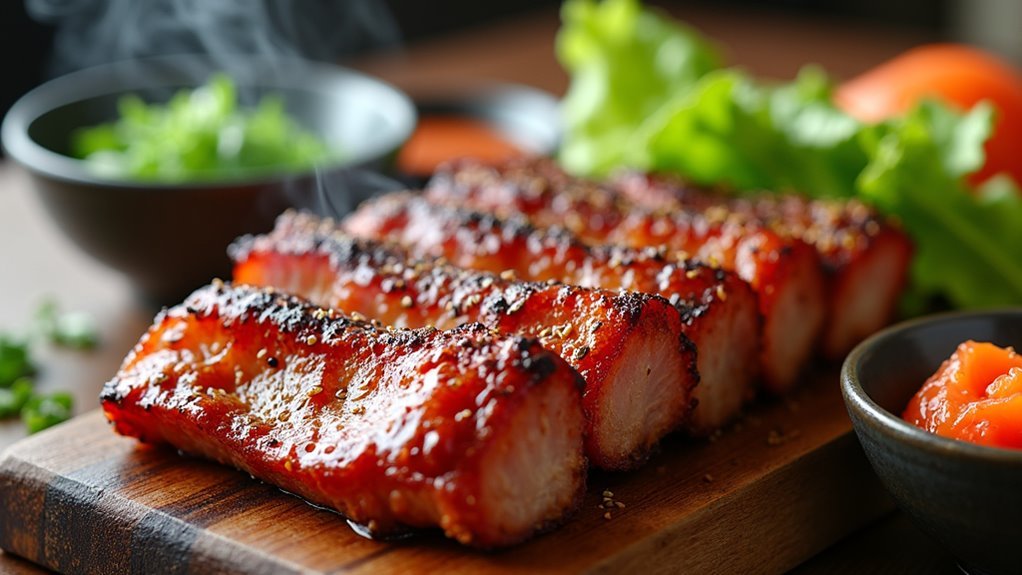
When it comes to creating the perfect Korean-inspired pork belly, the secret lies in balancing time, temperature, and flavor infusion.
The magic happens at 74C/165F for a full 10 hours, which might seem excessive, but trust me, this is what transforms tough pork belly into melt-in-your-mouth perfection.
The gochujang marinade infuses deeply during this process, perhaps best when the belly marinates for at least 4 hours beforehand.
I think the combination of this Korean chili paste with soy sauce and sesame creates that authentic depth that’s hard to achieve otherwise.
Precise temperature control is non-negotiable here – it’s what makes sous vide the ideal method. Additionally, using vacuum sealing for marinating the pork belly can enhance its flavor infusion by creating an oxygen-depleted environment that allows the marinade to penetrate deeper into the meat.
Essential Equipment for Sous Vide Success
To achieve professional-grade results with sous vide cooking, having the right equipment isn’t just helpful—it’s essential. A reliable sous vide machine tops the list, with Anova offering both manual and app control options, while Joule works exclusively via mobile.
For longer cooks like our 10-hour pork belly, a spacious 12-quart container with a lid is perhaps more important than many realize. The lid prevents excessive evaporation during extended cooking periods. Additionally, pairing your sous vide machine with a vacuum sealer can significantly enhance food preservation and flavor infusion before cooking.
Don’t overlook finishing tools either. A quality cast iron skillet—Lodge is great, I think—provides the perfect searing surface when it’s time to add that final caramelized touch to your gochujang pork belly.
Step-by-Step Cooking Process
The complete cooking process for gochujang pork belly unfolds in several distinct stages, each indispensable to developing its signature flavors and tender texture. It begins with marination, where the pork absorbs the spicy-sweet Korean paste mixture for up to 24 hours—though I think even 4 hours yields decent results.
The sous vide phase is perhaps the most vital, requiring a precise 74C/165F for 10 full hours. This transforms tough collagen into silky gelatin. Additionally, you can enhance the preservation of leftover pork belly by utilizing proper canning practices, which help to extend its shelf life safely.
After cooling in an ice bath, the finishing touches involve thickening the sauce and a two-step oven treatment—baking followed by a brief, intense broil for that perfect caramelization.
Tips for Achieving That Caramelized Glaze Finish
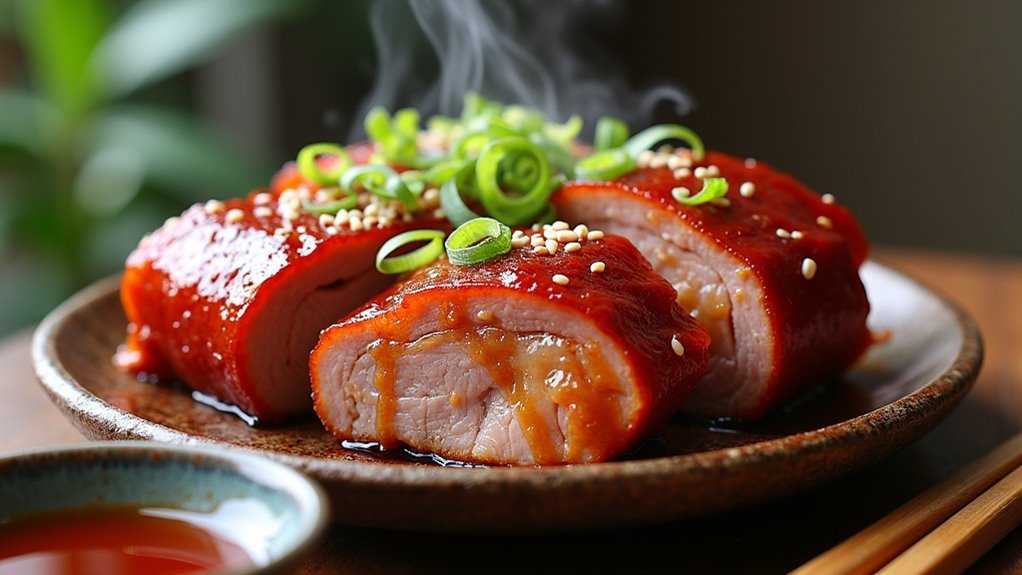
That perfect caramelized glaze on gochujang pork belly doesn’t happen by accident—it’s the result of careful technique and timing.
The finishing steps are perhaps the most critical part of the entire process, transforming good pork belly into something truly spectacular.
- Verify sauce is properly reduced and thickened before application
- Apply an even, thin coat rather than drowning the meat
- Watch the broiler like a hawk—the difference between caramelized and burnt is just seconds
- Allow brief resting periods between coating applications
- Position the meat on the middle rack during broiling for more consistent caramelization
Frequently Asked Questions
Can I Substitute Gochujang With Another Paste if Unavailable?
With astronomical flavor impact, gochujang can be substituted with miso paste mixed with chili flakes, sriracha, or sambal oelek. Each alternative provides different heat levels and umami characteristics.
How Long Will the Cooked Pork Belly Last in the Refrigerator?
Properly stored sous vide gochujang pork belly will last 4-5 days in the refrigerator. For extended storage, it can be frozen for up to 3 months with minimal quality loss.
Is It Possible to Make This Recipe Without Sous Vide Equipment?
Yes, the gochujang pork belly can be made without sous vide by slow-roasting in an oven at low temperature (275-300F) for 3-4 hours until tender, then finishing under the broiler.
Can I Freeze the Marinated Pork Belly Before Cooking?
Yes, the marinated pork belly can be frozen before cooking. After placing in a freezer bag with the marinade, it can be stored frozen for up to three months.
What Wine Pairs Best With Gochujang Pork Belly?
For gochujang pork belly, off-dry Riesling or Gewürztraminer balances the spice, while light-bodied reds like Pinot Noir complement the richness without overwhelming the Korean flavors.