Perfectly cooked shrimp requires precise temperature control, something sous vide excels at. Setting your circulator to 55°C (131°F) preserves moisture and prevents the rubbery texture that often ruins shrimp. Fresh or frozen works equally well, though frozen needs an extra 15 minutes of cooking time. After 30-45 minutes, pat the shrimp dry before serving to enhance the natural sweetness. This technique transforms ordinary shellfish into restaurant-quality bites every single time.
Mastering Temperature Control for Juicy Shrimp
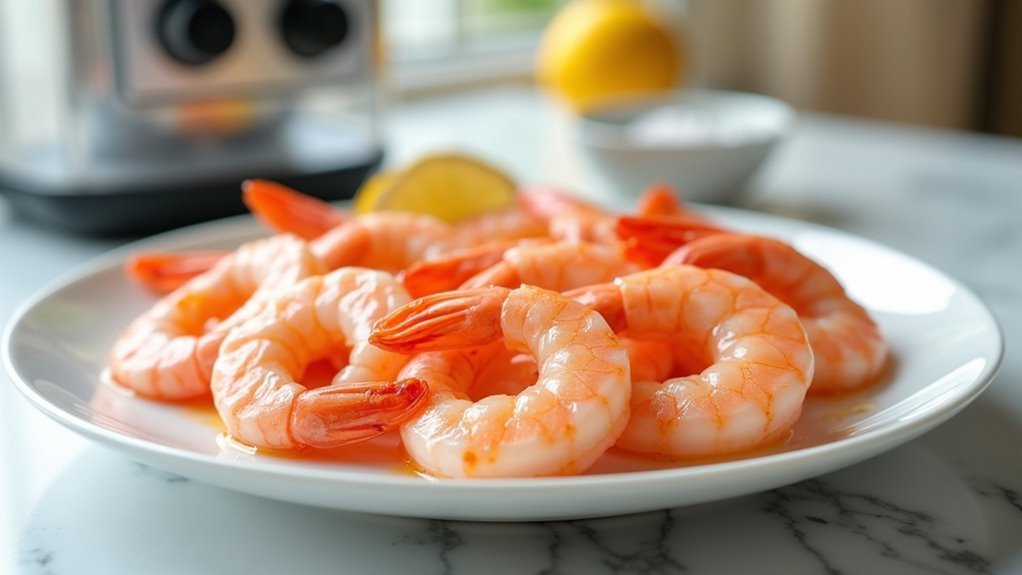
Every successful sous vide shrimp dish hinges on precise temperature control, perhaps the most critical factor in achieving that perfect, juicy texture.
The sweet spot seems to be around 55°C (131°F), which preserves the shrimp’s natural moisture while ensuring it’s safely cooked through.
The perfect sous vide shrimp emerges at 55°C, achieving that delicate balance between juicy succulence and safe consumption.
Many home chefs struggle with temperature consistency when using traditional cooking methods. Sous vide eliminates this unpredictability.
I think it’s worth experimenting with slight variations though – some prefer 54°C for slightly softer results, while others go up to 56°C for firmer texture. Using a sous vide cooker allows for accurate temperature control, which is essential in maintaining that ideal consistency across your shrimp dishes.
Step-by-Step Sous Vide Shrimp Preparation Guide
Preparing sous vide shrimp begins with selecting the right shrimp—ideally fresh, though high-quality frozen options work perfectly well too.
If using frozen shrimp, thaw them in cold water for about 30 minutes before cooking, or add 15 minutes to your cook time. Shell removal and deveining are essential steps for the best texture and flavor.
For perfect sous vide shrimp preparation:
- Set your sous vide machine to 55°C/131°F and let it preheat.
- Package shrimp using either vacuum sealing or the water displacement method, as vacuum sealing significantly improves freshness retention.
- Cook for 30 minutes (or 45 if starting from frozen).
After cooking, perhaps the most important step is patting the shrimp dry before any final seasoning.
Fresh vs. Frozen: Adapting Your Sous Vide Technique
The choice between fresh and frozen shrimp greatly impacts your sous vide cooking approach, though both can yield excellent results with proper technique.
Fresh shrimp offers convenience with immediate cooking readiness, while frozen provides flexibility and often better value.
Fresh shrimp offers immediate convenience, while frozen shrimp provides better value and flexibility in meal planning.
When using frozen shrimp, remember to add about 15 minutes to your cooking time—45 minutes total at 55°C/131°F should be perfect. I think the texture difference is minimal if you’re careful with timing.
Perhaps the most important step with frozen shrimp is ensuring they’re properly deveined and shells are removed before bagging.
A quick 30-minute thaw in cold water can help, but isn’t strictly necessary with the sous vide method. Additionally, utilizing vacuum sealing technology can further enhance the flavor retention and food safety during the cooking process.
Essential Equipment for Sous Vide Shrimp Success
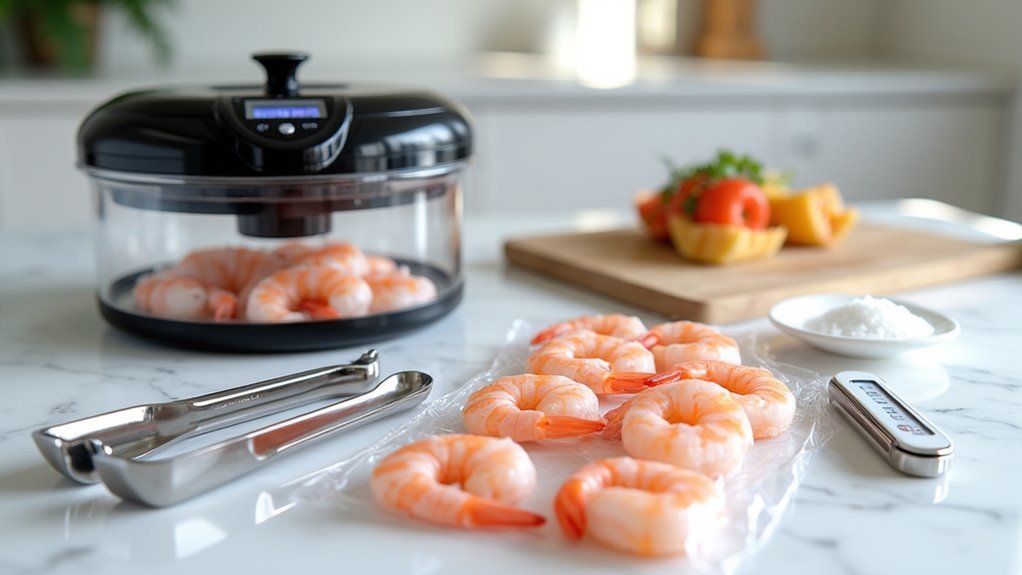
Successful sous vide shrimp cooking depends fundamentally on having the right equipment to maintain precise temperature control.
While the technique itself isn’t complicated, proper tools make all the difference between perfectly juicy shrimp and disappointment.
I think most beginners underestimate how important consistent temperature really is.
- Immersion Circulator – An Anova Precision Cooker or Breville Joule are perhaps the most reliable options, offering temperature stability within 0.1 degrees.
- Container – A 12-quart container provides ample space for water circulation.
- Packaging Tools – Either vacuum sealer or zip-top bags for the water displacement method.
Consider investing in a container lid too—it reduces evaporation during longer cooks. The careful temperature control used in sous vide cooking not only enhances the texture of shrimp but also locks in their natural flavors.
Frequently Asked Questions
Can I Reuse the Sous Vide Water for Multiple Cooking Sessions?
Reusing sous vide water is safe, efficient, and economical. Users can typically reuse water for multiple cooking sessions, simply covering the container between uses to maintain cleanliness and prevent evaporation.
How Do Different Seasonings Affect Sous Vide Shrimp Cooking Times?
Seasonings typically don’t affect sous vide shrimp cooking times. The recommended 30-minute duration at 55°C/131°F remains consistent regardless of herbs, spices, or aromatics added during the packaging process.
Is It Necessary to Ice Bath Shrimp After Sous Vide Cooking?
Tender pink shrimp glistening with moisture emerge from their warm bath. An ice bath isn’t necessary for sous vide shrimp unless serving cold or preventing overcooking while finishing with another cooking method.
Can I Sous Vide Shrimp With the Shell On?
Yes, shrimp can be sous vide cooked with shells on. Shells may provide additional flavor, though for best results, users should guarantee shrimp are properly deveined before cooking.
How Does Altitude Affect Sous Vide Cooking Temperatures for Shrimp?
Like Icarus flying too close to the sun, altitude impacts sous vide cooking minimally. Water boils at lower temperatures in higher elevations, but sous vide’s sealed, precision-controlled environment negates this effect for shrimp preparation.