Did you know that 87% of home cooks who try sous vide never go back to traditional methods? I’ve been cooking this way for nearly five years, and it’s transformed how I approach proteins in my kitchen. You might think specialized equipment means complicated cooking, but I’ve found the opposite is true. With precise temperature control, I’m achieving restaurant-quality results with less active cooking time—and honestly, less stress. Let me show you how simple mastery can be.
Sous Vide Essentials: What You Need to Get Started
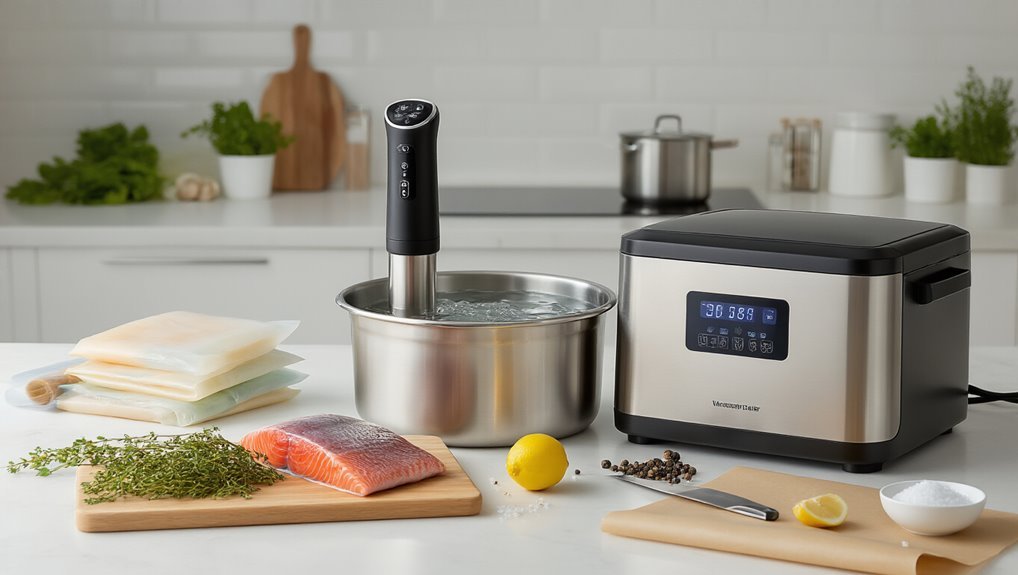
What’s actually needed to explore into sous vide cooking at home?
I’ve found the equipment basics are surprisingly minimal.
You’ll need an immersion circulator (the heart of the operation), a vacuum sealer, and a large heat-safe container of about 6-12 quarts.
In my experience, the immersion circulator is worth investing in—it should control temperature within ±0.1°C. This is why precise temperature control matters for reliable results precise temperature control.
For bag types, well, you’ve got options.
BPA-free vacuum bags are ideal, but honestly, the water-displacement method using freezer bags works fine for quick cooks when you’re just starting out.
I’d recommend beginning with a basic $200-300 circulator setup before splurging on fancier gear.
Oh, and don’t forget a tight-fitting lid!
It makes a huge difference in maintaining temperature.
Setting the Perfect Temperature: A Guide for Every Protein
How precisely does temperature selection influence your sous vide results? Well, it’s everything!
Temperature is the soul of sous vide cooking—precision determines whether you achieve perfection or disappointment.
I’ve found that proper equipment calibration guarantees you hit those exact doneness targets every time.
For beef, I aim for 131°F when I want that perfect medium-rare edge-to-edge.
When I cook pork, I typically go with 140°F, right in the middle of that 135-145°F sweet spot—though sometimes I’ll drop to 137°F if I want it extra juicy.
Fish is trickier, I think.
You can go as low as 104°F for that mi-cuit texture, or stick to around 125°F for most species.
And remember, pasteurization isn’t just about temperature—it’s about time too!
You can actually cook chicken at lower temps, like 136°F, as long as you give it enough time to pasteurize safely.
This is where accurate pasteurization time planning makes the difference across proteins.
Step-by-Step Sous Vide Process for Foolproof Results
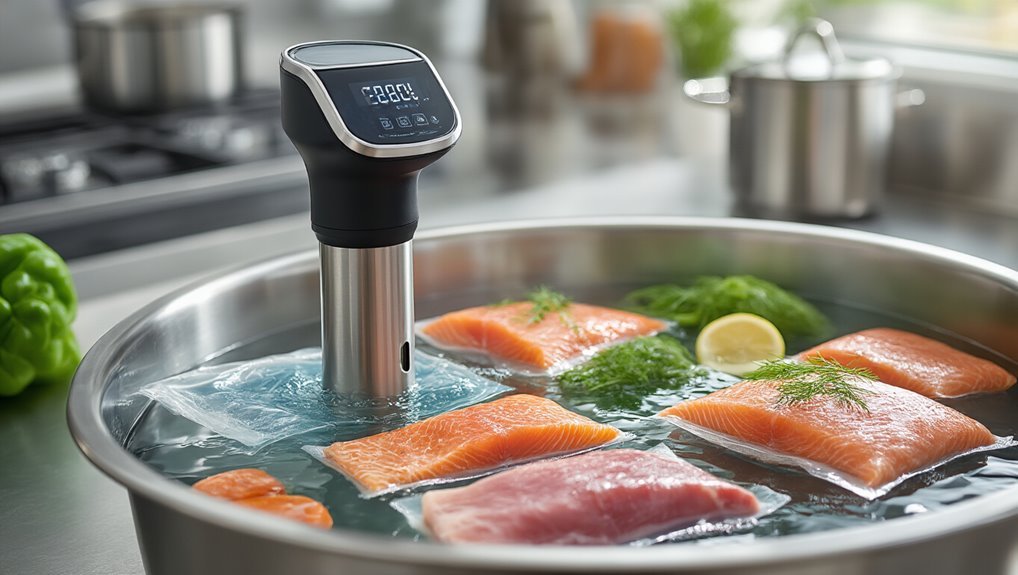
Now that we’ve figured out the right temperature, let’s walk through the sous vide process step-by-step. I’ve found that following a systematic approach is really the key to nailing this cooking method every time.
Quick tip: Freeze liquids before sealing to prevent leakage and ensure better results.
| Step | Action | My Quick Tip |
|---|---|---|
| 1 | Set water bath temperature | Add 30 minutes for preheating |
| 2 | Vacuum sealing your food | No vacuum? Use water displacement! |
| 3 | Cook to desired doneness | Thickness matters more than weight |
| 4 | Extend time for tough cuts | Patience pays off here, trust me |
| 5 | Quick sear to finish | Pat dry first for better crust |
I think the most common mistake people make is rushing the process. Remember, sous vide isn’t about speed—it’s about precision. The water bath does all the work while you relax!
Elevating Flavor: Seasoning and Searing Techniques
The magic of sous vide cooking truly happens when you master both seasoning and searing techniques.
Vacuum sealing accelerates flavor uptake through an air-free environment faster marination times.
I’ve found that understanding salt ratios is critical—I season proteins with about 1% salt by weight, while vegetables need slightly less at 0.8%. After cooking, the crust chemistry really comes into play during that final sear.
For perfect results, I recommend:
- Pat your meat completely dry before searing—this is non-negotiable for a proper crust
- Use high smoke-point oils like avocado oil when searing (trust me, it makes a difference)
- Keep searing time between 40-60 seconds per side—any longer and you’ll lose that perfect doneness
I’ve learned that timing matters too.
While most proteins benefit from pre-salting, delicate items sometimes do better with salt after cooking.
It’s all about balance!
Beyond Meat: Mastering Vegetables, Eggs, and Desserts in Your Sous Vide
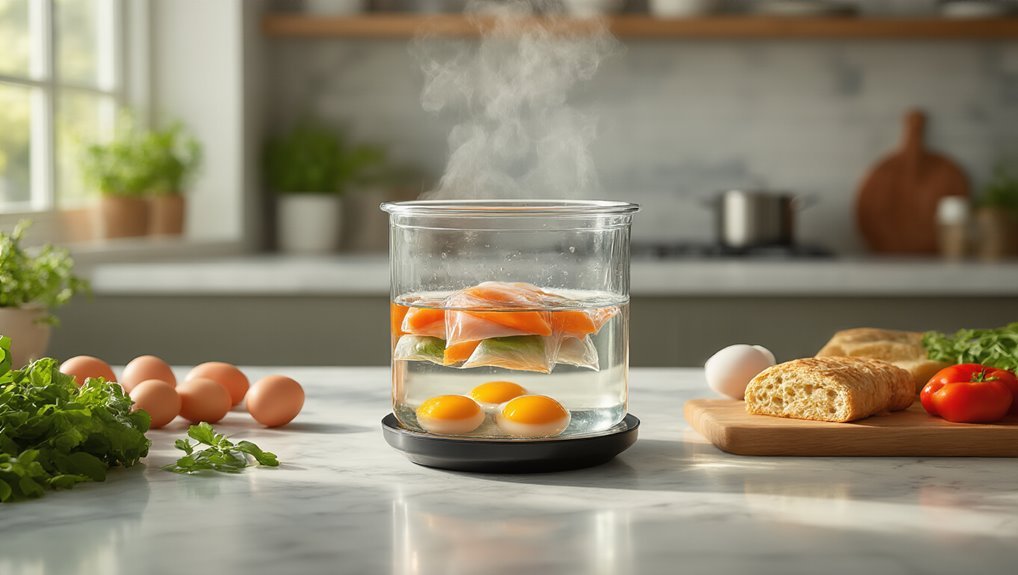
While meat often steals the spotlight in sous vide cooking, I’ve discovered that vegetables, eggs, and desserts actually showcase the technique’s versatility even more impressively.
Root vegetables like carrots and beets develop incredible sweetness while maintaining perfect texture.
I’ve found that green veggies require careful timing for ideal color retention.
Eggs might be my favorite sous vide experiment—maintaining shell integrity during cooking creates that 13-minute egg with its silky yolk that’s impossible to achieve through traditional methods.
Trust me, it’s life-changing over wilted spinach!
And desserts? Well, I thought custards were finicky until sous vide came along.
My white chocolate crème brûlée never curdles now.
Just remember to chill everything properly after cooking—vacuum-sealed storage is your best friend for preserving those perfect results.
Precise temperature control is essential for consistently tender vegetables and perfectly set desserts. precise temperature control
Frequently Asked Questions
What Are Common Sous Vide Mistakes?
I’ve found temperature drift ruins precision cooking! Common errors include vacuum leaks causing uneven cooking, not patting meat dry before searing, skipping rapid cooling, and ignoring pasteurization times for food safety.
Do High End Chefs Use Sous Vide?
Yes, I’ve seen elite chefs embrace sous vide since the 1970s, integrating sophisticated equipment innovation with careful ingredient selection to achieve the precision and consistency impossible with traditional methods.
What Is the Downside of Sous Vide?
All that glitters isn’t gold. I’ve found sous vide’s downsides include lengthy cooking times, equipment maintenance headaches, and questionable cost efficiency compared to traditional methods. Some foods simply taste better conventionally prepared.
Does Gordon Ramsay Use a Sous Vide?
I can’t confirm if Ramsay uses sous vide in his methods. Celebrity endorsements vary, and without reliable sources about his specific techniques, any claim would be speculation rather than fact.