I’ve been cooking for over twenty years, and I can honestly say that sous vide changed everything for me. It’s not just another kitchen gadget—it’s a complete rethinking of how temperature affects food. Remember that perfectly medium-rare steak you had at that fancy restaurant? That’s likely sous vide working its magic. The precision alone makes traditional cooking methods seem, well, primitive by comparison. But is it worth the investment and learning curve?
What Is Sous Vide and Why It Creates Perfect Results
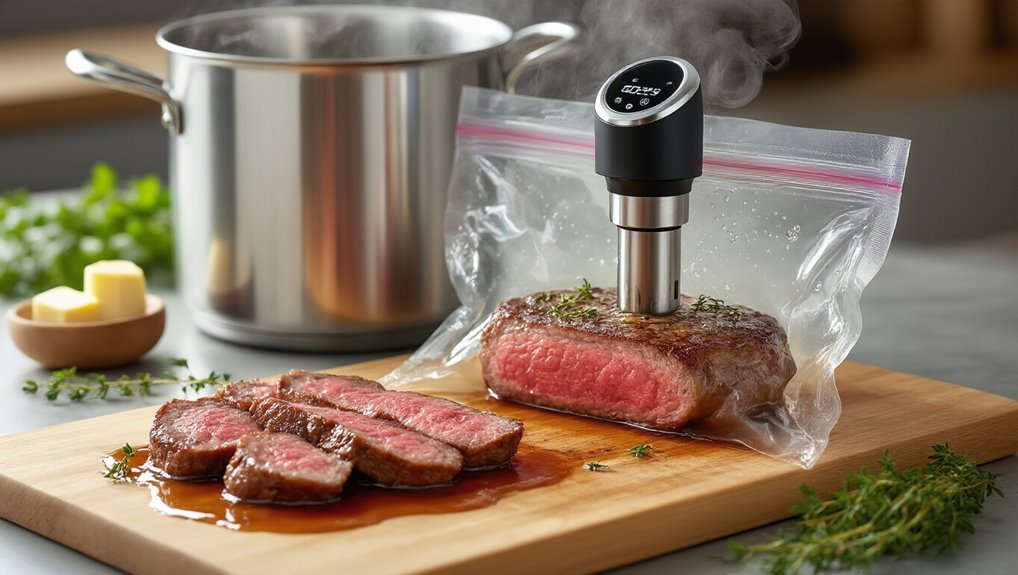
How exactly does a simple water bath transform raw ingredients into some of the most perfectly cooked food you’ll ever taste?
It’s all about the precision timing that sous vide offers.
When I place food in a vacuum-sealed bag and immerse it in water maintained at the exact temperature I want my food to reach—no more, no less—it’s practically impossible to overcook.
Think of it as the difference between rushing through traffic and taking a leisurely drive—the food cooks slowly, retaining moisture and concentrating flavors in ways conventional cooking can’t match.
This precision is powered by controlled heat and reduced air exposure, which minimizes hotspots and preserves juices heat transfer.
I’m always amazed at how the gentle, consistent heat transforms even tough cuts into buttery textures.
And while you’ll need to finish with a quick sear for that beautiful crust, the interior will be perfectly done every single time.
Essential Sous Vide Equipment: From Basic to Professional
The world of sous vide equipment can seem overwhelming at first, but I’ve found you don’t need to break the bank to get started.
Precision cooking at home is simpler than you think—no fancy gadgets required to dive into sous vide.
At the most basic level, you’ll need a circulator that clamps to your pot and maintains precise temperatures.
These come in various budget options, from small clip-on units for home use to professional-grade systems.
For containers, I personally switch between dedicated vessels made from durable materials and, well, just a regular pot when I’m cooking for two.
If you’re not ready to invest, there are clever DIY hacks using coolers or rice cookers that work surprisingly well.
As for packaging, you can start with the water-displacement method using zip-top bags—no vacuum sealer required!
Though I must admit, once I upgraded to silicone bags, I never looked back.
For long-term storage, proper air-tight packaging helps preserve flavors and moisture between cooks.
Safety First: Is Cooking Food in Plastic Bags Safe?
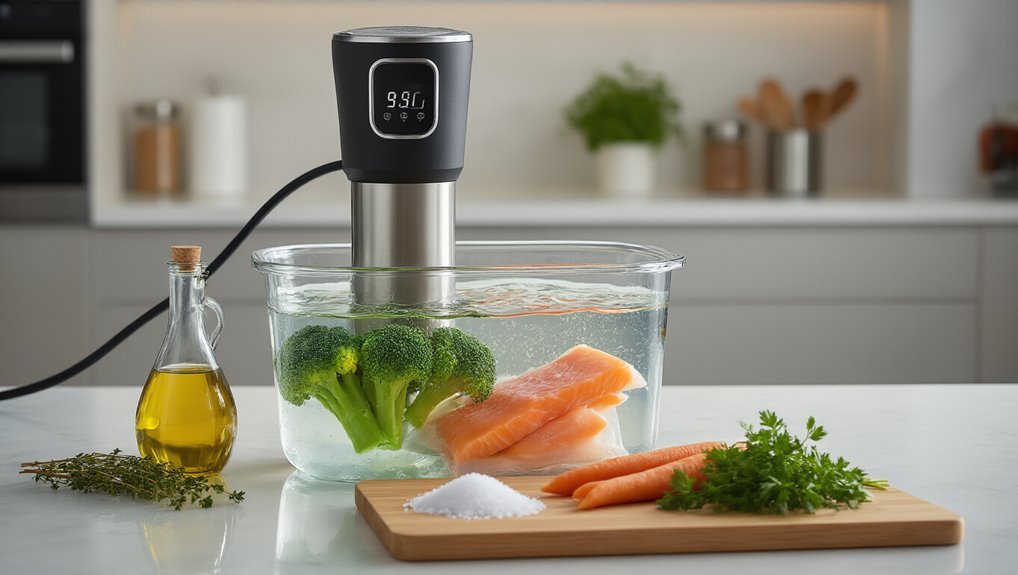
When I first started sous vide cooking, I worried about using plastic bags—I’m sure you’ve had the same concern.
The quality of the plastic matters enormously, so I always check that my bags are food-safe and rated for the temperatures I’ll be using (usually between 130-185°F). Always choose high-quality, food-grade bags that are BPA-free and designed for the temperatures you’ll cook at.
While there’s debate about plastic in cooking, using proper water displacement techniques and temperature control considerably reduces any potential risks you might be concerned about.
Plastic Considerations
Many sous vide enthusiasts worry about the safety of cooking food in plastic bags, and I’ll admit I was skeptical at first too. After researching, I’ve learned that modern freezer bags are actually designed for food contact at sous vide temperatures, which stay well below boiling.
When choosing bags, I always check the materials labeling to confirm they’re BPA-free and food-safe. Most name-brand options work great, but if you’re still concerned, glass canning jars are a viable alternative for many recipes.
I think what helped ease my mind was understanding the science—these bags are specifically engineered for food storage at various temperatures. And while bag recycling remains somewhat problematic (I mean, they’re not always accepted in curbside programs), the safety aspect shouldn’t be a deterrent to enjoying this revolutionary cooking method.
Temperature Control Matters
Beyond bag selection, precise temperature control forms the backbone of sous vide safety.
I can’t stress this enough—your water bath temperature dictates everything from texture to, more importantly, food safety.
When I first started sous vide cooking, I learned that sensor lag can cause problems if your circulator isn’t properly calibrated.
You think you’re cooking at 131°F, but you’re actually below pasteurization temperature.
Yikes!
Ambient variance is another factor I watch for.
If you’re cooking in a drafty kitchen, your water bath might lose heat unevenly.
In my experience, covering the container helps maintain that essential consistent temperature.
Mastering Sous Vide Temperatures for Different Foods
The precise temperature control that sous vide offers isn’t just a fancy cooking trick—it’s the cornerstone of transforming ordinary ingredients into extraordinary meals.
In addition, mastering vacuum sealing techniques ensures consistent results across proteins.
I’ve found that consulting doneness charts is essential when you’re just starting out.
For example, salmon shines at 122°F for about 40 minutes, delivering that silky texture that’s impossible with traditional cooking.
The magic of sous vide salmon lies in those 40 minutes at 122°F—transforming the ordinary into silky perfection.
What fascinates me most is how texture mapping works across different proteins.
Duck breast at 54.5°C for 2.5 hours creates an entirely different result than tough cuts like chuck tail at 64°C for two days.
I’ve learned the hard way that timing matters almost as much as temperature—leave that filet in too long and, well, you’ll end up with fish pudding instead of dinner!
Always finish with a quick sear for that perfect crust.
Step-by-Step Guide to Your First Sous Vide Meal
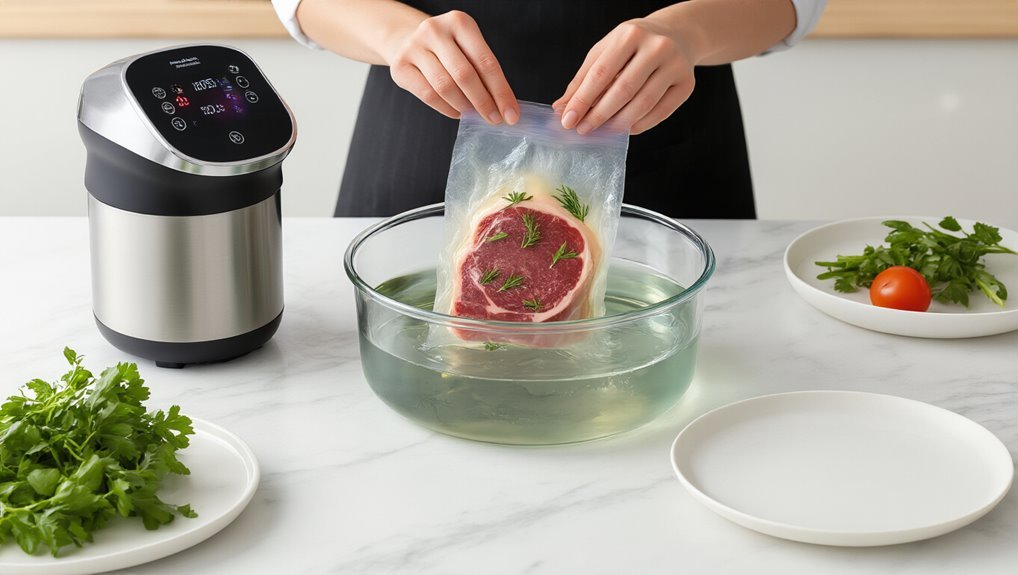
Preparing your first sous vide meal doesn’t need to be intimidating—I promise it’s simpler than it seems.
Its precision is precisely why it changed restaurant kitchens and home cooks alike precision cooking.
Start with ingredient sourcing—I always think fresh, quality proteins yield the best results.
Once you’ve selected your star ingredient, seal it in a food-safe bag, removing as much air as possible.
Next, attach your immersion circulator to a pot and set your desired temperature.
When considering flavor pairing, remember that herbs and aromatics can go right in the bag!
I’ve found garlic and rosemary work beautifully with beef, but, well, experiment with what you like.
Submerge your bag fully underwater and let science do its thing.
After cooking, don’t forget that quick sear—it’s what transforms the texture from, um, slightly soft to perfectly caramelized.
Trust me, that contrast between tender interior and crispy exterior is worth the extra step!
Beyond Steak: Unexpected Foods That Transform With Sous Vide
Duck breast cooked at 54.5°C for 2.5 hours yields incredibly tender meat with a crispy skin after a quick sear – it’s honestly game-changing.
Beyond proteins, I’ve fallen in love with what sous vide does to:
- Vegetables that retain vibrant colors and flavors impossible with high-heat cooking
- Infused oils like arugula olive oil that capture pure, clean flavors
- Fruit emulsions that maintain perfect consistency without breaking
- Dessert textures that are impossibly silky and uniform
I think what makes sous vide special isn’t just temperature precision, but how it creates textures and flavor combinations you simply can’t achieve any other way.
Beyond those tangible results, the technique hinges on precise temperature control that unlocks textures and flavors otherwise unattainable.
Time-Saving Strategies: Meal Prep and Batch Cooking With Sous Vide
Perhaps my favorite benefit of sous vide cooking isn’t just the magical flavors it creates, but how it’s completely transformed my weekly meal planning.
I can now prep an entire week’s proteins in one batch planning session, vacuum seal them with seasonings, and either cook immediately or freeze for later.
What’s really changed my game is the labeling efficiency—I write cooking temps and times right on each bag.
Then, when I’m ready, I drop them in the water bath and, well, that’s basically it!
The best part? I can cook chicken breasts on Sunday, refrigerate them still sealed, and they’ll taste just as perfect on Thursday with a quick 15-minute reheat.
It’s like having a personal chef waiting in my fridge!
Consistent labeling and maintenance help maximize shelf life and sealing reliability.
Troubleshooting Common Sous Vide Mistakes and Problems
I’ve seen countless sous vide cooks frustrated when their water levels drop too low or bags float to the surface, disrupting the precision we’re aiming for.
In my experience, securing bags with clips or weights and using a ping pong ball layer on the water surface can prevent evaporation issues during long cooks.
When your temperature starts fluctuating unexpectedly, check that your circulator isn’t placed too close to the container wall and that you’re not overloading the bath with too many cold items at once.
Water Level Issues
Maintaining proper water levels in your sous vide setup isn’t just a minor detail—it’s absolutely critical for successful cooking. I’ve learned through many cooking sessions that effective level maintenance prevents the immersion circulator from overheating or sucking in air. When I’m planning a long cook, I always consider evaporation control—either covering the container with plastic wrap or regularly topping up with warm water.
Here are the water level issues to watch for:
- Bags sticking above water create air pockets, resulting in unevenly cooked food
- Overcrowding pushes water away from the heater, causing temperature fluctuations
- Adding cold water after starting can create temperature drift (I made that mistake once!)
- Water must always remain between the min and max marks on your device
Bags Floating Up
The floating bag syndrome is perhaps the most frustrating sous vide hiccup I’ve encountered in my cooking journey.
There’s nothing worse than setting everything up, walking away, and returning to find your dinner bobbing at the surface like a tiny food raft.
This buoyancy issue typically happens when air pockets remain trapped in the bag or when your food is simply less dense than water.
I’ve found that proper vacuum sealing or using the water displacement method (where you slowly lower the bag into water to push air out) works wonders.
For stubborn floaters, I’ll add a rack or weights, or sometimes just clip the bag to the container’s side.
Double-bagging delicate items helps too, and honestly, upgrading to heavy-duty bags designed for sous vide has virtually eliminated my floating problems.
Temperature Fluctuation Fixes
Five temperature fluctuations can derail even the most promising sous vide cook, turning your perfectly planned medium-rare steak into something closer to well-done disappointment.
I’ve learned that maintaining consistent temperature is essential for success.
First, calibrate your immersion circulator—it should stay within ±0.1–0.5°C of your set temperature.
Here’s what I do to prevent temperature issues:
- Add lid insulation or a thermo cover to minimize heat loss when adding cold food
- Stir midway through long cooks to eliminate any hot spots that might form
- Avoid overcrowding bags—single layers cook more evenly
- Double-check seals to prevent water infiltration, which causes inconsistent results
Trust me, these small adjustments make a huge difference.
Your proteins will cook with the precision that makes sous vide truly revolutionary.
Frequently Asked Questions
Is Sous Vide a New Cooking Method?
No, sous vide isn’t new. I’d say it’s mature, with a history timeline stretching to the 1960s, though its technology evolution made it accessible to home cooks only recently.
What Is the Downside of Sous Vide?
Like Achilles’ heel, sous vide has its flaws. I’ve found plastic safety concerns, equipment costs, counter space requirements, and that odd plastic-cooking feeling can turn me off. Plus, you’ll still need to brown afterward.
What Percent of Gen Z Can’t Cook?
Based on surveys, I’d say roughly 30-50% of Gen Zers report struggling with basic cooking skills. These skill gaps explain why many rely on takeout or pre-packaged meals instead.
Do High End Chefs Use Sous Vide?
Yes, I’ve seen sous vide widely adopted in Michelin kitchens since the early 2000s. Top chefs love it for achieving precision temperatures that traditional methods can’t match consistently in fine dining.