Vacuum sealing is our favorite way to extend food shelf life up to five times longer than traditional storage methods. We’ve found it works wonders for meal prep, especially with meats, soups, and blanched vegetables. You’ll need a quality sealer, appropriate bags, and maybe some oxygen absorbers for best results. Remember to label everything with dates and contents, and implement a “first in, first out” rotation system. The techniques we’ll cover can transform how you approach food preservation.
Maximizing Food Shelf Life Through Vacuum Sealing Techniques
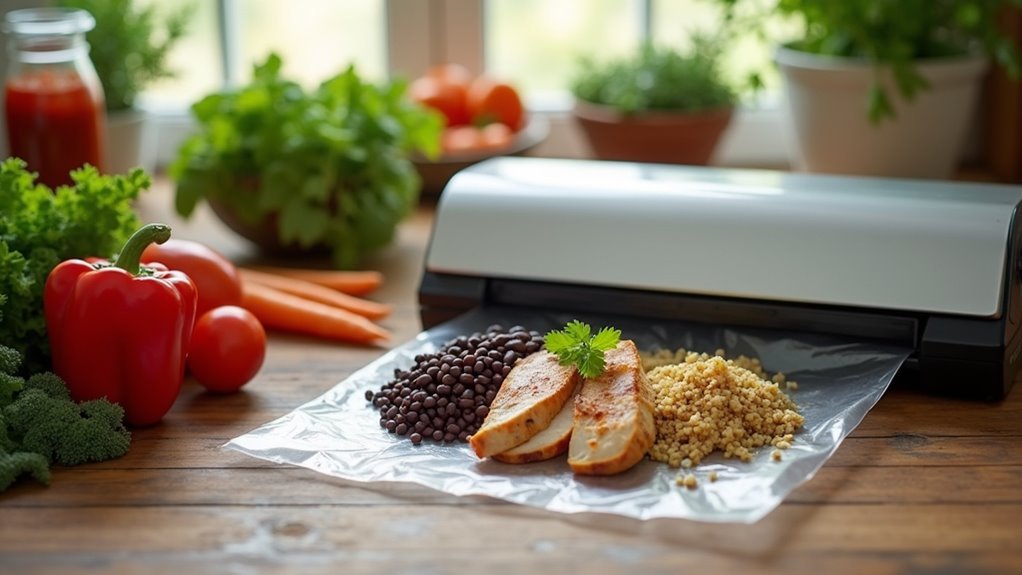
When it comes to preserving food for extended periods, we’ve found that vacuum sealing is perhaps one of the most effective methods available to home users. By removing air from FoodSaver bags or other similar food storage containers, we’re fundamentally eliminating the primary catalyst for bacteria and mold growth. What’s impressive is how this simple technique can extend shelf life up to five times longer than traditional storage methods. I think this is particularly valuable for meal prep enthusiasts who want to prepare portions in advance without worrying about food waste. We’ve noticed that meats, vegetables, and prepared meals not only stay fresh longer but also maintain their original flavors and nutritional content. For best results, always check that your vacuum sealed bags have no air pockets and store them in cool, dry places. Additionally, vacuum sealing protects against freezer burn by eliminating air exposure, which further enhances food preservation. Trust me, this small effort makes a huge difference!
Essential Equipment and Supplies for Long-Term Storage
To build a successful long-term food storage system, we’ll need three essential equipment categories that form the backbone of vacuum sealing preservation.
First, invest in quality vacuum sealers – both countertop vacuum sealers for meal prepping larger items and handheld pumps for delicate foods or smaller portions.
Next, don’t skimp on durable vacuum seal bags and rolls that create true airtight containers. I think the freezable, microwave-safe options are worth the extra cost since they’re so versatile.
We’ve found that specialty BPA-free containers work wonders for fruits and vegetables too.
Finally, consider oxygen absorbers as your secret weapon. These little packets, when added to your food storage setup, remove residual oxygen that vacuum sealing might miss. Additionally, using vacuum sealing can extend shelf life by two to five times, ensuring optimal food preservation.
Remember to regularly check your seals – perhaps monthly – to guarantee everything stays fresh.
Best Foods for Vacuum Sealed Meal Preparation
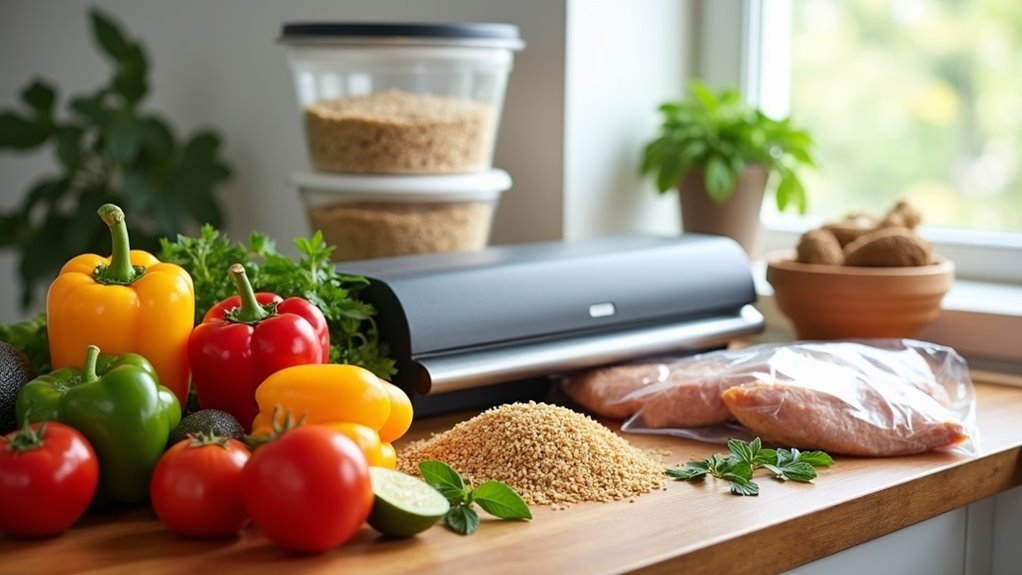
Five spectacular foods stand out as perfect candidates for vacuum sealed meal preparation, each offering unique advantages for your long-term storage strategy.
Fresh meats and proteins perhaps deserve the most attention, as vacuum sealing protects them from freezer burn while extending their shelf life dramatically.
We’ve found that soups and stews stored in vacuum containers maintain their flavors beautifully, making them perfect for those busy weeknights when cooking feels impossible.
Blanched seasonal vegetables, I think, are often overlooked—they’re fantastic for preserving summer produce year-round.
Don’t forget about dry goods like rice and beans! A handheld vacuum sealer makes storing these staples incredibly simple.
And pre-portioned complete meals might be the most convenient option, allowing you to grab exactly what you need from your food storage system. Moreover, vacuum sealing enhances food preservation techniques, ensuring your meals stay fresh and flavorful for longer periods.
Step-by-Step Guide to Batch Prepping and Preserving
Creating a successful batch prepping system might seem intimidating at first, but we’ve broken it down into manageable steps that’ll revolutionize your food storage game.
Start by selecting storage-friendly foods like uncooked proteins, grains, and blanched vegetables. These items maintain their quality when vacuum sealed.
Next, cook meals in bulk and portion them into meal-sized servings—this makes reheating simpler and, I think, helps with portion control too.
The vacuum sealing process is perhaps the most essential step. Don’t overfill your container before removing the air, as this might prevent a proper seal.
Always label each package with contents and date—we’ve all experienced the mystery freezer item phenomenon!
Finally, store your vacuum sealed food in cool, dark places to maximize freshness and preserve nutrients for up to five times longer than conventional methods. Additionally, remember that vacuum sealing extends shelf life significantly, which can lead to reduced food spoilage and cost savings.
Organizing and Rotating Your Vacuum Sealed Food Supply
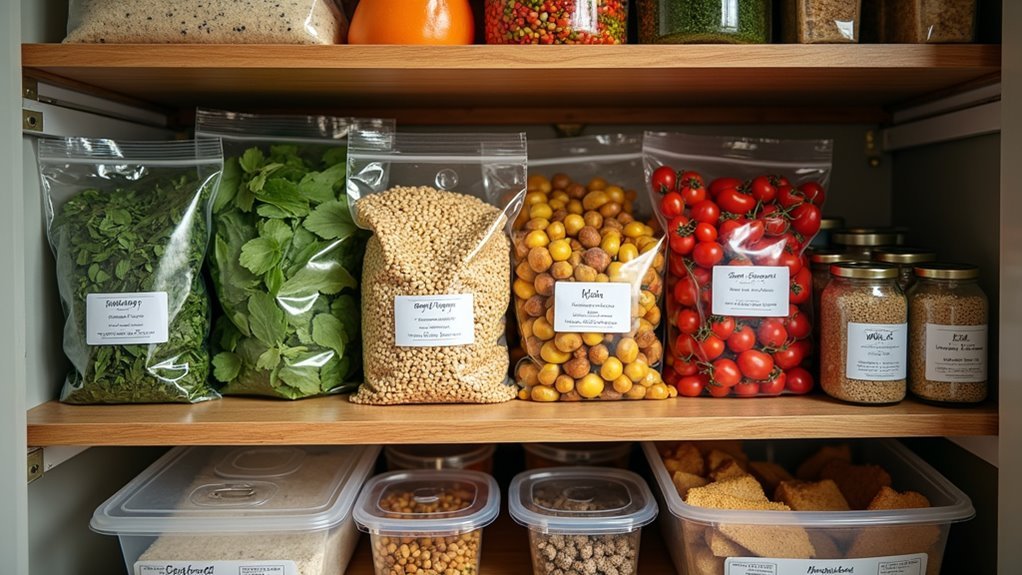
Now that you’ve got your food vacuum sealed and ready for long-term storage, organizing your supply properly becomes the next big challenge.
We’ve found that a well-organized system not only maximizes shelf life but also makes meal planning much easier.
Perhaps the most important aspect is creating an inventory system that works for your lifestyle while ensuring food safety through regular rotation.
Here’s our approach to organizing your vacuum-sealed food stores:
- Label everything clearly – date, contents, and perhaps even a quick note about preparation.
- Create dedicated zones in your storage areas – meats in one section, vegetables in another.
- Implement a simple “first in, first out” rotation system, placing newer items behind older ones.
- Inspect your inventory monthly, checking seals and removing any questionable packages.
Additionally, consider incorporating optimal storage conditions to enhance the longevity of your vacuum-sealed items.
Frequently Asked Questions
How Long Does Vacuum Sealed Meal Prep Last?
We’ve found vacuum sealed meal prep lasts 1-2 weeks refrigerated and 4-6 months frozen. Proper sealing techniques, quality storage containers, and regular meal rotation help maintain food quality beyond typical expiration dates.
Is Vacuum Sealing Good for Long-Term Food Storage?
Like a time capsule for your groceries, we’ve found vacuum sealing benefits are exceptional for long-term storage. It’s cost-effective, enhances meal prep efficiency, improves food safety, and markedly reduces food waste—a top food preservation technique.
Is a Vacuum Sealer Good for Meal Prep?
We’ve found vacuum sealers offer incredible meal prepping efficiency. They’re essential for long-term storage, preserving flavors while saving space. Vacuum sealing tips help maximize food preservation techniques for better kitchen organization.
Do I Need Oxygen Absorbers if I Vacuum Seal Freeze-Dried Food?
We recommend using oxygen absorbers even with vacuum sealing freeze-dried food for ideal long term storage. They remove residual oxygen your sealer misses, ensuring better moisture control regardless of temperature conditions in your storage containers.