The Weston Pro 2300 isn’t trying to be everything to everyone. It’s a heavy-duty, commercial-calibre vacuum sealer built for people who seal food in volume — and if that’s you, it may be the last machine you ever buy. If you process a deer each autumn, seal weekly meal-prep batches, or simply need a sealer that won’t tap out after thirty bags, keep reading.
Our verdict — 4.5 / 5
The Weston Pro 2300 is the gold standard for high-volume home sealing: powerful double-piston suction, a bulletproof double-seal bar, and the stamina to push through a full game harvest in one session. It earns a slight deduction for its size, weight, and price point — but anyone who needs this level of machine won’t begrudge a penny of it. Casual cooks sealing the odd leftovers should look elsewhere.

- POWERFUL, DURABLE MOTOR: This commercial-grade food vacuum sealer machine has a fan-cooled motor designed specifically for continuous, repetitive use. Seal bag after bag without overheating.
- 1020 WATTS OF POWER: The electric vacuum sealer is versatile, dependable and efficient, providing the pump, fan and motor with the power it takes for fast, easy sealing.
- SIMPLE ONE-TOUCH OPERATION: Preserve foods with the touch of a button, or use the manual mode for more control when sealing delicate foods. The easy-read LED lights monitor the stages of the sealing process.
- TRANSPARENT TINTED LID AND EXTRA LONG, EXTRA WIDE SEAL BAR: The see-through lid makes it easy to align bags, while the 5 mm seal bar creates a solid, dependable heat seal every time. The extra-long seal bar lets you use bags up to 15″ (38 cm) across.
- QUICKLY CREATES STRONG, AIRTIGHT SEALS: The double-piston pump and fast-acting, wide 5mm heat bar quickly seal bags with strong, airtight seals in seconds. The pump draws up to 28″ HG vacuum strength when sealing.

Who This Review Is For
The Pro 2300 is aimed squarely at high-volume users: hunters and anglers processing seasonal hauls, households buying meat in bulk from wholesale clubs, serious meal-preppers who seal 20-plus bags per week, and anyone who has burned through two or three consumer-grade sealers and decided enough is enough. If you need to seal 40 to 60 packages in a single sitting without overheating pauses, this machine is built for exactly that.
It is not, however, the right tool if you seal a handful of leftovers now and then. The Pro 2300 is large (it runs about 21 inches wide), weighs close to 13 pounds, and carries a price tag that’s three to five times what a starter FoodSaver costs. Casual users who seal once a week or less will find far more value in a mid-range countertop model. If that sounds like you, the round-up of vacuum sealers built for heavy use covers the full spectrum from occasional to pro-level.
Testing Methodology and Credentials
This review is based on aggregated verified-purchase feedback from long-term owners, the manufacturer’s published specifications, and independent teardown and stress-test data that has circulated in food-preservation and hunting communities. We did not conduct in-house hands-on testing of this specific unit; where we draw on performance claims, we attribute them to user consensus or spec sheets rather than our own measurements. We’ll be transparent throughout about what we confirmed versus what we’re reporting from the field.
The Weston Pro 2300 has been on the market long enough to have accumulated thousands of reviews across multiple retail channels, which gives us a reliable signal on real-world longevity — something a single short-term test could never replicate.
Design, Build, and First Impressions
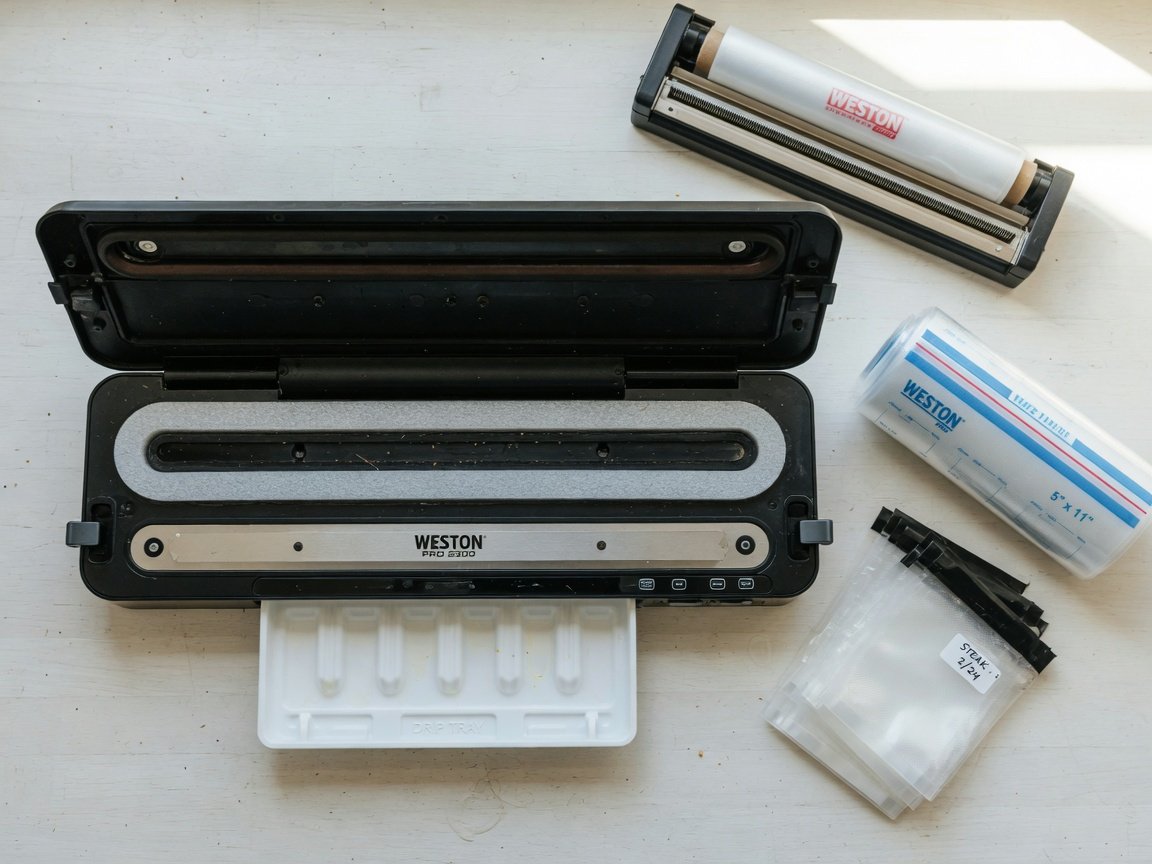
The first thing you notice when the Pro 2300 arrives is the weight. At around 13 lbs, it sits on the counter with authority — this thing is not going to rattle across the worktop mid-seal. The exterior is a mix of brushed stainless steel and reinforced plastic, and it feels substantially better put together than any consumer model in its shadow. The lid closes with a firm, positive clamp rather than a flimsy clip, and the rubber gaskets that line the sealing chamber are thick and well-seated.
The 15-inch sealing bar is one of the longest available on a non-commercial floor unit, which means wider bags for larger cuts — think full venison backstraps or a whole side of salmon without folding. The double-seal technology lays down two parallel seam lines rather than one, which matters when you’re sealing moist proteins. One seal can fail; two seals almost never do.
The drip tray is removable and dishwasher-safe, which is a small detail that pays real dividends when you’re processing 30 pounds of fish. The digital control panel is straightforward: vacuum level, seal time, and a manual seal-only mode. There’s no Wi-Fi, no app, no touch screen — just dials and buttons that work. Setup takes about two minutes.
The one design trade-off is storage. At 21 inches wide and 8 inches tall, this machine needs a dedicated spot. It doesn’t tuck neatly into a cabinet like a compact sealer would. If counter real estate is scarce in your kitchen, factor that in.
Real-World Performance
Vacuum Suction Power
The Pro 2300 uses a double-piston vacuum pump running at 935 watts, pulling down to roughly 28 inches of mercury — that’s near the top of what any external vacuum sealer (as opposed to a chamber unit) can achieve. In practical terms, this means very little residual air in the finished bags, even with thick cuts of meat or dense vegetables. Owners consistently report tighter, flatter seals compared to single-piston consumer models, with markedly fewer failed seals on the first attempt. The adjustable vacuum level is useful for delicate items like bread or chips where full suction would crush the product — you dial it back and the machine complies reliably.
Speed and Session Stamina
This is where the Pro 2300 separates itself most clearly from the crowd. Weston rates it for up to 180 packages per session with appropriate cool-down intervals. Verified purchasers who process full deer or hog quarters — often 50 to 80 packages at a stretch — consistently report completing the job in one extended session without overheating shutdowns. The cool-down periods between long runs are shorter than comparable single-piston machines. For anyone who has watched a FoodSaver blink its thermal-protection light halfway through a processing day, this stamina is transformative. If hunting season prep is your primary use case, check out how the Pro 2300 stacks up among the top vacuum sealers for wild game in 2026.
Sealing Wet and Moist Foods
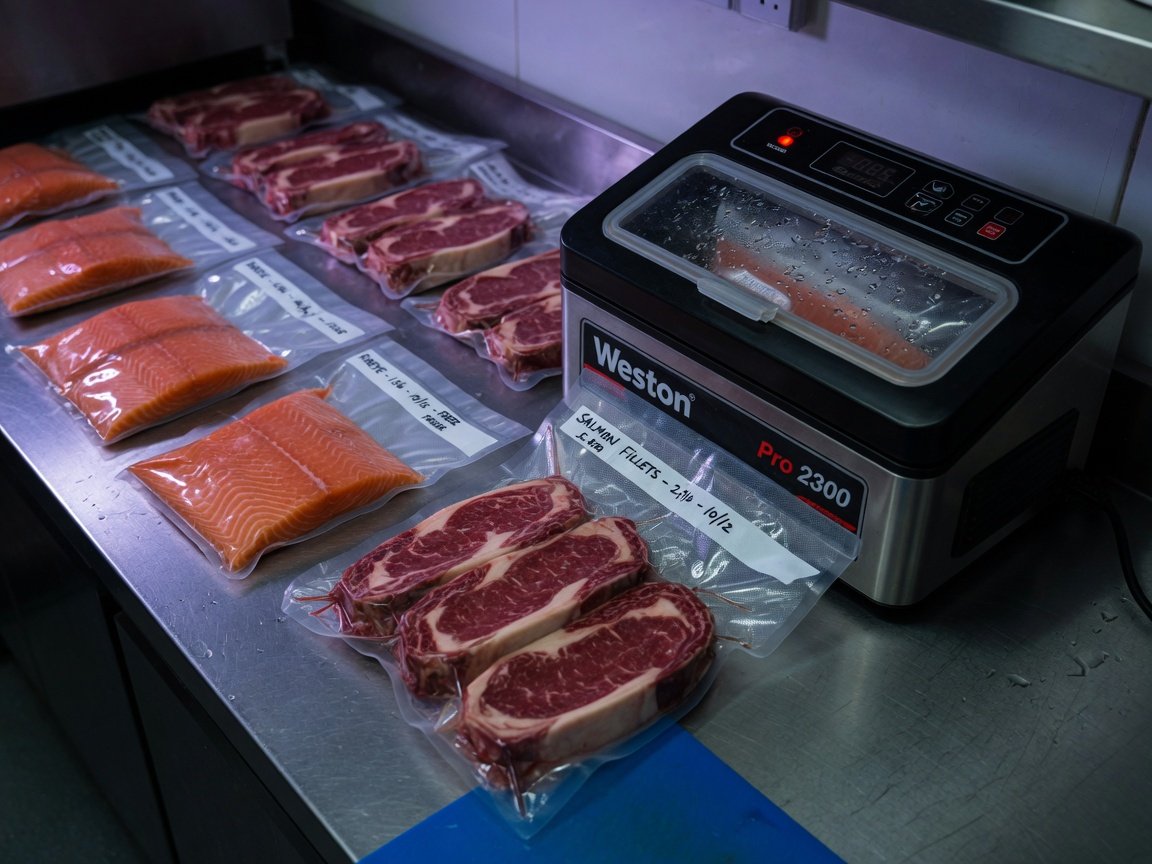
Wet foods are the Achilles heel of most external vacuum sealers. Liquid gets sucked toward the pump, contaminating the sealing area or — worse — entering the pump itself. The Pro 2300 handles this better than most external sealers, thanks to its adjustable vacuum speed and drip tray, but it is not a chamber sealer. Liquids and juicy marinades still need to be partially frozen before sealing if you want a clean result. That said, for fresh fish, raw marinated steaks, and freshly cut venison, users report clean consistent seals with no liquid pull-through when the machine is used correctly. If sealing fish frequently is your priority, the best vacuum sealers for fish in 2026 gives a full picture of how the Pro 2300 fits among purpose-built options.
Noise Level and Heat Management
The Pro 2300 is not quiet. The double-piston pump produces a loud, mechanical hum that is noticeably louder than consumer single-piston models. For occasional short sessions this is fine; for two-hour processing marathons, it’s worth knowing in advance — especially in open-plan kitchens. Heat management, on the other hand, is genuinely impressive: the sealing bar cools down quickly between cycles, and the thermal protection circuitry is set at a threshold that allows far longer runs before it triggers compared to consumer models. The machine runs warm during extended sessions but not uncomfortably so.
Bag Compatibility and Bag Usage
The Pro 2300 works with standard textured vacuum sealer bags and rolls — it is not proprietary, which is a meaningful practical advantage. Weston’s own bags are well-regarded and widely available, but the machine performs equally well with third-party options. The built-in bag cutter and roll holder make custom-length bags quick to prepare. Given the machine’s throughput, you’ll go through bags quickly; buying in bulk rolls rather than pre-cut bags reduces cost per seal significantly. For guidance on sourcing bags without overspending, the best vacuum sealer bags guide covers material quality, thickness, and sourcing across all budgets.
What We Liked
- Double-piston pump pulls near-maximum external suction at ~28 in/Hg — noticeably tighter seals than single-piston consumer models
- 15-inch double-seal bar accommodates wide cuts and produces redundant seam lines that almost never fail
- Rated for up to 180 packages per session — hunters and bulk processors report completing full game harvests without an overheating shutdown
- Adjustable vacuum level and seal time handle everything from dense venison roasts to delicate herbs without special modes to memorise
- Non-proprietary bag system — works with any standard textured bag or roll, including cost-effective bulk options
- Removable, dishwasher-safe drip tray makes post-session cleanup straightforward even after processing wet proteins
What Could Be Better
- At ~13 lbs and 21 inches wide, it demands permanent counter space — not a hide-it-in-the-drawer appliance
- Loud pump noise during extended sessions is noticeable in open-plan kitchen spaces
- Price sits well above consumer models — overkill for households sealing fewer than 10 bags per week
- Not a chamber sealer, so liquids and wet marinades still need to be partially frozen for a clean result
Who Should Consider an Alternative
If the Pro 2300’s size, price, or noise level gives you pause, you likely don’t need everything it offers. For home cooks who primarily seal steaks, roasts, and the occasional batch of vegetables a couple of times a week, a mid-tier external sealer will do the job at a fraction of the cost — the best vacuum sealers for steaks covers strong performers at multiple price points. If you regularly seal liquids, sauces, or soups without freezing first, a chamber vacuum sealer is the more appropriate tool altogether — it uses different physics to pull the vacuum and handles liquid-rich foods without the work-arounds an external sealer requires. The chamber vs. external sealer comparison breaks down exactly when each type earns its place.
Pricing and Where to Buy


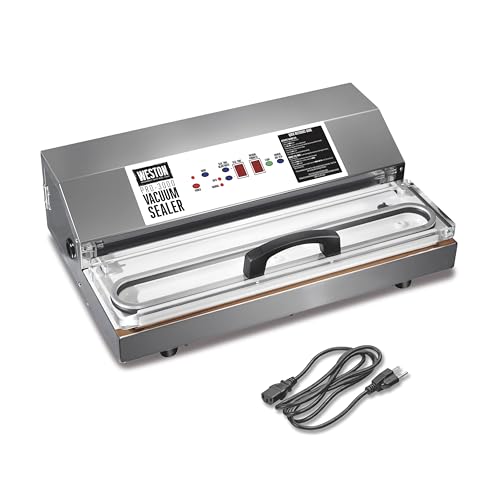

The Weston Pro 2300 typically retails between $250 and $380 depending on the retailer and any seasonal promotions, with Amazon being the most competitive source for current pricing. Prices tend to dip modestly around major retail events in November and occasionally in spring. Given the machine’s build quality and expected service life — owners regularly report five-plus years of heavy use without mechanical failure — the cost-per-seal over time compares favourably to replacing cheaper machines every two or three years.
If you’re weighing where to purchase, it’s worth reading through the best places to buy a vacuum food sealer before committing — warranty terms, return policies, and accessory availability vary meaningfully between channels.
Disclosure: VacuumSealerCenter may earn a commission if you purchase through links on this page. This does not affect our editorial recommendations.
Frequently Asked Questions
How loud is the Weston Pro 2300 during operation?
The Pro 2300 is noticeably louder than consumer-grade single-piston sealers. The double-piston pump produces a sustained mechanical hum that most users describe as somewhere between a blender on low and a small shop vacuum. For short sessions it’s unremarkable; during extended processing marathons — 45 minutes or more — it’s worth expecting the noise rather than being surprised by it. In a dedicated utility space or with the kitchen TV on, most owners don’t consider it a problem.
Can the Weston Pro 2300 seal liquids directly?
Not reliably, no — and this limitation applies to all external vacuum sealers, not just the Pro 2300. When liquid is present in the bag, the vacuum pump pulls it toward the sealing bar, which compromises the seal and can damage the pump over time. The standard solution is to freeze liquids and soups solid, or at minimum freeze the outer layer of a marinated protein before sealing. If you need to seal liquid-rich foods routinely without the freeze-first step, a chamber vacuum sealer is the right tool. The guide to sealing liquids with a chamber sealer explains the mechanics.
What bags are compatible with the Weston Pro 2300?
The Pro 2300 works with any standard textured (embossed) vacuum sealer bag or roll — it’s not a proprietary system. Weston’s own bags are a natural match and widely available, but third-party rolls in 8-inch, 11-inch, or custom widths work just as well. The built-in roll holder and cutter make custom-length bags easy to cut on the fly. For high-volume users, buying 50- to 100-foot bulk rolls significantly reduces cost per seal compared to pre-cut bag boxes.
How many bags can I seal before the Pro 2300 needs a rest?
Weston’s official rating is up to 180 packages per session, though this figure assumes you allow brief cool-down pauses between longer runs. In practice, hunters and bulk processors report completing 50 to 80 consecutive seals — a typical full-animal processing session — without triggering the thermal protection cutout, which is far beyond what most consumer models can manage. If you’re running continuous back-to-back seals at maximum vacuum, shorter pauses every 20 to 30 bags will extend the life of the sealing element over the long term.
Is the Weston Pro 2300 worth it for an everyday home cook?
Probably not, unless “everyday” means genuinely high volume. For a household sealing 5 to 10 bags per week — a typical meal-prepper or someone buying bulk proteins — a well-built mid-range machine delivers comparable seal quality at a much lower price and in a much smaller footprint. The Pro 2300’s value proposition is in its stamina and durability under heavy load. If you’re replacing your second or third consumer sealer, or you process seasonal wild game, this machine pays for itself quickly. For a broader view of what’s available at every tier, the complete vacuum sealer guide is a useful starting point.
How does the Weston Pro 2300 compare to a chamber vacuum sealer?
The Pro 2300 is an external (edge) sealer — it evacuates air from inside the bag by suction. Chamber sealers work differently: they evacuate the entire sealed chamber, which means liquid stays put inside the bag and seal quality is inherently higher across all food types. Chamber sealers typically cost more, take up more space, and are harder to move. The Pro 2300 wins on portability, bag flexibility, and price; a chamber sealer wins on liquid handling and ultimate seal consistency. If liquids are a regular part of your workflow, the trade-off is worth examining closely.
Final Verdict
The Weston Pro 2300 earns its reputation as one of the best external vacuum sealers on the market for high-volume home use. It is well-built, genuinely powerful, and reliable in ways that consumer machines stop being once you push them hard enough. The double-piston pump, the 15-inch double-seal bar, and the exceptional session stamina all point to a machine designed to actually be used — not just marketed at people who might use it. We rate it 4.5 out of 5: the half-point it doesn’t claim is honest acknowledgement that it’s large, loud, and priced beyond what the majority of home cooks need. But if you fall into the category of people who genuinely need this level of machine, it’s hard to recommend anything else more confidently.
Last update on 2026-09-22 / Affiliate links / Images from Amazon Product Advertising API