When comparing vacuum seal bags for meal prepping, we’ve found that durability and thickness (ideally 3-5 mils) matter most for preventing freezer burn. Premium bags might cost more upfront ($20-80) compared to budget options ($17), but they’ll preserve food 3-6 times longer, saving money in the long run. Consider your portion sizes too—pint bags work for sides, quarts for standard meals, and gallons for batch cooking. The right choice ultimately depends on your specific meal prep routine and storage needs.
Key Features to Consider When Selecting Vacuum Seal Bags
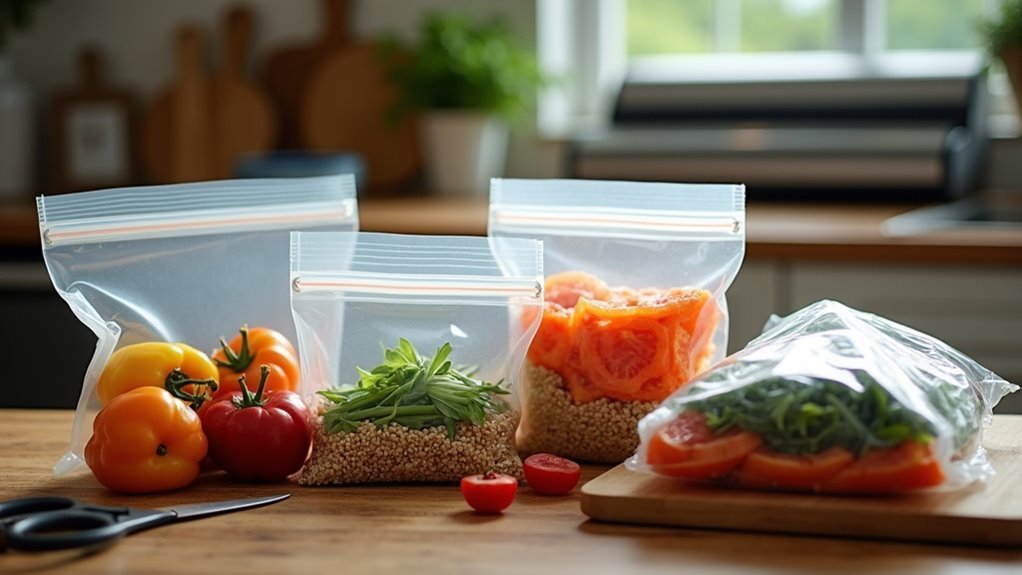
When we’re looking to up our meal prep game, the right vacuum seal bags can make all the difference. We’ve found that durability should be your first priority—look for heavy-duty bags with embossed channels that improve suction and prevent punctures during food storage.
Safety matters too, perhaps more than we initially realize. BPA-free bags that can handle everything from freezing to boiling (perfect for sous vide cooking) are worth the investment, I think. Additionally, opting for customizable rolls allows you to create tailored lengths for different foods, enhancing your efficiency in the kitchen.
Don’t forget to check compatibility with your vacuum sealer brand.
What we really appreciate are the practical features that enhance meal prepping—things like write-on labels and tear notches.
And of course, the extended shelf life these bags provide saves money and reduces waste, which is probably the whole point, right?
Cost Analysis: Budget vs. Premium Vacuum Seal Bags
Two major factors inevitably come into play when we’re weighing our vacuum sealing options: initial cost and long-term value.
Budget vacuum seal bags from brands like OutOfAir seem attractive at first glance—around $17 for 100 pint-sized bags compared to premium options that might cost up to $80.
But here’s the thing: those premium vacuum seal bags often pay for themselves. With features like tear notches and writeable labels, they make meal prep considerably easier.
Plus, they typically reduce food waste by preserving items 3-6 times longer than standard storage methods.
We’ve found that while budget options feel like savings initially, replacements add up quickly—nearly $70 over time.
For serious meal preppers, the cost efficiency of premium bags might actually make more sense, especially if you’re looking to maximize your grocery budget. Additionally, choosing the right thickness of vacuum sealer bags is crucial for ensuring proper sealing effectiveness and durability over time.
Durability and Thickness: How They Impact Food Preservation
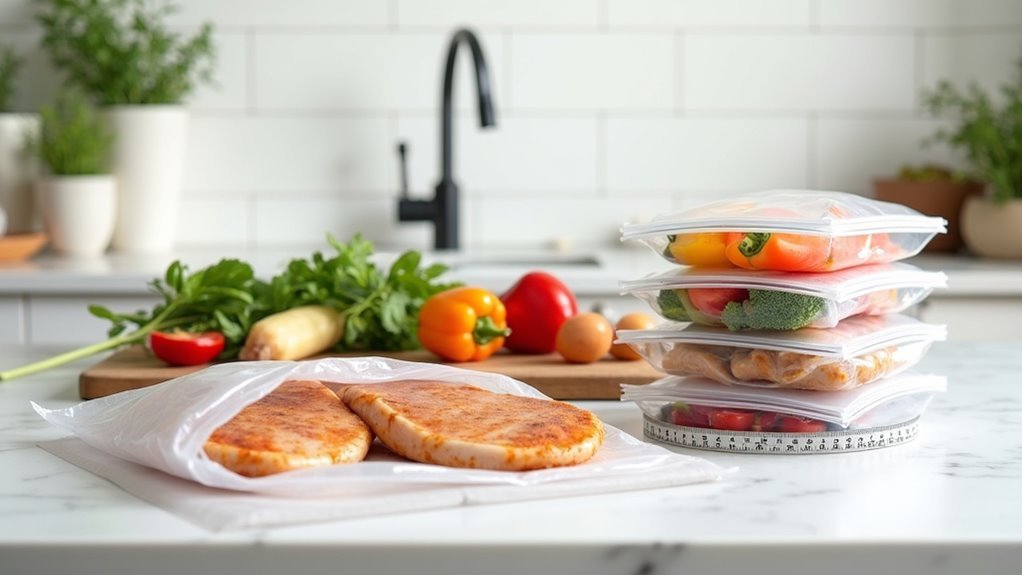
Since we’ve explored the cost factors, it’s worth examining how the physical construction of vacuum seal bags directly impacts their effectiveness.
The thickness of vacuum seal bags (typically 3-5 mils) is perhaps the most critical factor in determining their durability. We’ve found that heavier bags generally provide better protection against tears and punctures during freezer storage.
Heavy-duty vacuum seal bags with embossed channels aren’t just a marketing gimmick – they genuinely create a more effective seal. This improved construction directly translates to food preservation benefits:
- Extends food shelf life by 3-6 times compared to regular storage methods
- Prevents freezer burn through superior air removal capacity
- Withstands temperature variations, especially important for boiling or microwaving
I think the thickness difference between standard and commercial-grade bags might seem small, but it dramatically affects long-term meal prep success.
Size Options and Storage Efficiency for Weekly Meal Plans
Although most meal preppers focus on bag durability, the size options you choose can make or break your weekly meal planning system. We’ve found that quart-sized bags (8×12 inches) typically offer the best balance for most meals, but it’s worth considering a mix of sizes for different portions.
| Size Option | Ideal For | Storage Efficiency | Portions |
|---|---|---|---|
| Pint | Sides | High | 1-2 |
| Quart | Entrees | Very good | 2-3 |
| Gallon | Batch prep | Moderate | 4-6 |
| Custom cut | Specialty | Variable | Varies |
Perhaps the most underrated aspect of meal prepping with vacuum seal bags is their incredible space efficiency. When properly sealed, they stack flat—I think this alone reduces freezer space needs by almost 50% compared to containers. Plus, those with side markings make portion control surprisingly simple. Additionally, using vacuum sealers can extend food freshness up to 8 times longer compared to traditional storage methods.
Reusable vs. Disposable Vacuum Seal Bags for Sustainable Meal Prep
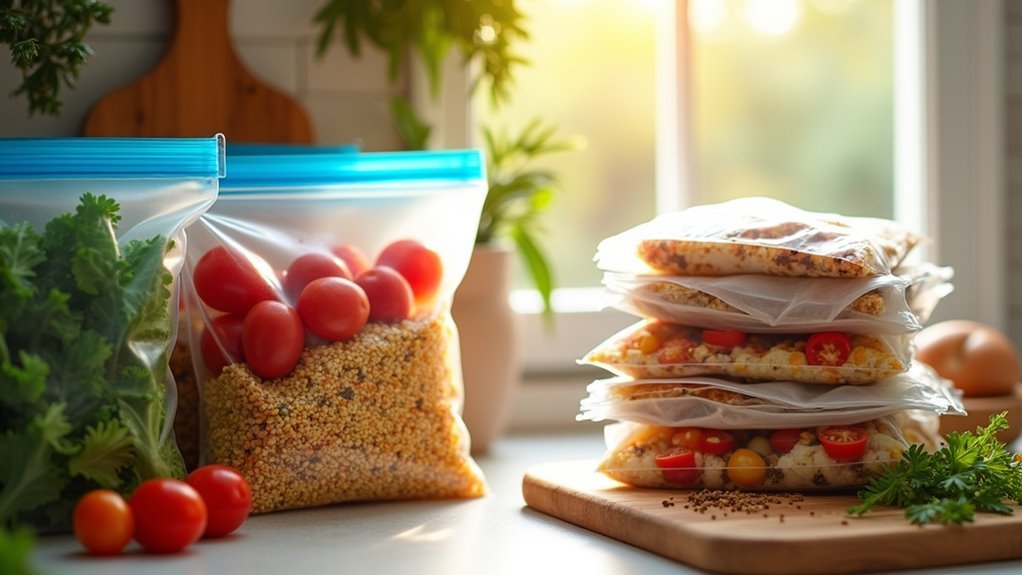
While many meal preppers focus solely on which bags seal the tightest or last the longest in the freezer, we’re seeing a major shift toward sustainability in the vacuum sealing world.
Reusable vacuum seal bags are quickly becoming the preferred choice for those of us looking to reduce our environmental impact while still enjoying the benefits of meal prepping.
When comparing reusable to disposable vacuum seal bags, three key advantages stand out:
- Long-term savings – you’ll spend $20-80 for 100 disposable bags, but reusables can be used dozens of times
- Versatility – reusable bags work with any vacuum sealer and can withstand boiling, freezing, and microwaving
- Reduced waste – perhaps the most compelling reason for eco-friendly meal preppers, as this aligns with the growing shift towards sustainable practices in food preservation.
I think the initial investment in reusable bags pays off quickly, making sustainable meal prep both environmentally responsible and financially smart.
Compatibility With Different Vacuum Sealer Models
When choosing vacuum seal bags for meal prep, compatibility with your specific sealer model can make or break your food storage system. Most quality bags, like those from MRang, are designed with universal compatibility in mind, working with popular brands such as Food Saver and Weston. I think what’s often overlooked is the importance of matching bag dimensions to your vacuum sealer’s intake. Perhaps this table might help clarify which bags work best with different types of sealers:
| Sealer Type | Recommended Bag | Size Compatibility | Food Types | Durability |
|---|---|---|---|---|
| Home Use | Embossed | 8×12″ (standard) | General | Medium |
| Commercial Grade | Heavy-duty | Multiple sizes | All types | High |
| Handheld | Zipper-style | Limited | Dry foods | Variable |
| Chamber | Non-channeled | Custom cut | All types | Very high |
| Portable | Pre-cut | Smaller sizes | Small portions | Medium |
Choosing the right vacuum seal bag is essential for optimal food preservation, ensuring your meal prep remains fresh and delicious for longer.
Best Vacuum Seal Bags for Specific Food Types
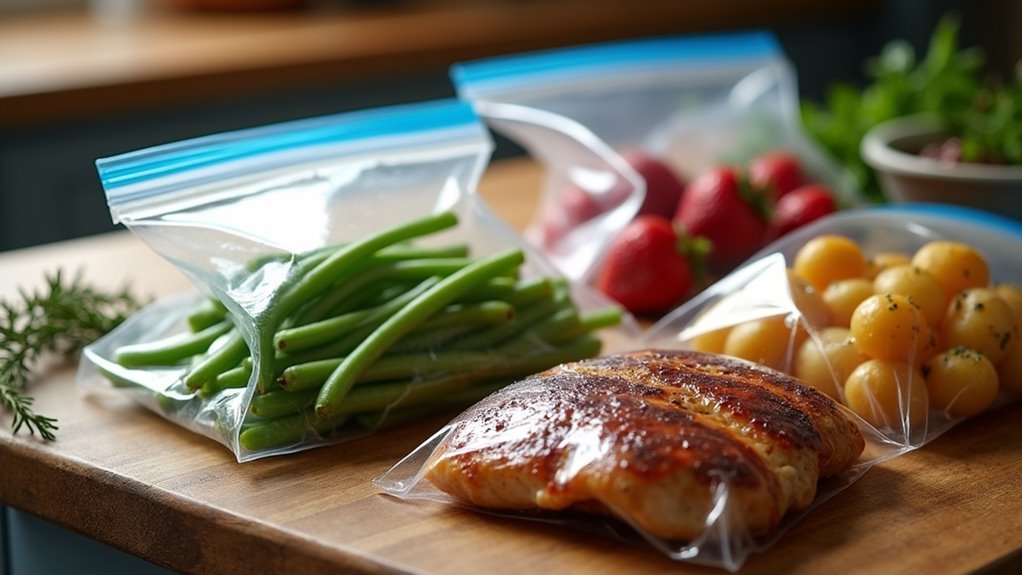
Selecting the right vacuum seal bags for different food types isn’t just about extending shelf life—it’s about preserving the unique qualities of each food.
When we’re meal prepping, we need to take into account how different foods respond to vacuum sealing.
For meats and proteins, we’ve found that thicker, textured bags work best since they:
- Prevent freezer burn on steaks and chicken breasts
- Handle marinades without leaking during storage
- Withstand the sharp edges of bones in cuts like ribs
Vegetables generally do well in standard bags after blanching, but I think fruits need gentler suction to avoid crushing.
Perhaps the most versatile option for those who store food regularly are the universal bags that keep food fresh regardless of what you’re preparing. Additionally, bag durability is a key factor when selecting a vacuum sealer bag to ensure effective food preservation.
Frequently Asked Questions
Are Vacuum Sealers Good for Meal Prep?
Is vacuum sealing worth it? We’ve found they’re fantastic for meal prep benefits! They provide cost efficiency through reusable bags, exceptional food preservation, versatile storage solutions, and incredible convenience factors for busy schedules.
What Is the Difference Between 4 Mil and 5 Mil Vacuum Bags?
We’ve found that 5 mil bags offer better durability compared to 4 mil, with improved thickness impact on sealing efficiency. They enhance food preservation for sharp items, though at slightly higher cost.
Which Is Better, Mylar Bags or Vacuum Seal Bags?
We’d recommend mylar bags for long-term food preservation due to superior durability, while vacuum seal bags offer efficiency for shorter storage. Consider your cost comparison needs and environmental impact when choosing between them.
Are All Food Vacuum Sealer Bags the Same?
No, we’ve found vacuum sealer bags differ greatly in product durability, bag compatibility with machines, and food preservation effectiveness. They also vary in storage efficiency and work with different sealing techniques.