
For most everyday use — cold storage and standard sealing — current evidence suggests major-brand vacuum sealer bags carry low risk for BPA. However, PFAS contamination and microplastic release are active, unresolved concerns, and the bags most home cooks actually use have never been independently tested for either.
What Does Current Research Actually Tell Us?
Before diving into the chemistry, it helps to have a clear map of where the science is settled, where it is genuinely uncertain, and — critically — where the research simply has not been done yet. Here is the honest executive summary of where things stand in mid-2026.
- BPA: largely resolved for major brands. Leading vacuum bag manufacturers including FoodSaver have confirmed they do not use BPA or phthalate plasticizers, a finding corroborated by independent testing from America’s Test Kitchen and culinary food-safety reviewers. For standard polyethylene-and-nylon bags used below 90°C, BPA is not considered an active concern.
- PFAS: an active and growing concern. A 2023 USDA-affiliated study published in the Journal of Chromatography Open found that 57% of plastic food storage bags it tested contained detectable PFAS compounds. While the specific bag types tested were not embossed vacuum roll bags, the findings apply to the broader category of polyethylene food-contact bags and cannot be dismissed.
- Microplastics: a confirmed pathway with significant caveats. Research published in the Journal of Food Science in 2022 detected 1.27 microplastic particles per gram in sous vide-cooked rainbow trout. However, that study included no bag-free cooking control, meaning it cannot isolate whether the microplastics originated from the cooking bag or from pre-existing contamination in the fish tissue itself.
- The central research gap: zero studies on your actual bags. Not a single peer-reviewed study has specifically tested the standard embossed nylon/PE vacuum roll bags — the kind that come on FoodSaver rolls or in pre-cut Anova Precision packs — for PFAS content, microplastic release, or chemical migration under real-world conditions. Everything we know is extrapolated from adjacent research, and that extrapolation matters.
What Are Vacuum Sealer Bags Actually Made Of?
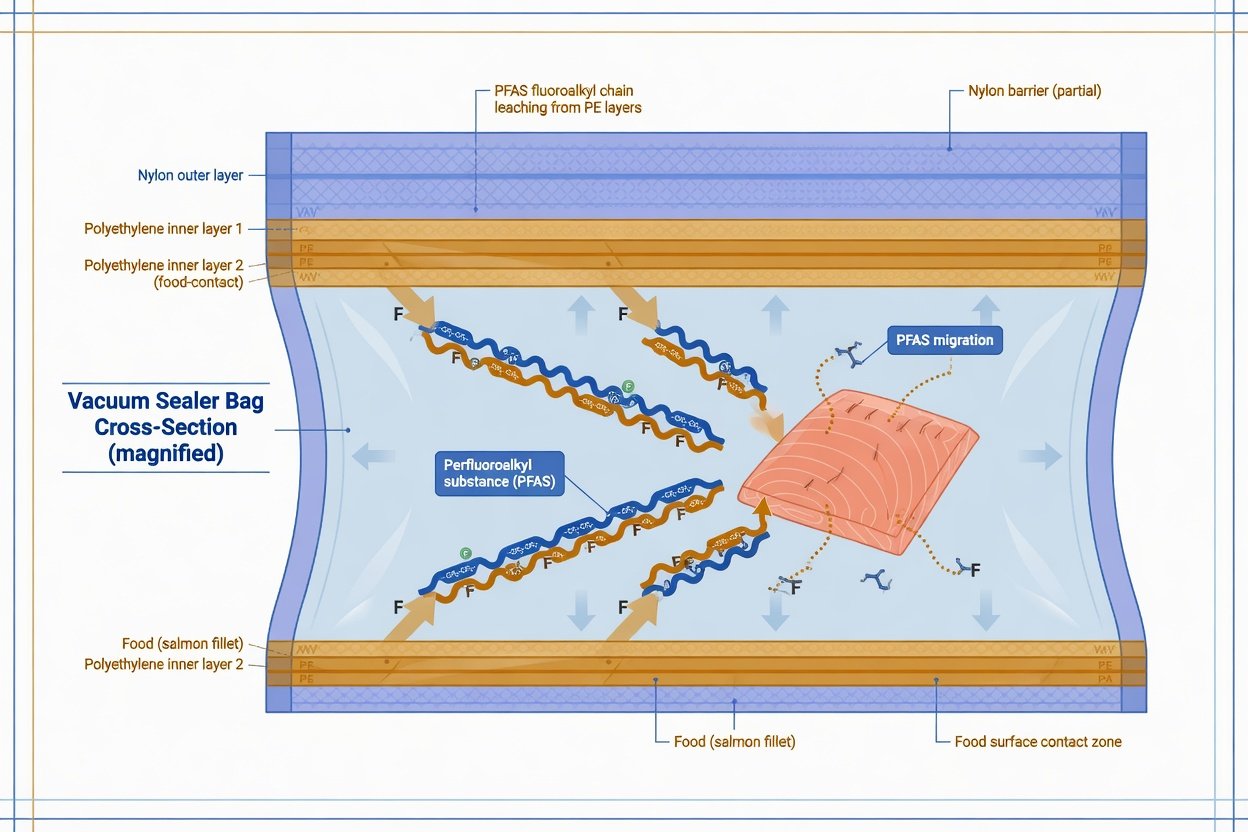
To understand the safety question, you first need to know what is actually in the bag touching your food. The construction is more complex than it looks. FoodSaver’s standard embossed rolls use a five-layer composite: the food-contact inner layers are polyethylene (PE), with a nylon (polyamide) outer layer providing the structural rigidity that makes the channel pattern work. Anova Precision bags similarly use a two-layer LDPE interior paired with one polyamide layer. Neither uses PVC, which was historically the main source of plasticizer concerns.
Polyethylene itself is considered one of the more chemically inert food-contact plastics — it lacks the bisphenol compounds or phthalate plasticizers found in some other polymer types. But “inert” is not the same as “chemically inactive under all conditions.” The nylon outer layer introduces its own variable: caprolactam, the monomer from which nylon 6 is synthesized. Research by Muzeza et al. (2023) found that caprolactam exceeded the EU-specific migration limit (SML) of 15 mg/kg in 35% to 100% of tested nylon food packages depending on temperature and food type. That range is wide, and the percentage at the upper bound is striking.
Zoom out further and the picture becomes more sobering. A comprehensive review in Foods (2023) identified up to 906 chemicals linked to plastic food packaging, of which 63 are classified as human health hazards and 68 as environmental hazards. No individual bag contains all 906 — but the finding illustrates how the “just PE and nylon” summary undersells the complexity of what modern plastic packaging actually is. Manufacturers do not publish full ingredient lists for their bags, which makes independent verification difficult and is one reason consumer advocacy testing groups like Mamavation have stepped into the gap.
Do Vacuum Sealer Bags Contain PFAS Forever Chemicals?
This is where the science gets genuinely uncomfortable. PFAS — per- and polyfluoroalkyl substances, the so-called “forever chemicals” — are a family of more than 12,000 synthetic compounds used in industrial and consumer products for their ability to resist heat, water, and oil. They accumulate in human tissue, persist in the environment, and have been associated with a range of health effects including thyroid disruption, immune suppression, and certain cancers.
The most directly relevant study was published in November 2023 in the Journal of Chromatography Open by Stroski and Sapozhnikova at the USDA’s Eastern Regional Research Center and Baylor University. They tested 18 plastic food storage bags and found that 57% — just over half — contained detectable PFAS compounds at concentrations ranging from 0.5 to 26.6 nanograms per gram. The most frequently detected compound was 6:2 diPAP (6:2 fluorotelomer phosphate diester), while PFBS (perfluorobutane sulfonate) appeared at the highest concentrations. These are not the same bags as FoodSaver rolls — they were generic zipper-style storage bags — but the chemistry involved (polyethylene construction, similar manufacturing environments) means the findings cannot be cleanly partitioned away from the vacuum bag category.
Consumer advocacy outlet Mamavation, working with an EPA-certified laboratory, published 2025 testing data finding that 81% of food storage bag brands tested above the 10 ppm total organic fluorine proxy threshold used as a PFAS screening indicator. One product specifically named in that testing was the FoodSaver Reusable Zipper Bag, which registered at exactly 10 ppm. This is a critical distinction to hold clearly in mind: the Mamavation result applies to FoodSaver’s zipper-closure reusable bags, not to the standard embossed texture vacuum roll bags that most FoodSaver owners actually use. These are physically and functionally different products manufactured to different specifications.
Looking globally, a 2023 assessment published in Food Packaging Forum found that 54% of 119 food packaging samples collected from 17 countries contained detectable PFAS, and — perhaps most alarming — 98% of the chemical content in those samples was not chemically identifiable with standard analytical methods. The implication is that PFAS testing almost certainly undercounts total fluorinated compound load because most compounds do not yet have validated analytical reference standards.
No peer-reviewed study has specifically tested the standard embossed nylon/PE vacuum roll bags used with countertop vacuum sealers — such as FoodSaver pre-cut bags, FoodSaver rolls, or Anova Precision bags — for PFAS content, microplastic release, or chemical migration under real-world use conditions including sous vide. The USDA 2023 study and Mamavation 2025 results apply to related but distinct bag types. The absence of data is not evidence of safety; it is a research gap that manufacturers and regulators have not yet filled.
How Quickly Does PFAS Migrate from Bags into Your Food?
Migration speed is arguably more important than mere presence. A PFAS compound sitting in a bag material might be inert if it stays there. The Stroski and Sapozhnikova study went beyond detection and actually modeled migration kinetics for PFBS, the most concentrated PFAS compound they identified. Their findings were not reassuring: PFBS migrated from bag material into food simulant at an efficiency of 22% to 75%, and the process reached steady-state equilibrium in approximately two hours. Two hours. That is well within the timeframe of an overnight marinade, a standard sous vide cook, or fish defrosting in its sealed bag in the refrigerator.
The researchers stated explicitly in their published findings that “even brief contact with the tested plastic storage bag can result in rapid migration of PFBS.” In their experimental food model, fish stored for approximately three months showed detectable PFBS contamination traced back to the bag material. They calculated a weekly dietary intake of 2.12 nanograms per kilogram of body weight per week from this exposure pathway — compared to the European Food Safety Authority’s (EFSA) tolerable weekly intake (TWI) of 4.4 ng/kg bw/week for the sum of four key PFAS. That places bag-derived PFBS exposure at roughly half of the EFSA TWI for a single compound, before any other PFAS dietary sources are counted. This is a meaningful number — though it comes with an important methodological limitation: the calculation models PFBS alone and does not represent cumulative PFAS burden from all sources including water, cookware, and other packaging.
The persistence question compounds the concern. PFAS compounds have a biological half-life described by Yashwanth et al. (2024) — a multi-institutional review drawing on researchers from Texas A&M, UC Riverside, Michigan State, and MIT — as “on the order of years” in the human body. Unlike most dietary contaminants that the body clears relatively quickly, PFAS accumulate over decades of repeated low-level exposure, concentrating in blood, liver, and kidneys. The National Academies of Sciences, Engineering, and Medicine’s landmark 2022 PFAS report identified five health categories with sufficient evidence of association: elevated cholesterol, immune suppression (particularly reduced vaccine response in children), thyroid disease, certain cancers (particularly kidney cancer), and pregnancy-induced hypertension.
Is BPA Still a Concern in Vacuum Sealer Bags?
This is the one area where the news is genuinely straightforward: for major vacuum sealer bag brands, BPA does not appear to be an active concern. FoodSaver has publicly confirmed its bags are free of plasticizers including BPA, a claim corroborated by America’s Test Kitchen’s food safety research and by culinary food safety reviewers who have documented this in detail. The physical chemistry supports this too: standard PE bag material softens at approximately 195°F (90.5°C), well above normal sous vide temperatures, meaning you would have to badly misuse the bags to approach the temperature range where PE degradation becomes a legitimate structural concern.
Regulatory movement has followed the science here. The European Union’s Regulation 2024/3190 formally banned BPA from all food-contact materials, along with its chemical cousins BPS and BPF, effective January 20, 2025. This is a meaningful step because BPS and BPF had increasingly been used as “BPA-free” substitutes. The US FDA has not enacted an equivalent ban on BPA in plastic food packaging at the federal level as of mid-2026, though some state-level action has occurred.
The critical caveat: BPA-free labeling tells you nothing about PFAS content. These are chemically unrelated compound families, and a bag can be genuinely free of bisphenol compounds while still containing fluorinated compounds. Marketing language around “BPA-free” has, in some cases, functioned to provide a false sense of complete chemical safety when it actually answers only a narrow subset of the relevant question.
For major-brand vacuum sealer bags used at normal temperatures, BPA and phthalate plasticizers are not considered an active concern based on current evidence. The EU’s 2025 ban on BPA and its structural analogues (BPS, BPF) further tightens the regulatory net for European-market bags. However, BPA-free status does not address PFAS, caprolactam, or microplastic concerns — and the US FDA has not matched the EU’s action.
Do Vacuum Sealer Bags Generate Microplastics?
Microplastics — defined as plastic particles smaller than 5 millimeters, and often far smaller — have emerged as one of the most pervasive environmental and dietary contaminants of the past decade. Research published in December 2024 by Yashwanth and colleagues, drawing on scientists from Texas A&M, UC Riverside, Michigan State, and MIT, identified vacuum sealing compression itself as a confirmed pathway for microplastic generation. The physical mechanism is intuitive once stated: the vacuum removal process presses the bag tightly against the food surface, and the friction and pressure involved can abrade plastic particles from the bag’s interior surface directly onto or into the food.
A second pathway involves surface abrasion from rough or textured produce. Vegetables with sharp edges, proteins with bone fragments, or crusty foods create friction against the bag interior during the sealing and handling process, physically scraping microplastic particles loose. This is not a hypothetical — it is a mechanical inevitability given the contact surfaces involved.
The dietary exposure context matters here. Research by Cox et al. (2019) estimated that Americans consume between 39,000 and 52,000 microplastic particles per year through diet alone, with additional inhalation exposure bringing total exposure higher. More recently, microplastics have been detected in eight distinct human organ and tissue types in studies published between 2021 and 2024: brain, heart, kidney, liver, lungs, placenta, blood, and feces. The clinical implications of this tissue accumulation are still being actively researched — causal disease associations have not been definitively established — but the finding that these particles are systemically distributed through the human body has shifted the conversation from theoretical to confirmed exposure.
Is Sous Vide Cooking in Plastic Bags Safe?
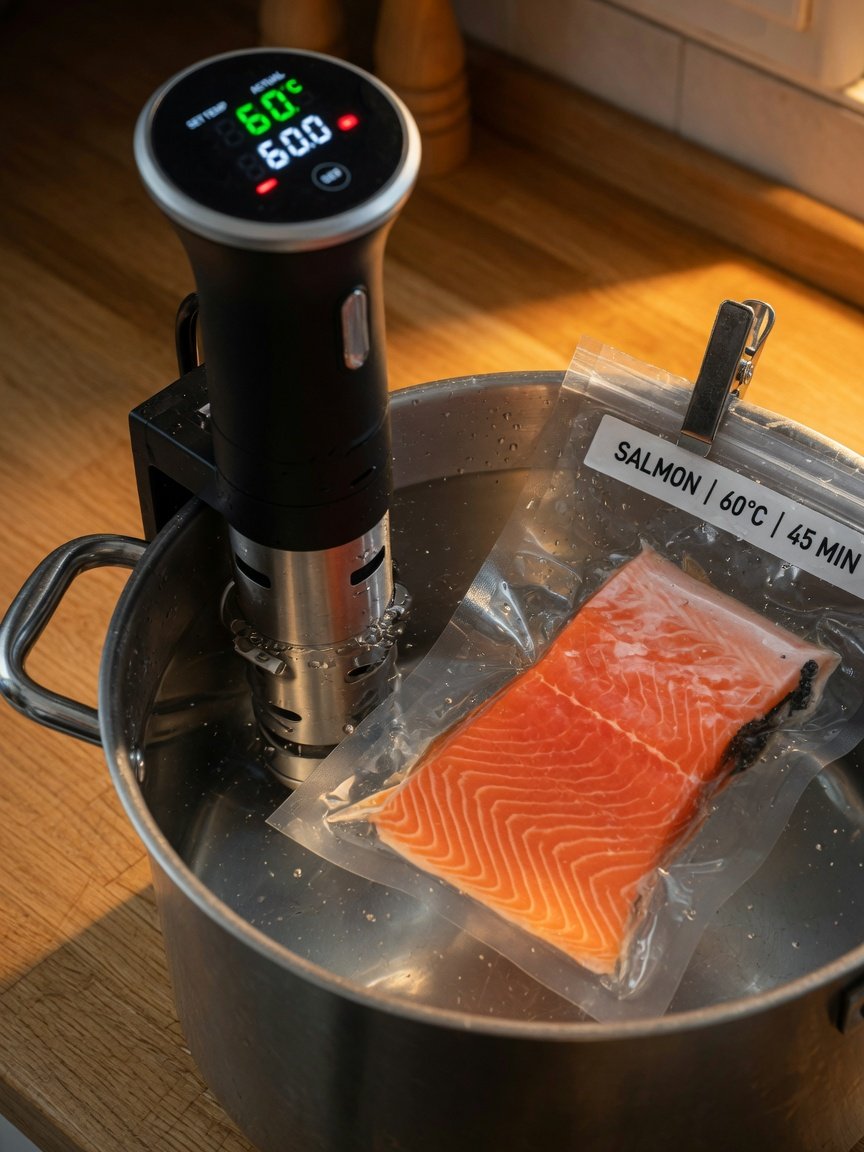
Sous vide is where the safety calculus gets most complex, because the combination of heat, extended time, and complete bag-food contact creates the conditions most likely to drive chemical migration. Let’s work through each concern category for this specific use case.
BPA and phthalates: Polyethylene remains structurally stable up to approximately 195°F (90.5°C), and standard sous vide temperatures — typically 54°C to 85°C for most applications — sit comfortably below that threshold. For these specific compounds, sous vide in PE bags appears low-risk based on available evidence.
Microplastics: Alak et al. (2022), published in the Journal of Food Science, found 1.27 microplastic particles per gram in sous vide-cooked rainbow trout. This figure sounds precise but carries a fundamental methodological limitation that must be stated clearly: the study included no bag-free cooking control group, meaning the researchers could not determine whether the microplastics they detected originated from the cooking bag or from pre-existing environmental microplastic contamination already present in the farmed fish tissue. The finding establishes that microplastics are present in sous vide-cooked fish; it does not establish the cooking bag as the source. That distinction matters enormously for practical risk assessment and is frequently omitted when this study is cited online.
PFAS at elevated temperature: Polymer degradation rates, including potential PFAS release, increase above 65°C (149°F). Research in related food packaging contexts has found PFAS migration to be substantially higher at elevated temperatures — the directional relationship (higher temperature equals higher migration) is well-established even if the specific dose-response curve for sous vide temperature ranges has not been characterized in vacuum bag materials specifically.
Caprolactam from the nylon layer: The outer polyamide layer of vacuum bags becomes relevant at sous vide temperatures. The Muzeza et al. (2023) finding that caprolactam exceeded the EU SML of 15 mg/kg in a substantial percentage of tested nylon food packages is directly applicable to extended cooking in nylon-composite bags at temperatures between 55°C and 80°C. This remains an understudied area specifically for vacuum bag products used in sous vide applications.
“No studies were found in the literature evaluating migration of chemical additives from plastics in simulated sous vide conditions.”
— Pollution Prevention Resource Center (PPRC), Do Plastic Chemicals Leach Into Food From Sous Vide Cooking?, updated August 2022. This research gap remains unfilled as of mid-2026.| Chemical / Concern | Cold Storage (<4°C) | Sous Vide <65°C | Sous Vide >65°C |
|---|---|---|---|
| BPA / Phthalates | ✅ Low Risk | ✅ Low Risk | ✅ Low Risk |
| PFAS | ⚠️ Uncertain (untested) | ⚠️ Uncertain — migration in 2h | 🔴 Higher risk — polymer stress |
| Microplastics (sealing) | ⚠️ Compression abrasion possible | ⚠️ Degradation begins | 🔴 Accelerated degradation |
| Caprolactam (nylon layer) | ✅ Minimal at cold temps | ⚠️ Migration possible (Muzeza 2023) | 🔴 Exceeds EU SML in tested packages |
What Do 2025–2026 Regulations Say About Bag Safety?
The regulatory landscape has shifted more in the past 18 months than in the preceding decade, though meaningful gaps remain — particularly in the United States at the federal level. Here is the timeline of what has changed and what it means for home vacuum sealers.
At the US federal level, the FDA took action in January 2025 to revoke 35 food contact notifications (FCNs) related to PFAS compounds — but this action applied specifically to paper and paperboard food packaging, with a compliance date of June 30, 2025. Plastic bags are not subject to these PFAS FCN revocations. As of mid-2026, there is no equivalent FDA restriction on PFAS in plastic vacuum sealer bags. American consumers relying on federal regulation alone remain in a gap that state-level legislation is only partially filling.
Which Bag Brands Have Been Tested — and Which Haven’t?
Understanding what the existing research actually tested is essential to interpreting it correctly — and the honest answer is that the specific bags most home vacuum sealers use have not been independently tested for the contaminants that matter most.
The USDA 2023 study by Stroski and Sapozhnikova, which is the most rigorous PFAS detection study in this space, tested generic zipper-style plastic storage bags purchased through standard retail channels. The study was not designed to evaluate embossed vacuum roll bags specifically, and the authors did not represent it as such. The bags they tested share some construction similarities with vacuum bags (PE film construction) but differ in the presence of the textured embossed channel pattern and the nylon outer layer.
The Mamavation 2025 testing specifically identified the FoodSaver Reusable Zipper Bag at 10 ppm total organic fluorine. FoodSaver produces multiple distinct product lines with different materials and constructions. Their reusable zipper bags — designed for repeated wash-and-use cycles — are not the same product as their single-use embossed pre-cut bags or their roll stock. The distinction between a “FoodSaver bag” and the specific FoodSaver product tested is not semantic hair-splitting; it reflects genuinely different materials that may have different PFAS profiles.
What has not been tested in any published peer-reviewed study or major consumer advocacy review: FoodSaver Quart pre-cut bags, FoodSaver Gallon pre-cut bags, FoodSaver roll stock, Anova Precision Cooker bags or rolls, Weston Pro bags, or any of the major private-label vacuum bag products sold through retailers. This is the central research gap — the product millions of home cooks use weekly is precisely the product that science has not yet looked at directly.
What Are the Five Biggest Chemical Migration Risk Factors?
Migration is not a binary on/off phenomenon — it is driven by a set of interacting physical and chemical variables. Understanding these factors lets you make genuinely informed decisions about which uses carry more risk and which carry less, rather than treating “plastic bag” as a monolithic risk category.
This is the dominant variable. Polymer degradation and PFAS migration both accelerate with temperature. Research by Ramírez Carnero et al. (Foods, 2021) found PFAS migration to be approximately 7× higher at 175°C compared to 100°C — and the directional relationship holds at lower temperature ranges too. The critical threshold for vacuum bag nylon layers appears to begin around 65°C (149°F), which is squarely within the sous vide range for many proteins including fish, pork, and poultry.
The Stroski and Sapozhnikova migration kinetics data showed PFBS reaching steady-state equilibrium in approximately two hours of contact at ambient temperature. This means that any contact time beyond two hours does not necessarily add more PFAS burden — but it also means that very brief contact (under 30 minutes) may result in substantially less migration. Overnight marinades and multi-day refrigerator storage in vacuum bags represent a meaningfully different risk profile than a quick sealing-then-freezing operation.
Vacuum sealing is unusual among food storage methods precisely because it maximizes bag-food contact by removing the air buffer between packaging and food. A jar, Tupperware, or zip-top bag with air all maintain some separation. Vacuum sealing eliminates that separation and presses the full interior bag surface against the food — mechanically ideal for preservation, but maximizing the contact interface through which any migrating compounds must travel.
Marinades containing citrus juice, vinegar, wine, or fermented ingredients create an acidic food simulant environment that research consistently shows accelerates chemical migration from plastic food-contact materials. The EU’s food simulant testing protocols specifically include acidic simulants (acetic acid solutions) because the effect is well-established. Vacuum sealing chicken thighs in a lemon-herb marinade overnight adds the acid migration driver on top of time and surface area variables simultaneously.
Fat is the most potent individual migration accelerator for lipophilic compounds including many PFAS. Research has found that PFAS migration into fatty food simulants can be up to 50× higher than migration into aqueous simulants (Ramírez Carnero et al. 2021, cross-confirmed in Yashwanth et al. 2024). The practical implication is significant: salmon, duck breast, pork belly, and other high-fat proteins represent the highest-risk category for PFAS migration when vacuum sealed and cooked at elevated temperatures over extended periods. Lean proteins sealed cold represent a substantially lower-risk profile.
What Can Experienced Cooks Do Right Now?
Given genuine uncertainty and a research gap that will not be filled overnight, here are the six most defensible practical steps for home cooks who use vacuum sealers regularly and want to reduce potential exposure without discarding a genuinely useful kitchen tool.
- Seek third-party PFAS testing data, not just BPA-free claims. Contact the manufacturers of the bags you use and ask specifically whether their products have been independently tested for total organic fluorine or individual PFAS content. BPA-free labeling addresses a different chemical family entirely. If a manufacturer cannot provide a third-party PFAS test result, that is itself informative data about their testing program.
- Do not reuse single-use vacuum bags. Each sealing and unsealing cycle creates additional physical stress on the bag material, increasing the potential for surface abrasion and microplastic generation. Single-use bags are designed for single use, and reusing them — particularly after any heat exposure — compounds the exposure variables.
- Apply extra caution with high-fat proteins at temperatures above 65°C. Salmon, duck, pork belly, and similar fatty cuts at sous vide temperatures above 65°C represent the highest-risk intersection of fat content and elevated temperature based on current evidence. If you cook these regularly, this is the use case most worth monitoring as more research becomes available.
- Keep acidic marinades brief in plastic bags. If your recipe calls for a citrus or vinegar marinade, consider marinating in glass or ceramic and transferring to the vacuum bag immediately before sealing. Extended marinade contact in the bag unnecessarily adds the acid migration driver to the contact time driver.
- Watch for EU-compliant bags after August 2026. The EU PPWR’s PFAS limits (25 ppb individual, 250 ppb sum, 50 ppm total organic fluorine) take effect August 12, 2026. Products manufactured to EU PPWR specifications will have been PFAS-tested and reformulated if necessary. EU-compliant products will likely represent the most meaningfully tested option available to US consumers.
- Demand manufacturer PFAS transparency. The most powerful consumer tool is direct pressure. Contact FoodSaver, Anova, Weston, and whichever brand you use. Ask for published third-party PFAS testing for their specific embossed vacuum roll bag products. The absence of published data from major manufacturers on a well-documented compound class is a choice, not an inevitability — and consumer demand changes it.
Frequently Asked Questions
Yes, for all major brands currently on the market. FoodSaver, Anova, Weston, and comparable brands have confirmed that their bags do not use BPA or phthalate plasticizers, and this has been corroborated by independent reviewers including America’s Test Kitchen. However, it is essential to understand that “BPA-free” is a statement about one specific chemical family — bisphenol compounds — and says nothing about whether the bags contain PFAS, caprolactam, or other compounds of concern. A bag can be genuinely BPA-free and still present unresolved questions on other chemical fronts.
The honest answer is: we do not know for the specific embossed roll bags most countertop vacuum sealer users rely on. The USDA 2023 study found detectable PFAS in 57% of plastic food storage bags tested, at concentrations of 0.5 to 26.6 ng/g. Mamavation 2025 testing found the FoodSaver Reusable Zipper Bag at 10 ppm total organic fluorine. However, neither of these tests used standard embossed vacuum roll bags — those are different products. No peer-reviewed study has tested embossed vacuum roll bags from any major brand for PFAS content. The research gap is real, significant, and has not been addressed by any manufacturer as of mid-2026.
For BPA and phthalates, the evidence suggests low risk at standard sous vide temperatures below 90°C. For PFAS and microplastics, the question is genuinely unresolved. A 2022 Journal of Food Science study found 1.27 microplastic particles per gram in sous vide-cooked rainbow trout, with polymer degradation accelerating above 65°C — though that study included no bag-free cooking control, meaning bags could not be confirmed as the microplastic source. The PPRC’s 2022 literature review found zero studies evaluating chemical migration from plastics under actual sous vide conditions. The evidence gap — not the evidence itself — is the primary concern for experienced cooks doing regular high-temperature, long-duration cooks with high-fat proteins.
Three major regulatory changes apply. First, the EU’s Regulation 2024/3190 banned BPA, BPS, and BPF from all food-contact materials including plastic bags, effective January 20, 2025. Second, Illinois HB 2516 restricts intentionally added PFAS in food packaging, effective January 1, 2026 — the broadest US state food packaging PFAS ban enacted to date. Third, the EU PPWR (Regulation 2025/40) imposes PFAS concentration limits on all food-contact packaging effective August 12, 2026: 25 ppb for individual PFAS compounds, 250 ppb for the sum of targeted PFAS, and 50 ppm total fluorine. At the US federal level, the FDA’s January 2025 PFAS action revoked food contact notifications for paper packaging only — plastic vacuum bags remain unregulated for PFAS under US federal law.
Silicone bags are frequently mentioned as an alternative, but they are mechanically incompatible with countertop vacuum sealers — the embossed channel pattern on standard PE/nylon bags is what allows air evacuation, and silicone bags do not work with heat-seal machines. For sous vide specifically, food-grade silicone bags with a hand pump or chamber vacuum system represent a different approach but require different equipment and have not been independently tested for PFAS either. For standard cold storage, glass or stainless containers eliminate plastic contact entirely but cannot replicate the preservation benefits of vacuum sealing. Standard PE-based vacuum bags from major brands remain the current lowest-risk choice specifically for BPA and phthalates; PFAS and microplastics remain unresolved regardless of brand.
Caprolactam is the chemical monomer from which nylon 6 (polyamide) is synthesized — the same nylon that forms the structural outer layer of most vacuum sealer bags, including FoodSaver and Anova products. Under heat and extended contact time, caprolactam can migrate from the nylon layer into food. Research by Muzeza et al. (2023) found that caprolactam migration exceeded the EU’s specific migration limit (SML) of 15 mg/kg in 35% to 100% of tested nylon food packages depending on temperature and food type — with the highest rates in high-fat foods like pâté and poultry at elevated temperatures. For sous vide cooking that holds nylon-composite bags at 55°C–85°C for extended periods, caprolactam migration is a directly relevant and significantly understudied concern.
The Bottom Line: Where Vacuum Sealer Bag Safety Stands in 2026
Vacuum sealer bags from major brands are not the ticking chemical time bombs that the most alarmist coverage implies — but they are also not the completely inert food-contact materials that casual “BPA-free” marketing language suggests. The honest picture in mid-2026 is one of confirmed low risk for BPA, meaningful and unresolved concern for PFAS, a confirmed-but-methodologically-uncertain microplastics pathway, and a striking central research gap: the specific embossed nylon/PE roll bags that millions of home cooks use weekly have never been independently tested for the contaminants that most warrant investigation. BPA is the question that has been answered. PFAS, microplastics, and caprolactam are the questions that have not — and the regulatory pressure now building in the EU and at the US state level suggests those answers are coming, whether manufacturers volunteer them or not.
- Continue using vacuum bags for cold storage and standard food preservation without significant concern about BPA — the evidence here is reassuring for major brands.
- If you sous vide high-fat proteins regularly at temperatures above 65°C, treat this as your highest-priority use case for monitoring new research and seeking manufacturer PFAS data.
- Keep acidic marinades in glass or ceramic and transfer to the vacuum bag only when you are ready to seal and cook or store.
- Do not reuse single-use vacuum bags, particularly after any heat exposure — mechanical stress compounds with each cycle.
- Look for EU PPWR-compliant products after August 2026. Compliance with the 25/250 ppb PFAS limits will require the testing transparency that currently does not exist for US-market vacuum bags.
- Contact your bag manufacturer directly and ask for third-party total organic fluorine test results for the specific embossed roll bag products you use. Consumer demand is the most reliable mechanism to accelerate the testing that regulators and researchers have not yet delivered.