Life’s clutter often feels like air slowly leaking into our precious space. Want to know what factors actually matter before wasting your money on systems that’ll fail within months?
Understanding Vacuum Sealer Bag Materials and Construction
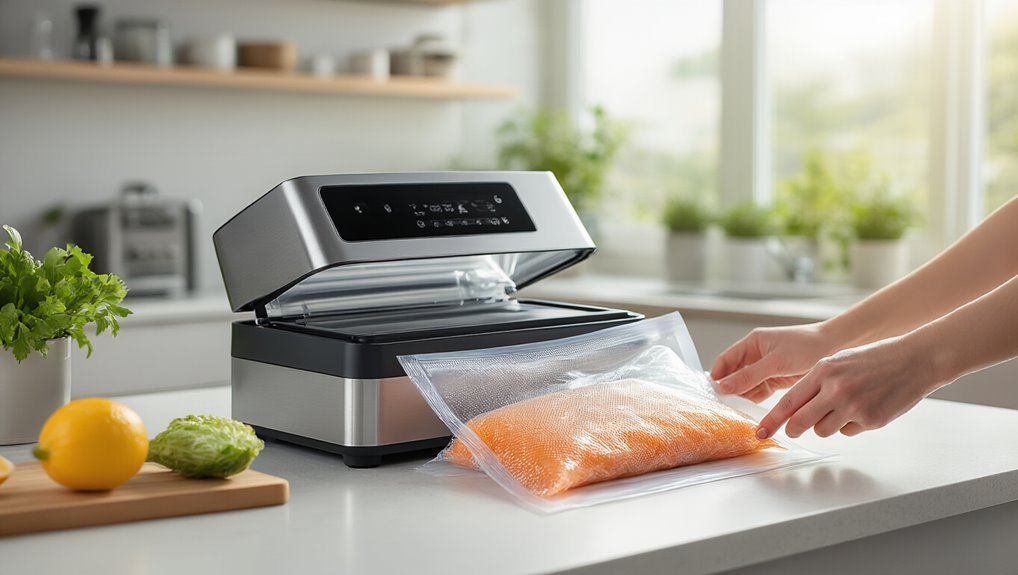
When you’re diving into the world of vacuum sealer bags, understanding what they’re actually made of makes all the difference in how well they’ll protect your food. The material composition isn’t just technical jargon—it’s the reason some bags keep food fresh for months while others fail after weeks.
Many users find that quality vacuum bags typically feature multiple layers (this bag layering thing is pretty essential).
A well-designed bag often uses deliberate material layering to achieve reliable oxygen resistance.
They’ll have polyethylene on the outside, some kind of barrier material in the middle like nylon or polyester, and food-safe polyethylene on the inside.
Some even include foil linings which, in practice, work wonders for blocking oxygen.
Choosing the Right Pump Technology for Your Needs
You’ll want to weigh how frequently you’ll use your vacuum bags and where you’ll be using them before deciding which pump type meets your specific needs.
Consider how the long-term cost is affected by both options, as economic savings can accumulate through reduced waste and bulk-buys.
Manual vs. Electric Pumps
As you consider vacuum sealer bags with pumps, you’ll need to decide between manual and electric options—a choice that’s actually quite significant for your food preservation journey.
In practice, manual pumps are more budget-friendly and portable, but they’ll make you work for that air pressure removal.
Electric pumps, on the other hand, well, they’re game-changers if you’re sealing stuff regularly. They offer stronger suction power and—A highlight is this part—many have auto shut-off features so you don’t have to guess when you’ve reached ideal vacuum.
They’re pricier, sure, but the time and effort you’ll save is worth considering.
Pump Compatibility Factors
Why does pump compatibility matter so much when you’re shopping for vacuum sealer bags? Well, Many users find that having the wrong pump is like trying to fit a square peg in a round hole—it simply won’t work! Pump voltage and connection compatibility are essential factors that determine whether you’ll successfully seal your items or end up frustrated.
| Compatibility Factor | Why It Matters | What To Look For |
|---|---|---|
| Voltage Requirements | Powers the pump | 110V (US) or 220V (EU) |
| Connection Type | Creates proper seal | Match valve to pump nozzle |
| Battery Options | Affects portability | Rechargeable vs. corded |
In practice, it’s better to invest in a pump that’s specifically designed for your bags. Check both elements before purchasing to ensure seamless operation.
Storage Capacity and Size Options
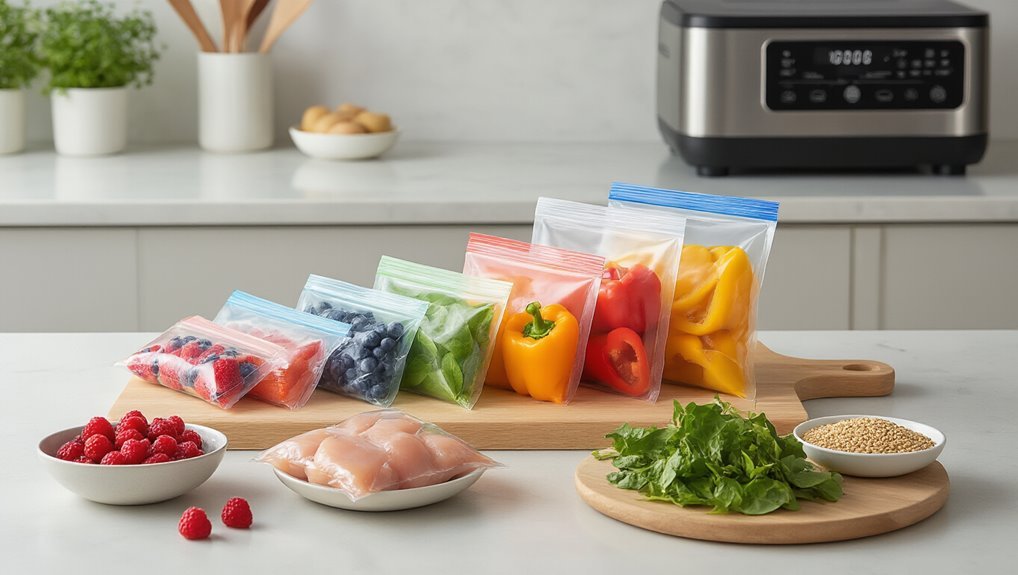
The three most important considerations when choosing vacuum sealer bags are definitely size, capacity, and versatility.
Many users find that most manufacturers offer a range from tiny snack-sized pouches to jumbo bags that’ll hold bulky winter coats or king-sized bedding.
The design variations and color options have improved dramatically in recent years.
You’ll want to think about your specific needs when selecting sizes – they’re not a one-size-fits-all solution.
Understanding that vacuum sealing can extend storage life up to five times helps explain why bag size matters for storage life.
Durability and Reusability Factors
Durability stands out as the make-or-break factor when you’re choosing vacuum sealer bags with pumps.
Many users find that high-quality bags made from multi-layered materials can actually withstand numerous uses without failing.
You’ll want to clean and inspect your bags between uses—this simple step extends their life dramatically.
For customization possibilities, consider how different bags suit specific needs; some are better for liquids, others for dry goods.
This approach aligns with how vacuum sealing improves heat distribution for even cooking.
Top-Rated Vacuum Sealer Bag Systems on the Market
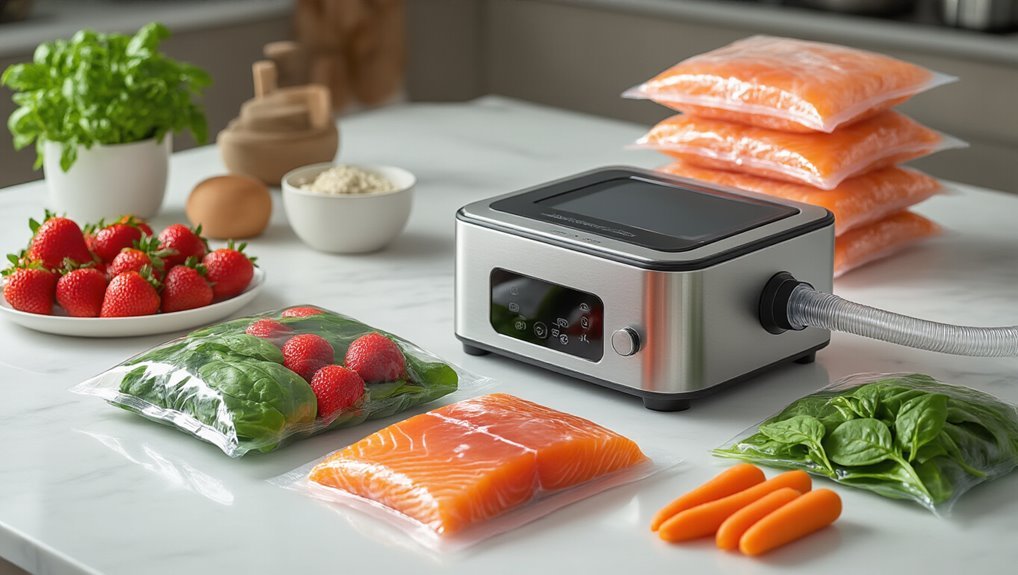
long-term preservation These choices also tie into long-term preservation strategies, so picking a reliable model matters beyond upfront cost.
Electric pumps typically range from $40-100. You’ll need to weigh the convenience of electric pumps against the reliability and no-charging-needed benefits of manual systems.
In practice, the cost-benefit really comes down to how frequently you’ll use it—occasional users might be perfectly happy with a quality manual pump, while meal preppers who vacuum seal weekly will definitely appreciate the time saved with an electric model.
Portable Pump Options
For on-the-go convenience, It’s worth looking for:
- Rechargeable systems that don’t require constant outlet access
- Sets that include multiple bag sizes (compression, storage, and travel)
- User-friendly controls that don’t require an engineering degree to operate
Many users find these portable pumps particularly useful for camping trips where you need to compress clothing or protect electronics from moisture.
Manual vs. Electric
Manual systems require more effort with their hand pumps, but they’re portable and budget-friendly. Many users find proper vacuum seal maintenance is easier with electric systems, which deliver consistent results every time.
For occasional use, manual kits work fine, though they demand more skill.
Think of it like the difference between hand-washing dishes versus using a dishwasher—both get the job done, but one saves significant time and effort.
Cost-Benefit Analysis
The sweet spot typically falls between $30-40, where you’ll find reliable performance without breaking the bank.
When considering pricing strategies, remember that cheaper isn’t always economical in the long run.
For maximum value, we recommend:
- Investing in mid-range systems that include multiple bag sizes rather than the cheapest option that might need frequent replacement
- Looking for models with maintenance tips in the manual – proper cleaning extends lifespan tremendously
- Calculating cost-per-seal rather than just upfront price (divide total cost by expected number of seals)
You’ll save way more on reduced food waste than you’ll spend on even premium models.
Space-Saving Benefits and Practical Applications
It’s like having Mary Poppins’ magical bag, but real!
Regular maintenance, including cleaning the sealing strip, can prevent incomplete seals sealing strip maintenance.
Frequently Asked Questions
How Do I Know Which Vacuum Bag to Buy?
Which Vacuum Sealer Bags Are Best?
We recommend BPA-free, FDA-approved bags compatible with your machine. For food preservation, choose multi-layered options with barrier materials. Embossed bags maximize storage efficiency with external sealers, while heat-resistant ones work for cooking.
What Should I Look for When Buying a Vacuum Sealer?
It’s worth focusing on material durability for your storage needs and seal compatibility with your specific machine. Check for BPA-free construction, appropriate thickness, and whether it’s suitable for your preservation method.
What’s the Best Vacuum Sealer for the Money?
We recommend the FoodSaver or Geryon models for value. They offer excellent storage capacity while maintaining material durability. Look for replaceable seals and sturdy pumps that’ll serve you reliably for years.